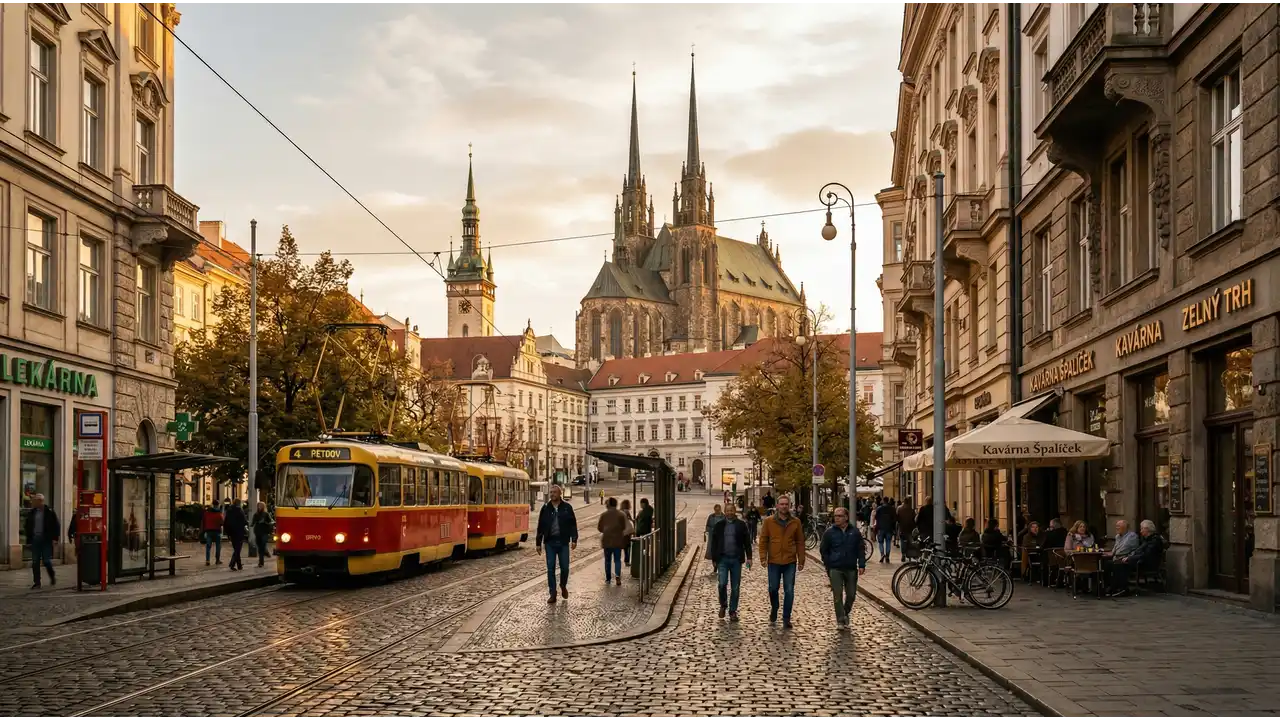
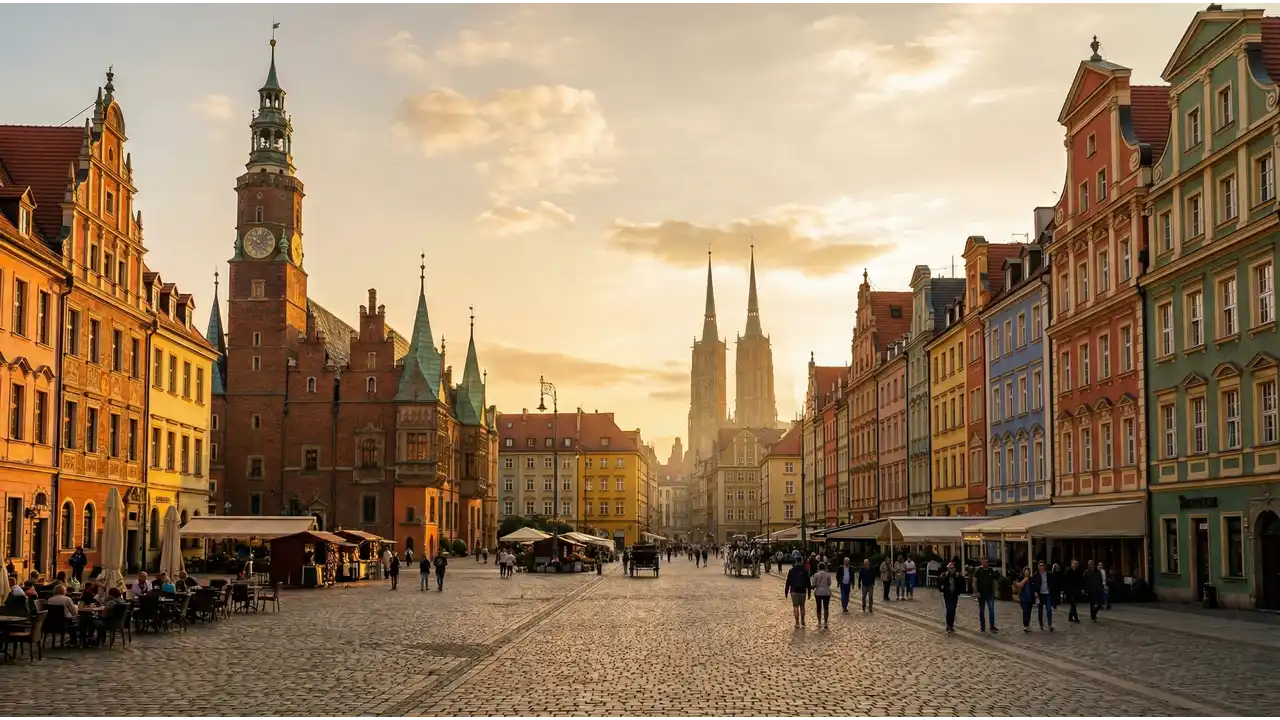
Brno is a university city of about 380,000 people in Moravia, the eastern half of the Czech Republic. It has a Central European character without the tourist density of Prague: Baroque architecture, an active cultural scene, and a working local economy. Winters are cold and grey, summer pleasant. The population is mix of students, young professionals, and established families. Daily life centers on the compact old town, tram networks, and regular doses of beer and goulash. Most neighborhoods are walkable. It functions as a real place where people live, not primarily as a visitor destination.
💡 Local Insights
Brno · 2026
Brno costs roughly half what Prague does, making it genuinely affordable for Europeans. Housing drives the budget at $865 per month. A one-bedroom apartment in central neighborhoods like Staré Brno or around Svobody Square runs $700-$950. Outside the center (Židenice, Královo Pole), you can find places at $600-$750. Shared housing is cheaper. Utilities add $100-$150 monthly. Groceries are inexpensive at $285 per month for a moderate diet, with local markets cheaper than supermarkets. Eating out remains very cheap, under $6 for a substantial meal at a traditional hospoda. Public transport (trams and buses) costs roughly $15 monthly on an unlimited pass. The main cost trap is that expats often end up in newer apartments marketed specifically to foreigners at 20-30 percent premiums. Negotiating directly with Czech landlords, using local websites like Sreality.cz, and speaking Czech helps bring rent closer to local prices. Remote workers from Western Europe find real financial advantage here.
Frequently Asked Questions
How much does it cost to live in Brno per month?
A moderate lifestyle costs about $1,750 per month. This covers housing at $865, groceries around $285, transport, utilities, dining out occasionally, and modest entertainment. A tighter budget of $1,050 monthly is possible if you share housing and cook all meals. A comfortable lifestyle with better accommodation, regular dining out, and travel runs roughly $2,713 per month. The actual figure depends heavily on whether you rent centrally or in outer neighborhoods, and whether you eat Czech food or import Western groceries.
What is the average rent in Brno?
Average rent is $865 per month. One-bedroom apartments in central locations like Staré Brno, near the Cathedral, or on Svobody Square typically cost $700-$950 depending on condition and exact location. Outer neighborhoods like Židenice, Královo Pole, or Ivanovice offer one-bedroom places at $600-$750. Two-bedroom apartments run $950-$1,300 centrally, $700-$1,000 further out. Utilities (heat, water, electricity) add $100-$150. These figures assume local prices. Apartments marketed specifically to expats on English-language sites often run 20-30 percent higher. Direct negotiation with Czech landlords via Sreality.cz, Bezrealitky.cz, or local housing groups yields better rates.
Is Brno cheap to live in for expats?
Yes, but context matters. For expats from Western Europe or North America, Brno is genuinely inexpensive. Rent, food, and transport are all substantially cheaper than Paris, Berlin, or London. Compared to other Czech cities or Poland, Brno is middle-range, cheaper than Prague but similar to Ostrava. The advantage shrinks if you earn local Czech salaries (around $1,500-$2,000 monthly). Remote workers from high-income countries find real purchasing power here. The catch: if you insist on expat-oriented housing and imported groceries, you sacrifice much of the savings. Integrate into local housing markets and eat Czech, and the economics work well.
How much does food cost per month in Brno?
Groceries for a moderate diet run roughly $285 per month, or about $70 weekly. A kilogram of chicken costs around $4, fresh bread $1-$1.50, cheese $3-$5 per 500 grams. Local markets are cheaper than supermarkets. Eating out remains very affordable: a full meal (goulash, beer, bread) at a local hospoda costs $4-$7. Lunch menus (polední menu) at restaurants offer three courses for $3-$5. Coffee is $1.50-$2. Western imported goods (cheese, specialty items) cost 50-100 percent more than Czech staples. Grocery costs are stable year-round unless import-dependent items spike.
What salary do you need to live comfortably in Brno?
Comfortable living requires about $2,713 per month. This allows a nicer one or two-bedroom apartment, regular dining out, weekends traveling within Central Europe, hobbies, and a genuine buffer for unexpected costs. In Czech crown terms, that's roughly 65,000-68,000 CZK monthly before tax. Most expats aiming for comfort aim for $2,500-$3,500 monthly net income. Local Czech salaries for skilled work run $1,800-$3,000 monthly, which makes life comfortable by Czech standards but tighter for expats accustomed to Western spending. Remote workers from Western tech or professional fields easily exceed this threshold and live very well.
How does the cost of living in Brno compare to other places?
Brno sits squarely in Central Europe's affordable tier. A moderate lifestyle costs $1,750 per month here, with housing running $865 monthly. That puts it slightly pricier than its closest peer, Vilnius, where a moderate lifestyle runs $1,625 with housing at $746. If you're coming from Western Europe, the difference is stark. Madrid costs $2,450 for the same lifestyle, nearly 40 percent more, with housing alone at $1,442. Brno is substantially cheaper than major Western capitals but noticeably more expensive than smaller Eastern alternatives like Chisinau, which runs $1,225 monthly overall. For most expats and professionals, Brno offers good value without feeling stripped-down. You get decent restaurants, reliable public transport, and modern services at prices that don't strain a typical salary.
Yes, but with real constraints. A $1,050 monthly budget requires housing around $550-$650, forcing you to shared apartments or outer neighborhoods, no central location. Groceries must stay strict at $200-$220 monthly, meaning no imported goods and heavy reliance on local staples. Dining out becomes rare. Transport, utilities, and phone absorb the remainder. A single emergency (medical, repair, travel) breaks the budget. This works for students, long-term backpackers, or those with very low expenses, but offers minimal margin. Most people report this is livable but uncomfortable; adding $200-$300 monthly dramatically improves quality of life.