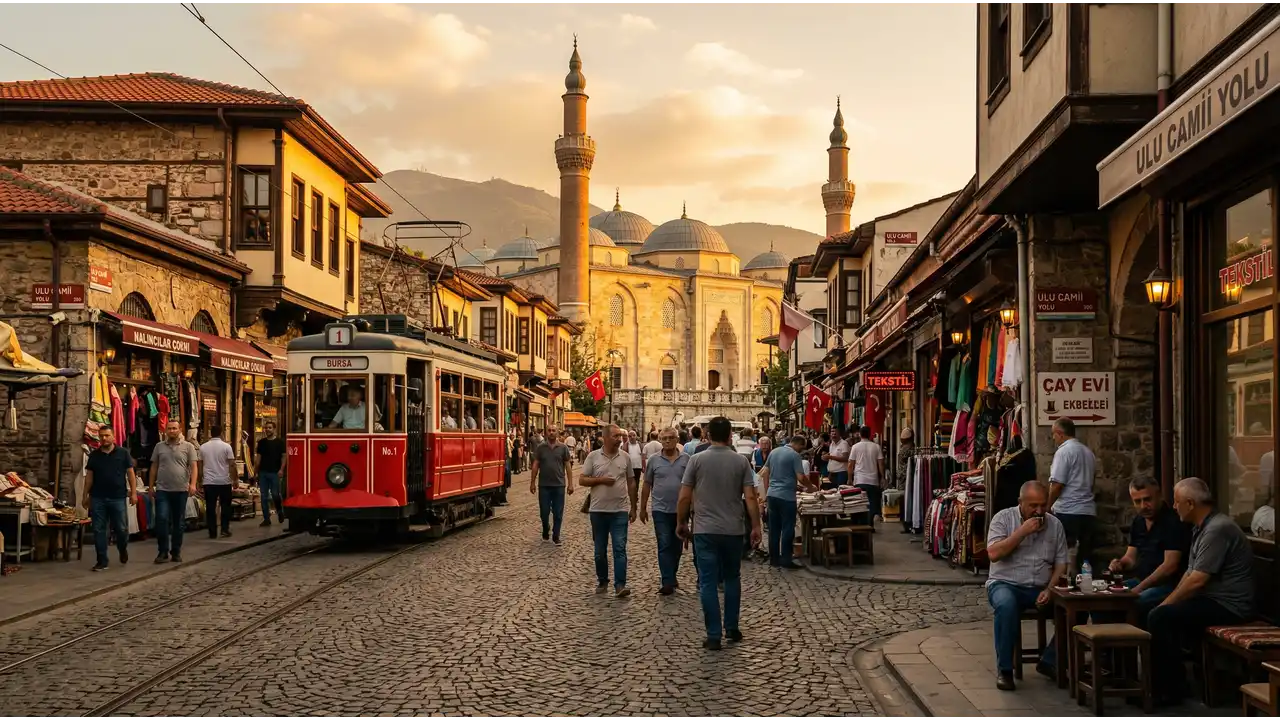
Istanbul straddles Europe and Asia, split by the Bosphorus. The Asian side, where most residential neighborhoods cluster, feels less touristy than the European center. Daily life revolves around ferries, dolmus (minibus) routes, and dense street markets. Winters are mild but wet. The city draws Turkish families, remote workers, students, and long-term expats seeking affordability relative to Western Europe. Traffic and noise are constant. The call to prayer structures the day. You'll live among locals if you avoid the obvious expat enclaves, though some neighborhoods cater entirely to international residents.
💡 Local Insights
Istanbul · 2026
Istanbul's cost advantage has narrowed as the expat population grew, but it remains affordable compared to London or Berlin. Housing dominates the budget at $906/month, which covers a one-bedroom apartment in outer neighborhoods like Kadikoy or Besiktas. Central areas and new developments command premiums. Groceries run $248/month for basic Turkish staples, local produce, and dairy. Eating out remains cheap; a kebab costs $3-5, a restaurant meal $8-12. Transportation is efficient and inexpensive: a monthly transit pass covers unlimited metro, tram, and ferry rides. Expat-focused shops, Western groceries, and private gyms push costs up fast. Utilities (electricity, water, heating) add $40-80 monthly and spike in winter. Healthcare is affordable if you use Turkish clinics; private hospitals cost more. Turkish language skills reduce prices meaningfully. Neighborhoods matter: Kadikoy and Besiktas attract expats and cost more; Fatih and Aksaray offer lower rents but less English spoken.
Frequently Asked Questions
How much does it cost to live in Istanbul per month?
A moderate lifestyle in Istanbul costs $1,675/month. Housing averages $906/month for a one-bedroom apartment in residential neighborhoods. Groceries run $248/month for local shopping. The remaining budget covers utilities ($40-80), transit ($15-20), dining out, and entertainment. Budget-conscious residents manage on $1,005/month by choosing outer neighborhoods, cooking at home, and using public transit. Those seeking comfort and convenience (cafes, dining, private transportation) spend closer to $2,596/month. Costs vary by neighborhood and lifestyle choices more than fixed regional prices.
What is the average rent in Istanbul?
Rent averages $906/month for a one-bedroom apartment in residential neighborhoods on the Asian side. Kadikoy and Besiktas, popular with expats, run $850-1,100/month for a one-bedroom. Outer areas like Pendik or Kartal drop to $600-750/month. European-side central neighborhoods like Beyoglu cost $1,000-1,400/month. A two-bedroom typically ranges $1,100-1,500/month depending on location and amenities. New developments and furnished apartments command premiums. Unfurnished rentals are cheaper but require buying basic furniture. Utility deposits (typically one or two months) are standard. Prices fluctuate by season and individual negotiation.
Is Istanbul cheap to live in for expats?
Istanbul is moderate-cost for expats, not cheap. It undercuts London, Paris, or Berlin by 40-50% but costs more than Southeast Asian cities or parts of Mexico. The affordability mainly applies to housing and eating at local restaurants. Expat-oriented neighborhoods inflate prices: imported food, private healthcare, international schools, and English-language services all cost Western rates. Expats who adapt to Turkish grocery shopping, use public transit, and avoid tourist areas spend significantly less. Long-term expats often settle into $1,500-2,000/month budgets. Short-term visitors paying for hotels and restaurants experience much higher daily costs.
How much does food cost per month in Istanbul?
Groceries for one person average $248/month when shopping at local markets and supermarkets. Eggs cost $0.70/dozen, bread $0.40/loaf, milk $1.10/liter, and chicken $3-4/pound. Seasonal vegetables and fruits are cheapest at pazar (open markets), often 30-40% less than supermarkets. Eating out is cheap: a kebab runs $3-5, a restaurant meal $8-15, street food like simit (pretzel) $0.50. Imported Western groceries at expat shops cost triple local prices. A coffee at a local cafe is $1-2; at tourist cafes, $4-6. Dining at international restaurants or buying prepared foods significantly increases monthly food spending.
What salary do you need to live comfortably in Istanbul?
A comfortable lifestyle requires $2,596/month, which allows choice in neighborhoods, regular dining out, gym memberships, and occasional travel. This budget supports a well-furnished one-bedroom or two-bedroom apartment ($1,000-1,300/month), meal variety, entertainment, and transportation without worry. Working expats often aim for $2,500-3,000/month gross to account for taxes. Remote workers earning in dollars or euros find this comfortable. Turkish salaries in professional sectors typically range $1,500-2,500/month, making comfortable expat budgets accessible mainly to those with foreign income. Local cost-of-living varies enormously by where you spend: Kadikoy comfort differs from Fatih comfort.
How does the cost of living in Istanbul compare to other places?
Istanbul sits in the middle range for global cities. A moderate lifestyle costs $1,675 a month here, with housing at $906 a month. Beijing runs $1,575 for the same lifestyle, making it slightly cheaper overall, though Beijing housing costs $947 a month. If you want significantly lower costs, Phnom Penh comes in at $1,150 a month with housing at $525 a month. On the other end, Abu Dhabi is substantially pricier at $2,675 a month, with housing alone at $1,792 a month. Istanbul's appeal lies in offering reasonable costs relative to its size and amenities, positioned between budget destinations and premium Gulf cities. Your actual spending will depend on neighborhood choice and lifestyle preferences, but these figures reflect what typical residents should expect.
Yes, but with significant trade-offs. The budget tier of $1,005/month requires sharing an apartment or living in outer neighborhoods like Pendik or Kartal ($400-600/month), buying only local groceries and cooking daily, using public transit exclusively, and minimal dining out. This leaves roughly $250-300 for utilities, phone, and small luxuries. No gym membership, no private transportation, no international restaurants. You'll need basic Turkish language skills to navigate shopping and services. Turkish university students and some local workers live this way. Expats typically find it stressful unless highly disciplined and comfortable with minimal comfort margins. A one-bedroom solo apartment becomes difficult at this level.