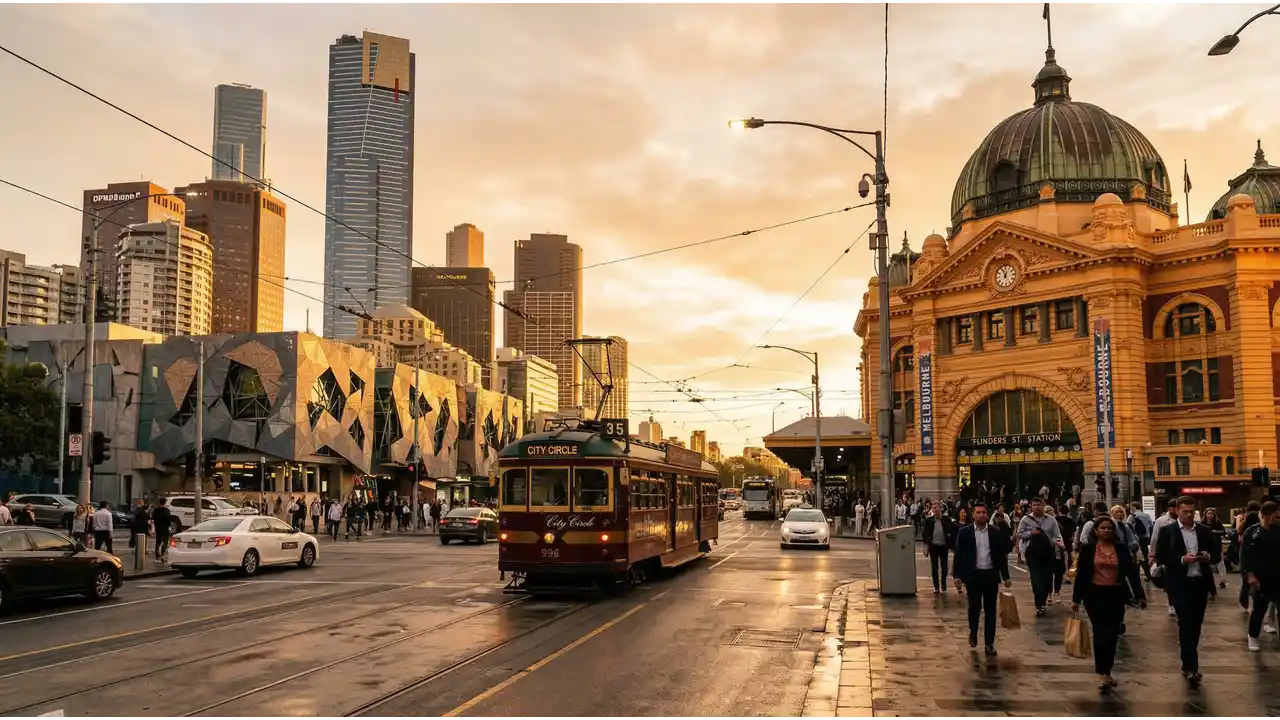
Sydney is Australia's largest city, spread across beaches, harbor areas, and inland suburbs. The climate is subtropical, warm year-round with mild winters. Around 5.3 million people live here, a mix of Australian-born residents, long-term migrants, and expats drawn by work and lifestyle. Daily life centers on outdoor activities, cafe culture, and long commutes from affordable outer suburbs into the city center. The pace is relaxed compared to Northern Hemisphere cities, but housing costs reflect Sydney's status as a global financial hub. Most residents rely on cars or public transit (trains, buses, ferries) to move around. Work-life balance and beach proximity matter more than maximum wages.
💡 Local Insights
Sydney · 2026
Sydney's cost of living sits at $3,050/month for a moderate lifestyle, driven primarily by housing. Rent around $1,709/month buys a one-bedroom apartment in middle-ring suburbs like Marrickville, Enmore, or Coogee. Inner-city areas (Paddington, Surry Hills, Barangaroo) cost significantly more; outer suburbs (Parramatta, Penrith, Manly) offer lower rents but longer commutes. Groceries run about $433/month for a single person shopping at major chains like Coles or Woolworths. Local produce is cheaper than imported goods. Eating out is expensive: lunch at a casual cafe costs $15-20, dinner at a mid-range restaurant $25-35 per person. Transport is manageable if you use public transit (Opal card around $50/week) rather than driving; petrol and car registration push costs up significantly. Expats often pay slightly more for furnished rentals and English-language services, but local pricing for basics applies universally. The gap between budget ($1,830/month) and comfortable ($4,728/month) reflects housing choice and social frequency more than hidden costs.
Frequently Asked Questions
How much does it cost to live in Sydney per month?
A moderate lifestyle in Sydney costs $3,050/month. This breaks down to housing at $1,709/month and groceries at $433/month, with the remainder covering transport, utilities, dining out, and entertainment. A tight budget costs around $1,830/month (shared housing, minimal social spending, no car). A comfortable lifestyle allowing regular dining out, travel, and flexible housing choices runs $4,728/month. Most costs scale with your location choice and how much time you spend in the city center versus outer suburbs.
What is the average rent in Sydney?
Rent in Sydney averages $1,709/month for a one-bedroom apartment. In middle-ring suburbs (Marrickville, Enmore, Coogee, Newtown), expect $1,600-1,800/month. Inner-city areas like Paddington, Surry Hills, and Barangaroo run $2,000-2,800/month or higher. Outer suburbs (Parramatta, Penrith, Manly, Campbelltown) offer $1,300-1,600/month but require longer commutes. Shared housing (renting a room) costs $700-1,200/month depending on location. Furnished rentals for expats typically cost 10-20% more than unfurnished. Competition is fierce; many landlords request references and proof of income.
Is Sydney cheap to live in for expats?
Sydney is not cheap by global expat standards. Housing is the primary shock: $1,709/month for rent is high relative to comparable cities in Asia or North America outside major tech hubs. Expats on regional visas or sponsored work schemes often find it manageable because employers factor Sydney costs into salary offers. Those relocating on local wages or savings struggle more. The advantage is predictable costs, English-language services, reliable infrastructure, and no visa uncertainty once settled. Budget-conscious expats either live in outer suburbs with long commutes or share housing. Compared to London, San Francisco, or Singapore, Sydney rents are lower but higher than Melbourne or Brisbane.
How much does food cost per month in Sydney?
Groceries for one person average $433/month at major supermarkets (Coles, Woolworths, Aldi). Specific prices: milk $1.50/liter, bread $3-4/loaf, chicken breast $12-15/kg, eggs $6/dozen, cheese $8-12/100g, rice $1.50/kg. Weekly shop for basic meals runs $80-120. Eating out is expensive: coffee $5-6, lunch sandwich $12-15, cafe lunch $15-20, casual dinner $25-35/person, fine dining $60-100+/person. Farmers markets in suburbs like Glebe or Marrickville offer cheaper produce. International groceries cost more. Most expats spend $600-800/month on all food combined (groceries plus occasional dining out).
What salary do you need to live comfortably in Sydney?
A comfortable lifestyle costs $4,728/month, suggesting a gross annual salary of roughly $65,000-75,000 AUD (accounting for tax). This allows for a one-bedroom apartment in a good inner-ring suburb, regular dining out, social activities, and occasional travel. Someone earning $80,000-100,000 AUD has genuine financial breathing room and can save. Below $50,000 AUD annual income, you'll need roommates or outer-suburb living. Couples combining incomes find Sydney more sustainable. Professional expats on sponsored visas typically earn $70,000-120,000+ AUD, making the moderate budget comfortable and the comfortable tier achievable without hardship.
How does the cost of living in Sydney compare to other places?
Sydney at $3,050 per month for a moderate lifestyle sits squarely in the middle of Australia's major cities. Darwin runs $2,900 monthly, making it modestly cheaper, though housing costs there are only slightly lower at $1,476 versus Sydney's $1,709. Across the Tasman, Auckland is noticeably more affordable at $2,325 per month, with housing at $1,238. If you're comparing to Southeast Asia, Singapore is substantially pricier at $4,125 monthly, with particularly steep housing at $2,649. Sydney's costs reflect its status as Australia's largest city and most expensive domestic option, though it remains well below global financial hubs. For most expats and remote workers, Sydney's expense is offset by employment availability and the city's amenities, but the housing component will likely be your biggest budget concern.
Yes, but with real constraints. The budget tier of $1,830/month requires shared housing ($700-900/month rent), minimal socializing, no car, public transit only, groceries only (no regular dining out), and no travel. A single person can manage this through strategic choices: a room in Marrickville, Newtown, or Penrith; cooking at home almost entirely; using the Opal transit card; and finding free or cheap entertainment (beaches, parks, community events). You cannot afford emergencies, frequent restaurants, or a car. This budget works for students with part-time income or early-career workers for 1-2 years, but long-term it's restrictive. Most people living below $2,300/month report stress around unexpected costs.