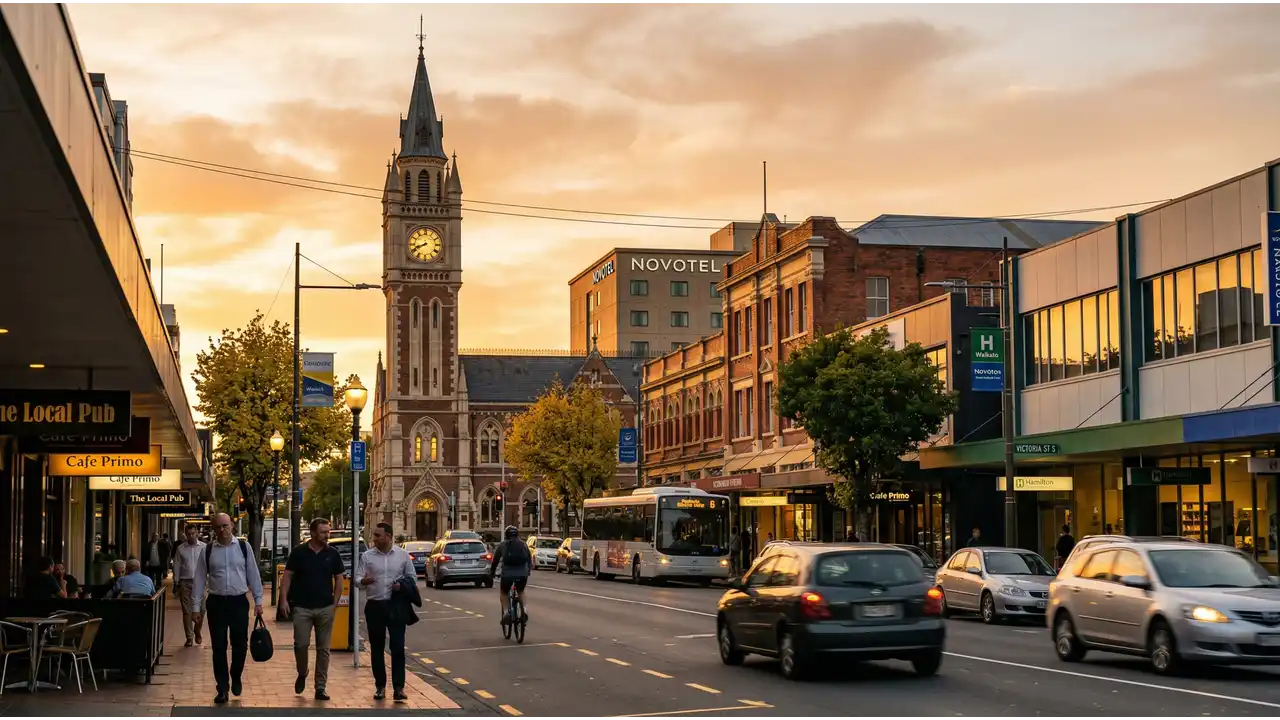
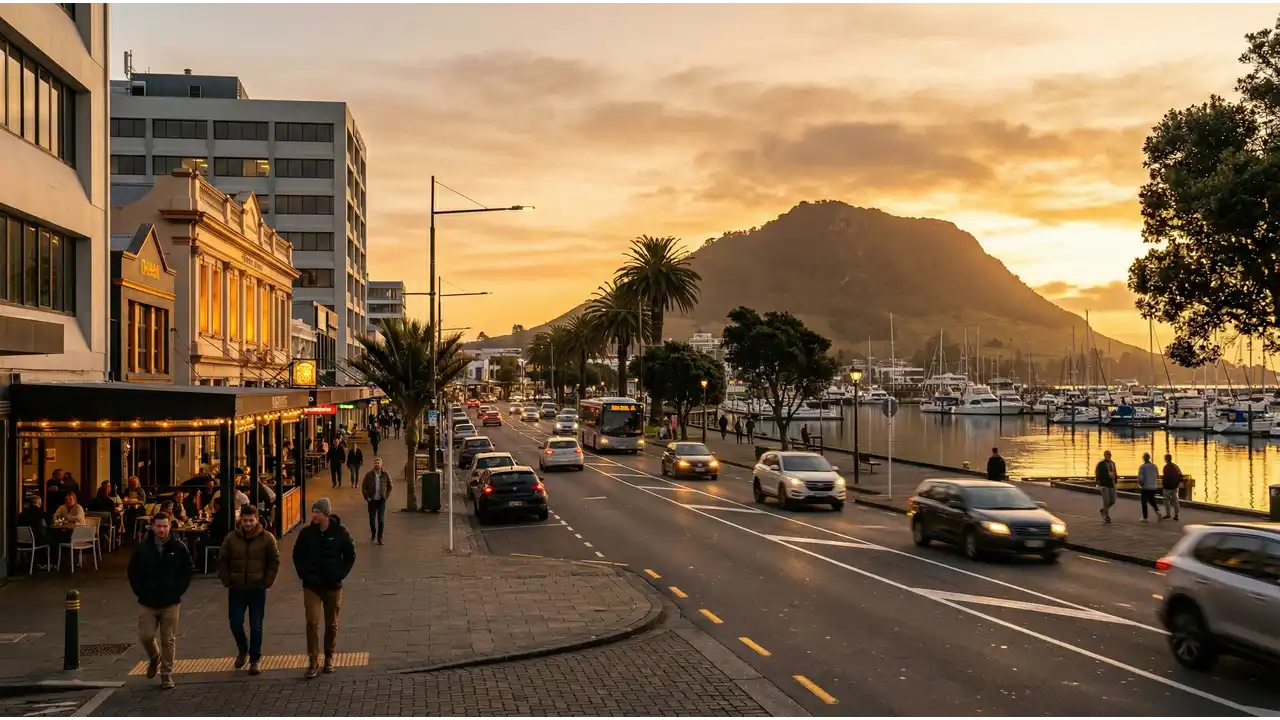
Auckland is New Zealand's largest metropolitan area with about 1.6 million residents. It sits on an isthmus between two harbors on the North Island, with a temperate oceanic climate, mild winters, and warm summers. The city is a working port, financial hub, and transport hub for the country. Daily life involves a mix of suburban neighborhoods, inner-city apartment living, and waterfront communities. Most residents rely on cars, though the city has buses and a growing light rail network. The pace is slower than major US or Australian cities but faster than rural New Zealand. Expat communities from Asia, Europe, and the Pacific Islands are substantial.
💡 Local Insights
Auckland · 2026
Auckland's cost of living reflects its position as New Zealand's economic center, but it remains cheaper than Sydney or Melbourne. Housing is the dominant expense at $1,238/month and represents the tightest cost control point. Rental prices vary sharply by location: inner suburbs like Ponsonby or Grey Lynn range $1,400-$1,800 for a one-bedroom, while outer suburbs like Henderson or Manurewa drop to $1,000-$1,300. Groceries at $351/month are moderately priced. Fresh produce at farmers markets is cheaper than supermarkets (Countdown, Pakn Save, New World dominate). Imported goods cost significantly more than in the US or Australia. Transport options include AT (Auckland Transport) buses, limited train service, and ferries. Most people budget for a car. Expats often find housing the surprise cost; locals accustomed to NZ prices see it as normal. Eating out ranges from $15 for casual meals to $80+ for fine dining. Childcare and private schooling add substantially if relevant.
Frequently Asked Questions
How much does it cost to live in Auckland per month?
A moderate lifestyle costs $2,325/month. This breaks down to $1,238 for housing (rent, utilities, maintenance), $351 for groceries, $200-$300 for transport (fuel, maintenance, or public transit passes), and $400-$500 for dining out, entertainment, and personal goods. Those on a tight budget can live on $1,395/month by choosing shared housing or distant suburbs and cooking all meals. A comfortable lifestyle runs $3,604/month, allowing larger accommodation, frequent dining out, and more discretionary spending. Individual circumstances vary widely based on household size, neighborhood choice, and lifestyle preferences.
What is the average rent in Auckland?
Average rent is $1,238/month. In central suburbs like Ponsonby, Grey Lynn, or Karangahape, one-bedroom apartments rent for $1,400-$1,800. Two-bedroom units in the same areas run $1,800-$2,400. Outer suburbs like Henderson, Manurewa, Papakura, or Flatbush offer one-bedroom rentals at $1,000-$1,300 and two-bedroom homes at $1,300-$1,800. The North Shore (Takapuna, Devonport) and east suburbs (Parnell, Remuera) are pricier at $1,600-$2,200 for one-bedroom. Shared housing can reduce individual costs to $700-$900. Rates, water, and electricity add $200-$300 monthly for a standalone house.
Is Auckland cheap to live in for expats?
Auckland is moderately priced compared to Sydney, Melbourne, or major US cities, but expensive relative to most Southeast Asian capitals. For expats from Australia or the US, housing costs will feel familiar or slightly lower. For those from the UK or Europe, Auckland is comparable to London or Berlin outer suburbs. Visa holders on skilled migrant visas often earn local NZ salaries, which can strain budgets. The reality: expats living on overseas pensions or remote US/UK salaries find Auckland very affordable. Those earning local NZ wages (median around $65,000) find housing tight. Childcare, private schooling, and imported goods cost significantly more than in home countries. Supermarket shopping habits require budget adjustment.
How much does food cost per month in Auckland?
Groceries average $351/month for one person eating at home. A week of basics at Countdown or Pakn Save: milk $3, bread $2.50, chicken $12/kg, beef $18/kg, eggs $5 per dozen, cheese $8/kg, apples $4/kg, carrots $1.50/kg. Buying at farmers markets (Otara Market, Avondale Market) saves 20-30 percent on produce. Eating out costs $15-$25 for casual meals, $35-$50 for mid-range restaurants, $80+ for fine dining. Supermarket wine ranges $8-$20. Imported foods from the US, UK, or Asia cost 40-60 percent more than local equivalents. Cooking at home and buying seasonal produce keeps monthly food budgets near the $351 figure.
What salary do you need to live comfortably in Auckland?
A comfortable lifestyle requires $3,604/month, suggesting a gross annual income around $50,000-$55,000 NZD to account for taxes and savings. This allows mid-range housing ($1,500-$1,800), regular dining out, hobbies, travel, and a modest emergency fund. For a household of two working adults, combined gross income of $90,000-$110,000 NZD is realistic. Those earning below $45,000 NZD can survive but face tight housing choices and limited discretionary spending. Auckland's median household income is around $100,000 NZD. Expats on international salaries pegged to USD or GBP often find themselves well above comfortable thresholds. Cost of living increases with children, private schooling, or inner-city location preferences.
How does the cost of living in Auckland compare to other places?
Auckland sits in the middle tier globally. A moderate lifestyle costs $2,325 per month, with housing at $1,238 per month. This places it slightly cheaper than Adelaide, where a moderate lifestyle runs $2,525 monthly and housing $1,312. Darwin is notably more expensive at $2,900 for a moderate lifestyle and $1,476 for housing. If you're relocating from Western Europe, Auckland will feel pricier. Vilnius costs just $1,625 monthly for a moderate lifestyle with housing at $746. The gap widens most in housing: Auckland's $1,238 reflects New Zealand's tight rental and property markets, particularly acute for a city of its size. Against comparable developed-world cities, Auckland offers reasonable value, though it's far from budget-friendly by global standards.
Yes, but with real constraints. This is the budget tier. Housing must stay around $900-$1,050 (shared house, distant suburb, or bedsit). Groceries at $351 means cooking all meals at home with minimal waste. Transport drops to $150-$200 (public transit only or one cheap car). Entertainment and dining out shrink to $50-$100 monthly. This budget cuts healthcare costs (rely on public system), assumes no debt, no car ownership beyond shared use, and disciplined spending. It is livable for single people or couples but very difficult for families. Emergencies (medical, car repairs) create real hardship at this level. Most people on $1,395/month qualify for government assistance in New Zealand. It requires intentional frugality and neighborhood choice favoring outer suburbs or room rentals over standalone housing.