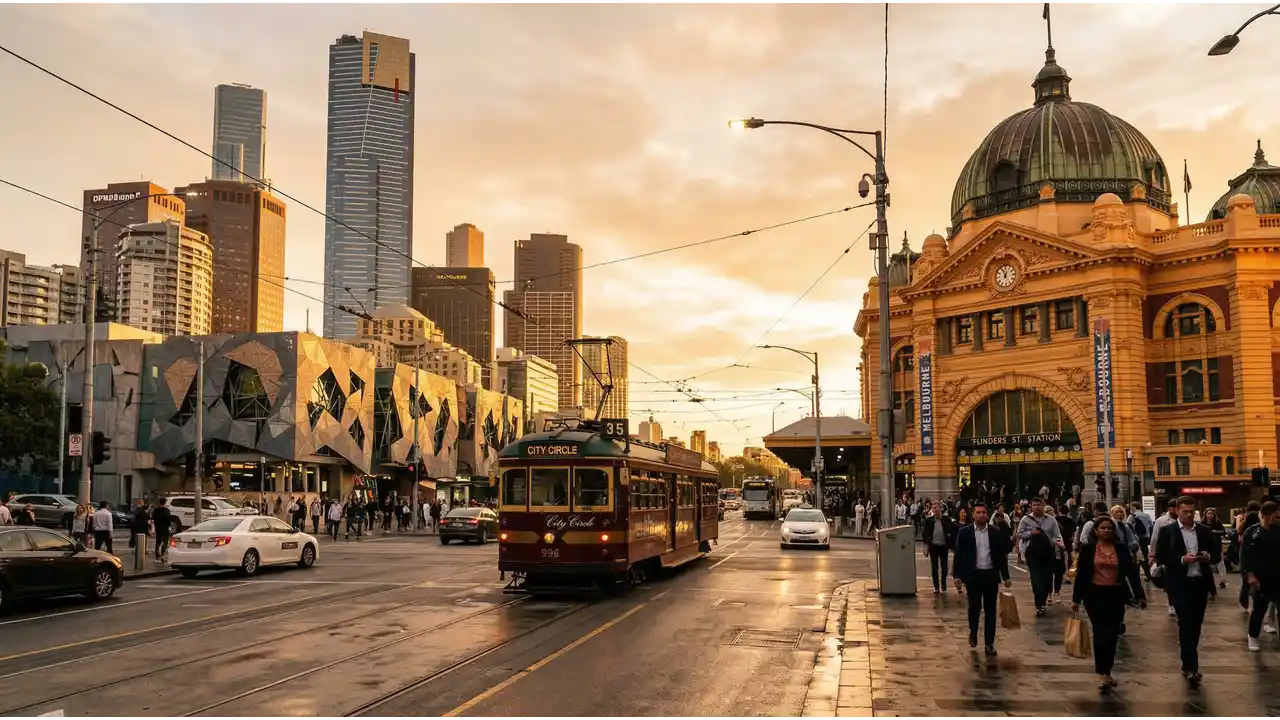
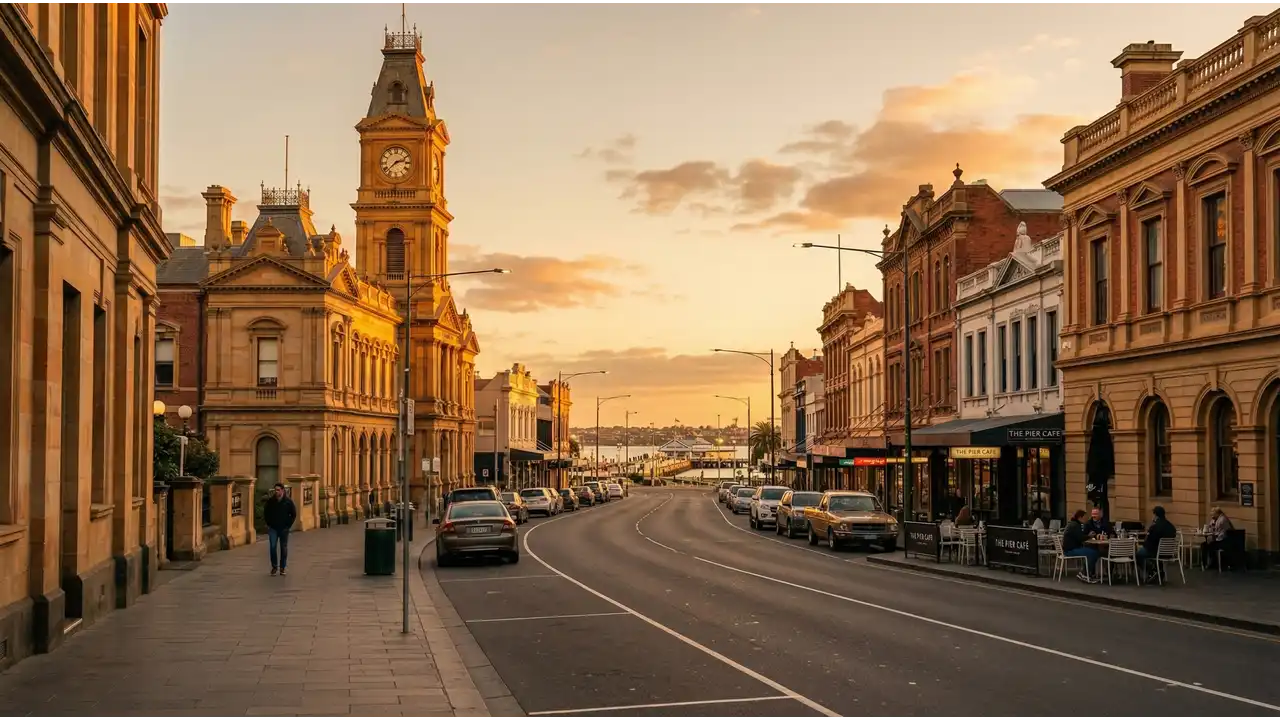
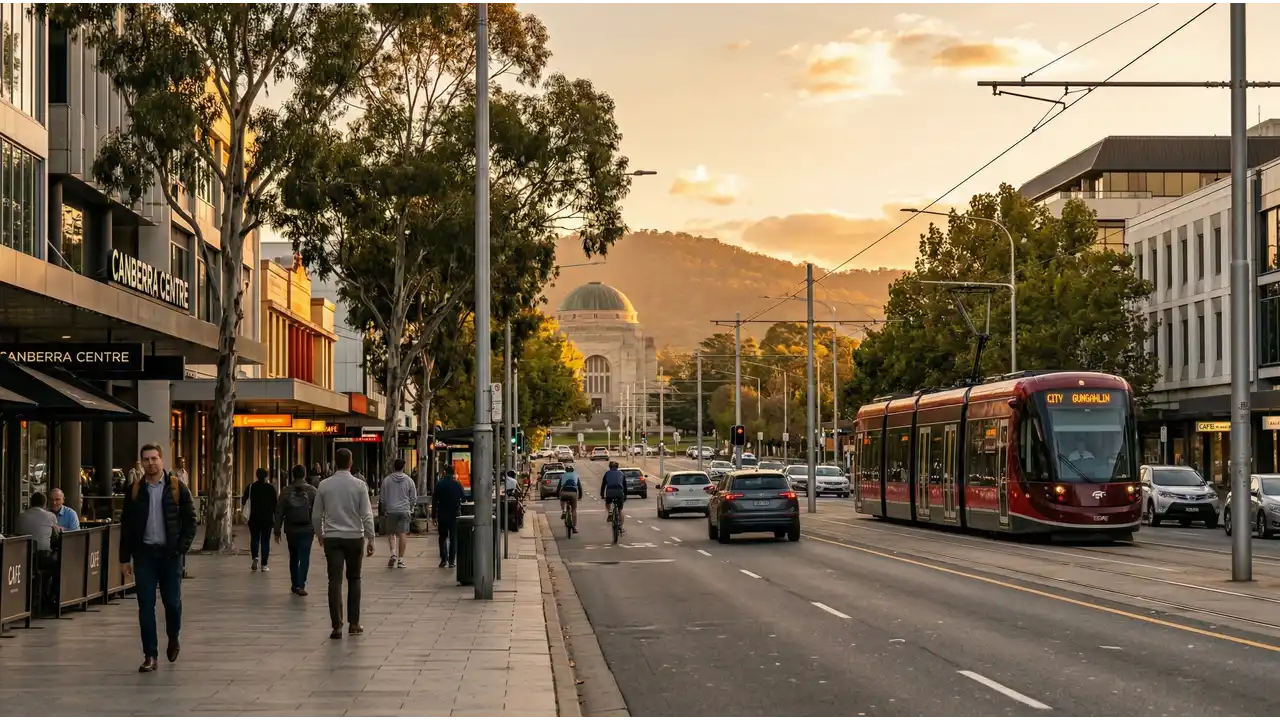
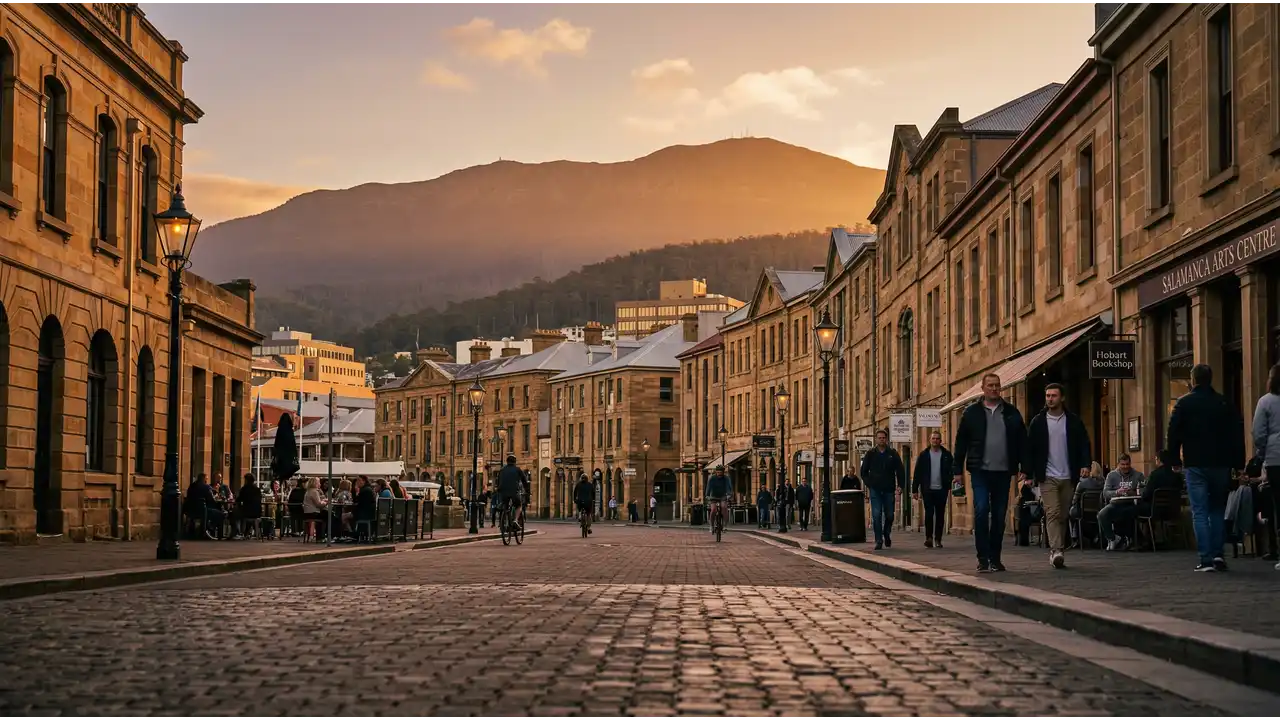
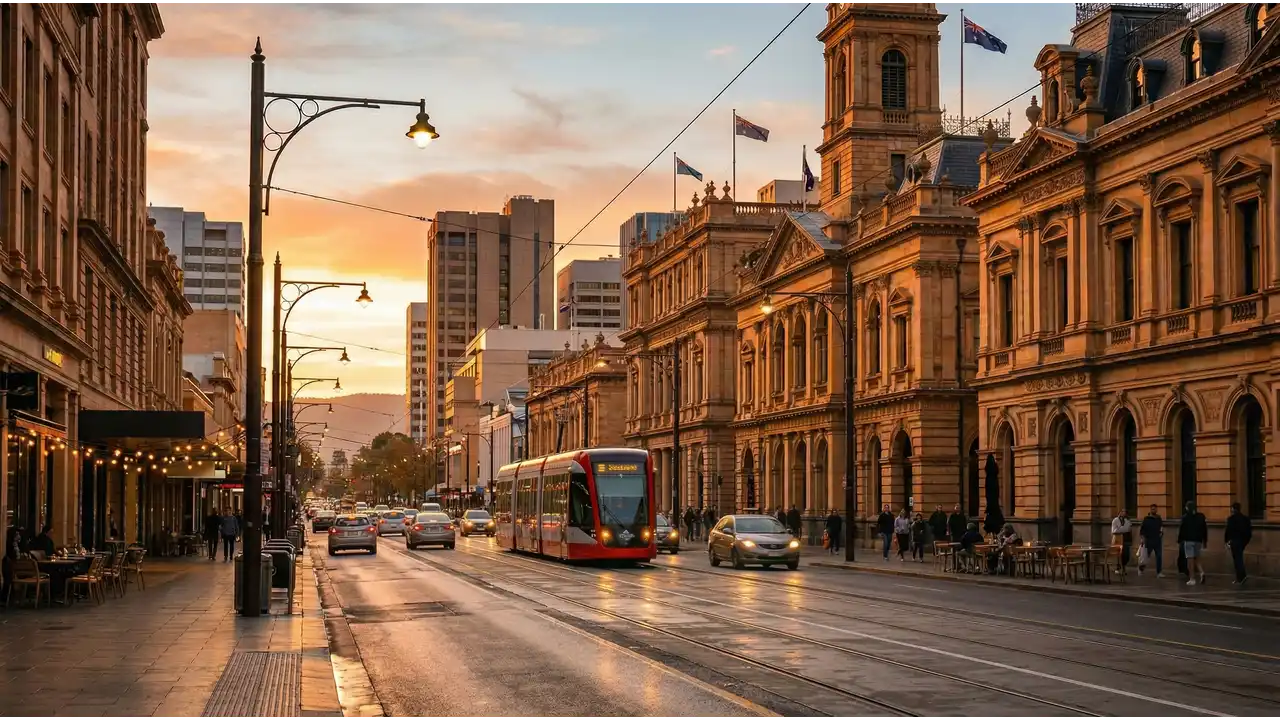
Melbourne is Australia's second-largest city, known for its café culture, street art, and sports obsession. The climate is temperate with four distinct seasons, rarely extreme. The population is highly multicultural, shaped by waves of migration from Europe, Asia, and the Middle East. Daily life revolves around inner-city neighborhoods (often called suburbs), public transport, and a strong focus on food and coffee. Most residents are renters rather than owners. The city sprawls significantly, so your neighborhood choice determines your commute and lifestyle quality substantially.
💡 Local Insights
Melbourne · 2026
Housing dominates your budget at $1,449/month and reflects Melbourne's competitive rental market. Inner suburbs like Fitzroy, Brunswick, and Carlton rent from $1,300 to $1,600 for a one-bedroom apartment, while outer suburbs (Coburg, Footscray) drop to $1,100 to $1,300. Groceries average $412/month for a single person buying at supermarkets like Coles or Woolworths. Dining out is a major spending category, with casual meals running $15 to $25, and coffee at $4 to $5. Transport costs depend on your zone: a monthly Myki pass ranges from $45 (zone 1-2) to $80 (zone 1-3), though many expats find a car necessary depending on location. The biggest cost driver for expats is often housing, as rental demand from international students and skilled workers inflates prices. Eating groceries rather than restaurants, living near public transport, and choosing outer suburbs over inner-city areas are the most effective ways to reduce spending.
Frequently Asked Questions
How much does it cost to live in Melbourne per month?
A moderate lifestyle in Melbourne costs $2,725/month. This breaks down roughly as: housing $1,449/month, food (groceries) $412/month, utilities and transport around $300/month, and discretionary spending (dining, entertainment, personal care) around $500 to $600/month. A tighter budget is possible at $1,635/month, though this requires shared housing and minimal eating out. A comfortable lifestyle runs $4,224/month, allowing for better neighborhoods, regular dining, and more leisure spending. Your actual costs will vary based on neighborhood, car ownership, and eating habits.
What is the average rent in Melbourne?
Average rent is $1,449/month for a one-bedroom apartment. Inner suburbs like Fitzroy, Carlton, and Brunswick typically rent for $1,400 to $1,600 per month. Mid-ring suburbs (South Yarra, Northcote) range from $1,350 to $1,500. Outer suburbs (Coburg, Footscray, Reservoir) are cheaper at $1,100 to $1,300. House shares drop to $500 to $800/month per room. The CBD is pricier, starting at $1,600. Prices have risen significantly in recent years, driven by strong rental demand from international students and skilled workers. Most leases are 12 months, and landlords typically require proof of income and references.
Is Melbourne cheap to live in for expats?
Melbourne is not cheap for expats. Housing at $1,449/month is substantial, and inner-city neighborhoods where many expats cluster push that higher. However, it's more affordable than Sydney, London, or Toronto. The main advantage for expats is that most expenses are in Australian dollars, so salary and cost align if you're earning locally. Expats on international salaries often find it expensive. Groceries and public transport are reasonably priced, but dining out, entertainment, and car ownership inflate budgets quickly. Your cost experience depends heavily on whether you're sharing accommodation, which neighborhood you choose, and if you're earning locally or on a fixed overseas income.
How much does food cost per month in Melbourne?
Groceries average $412/month for a single person buying staples at major supermarkets like Coles or Woolworths. A chicken breast runs $6 to $8/kg, milk around $1.50/liter, bread $2.50 to $4, and eggs about $4 to $5/dozen. Eating out is more expensive: a casual meal costs $15 to $25, coffee $4 to $5, and a mid-range dinner $30 to $50. Melbourne's café culture means many people spend significantly on coffee and brunch. International grocers (Asian, Middle Eastern, European) in suburbs like Brunswick and Footscray offer cheaper produce and specialty items. Farmers markets in suburbs like Collingwood also provide alternatives to supermarket pricing.
What salary do you need to live comfortably in Melbourne?
A comfortable lifestyle requires $4,224/month, or roughly $50,700/year gross (accounting for Australian taxes). This covers housing at $1,449/month, food and dining at $700 to $800/month, transport and utilities at $400/month, and discretionary spending of $800 to $1,000/month for entertainment, travel, and personal care. If you're renting alone in a desirable neighborhood, working with a lower salary means cutting dining out, entertainment, or living in a shared house. Dual-income households have more flexibility. Salaries for skilled workers in tech, healthcare, and finance typically start at $55,000 to $65,000, which allows for comfortable living or housing upgrades.
How does the cost of living in Melbourne compare to other places?
Melbourne sits in the middle of the Oceania cost spectrum. A moderate lifestyle in Melbourne costs $2,725 per month, with housing at $1,449 per month.
Brisbane runs slightly higher at $2,825 monthly overall, though Brisbane's housing specifically costs $1,641 per month. Christchurch is notably cheaper, where a moderate lifestyle runs $2,050 per month and Christchurch's housing costs $1,050 per month. If you're comparing to further afield, Nassau is substantially more expensive at $3,625 per month for a moderate lifestyle, with Nassau's housing at $2,058 per month.
Within Australia and New Zealand, Melbourne offers middle-ground pricing. You'll spend less than Brisbane but more than Christchurch. For most expats and travelers from developed economies, Melbourne remains accessible while offering genuine city amenities and a strong job market.
Yes, but with careful choices. At $1,635/month, you'd allocate roughly $1,449 to housing (requiring a house share or outer-suburb studio), leaving $186 for food, transport, utilities, and everything else. This means groceries are tight at under $250/month, requiring budget supermarket shopping and minimal eating out. Public transport on the Myki pass costs $45 to $80/month, leaving almost nothing for discretionary spending. A phone plan, coffee, and unexpected expenses become stressful. This budget works if you're in a house share in an outer suburb like Footscray, shopping carefully, cooking at home, and using public transport. It requires discipline and leaves little room for emergencies or leisure spending.