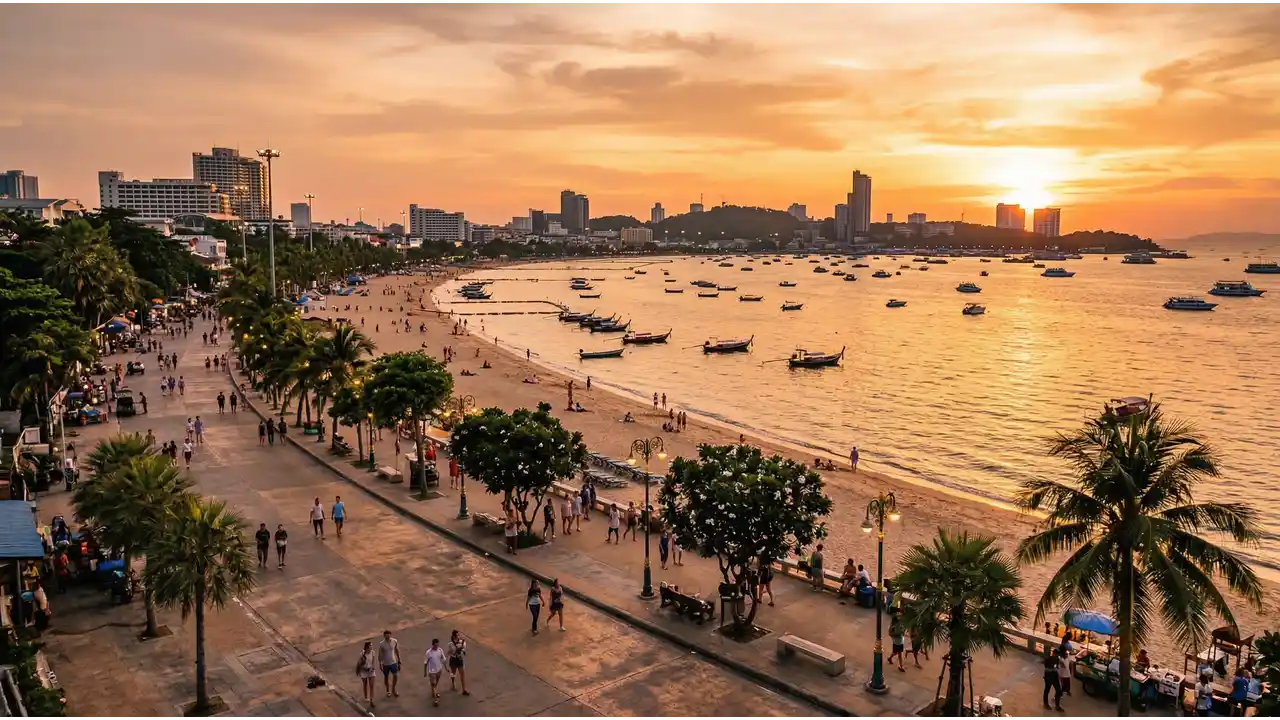
Chiang Mai is Thailand's second-largest city, located in the mountainous north about 700 kilometers from Bangkok. It functions as a working city for Thai professionals and students, not just a tourist destination. The pace is slower than the capital. Summers are hot and dry; the cool season runs November through February. Traffic is heavy during peak hours. Old City (Nimmanhaemin) has most expat services, restaurants, and coworking spaces. Warorot and surrounding neighborhoods are cheaper and more local. Most expats live in condominiums or rented houses in central zones.
💡 Local Insights
Chiang Mai · 2026
Chiang Mai's economy runs on three tracks: local Thai wages, tourism spending, and expat and digital nomad consumption. Housing at $410 per month typically means a one-bedroom condominium in central zones like Nimmanhaemin or a smaller house with a yard in peripheral neighborhoods. Utilities (electricity, water, internet) add $40-60 monthly. Local Thai grocery staples cost far less than imported goods. A month of local produce, eggs, rice, and Thai proteins runs around $182 at neighborhood markets. Eating street food or at local restaurants costs $2-5 per meal. Imported Western groceries at 7-Eleven or chains cost double or triple. Transport is cheap: taxis under $2 across town, songthaew shared trucks under $0.50, motorcycles rental $50-100 per month. Your actual spend depends heavily on where you shop and eat. Expats who eat Western food and import preferences will spend more; those who adopt Thai markets and local dining stay well under budget.
Frequently Asked Questions
How much does it cost to live in Chiang Mai per month?
A moderate lifestyle costs around $975 per month. That breaks down to housing at $410, groceries at $182, utilities around $50, local transport $30, and dining, entertainment, and personal care another $300. A tighter budget of $585 per month is possible if you rent a small house outside the center, eat almost entirely Thai food, and skip imported goods. A comfortable lifestyle with more eating out, travel, and Western amenities costs closer to $1,511 per month.
What is the average rent in Chiang Mai?
Monthly rent averages around $410. A one-bedroom condominium in Nimmanhaemin or Old City typically runs $350-500. Smaller studios or shared housing in the same zones cost $250-350. Houses with yards in less central areas like Hangdong or Suthep run $300-450. Furnished serviced apartments aimed at expats cost $450-650. Prices near the Night Bazaar and tourist areas are higher. Unfurnished local rentals are slightly cheaper but less common for short-term expat stays. Most housing is in Thai baht; conversion varies with exchange rates.
Is Chiang Mai cheap to live in for expats?
Yes, relative to North America or Western Europe, but the savings depend on your habits. Housing and groceries are genuinely low. At $410 for rent and $182 for groceries, a single person or couple with moderate spending can live very well. The cost advantage shrinks if you gravitate toward expat restaurants, imported Western products, and gym memberships targeting foreigners. Healthcare is affordable; a doctor visit runs $15-30 at private clinics, hospitals $8-15 for public facilities. Visa costs and occasional travel add expenses. For remote workers earning in dollars or euros, Chiang Mai offers strong purchasing power.
How much does food cost per month in Chiang Mai?
Groceries for a month average $182 if you shop at local markets and supermarkets. That covers rice, eggs, vegetables, chicken, pork, fish, canned goods, and dry goods. A kilogram of chicken costs $2-3, eggs $0.10 each, local vegetables $0.50-1.50 per kilogram, rice $0.30 per kilogram. Eating out is cheaper: a bowl of khao soi (noodle curry) costs $1-2, pad thai $1.50-2.50, a full meal at a local restaurant $3-5. Imported Western foods at supermarkets cost 2-3 times more than local equivalents. Coffee at tourist cafes runs $2-4; local Thai coffee from a street vendor $0.50.
What salary do you need to live comfortably in Chiang Mai?
A comfortable lifestyle costs around $1,511 per month. That includes $410 for housing, $182 for groceries, regular dining out at mid-range restaurants, gym membership, occasional massage or spa, monthly entertainment, and travel within Thailand. At this budget level, you can afford a larger apartment, eat out several times weekly, maintain hobbies, and take weekend trips. For remote workers, a stable income of $1,500-2,000 per month (after taxes in your home country) provides a comfortable buffer. This assumes you're not supporting dependents or handling major medical costs.
How does the cost of living in Chiang Mai compare to other places?
Chiang Mai runs $975 per month for a moderate lifestyle, with housing at $410 per month. That makes it genuinely affordable compared to most Southeast Asian cities.
For context, Tabriz costs $650 monthly, so Chiang Mai is noticeably pricier. Bursa comes in at $1,050 per month, making it roughly equivalent in overall expense. If you're considering Yerevan at $1,350 per month, Chiang Mai would feel like a bargain by comparison.
The real advantage is housing. Chiang Mai's $410 monthly rent is reasonable for a city its size. You'll find furnished apartments in decent neighborhoods, reliable internet, and functional utilities at that price point. Compared to Yerevan's $644 in housing costs alone, Chiang Mai offers substantially more space and comfort for your money.
Yes, but with tight choices. That budget means a small house or studio outside central areas ($250-300), local market groceries ($150-170), minimal eating out, no gym or paid services, and public transport only. You'd skip imports, coffee shops, and tourism. It requires comfort with Thai life: speaking some Thai, cooking at home, using local markets, and relying on government healthcare. This budget works if you're disciplined and have an emergency fund. Many long-term expats and digital nomads do this by living in cheaper neighborhoods like Hangdong or Doi Saket, though you'll feel the constraints on leisure and dining.