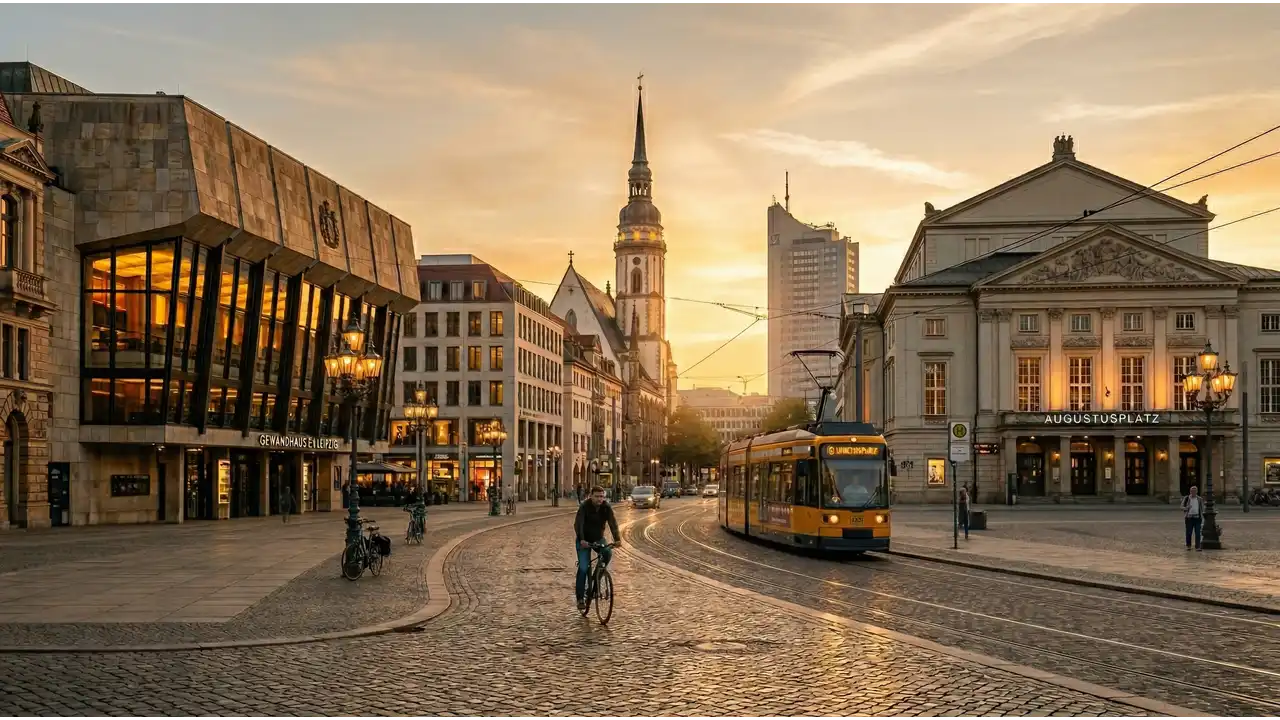
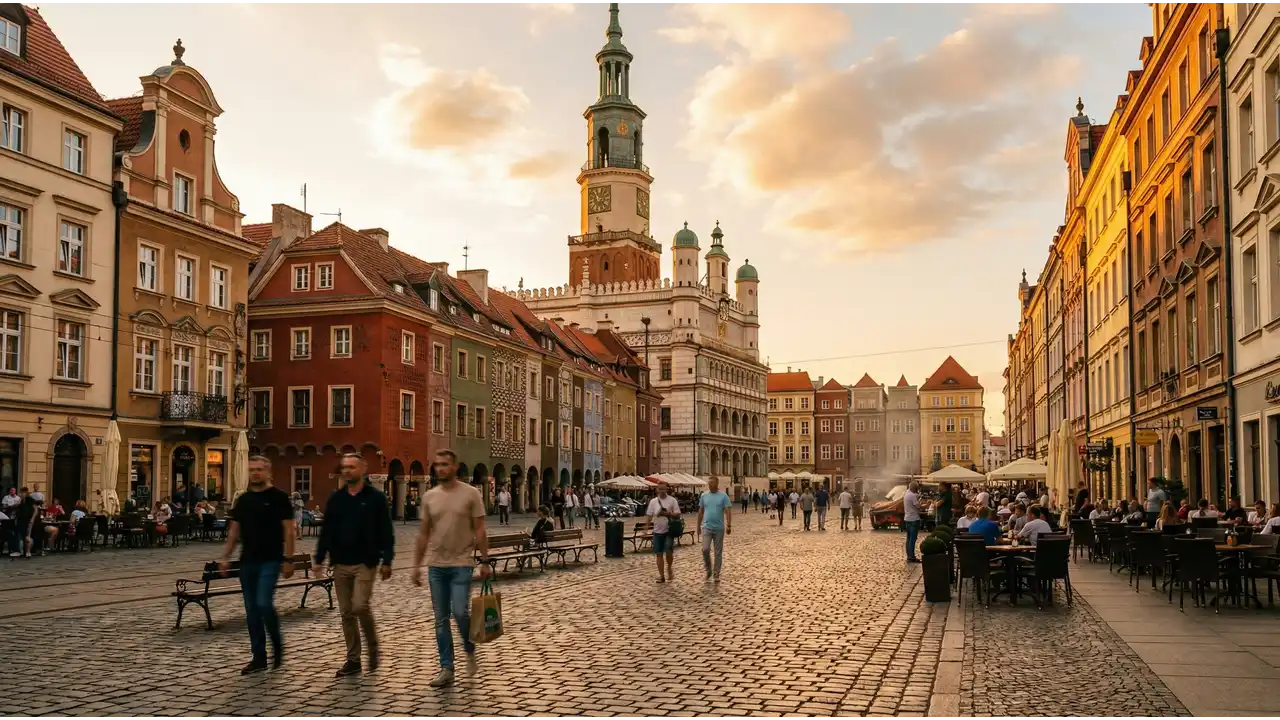
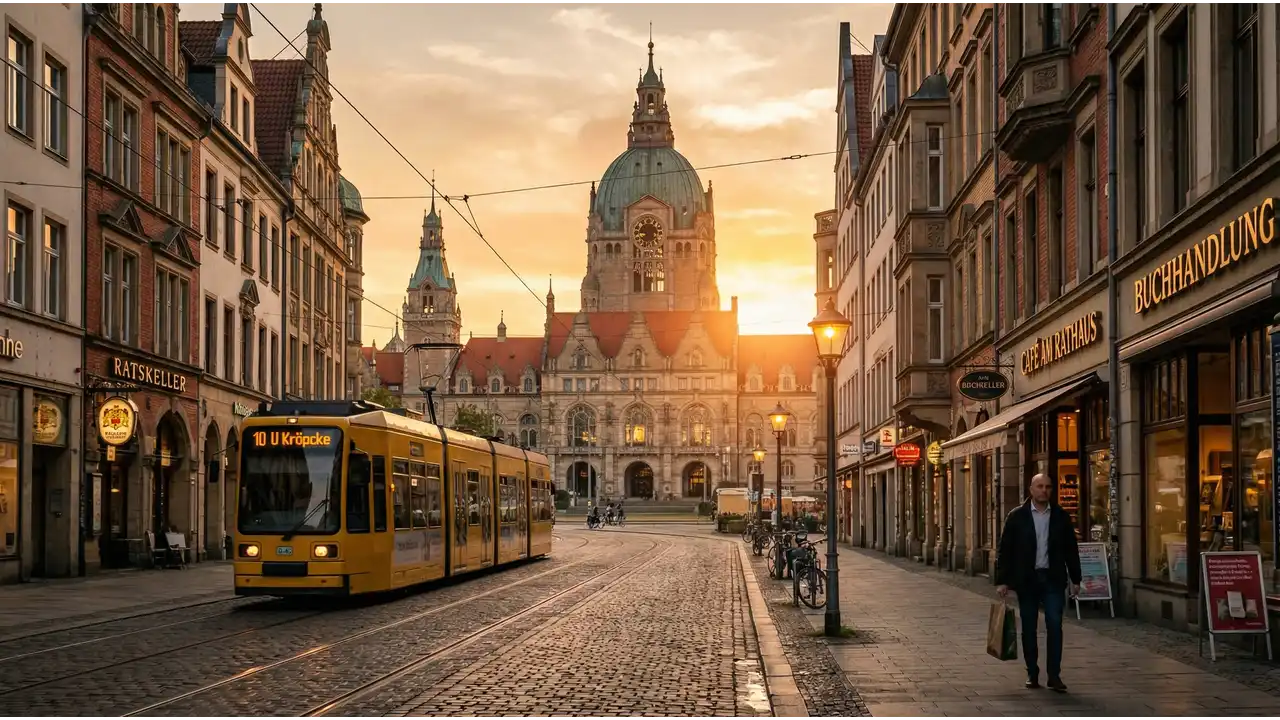
Berlin is a sprawling city of 3.6 million in eastern Germany, built across flat terrain bisected by the Spree River. Former divided capital, now seat of federal government. Winters are cold (near freezing, frequent rain and occasional snow). Summers mild, around 25 degrees Celsius. Population is mixed: longtime Berliners, German nationals, and expat communities from across Europe, the Middle East, and Asia. Daily life centers on cycling, public transit, and neighborhood cafes. Working culture leans toward startups and creative industries alongside traditional office work. Rents have risen sharply in recent years but remain lower than western European capitals.
💡 Local Insights
Berlin · 2026
Berlin costs less than Munich, Hamburg, or Cologne, and substantially less than Paris or London, but prices have climbed steadily. Housing at $1,201/month reflects a mix: outer neighborhoods (Tempelhof, Wedding, Neukölln) run $800 to $1,100 for one-bedroom apartments, while central areas (Mitte, Charlottenburg, Friedrichshain) reach $1,400 to $1,800 for comparable space. Groceries cost $379/month because supermarkets like Aldi, Lidl, and Penny offer cheap staples; dining out costs more. A beer at a bar runs $4 to $6, a restaurant meal $12 to $20. Public transport (U-Bahn, S-Bahn, buses) is extensive and reliable; a monthly pass costs around $110. Expats often overpay initially by choosing central, English-friendly neighborhoods; locals live further out and commute 20-40 minutes. Utility costs are moderate but rising due to energy prices. Childcare and healthcare are affordable by Western standards.
Frequently Asked Questions
How much does it cost to live in Berlin per month?
A moderate lifestyle costs $2,375/month. This breaks down roughly as: housing $1,201/month, groceries $379/month, transport around $110/month, utilities $120-150/month, and discretionary spending (dining out, entertainment, clothing) making up the remainder. A tighter budget runs $1,425/month (cutting dining out, choosing cheaper neighborhoods). A comfortable lifestyle with dining freedom and larger housing costs $3,681/month. Actual spending depends heavily on neighborhood choice and lifestyle. Many expats overspend initially by staying central; relocating outward saves $300-600/month in rent alone.
What is the average rent in Berlin?
Average rent is $1,201/month for a moderate lifestyle. This reflects a broad range across neighborhoods. Outer areas like Tempelhof, Wedding, Neukölln, and Köpenick run $800 to $1,100/month for a one-bedroom apartment. Central neighborhoods (Mitte, Kreuzberg, Friedrichshain, Charlottenburg) run $1,300 to $1,800/month for similar space. Two-bedroom apartments in outer areas cost $1,100 to $1,400/month; central two-bedrooms reach $1,800 to $2,400/month. Rents have risen roughly 8-12 percent annually in recent years, though caps on rent increases apply to existing contracts. Furnished short-term rentals cost 30-50 percent more. Deposits equal two to three months' rent.
Is Berlin cheap to live in for expats?
Berlin is cheaper than most Western European capitals but not as cheap as 5-10 years ago. Compared to London, Paris, or Zurich, it is genuinely affordable. Compared to Sofia, Prague, or Budapest, it is expensive. For North American expats, Berlin feels moderately priced. Housing drives the difference: you get a modern apartment in a real neighborhood for $1,201/month average, not $2,000+. Food and transport are inexpensive. The gap is lifestyle: expats who insist on central locations overpay; those who accept outer neighborhoods (10-15 min by transit) live comfortably on $2,000 to $2,500/month. Salary expectations matter: German salaries are often lower than comparable North American or UK roles, so affordability depends on income source.
How much does food cost per month in Berlin?
Groceries average $379/month for one person buying staples. A week of basics: bread $1-2, milk $1.50, eggs $3, chicken $6-8/kg, pasta $0.80, canned tomatoes $0.70, frozen vegetables $2-3. Budget supermarkets (Aldi, Lidl, Penny, Netto) are cheapest; mid-range chains (Edeka, Rewe) cost 15-20 percent more. Dining out is significantly higher: a casual lunch (sandwich, coffee, pastry) costs $7-10; a dinner entree at a mid-range restaurant $12-18. Weekly farmers markets in every neighborhood offer produce slightly cheaper than supermarkets. Organic groceries cost 30-50 percent more. Alcohol (beer, wine) from supermarkets is cheap ($1-3 per bottle). Restaurant-dependent living doubles or triples the food budget.
What salary do you need to live comfortably in Berlin?
A comfortable lifestyle costs $3,681/month, implying a gross salary around $55,000 to $60,000 annually to account for German income tax and social contributions (roughly 40 percent effective rate for middle incomes). This budget assumes renting a two-bedroom apartment in a good neighborhood ($1,400-1,600/month), frequent dining out, regular entertainment, travel, and personal care without counting every euro. For expats on international salaries or remote work, this is straightforward. For locals earning German wages, it requires dual income or freelance work. A single person can live well on $2,375/month (moderate lifestyle, roughly $35,000-40,000 gross salary equivalent), but comfort and flexibility improve significantly at the $3,681/month level.
How does the cost of living in Berlin compare to other places?
Berlin is genuinely affordable for a major European capital. A moderate lifestyle runs $2,375 per month, with housing at $1,201. That's noticeably cheaper than Dublin, where the same moderate lifestyle costs $3,175 and housing alone runs $1,902. Berlin edges out its German peer Cologne slightly, which runs $2,200 monthly with housing at $1,001. If you're willing to move south, Alicante costs $1,650 for a moderate lifestyle and $772 for housing, making it considerably less expensive. The real advantage of Berlin is that you're getting a major world city (nightlife, culture, job market, transit) at prices closer to a mid-sized European town. Your money stretches further on rent especially compared to other capitals, though everyday costs like food and transport are fairly standard for Western Europe.
Yes, but with real constraints. This budget tier allows rent around $800-900/month (outer neighborhoods like Tempelhof, Köpenick, or southern Neukölln), groceries $300-350/month (cooking almost all meals, shopping discount supermarkets), transport $110/month (transit pass), utilities $120/month. That leaves roughly $100/month for phone, internet, clothing, medical costs, and entertainment, which is tight. You cut dining out almost entirely, minimize drinking at bars, skip expensive hobbies. It works if you are young, solvent (can handle emergencies), comfortable in outer neighborhoods, and willing to cook. Many students and early-career expats do this successfully. It does not work long-term if you have dependents, health issues requiring expense, or need central location for work. The $2,375/month moderate budget allows real breathing room.