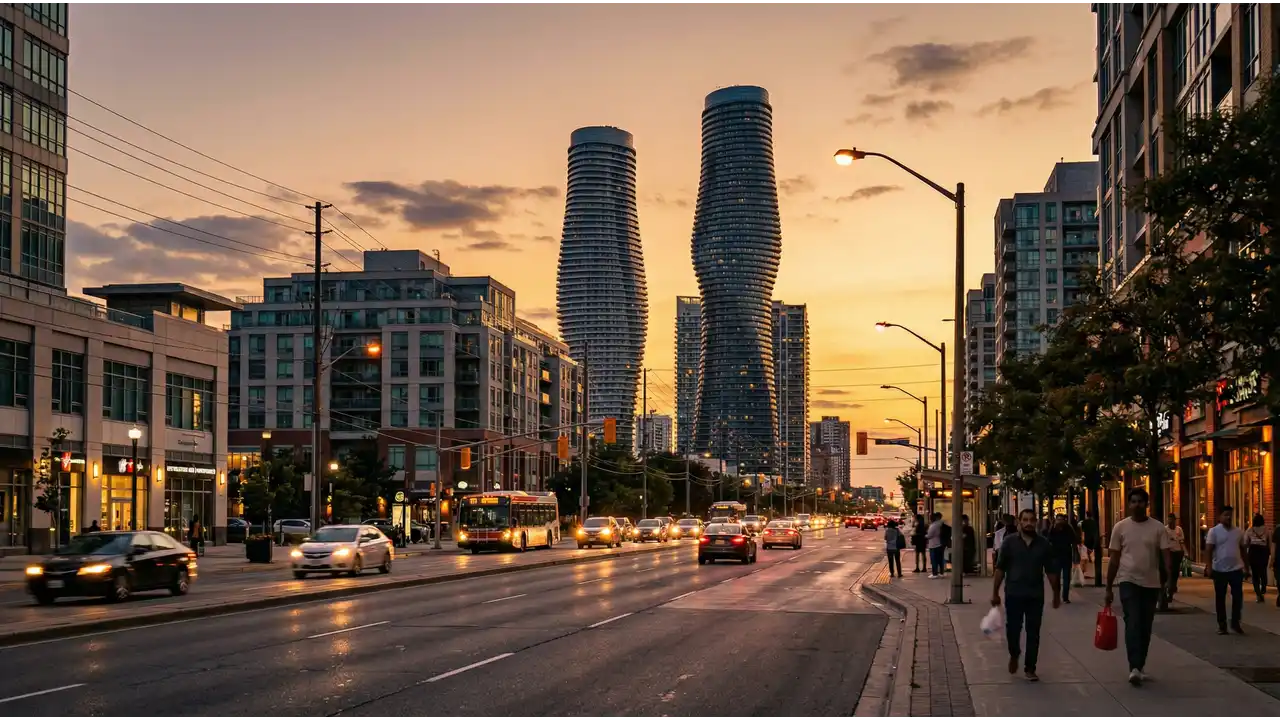
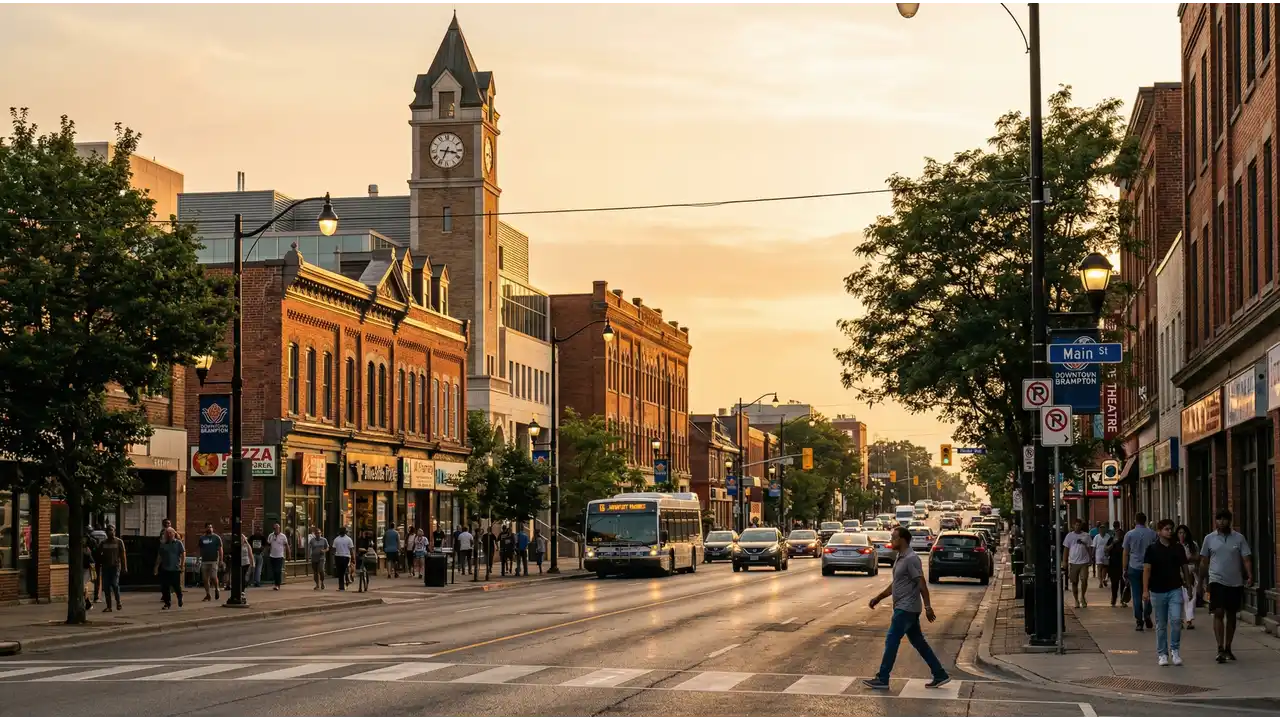
Toronto is Canada's largest city and a major economic hub with a population around 2.9 million in the metro area. Daily life centers on downtown cores like the Financial District, entertainment zones like King West, and residential neighborhoods spreading north and east. The city experiences four seasons with cold winters (below freezing December through February) and warm summers. Transit revolves around the TTC subway, streetcars, and buses. The population is diverse, with large South Asian, Chinese, Italian, and Caribbean communities. Most people commute by transit, car, or bike. The pace is faster than smaller Canadian cities but less intense than New York or Los Angeles.
💡 Local Insights
Toronto · 2026
Toronto's cost structure is driven primarily by housing scarcity and regulatory constraints on new supply. Rent for a one-bedroom apartment averages around $1,462 in moderate neighborhoods, though this varies sharply by location. Downtown and waterfront areas exceed $1,800; outer neighborhoods like Scarborough or North York run $1,200 to $1,400. Buying property averages $900,000 to $1.2 million for a detached home in the metro area. Groceries run about $367 monthly for basic staples at chains like Loblaws, Metro, or Costco. Ethnic markets in Chinatown, Little India, and Greektown offer lower prices on specific items. Transit costs $156 for a monthly pass; many expats skip car ownership entirely. Utilities add $150 to $200 monthly. Eating out ranges from $15 casual to $60+ fine dining. The gap between local and expat pricing is minimal; most face identical rents and grocery costs. Income taxes at federal and provincial levels take roughly 20-30% for salaries between $50,000 and $100,000.
Frequently Asked Questions
How much does it cost to live in Toronto per month?
A moderate lifestyle in Toronto costs around $2,600 per month. This breaks down roughly as: housing $1,462, groceries $367, utilities $180, transit $156, dining and entertainment $250, and personal goods and services $185. The budget tier sits at $1,560 monthly (housing, food, minimal transit, no dining out). A comfortable lifestyle costs $4,030 monthly, adding space, dining, and discretionary spending. Individual expenses vary significantly by neighborhood, family size, and personal priorities.
What is the average rent in Toronto?
Average rent for a one-bedroom apartment is around $1,462 monthly. In central neighborhoods like Downtown, King West, or the Entertainment District, expect $1,650 to $1,950. In Midtown near Bloor and Avenue Road, rents run $1,500 to $1,700. Outer neighborhoods like Scarborough, North York, or Etobicoke offer $1,200 to $1,400. Two-bedroom apartments average $1,900 to $2,200 downtown, $1,500 to $1,800 midtown. Bachelor units in central areas start around $1,300. Prices have stabilized after sharp increases in prior years. Lease terms are typically 12 months, with rent increases capped by provincial law.
Is Toronto cheap to live in for expats?
Toronto is moderately expensive for expats but cheaper than comparable cities like Vancouver, San Francisco, or London. Housing costs are the primary shock; at $1,462 monthly for a one-bedroom, rent is higher than most U.S. cities outside coastal tech hubs. Groceries and transit are cheaper than New York or London. Expats on salaries above $70,000 typically find Toronto manageable. Those relocating from smaller cities or lower-cost countries should budget carefully. Tax residency means federal and provincial income taxes (20-30% marginal rates for middle earners). Healthcare is public and free, which reduces total cost compared to the U.S. Dining and entertainment are reasonable relative to New York or San Francisco.
How much does food cost per month in Toronto?
Monthly groceries for one person average $367 at mainstream chains like Loblaws, Metro, or Sobeys. Specific prices: milk $5, eggs $3, chicken breast $10/lb, ground beef $8/lb, bread $3, apples $2/lb. Ethnic markets (Chinatown, Little India, Greektown) offer 15-25% discounts on produce, rice, and spices. Costco membership ($65 annually) saves money on bulk items. Eating out ranges from $15 for casual tacos or ramen to $40-60 for mid-range restaurants, $100+ for fine dining. Coffee costs $5-6. A meal at a food court runs $8-12. Grocery costs are similar across neighborhoods; transit time matters more than location.
What salary do you need to live comfortably in Toronto?
A comfortable lifestyle costs $4,030 monthly, suggesting a gross annual salary around $65,000 to $75,000 before taxes. After federal and provincial income taxes (roughly 25% for this bracket), net income covers $4,030 monthly. For a household, dual earners at $55,000 each provide stability. Comfortable living includes a one-bedroom or two-bedroom apartment, regular dining out, fitness memberships, and entertainment. Homebuyers typically need $100,000+ household income and substantial down payment savings. Remote workers or transferees earning in USD or GBP have significant purchasing power. Renters at $2,600 monthly (moderate tier) need roughly $50,000 gross annual income.
How does the cost of living in Toronto compare to other places?
Toronto's moderate lifestyle costs $2,600 per month, with housing running $1,462 of that. This positions it squarely in the mid-range for North American cities.
Halifax comes in slightly cheaper at $2,375 monthly, though housing there costs $1,322, so the overall savings are modest. Mexico City is substantially less expensive at $1,925 per month with housing at $1,140, making it a meaningful drop if you're willing to leave North America. On the other end, Nassau runs $3,625 monthly with housing at $2,058, so you're paying a significant premium for Caribbean living.
Toronto's advantage is stability and job market depth. You'll spend more than in Mexico City but less than Nassau, and your money goes further than in many comparable North American metros with stronger international connections.
Yes, but with tight constraints. The budget tier of $1,560 breaks down as: rent $900-1,050 (shared apartment or outer neighborhood), groceries $300, transit $130, utilities $100, and $80-90 discretionary. This requires either roommates or a commute to affordable areas like Scarborough or North York. No dining out, minimal entertainment, basic necessities only. Full-time students with part-time work often operate at this level. Single professionals earning $30,000-35,000 (after taxes) can manage with discipline. Not recommended as a long-term sustainable budget for families. Used furniture, public libraries, and community programs help stretch dollars further.