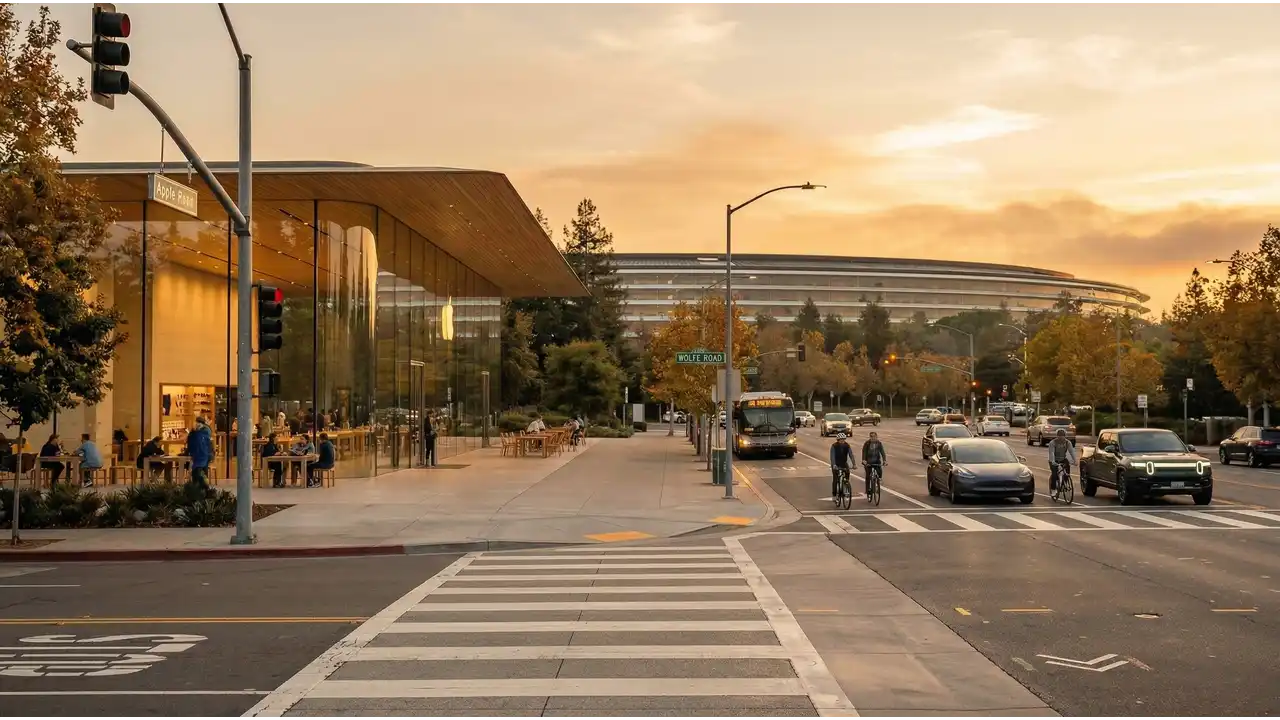
Cupertino is a planned suburban city in Silicon Valley's heart, home to Apple's main campus and tens of thousands of tech workers. The population is roughly 60,000, with significant numbers of Asian Americans and immigrant professionals. Daily life revolves around commuting to tech offices, shopping at the Vallco mall and local strips, and navigating heavy traffic on I-280 and I-85. Weather is mild year-round (60-85 degrees). Schools are competitive and well-funded. The city has parks and biking trails but limited nightlife or urban density. Most residents are either employed in tech or supporting that economy.
💡 Local Insights
Cupertino · 2026
Cupertino's costs are driven almost entirely by the tech economy and San Francisco Bay Area real estate demand. Housing dominates the budget at $3,185/month, reflecting competition from well-paid engineers. Rent for a one-bedroom apartment typically runs $2,400-$2,800, while a two-bedroom ranges from $3,200-$3,800. Buying is substantially more expensive, with median home prices well above $2,000,000. Groceries average $618/month for moderate shopping, slightly higher than national average due to California taxes and local market pricing. Eating out is expensive; casual restaurants charge $16-$22 per entree. Public transit (VTA bus system) exists but most residents drive. Car ownership is effectively mandatory, adding significant transportation costs beyond the typical budget. Expats should expect tech salaries to match these costs, but service workers and teachers face real affordability gaps. Neighborhoods like Vallco and residential areas near DeAnza College offer slightly lower rents than areas adjacent to Apple Park.
Frequently Asked Questions
How much does it cost to live in Cupertino per month?
A moderate lifestyle in Cupertino costs around $5,100/month for a single person or couple. This breaks down to approximately $3,185/month for housing (rent or mortgage-equivalent), $618/month for groceries, $400-$500 for utilities and internet, $300-$400 for transportation, and $600-$800 for dining out, entertainment, and miscellaneous expenses. Budget tier living (cutting restaurants, entertainment, and housing to basic shared arrangements) runs closer to $3,060/month. A comfortable lifestyle with dining flexibility and a larger apartment reaches $7,905/month.
What is the average rent in Cupertino?
Average housing costs are $3,185/month. A one-bedroom apartment typically rents for $2,400-$2,800, while a two-bedroom ranges from $3,200-$3,800. Prices vary by neighborhood: areas near Apple Park and the Vallco district tend toward the higher end, while units further from transit run slightly lower. Shared housing or studio apartments can drop to $1,800-$2,200. Most landlords require proof of income (typically 2.5 to 3 times the monthly rent) and first month plus deposit upfront. The rental market is competitive; units often rent within days of listing.
Is Cupertino cheap to live in for expats?
No. Cupertino is expensive by global standards and even by US standards. Expats relocating for tech jobs will find salaries typically match or exceed these costs, making the math work. Those coming from lower cost-of-living countries (India, Vietnam, Mexico) will experience significant sticker shock on housing. Expats without tech sector income should budget carefully. The upside is reliable infrastructure, good schools, and high salaries in the tech industry. Many expat communities here are well-established, with shared housing options and cultural familiarity, which can help offset costs.
How much does food cost per month in Cupertino?
Groceries average $618/month for a moderate diet. Specific costs at local chains: milk roughly $4 per gallon, eggs $3-$4 per dozen, chicken breast $8-$10 per pound, fresh produce $1.50-$3 per item depending on season. Ethnic markets (Asian, Latin American groceries near the downtown area) offer competitive pricing on specialty items. Eating out is expensive: casual restaurants charge $16-$22 per entree, mid-range dining $25-$40, and upscale restaurants $50+. Coffee runs $5-$7. Many tech workers meal-prep or use subsidized cafeterias at offices to manage food costs.
What salary do you need to live comfortably in Cupertino?
A comfortable lifestyle in Cupertino requires roughly $7,905/month, translating to an annual gross salary of approximately $95,000-$100,000 for a single person (accounting for taxes). This tier allows for a larger apartment or house, regular dining out, entertainment, and modest savings. For households with two tech workers, combined household income of $150,000-$200,000+ is typical. Those earning less should budget tightly and consider shared housing. Many tech companies offer housing stipends or relocation bonuses that effectively bridge the gap. The median household income in Cupertino exceeds $150,000, reflecting the tech sector's dominance.
How does the cost of living in Cupertino compare to other places?
Cupertino's moderate lifestyle costs $5,100 per month, with housing running $3,185 of that. It ranks among the pricier US metros you'd consider. Brooklyn is notably dearer, where a moderate lifestyle hits $5,975 monthly and housing alone reaches $4,295. Honolulu, Hawaii sits close to Cupertino as a peer market at $4,475 for a moderate lifestyle overall. If you're looking to cut costs meaningfully, Sacramento offers real savings: a moderate lifestyle there runs $3,450 monthly with housing at $1,537. The gap between Cupertino and Sacramento reflects the difference between Silicon Valley real estate and California's inland markets. Honolulu's figures suggest that island living, while expensive, doesn't necessarily exceed Bay Area costs.
Yes, but only with serious constraints. The $3,060/month budget tier requires shared housing (2-3 roommates) to keep rent to $1,200-$1,500 per person, minimal dining out, no car ownership (relying on VTA transit or biking), and careful grocery shopping. Utilities, phone, and transport would consume $400-$500. You'd have nearly zero discretionary spending. This budget suits students, early-career workers willing to share apartments, or individuals with subsidized housing through employers. Service workers, teachers, and non-tech professionals genuinely struggle at this level. Most people living on this budget are either transitioning through Cupertino short-term or supplementing income through side work.