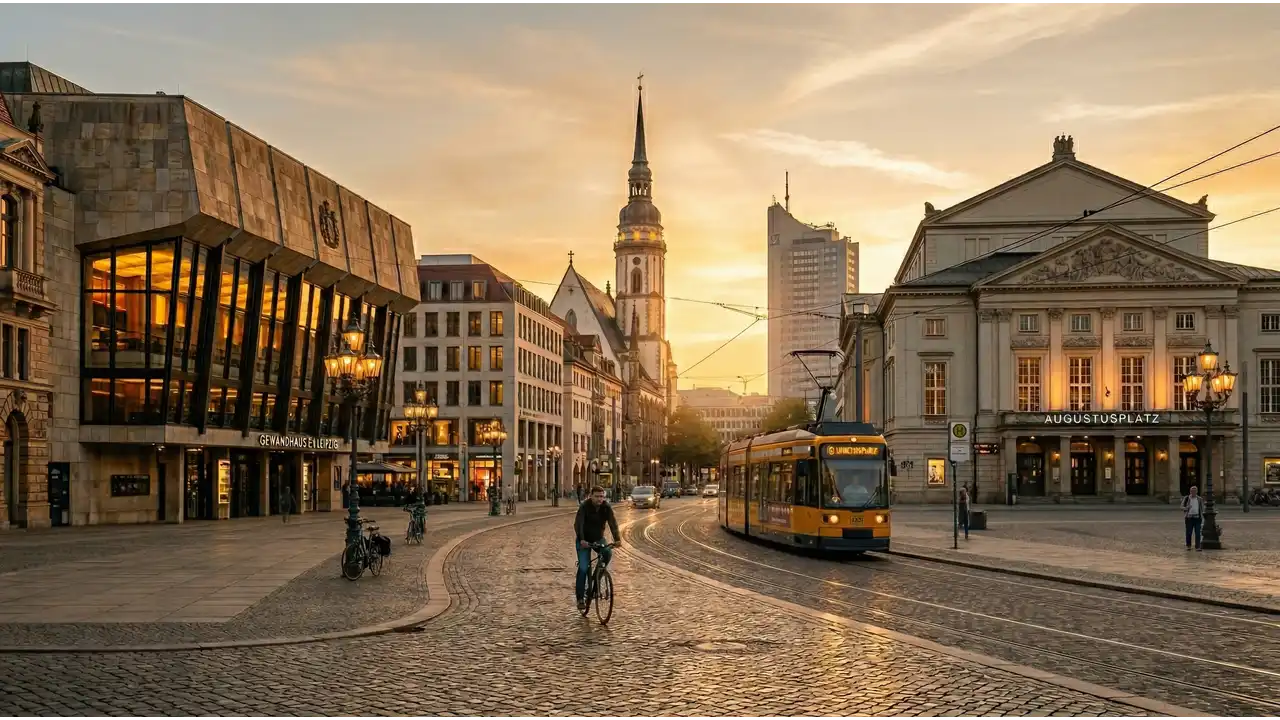
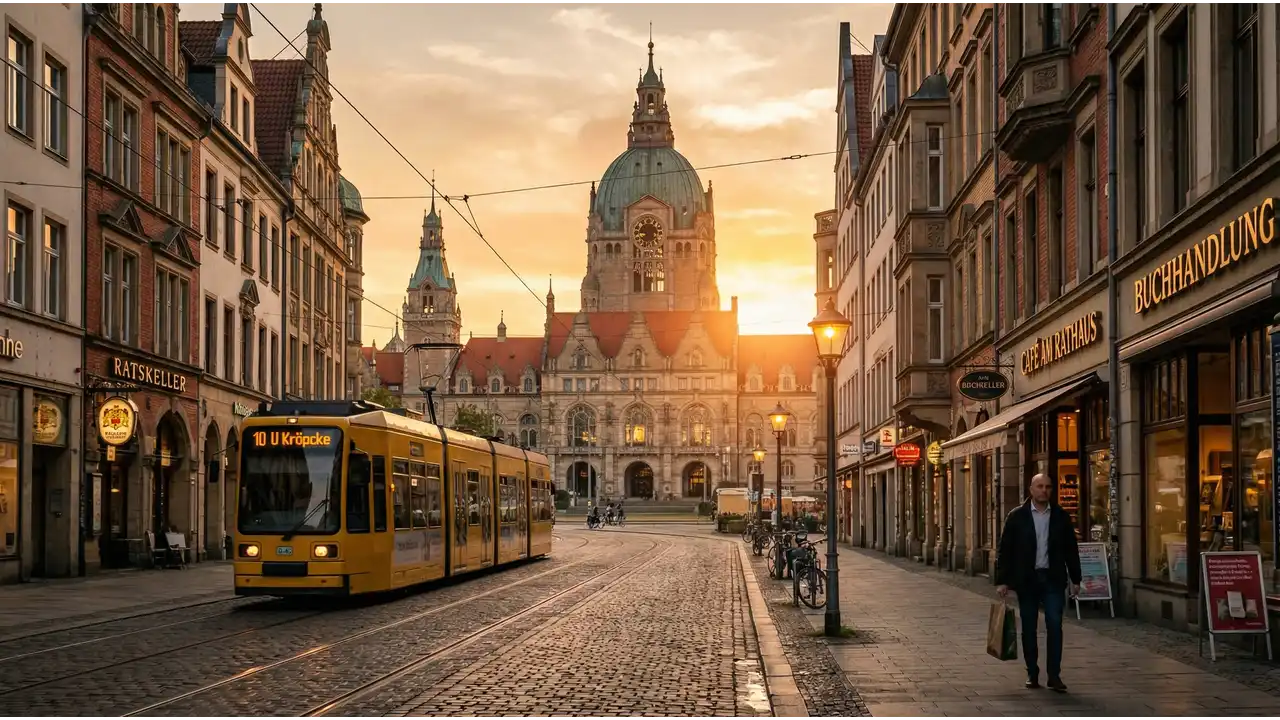
Leipzig is a mid-size city in eastern Germany with around 620,000 residents. It functions as a regional hub for culture, education, and small business, without the international tourist infrastructure of Berlin or Munich. The city has a continental climate with cold winters and mild summers. Daily life centers on cycling and public transit, with neighborhoods varying from post-industrial areas undergoing renovation to established residential zones. The population includes young professionals, students (multiple universities), families, and a growing expat community, though it remains predominantly German. Food culture emphasizes regional Saxon cooking and market shopping rather than dining out.
💡 Local Insights
Leipzig · 2026
Leipzig's affordability stems from its position in former East Germany, where housing stock is abundant and property values remain lower than western German cities. Rent runs around $701/month across the city, with variation by neighborhood rather than dramatic price tiers. Zentrum-Ost and Plagwitz lean toward renovation and young professionals, typically $650-$850 for a one-bedroom apartment. Older residential areas like Gohlis or Schleußig offer similar or cheaper options. Groceries average $363/month for one person shopping at supermarket chains like Lidl, Aldi, or Rewe. Weekly markets and discount retailers are your best tools for stretching a food budget. Public transit (trams, buses) costs around $90 monthly for an unlimited pass and covers the city comprehensively. Expats report local pricing is consistent, not inflated. Utilities and phone service add roughly $120-$150/month. What drives costs up: dining out regularly (restaurant meals cost $12-$20), alcohol in social settings, and gym memberships. What keeps costs down: the transit system, lack of car necessity, and food shopping discipline.
Frequently Asked Questions
How much does it cost to live in Leipzig per month?
A moderate lifestyle costs around $1,825/month for one person. This breaks down to roughly $701 on housing (rent for a one-bedroom apartment), $363 on groceries, $90 on public transit, $120-$150 on utilities and phone, and the remainder on dining out, entertainment, and miscellaneous expenses. A budget tier, cutting back on social spending and eating mostly at home, runs $1,095/month. A comfortable tier with more dining out, better housing, and regular entertainment reaches $2,829/month. Actual costs depend on neighborhood, household size, and personal habits.
What is the average rent in Leipzig?
Average rent is approximately $701/month for a one-bedroom apartment in central or popular neighborhoods. This figure is consistent across the city's main residential areas. Zentrum-Ost and Plagwitz, popular with younger residents and expats, typically run $650-$850 for a one-bedroom. Quieter areas like Gohlis, Schleußig, or Stötteritz offer one-bedroom apartments at $550-$750. Three-bedroom apartments typically cost $1,000-$1,400. Furnished short-term rentals and serviced apartments run higher, $900-$1,500 for one-bedroom, particularly through international housing platforms. Most leases require three months notice and a security deposit equal to two months' rent. Utilities (heating, water, electricity) add $100-$130 monthly on top of rent.
Is Leipzig cheap to live in for expats?
Yes, Leipzig is significantly cheaper than western German cities or major European capitals. Expats from London, Paris, Amsterdam, or Berlin will find rent and food costs substantially lower. Compared to US cities like Boston or San Francisco, Leipzig is far more affordable. The main trade-off is that wages are also lower, and English speakers are less common outside central neighborhoods and universities. Housing availability is good and rental scams are uncommon, though competition for desirable apartments still exists. For remote workers earning Western salaries, Leipzig offers exceptional value. For those seeking local employment, salaries typically run 20-30% below western German averages. The city has established expat communities, particularly students and young professionals, but lacks the expat infrastructure of larger cities.
How much does food cost per month in Leipzig?
Groceries average $363/month for one person shopping at budget and mid-range supermarkets. Typical prices: milk $1 per liter, bread $1-$2 per loaf, chicken $6-$8 per kilogram, apples $2-$3 per kilogram, eggs $3 per dozen. Weekly markets and discount chains (Aldi, Lidl) are cheapest. Rewe and Kaufland are mid-range and wider selection. Eating out costs $12-$20 per meal at casual restaurants, $25-$40 at mid-range establishments. Beer at a bar runs $3-$4. Coffee is $2-$3 at cafes. If you cook at home and shop strategically, $363/month is realistic. Dining out regularly or shopping at premium stores easily doubles this figure.
What salary do you need to live comfortably in Leipzig?
A comfortable lifestyle costs around $2,829/month. In annual terms, that's roughly $34,000. This budget assumes a one-bedroom apartment in a good neighborhood ($701-$900), dining out 1-2 times weekly, regular entertainment and activities, quality groceries, and gym or hobby spending. Gross income needs are higher due to German taxes and social contributions. A comfortable net income of $2,829/month typically requires gross income of roughly $4,200-$4,800/month depending on tax class and church membership. For expats on work visas, employers generally expect to budget $3,500-$4,500/month gross salary for a comfortable standard of living. Those with lower spending habits or living with a partner can do well on less. Remote workers earning $2,500-$3,000 net from abroad report comfortable lifestyles with money left over to save.
How does the cost of living in Leipzig compare to other places?
Leipzig sits in the middle of central Europe's cost-of-living spectrum. A moderate lifestyle runs $1,825 per month, with housing at $701 per month. That makes it marginally more expensive than Krakow, where a moderate lifestyle costs $1,650 monthly and housing runs $754 per month. Both cities offer similar value for daily expenses, though Leipzig's housing is slightly cheaper. Move significantly cheaper and you reach Chisinau, where a moderate lifestyle runs $1,225 monthly. On the other end, Helsinki costs substantially more at $2,500 per month, with housing alone at $1,252 per month. For most expats and students, Leipzig offers authentic city living without the price shock of western European capitals. It's genuinely affordable compared to Berlin or Munich, while remaining more cosmopolitan and developed than budget alternatives further east.
Yes, but with significant constraints. A $1,095/month budget works for students or those with low expenses. Rent typically consumes $550-$700, leaving $395-$545 for everything else. Food (cooking at home) takes roughly $300-$350/month, leaving $45-$245 for utilities, transit, phone, and personal items. This means minimal dining out, no car ownership, no gym or hobby spending, and close attention to every expense. Shared housing (with roommates) cuts rent to $400-$500, freeing more breathing room. Many students and budget-conscious expats live this way successfully, particularly in outer neighborhoods like Connewitz or Anger-Crottendorf. It requires discipline and rules out emergencies, but it is feasible for those with stable basic expenses and no dependents.