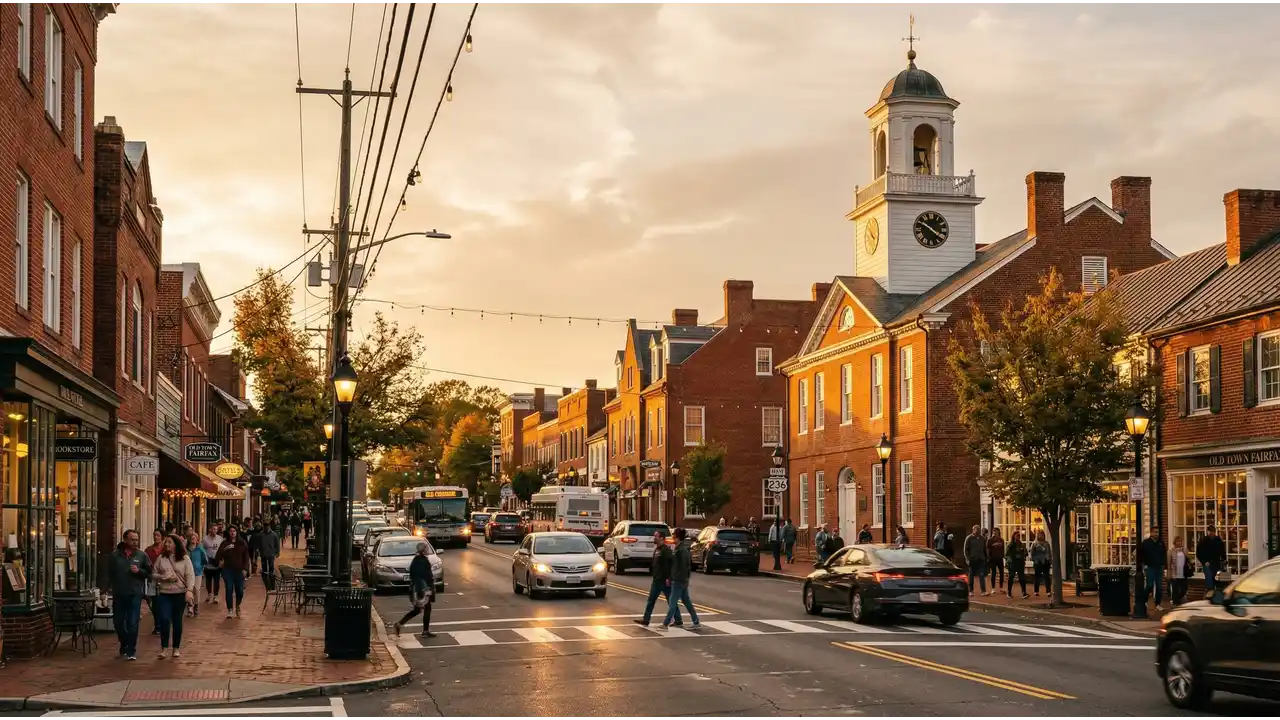
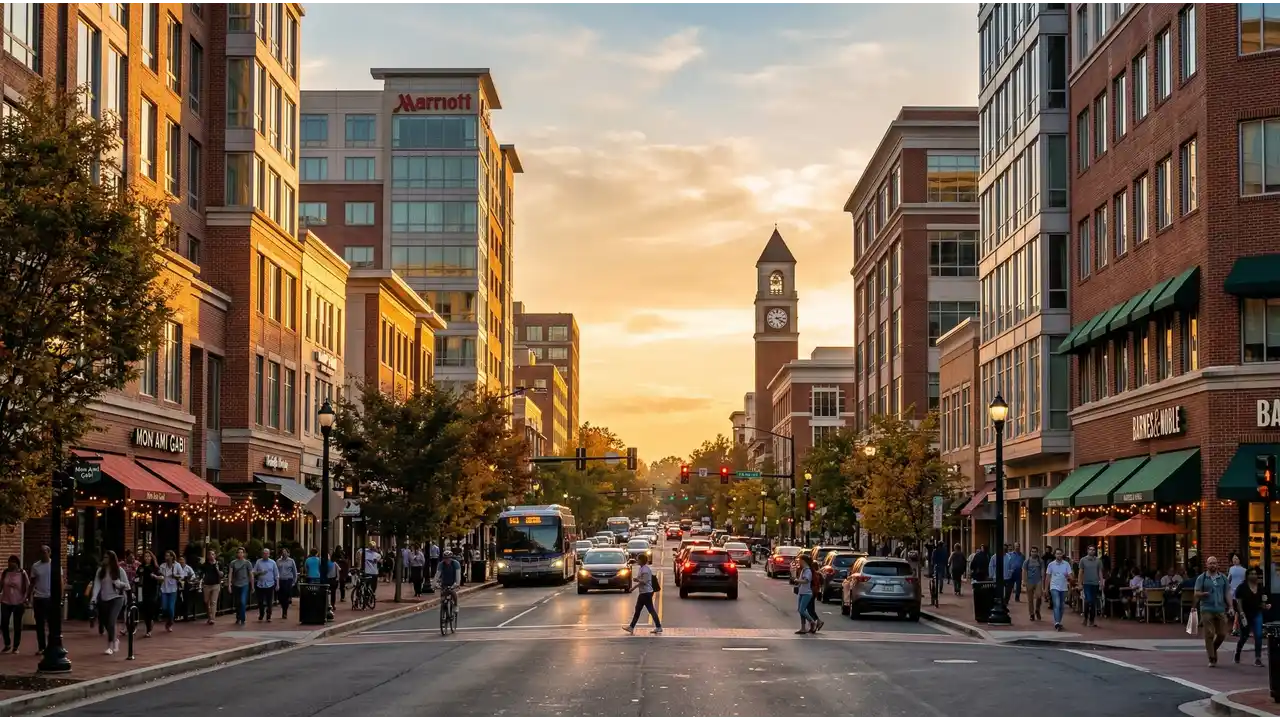
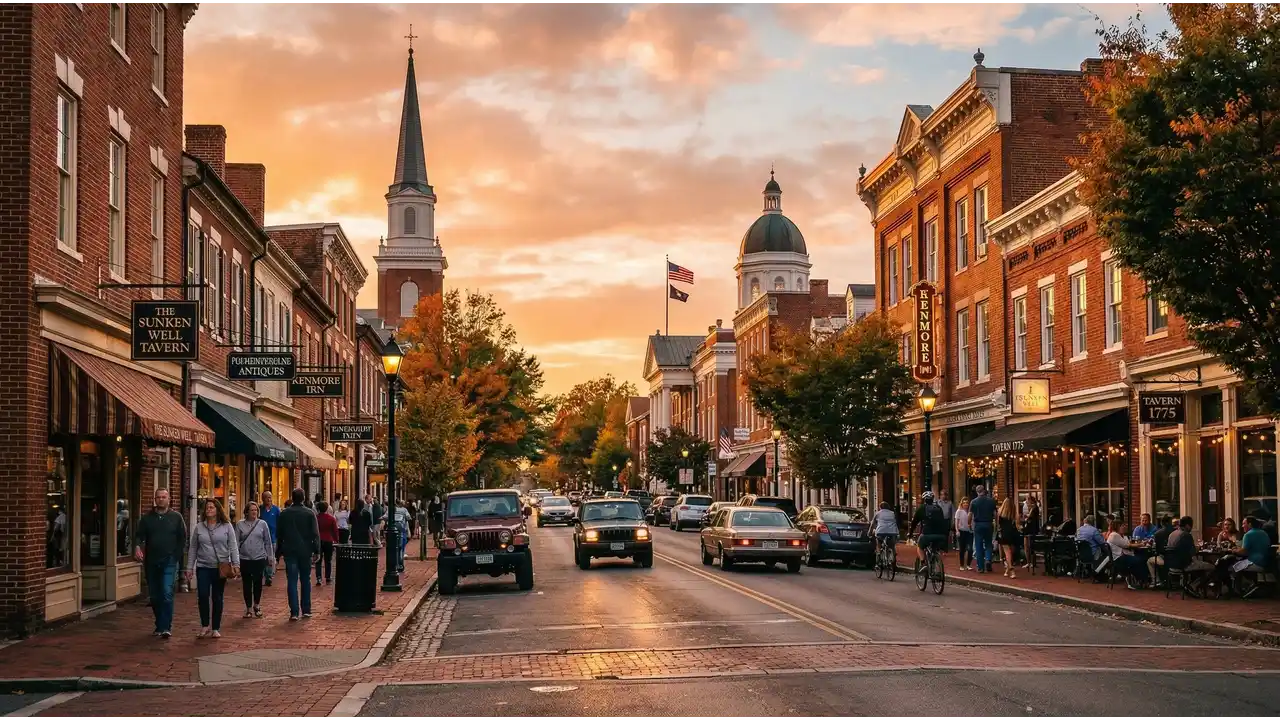
Fairfax is a suburban city in Northern Virginia about 20 miles west of Washington DC, part of a dense metropolitan corridor. It's predominantly residential with tree-lined streets, single-family homes, and planned communities. The population is diverse and well-educated, with many residents commuting to federal jobs, tech companies, or DC offices. Daily life centers around driving (public transit is limited), shopping at chain retailers, and weekend activities in nearby parks or downtown DC. Winters are mild, summers warm and humid. Schools are a major draw for families. The area feels neither urban nor rural, but solidly middle to upper-middle class suburban.
💡 Local Insights
Fairfax VA · 2026
Fairfax's costs reflect its proximity to DC, federal employment concentration, and strong school systems. Housing drives the budget at $1,998/month, which covers modest apartments or townhouses in established neighborhoods. Single-family homes rent higher, typically $2,400 to $2,800/month depending on age and size. Groceries run $517/month for a household buying standard brands at chain supermarkets (Safeway, Harris Teeter, Costco prevalent). Eating out is moderately priced: casual dining $15 to $22 per meal, coffee $5 to $6. Transportation costs matter because Fairfax has limited Metro access (one station serves the city). Most residents own cars; gas, insurance, and maintenance add $400 to $600/month. Public transit via WMATA bus exists but is infrequent outside peak hours. Expats and remote workers find Fairfax quieter and cheaper than DC proper but pricier than rural Virginia. The moderate lifestyle of $3,600/month assumes shared or modest solo housing, basic dining, and one vehicle.
Frequently Asked Questions
How much does it cost to live in Fairfax VA per month?
A moderate lifestyle in Fairfax costs around $3,600/month. Housing runs $1,998/month, groceries approximately $517/month. The remaining budget covers utilities (about $150 to $200), transportation (if owning a car, $400 to $600 for gas, insurance, maintenance), dining out, and entertainment. A tight budget of $2,160/month is possible if you share housing, avoid driving, and cook most meals. A comfortable lifestyle at $5,580/month allows for a larger rental, frequent dining out, and more flexible spending.
What is the average rent in Fairfax VA?
Average rental housing costs $1,998/month based on current market data. One-bedroom apartments typically rent $1,600 to $2,000/month in established neighborhoods like Fairfax City proper or near shopping centers. Two-bedroom units range $2,000 to $2,400/month. Single-family townhouses run $2,200 to $2,800/month. Newer developments and units closer to employment centers (Tysons Corner, Route 29) command higher rents. Older garden apartments offer lower rates, sometimes $1,500 to $1,700/month. Utilities add $120 to $180/month depending on season and consumption.
Is Fairfax VA cheap to live in for expats?
No. Fairfax is moderately expensive for expats, particularly those from lower-cost regions. It costs significantly less than central Washington DC (where housing exceeds $2,500/month) but substantially more than rural Virginia, West Virginia, or Southern states. For expats accustomed to European or Asian costs, Fairfax feels pricey, especially housing and cars. For those from major UK, German, or Scandinavian cities, costs are comparable. The main savings versus DC proper are in housing (suburban vs urban) and dining (fewer high-end restaurants). Most expats working remotely can afford a modest lifestyle; those on local US salaries find it reasonable for the region.
How much does food cost per month in Fairfax VA?
Grocery shopping runs approximately $517/month for one person buying standard brands. A typical week might include milk ($4), eggs ($3.50), chicken breasts ($8 to $10 per pound), ground beef ($6 to $7 per pound), rice ($1.50 per pound), pasta ($1 per box), bread ($3 to $4), and fresh produce (apples $1.50 to $2/lb, broccoli $2 to $3/head). Eating out costs $15 to $22 per meal at casual restaurants (Chipotle, Panera, local diners). Coffee shops charge $5 to $6. Grocery prices are consistent across Safeway, Harris Teeter, and Costco; ethnic markets (Asian, Hispanic) offer cheaper produce and proteins.
What salary do you need to live comfortably in Fairfax VA?
A comfortable lifestyle costs approximately $5,580/month, suggesting a gross income around $7,400 to $7,500/month, or roughly $89,000 to $90,000/year. This assumes standard rent-to-income guidance and allows for larger housing ($2,400 to $2,600/month for a one-bedroom), frequent dining out, regular entertainment, and savings. Many households earning $75,000 to $85,000/year live comfortably by sharing housing, cooking most meals, and limiting entertainment. Dual-income households with combined income above $120,000/year have substantial discretionary spending. Federal employees, tech workers, and contractor staff typically fall into these ranges.
How does the cost of living in Fairfax VA compare to other places?
Fairfax, Virginia sits firmly in the upper-middle range for US cost of living. A moderate lifestyle here runs $3,600 per month, with housing representing the biggest expense at $1,998 per month.
To put this in perspective, Denver runs $3,225 monthly, making it noticeably cheaper overall, though housing costs are only slightly lower there. Kansas City is substantially more affordable at $2,600 per month. On the other end, San Francisco is in a different category entirely at $5,200 monthly.
Fairfax's high costs reflect its proximity to Washington DC, strong job market, and well-regarded schools. If you're relocating from the Midwest or Mountain West, expect a significant jump. If you're coming from a major coastal city, Fairfax will feel like a bargain.
Yes, but with significant trade-offs. This budget (the tight tier) requires sharing housing to keep rent under $1,000 to $1,100/month, buying groceries strategically to stay near $400 to $450/month, and either eliminating a personal car or buying and maintaining a very cheap used vehicle. Utilities, internet, and phone together run $120 to $150. Dining out becomes rare; entertainment is free or low-cost. Medical or unexpected expenses quickly create problems. This budget suits students, roommate situations, or those receiving housing subsidies. Remote workers with this income typically supplement with savings. Most single-income households find $2,160/month unsustainable without significant lifestyle restriction.