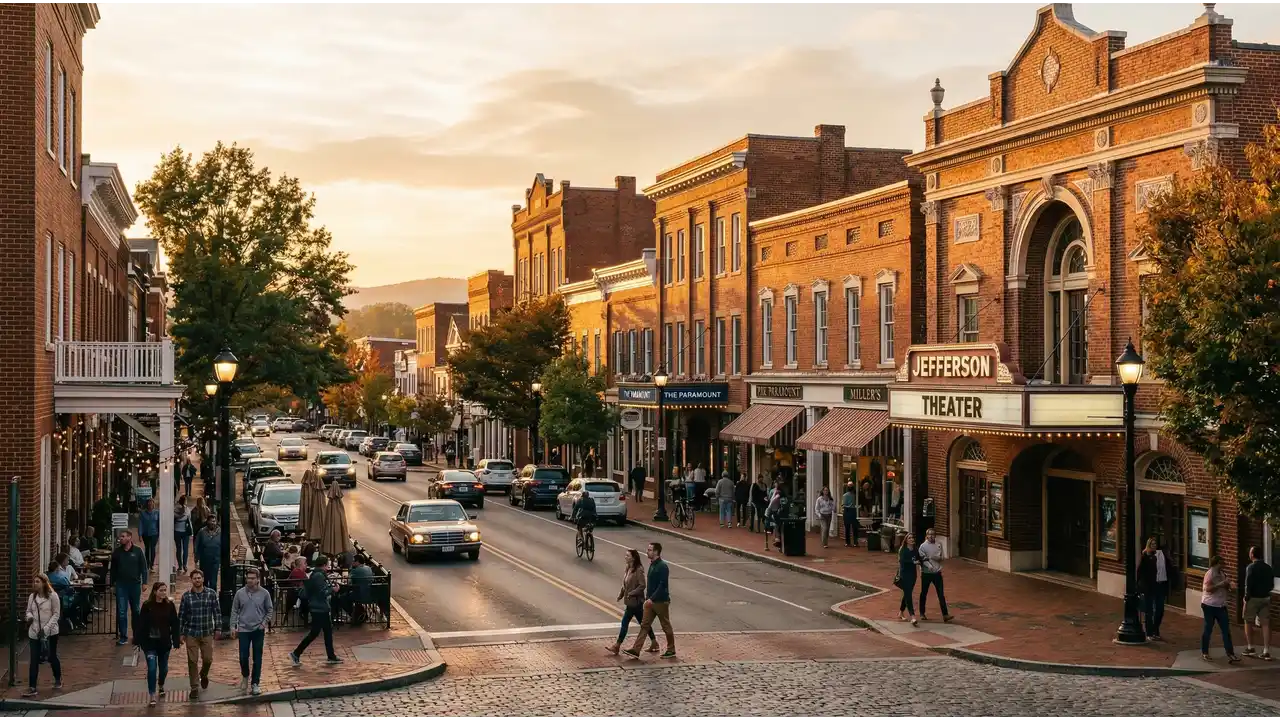
Lynchburg sits in south-central Virginia along the James River, home to about 82,000 people. The city has a mix of older industrial architecture, college presence (Liberty University and Randolph College), and riverfront redevelopment. Winters are mild (30s to 40s Fahrenheit), summers warm and humid (80s). The population is roughly 45% Black, 50% white, with growing Latino and Asian communities. Daily life centers on downtown dining and shopping, riverside trails, and a quiet pace compared to nearby Richmond. Tobacco and textiles shaped the city's history; today's economy relies more on education, healthcare, and light manufacturing.
💡 Local Insights
Lynchburg VA · 2026
Lynchburg's cost of living reflects a smaller mid-Atlantic city with limited job specialization and lower demand for housing than Richmond or Washington DC. Housing runs around $1,026 per month because the rental market is soft. One-bedroom apartments in downtown or near the universities rent for $850 to $1,050; two-bedroom units range from $1,000 to $1,200. Owner-occupied homes run $250,000 to $350,000 for modest three-bedroom houses. Groceries cost about $516 monthly, on par with national averages. SNAP benefits stretch further here than in major metros. Gas and car ownership are essential (no meaningful public transit), adding $150 to $200 monthly for a single vehicle. Utilities average $120 to $150 in winter, less in summer. Local incomes cluster around $35,000 to $45,000 annually, which means the $2,625 moderate lifestyle is achievable for dual-income households but tight for solo earners. Property taxes are low (around 0.6% of home value), a genuine cost advantage versus Northern Virginia.
Frequently Asked Questions
How much does it cost to live in Lynchburg VA per month?
A moderate lifestyle in Lynchburg costs around $2,625 per month. Housing accounts for $1,026 monthly. Groceries run about $516. Utilities, transportation, dining out, and entertainment make up the remainder. A tight budget lifestyle is possible at $1,575 per month if you rent affordably and cook most meals. A comfortable lifestyle, with more dining flexibility and leisure spending, runs roughly $4,069 monthly. Costs vary by neighborhood and household size.
What is the average rent in Lynchburg VA?
Average rent is approximately $1,026 per month. One-bedroom apartments downtown or near universities rent for $850 to $1,050. Two-bedroom units run $1,000 to $1,200 monthly. Older houses converted to rental units may cost $900 to $1,100 for two bedrooms. College-area rentals (near Liberty or Randolph) tend toward the higher end due to student demand. Properties farther from downtown or in older neighborhoods cost less, sometimes $750 to $900 for one bedroom. Utilities are separate and average $120 to $150 monthly in winter.
Is Lynchburg VA cheap to live in for expats?
Lynchburg is genuinely affordable compared to most US metropolitan areas, but it depends on your reference point. If you are coming from London, Toronto, or coastal Australia, yes, it is very cheap. If you are relocating from Southeast Asia or Eastern Europe, it is moderately expensive. The real friction for expats is the car-dependent layout and limited international community outside the universities. Grocery staples are affordable, housing is reasonable at $1,026 monthly average, but there is no public transportation. International schools are absent. Healthcare is available but not world-class. For expats on US corporate salaries, Lynchburg works well. For those on expat or retirement budgets below $3,000 monthly, it is tight.
How much does food cost per month in Lynchburg VA?
Grocery costs average $516 monthly for one person eating a mix of fresh and processed foods. A gallon of whole milk costs about $3.50; a dozen eggs run $3; ground beef is $5 to $6 per pound. Produce prices are standard for the mid-Atlantic (apples $2 per pound, lettuce $2 to $3). Shopping at Food Lion, Harris Teeter, or Kroger keeps costs moderate. Eating out is cheaper than major cities: casual restaurants run $12 to $16 per entree, ethnic restaurants $10 to $13. A coffee costs $2 to $3. Groceries for a couple can reach $800 to $900 monthly if you eat well.
What salary do you need to live comfortably in Lynchburg VA?
A comfortable lifestyle in Lynchburg costs roughly $4,069 per month, which means an annual salary of approximately $49,000 to $52,000 is a safe baseline for a single earner (accounting for taxes and modest savings). Couples can split this and manage on $60,000 to $65,000 household income. This budget allows for a decent one or two-bedroom rental, regular dining out, car ownership, and entertainment. Below $40,000 annually as a solo earner, you will be cutting groceries and limiting social spending. Above $65,000, you are building savings and can afford newer rental or home ownership without strain.
How does the cost of living in Lynchburg VA compare to other places?
Lynchburg sits squarely in the middle of the cost-of-living spectrum for mid-sized American cities. A moderate lifestyle here runs $2,625 per month, with housing at $1,026 per month. That makes Lynchburg slightly cheaper than Albuquerque, where a moderate lifestyle costs $2,725 monthly and housing runs $1,182. If you're comparing to coastal or high-demand markets, Scottsdale runs considerably higher at $3,350 for a moderate lifestyle, with housing alone at $1,729 per month. On the other end, if you're open to relocating internationally, Playa del Carmen offers a more affordable option at $1,825 monthly overall, though housing there sits at $949. For most people moving within the United States, Lynchburg offers reasonable costs without sacrificing access to amenities and services.
Yes, but only if you optimize carefully. A budget lifestyle means renting a one-bedroom away from downtown for $750 to $850, spending $400 on groceries (rice, beans, eggs, seasonal produce), and minimal discretionary spending. You will have $200 to $250 left for utilities, transport, phone, and unexpected costs. This works for students, retirees on fixed income, or anyone with a paid-off car and low insurance. You cannot afford regular dining out, frequent social activities, or major repairs. It is sustainable but leaves no cushion. If rent exceeds $900, this budget fails. Consider house sharing or subsidized housing options.