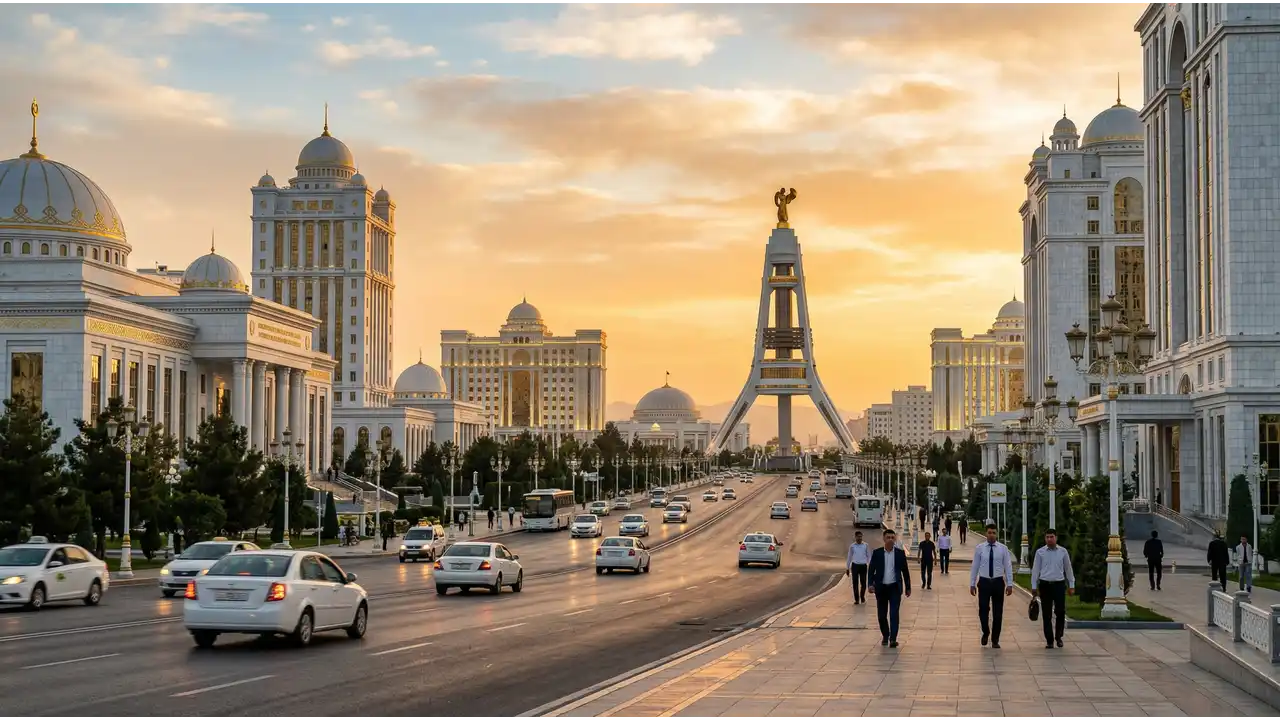
Ashgabat is Turkmenistan's capital and largest city, set in the Kara-Kum Desert near the Iranian border. The city has a distinctive character defined by Soviet-era architecture mixed with newer government monuments and wide, orderly avenues. Daily life centers on state-controlled commerce, bazaars, and a small but visible expat community. Summers are extremely hot (often exceeding 110 degrees Fahrenheit), winters mild. The population is roughly 1.2 million. Internet and communications are monitored. Most expats work for international organizations, NGOs, or multinational companies. Public transport consists of minibuses and taxis. The pace is slower than major regional hubs, and social life revolves around established networks.
💡 Local Insights
Ashgabat · 2026
Ashgabat's cost structure reflects limited market competition and state control over many sectors. Housing at $235/month covers modest local accommodation; expat compounds and modern apartments run higher, though limited supply constrains availability. Food groceries at $134/month are affordable for basic staples (bread, rice, oil, vegetables from bazaars), but imported goods carry substantial markups. Eating out at local plov houses or kebab stands is cheap; Western restaurants cater to expats at higher prices. Transport is inexpensive (minibus rides under $1), but private car ownership is common among expats. Currency (Turkmen manat) is officially fixed but a parallel market exists; exchange rates affect expat spending power. Visa and residency requirements are strict and often determine who can stay long-term. Local employment is limited for foreigners. Utilities (electricity, water, gas) are heavily subsidized and minimal. Telecommunications and internet remain controlled sectors with limited options.
Frequently Asked Questions
How much does it cost to live in Ashgabat per month?
A moderate lifestyle in Ashgabat costs around $650/month. This breaks down roughly as: housing at $235/month, groceries at $134/month, transport and utilities at $100-120/month, and other expenses (dining out, entertainment, miscellaneous) at $150-180/month. The budget tier is $390/month for bare essentials (local housing, basic groceries, minimal transport). A comfortable lifestyle with modern housing, varied dining, and regular travel runs approximately $1,008/month. Expat costs typically exceed these figures due to preference for Western goods and services.
What is the average rent in Ashgabat?
Average rent is approximately $235/month. Local apartments in residential neighborhoods range from $150-300/month for a one-bedroom unit. Expat-oriented housing in safer compounds or modern buildings runs $400-800/month. Furnished versus unfurnished properties show little price difference. Neighborhoods closer to the center (Ahal district) cost slightly more. Utilities are minimal additions due to heavy state subsidies. Most rentals are negotiated privately; formal lease structures vary. Long-term residents report that housing availability is constrained and landlords often prefer tenants with stable employment (NGO, UN, or diplomatic staff).
Is Ashgabat cheap to live in for expats?
Yes and no. Ashgabat is inexpensive for basic local services, food, and transport. However, expats rarely live at the $650/month moderate level because they tend to use Western goods, rent in safer compounds, eat at restaurants catering to foreigners, and employ household help. Actual expat spending often reaches $1,200-2,000/month depending on lifestyle choices. The city lacks consumer amenities common in regional hubs (Bangkok, Dubai, Istanbul), so daily life requires adjustment. If you embrace local markets and neighborhoods, costs stay low. If you replicate a Western lifestyle, expenses rise significantly. The visa and work permit restrictions limit who can live there long-term, making cost comparisons less relevant than logistics.
How much does food cost per month in Ashgabat?
Grocery shopping costs approximately $134/month for basic staples. Local bazaars offer cheap bread ($0.20 per loaf), rice ($1.50/kg), oil ($2/liter), and seasonal vegetables. Dairy, eggs, and meat are affordable. Imported Western goods (cheese, canned foods, cereals) cost 2-3 times more. Eating out varies: local plov or kebab stands cost $2-4 per meal, while restaurant meals for expats run $10-20. Tea houses and bazaar food stalls offer the cheapest options. Alcohol is limited and carries high markups. Markets operate daily, with prices negotiable in smaller bazaars. Supermarkets exist but are pricier than bazaars.
What salary do you need to live comfortably in Ashgabat?
A comfortable lifestyle costs approximately $1,008/month. This supports a one-bedroom rental in a decent neighborhood, varied groceries including some imported items, regular restaurant meals, utilities, transport, and modest entertainment. For expats, plan for $1,500-2,000/month to access more choices (better housing, frequent dining out, travel, household services). Most international organization staff and NGO workers earn salaries in the $2,000-4,000/month range, giving them comfortable margins. Local employment salaries are much lower (typically $200-400/month), making the comfortable tier aspirational rather than standard. Housing costs can be negotiated for long-term residents, reducing overall monthly expenses.
How does the cost of living in Ashgabat compare to other places?
Ashgabat runs $650 per month for a moderate lifestyle, which places it squarely in line with Delhi at $675 per month. Housing costs in Ashgabat sit at $235 monthly, notably higher than Delhi's $299 monthly housing expense. If you're looking for genuine bargains in the region, Jaipur costs $475 per month overall, with housing at $156 per month, making it substantially cheaper than Ashgabat across both categories. By contrast, Penang runs $900 per month, pushing costs noticeably higher. Ashgabat occupies a middle tier within Central and South Asia. Your money stretches further in smaller Indian cities but doesn't go as far in more developed Southeast Asian hubs. Local salaries and job markets matter significantly here, since most expats face limited employment options and currency restrictions that affect real spending power.
Yes, but with significant constraints. The budget tier of $390/month covers local accommodation ($150-180/month), basic groceries ($100-120/month), minibus transport ($30/month), and utilities ($20/month). You must rent in local neighborhoods, shop at bazaars, eat local food, and avoid any Western goods or dining. This is realistic for long-term local residents or those earning local salaries, but difficult for expats accustomed to certain amenities. Medical emergencies, visa renewals, or travel become problems. Expats attempting this budget report stress around housing quality and social isolation. It is survivable but not recommended unless you have deep ties to the city or strong cultural adjustment skills. Most organizations supporting expats assume $1,000+/month minimum.