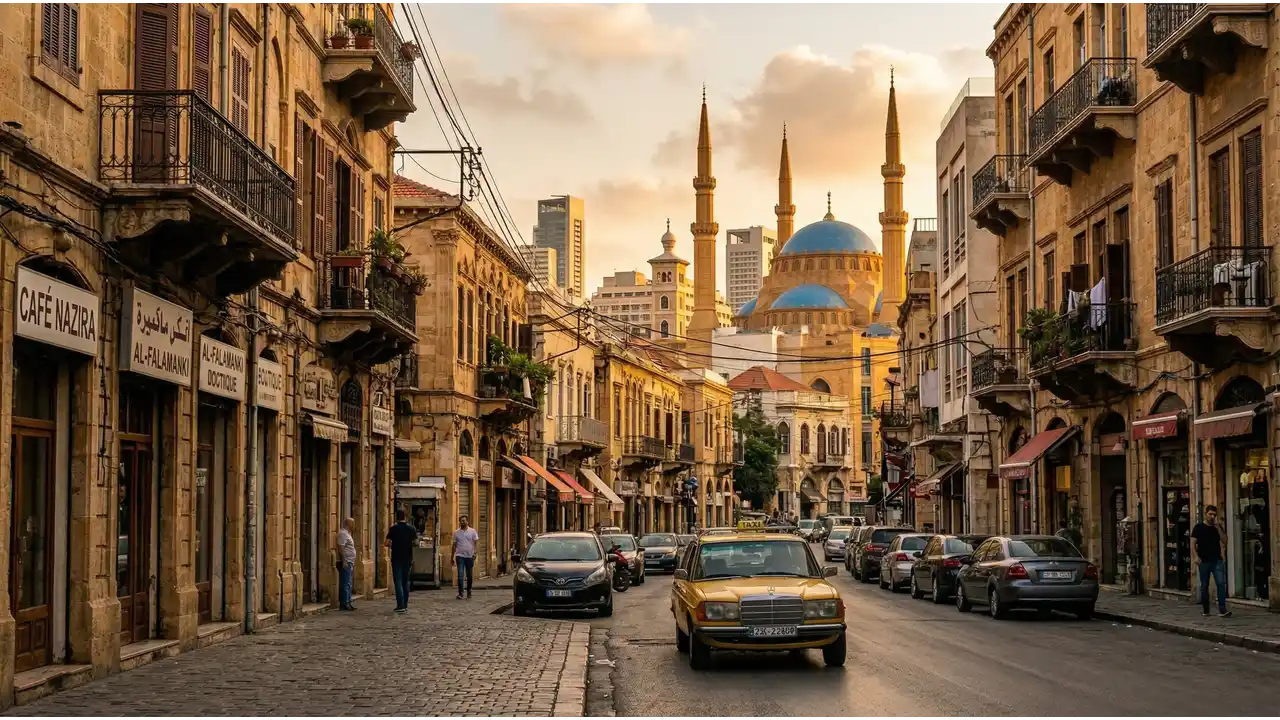
Beirut is a Mediterranean port city of roughly 2 million people in the greater metro area, characterized by dense urban neighborhoods, a historic center rebuilt after the 1975-1990 civil war, and a mix of Lebanese nationals, Palestinian refugees, Syrian refugees, and expats. Daily life involves navigating traffic-heavy streets, frequent power cuts requiring generator use, and access to Middle Eastern and Mediterranean food markets. The city sits on the coast with mountains visible inland. Languages are Arabic (primary) and French and English widely spoken among educated residents. The pace is fast and social life centers on cafes, restaurants, and neighborhood gathering spots.
💡 Local Insights
Beirut · 2026
Beirut's cost structure reflects instability and currency pressures. The Lebanese pound has undergone severe devaluation, but prices for most goods and services are quoted and paid in US dollars, which creates unpredictability. Housing runs $787/month on average, concentrated in neighborhoods like Hamra, Ashrafieh, Mar Mikhael, and Ras Beirut, where a one-bedroom apartment in an older building ranges from $600 to $1,000. Newer or expat-oriented units cost more. Groceries average $270/month, with local markets substantially cheaper than supermarkets targeting expats. Eating out varies wildly: a casual meal costs $5 to $8, while restaurant dining runs $15 to $40 per person. Public transport (buses, shared minibuses) is minimal and unreliable; most people rely on private cars or taxis. Fuel and electricity are expensive due to subsidies and power cuts. Expats often pay premiums on rent by 20 to 40 percent versus locals. The political and economic situation remains volatile, affecting availability and price stability of goods.
Frequently Asked Questions
How much does it cost to live in Beirut per month?
A moderate lifestyle costs $1,625/month. That breaks down to $787 for housing (rent on a one-bedroom apartment in a central or residential neighborhood), $270 for groceries, $150 to $200 for utilities and internet, and the remainder for transport, dining out, entertainment, and miscellaneous expenses. A budget tier lifestyle runs $975/month by cutting housing to shared or peripheral locations, minimizing eating out, and using public transport. A comfortable lifestyle costs $2,519/month, reflecting newer apartments, frequent dining out, and expat-focused amenities.
What is the average rent in Beirut?
Average housing runs $787/month. A one-bedroom apartment in central neighborhoods like Hamra or Ashrafieh typically costs $700 to $950, while outer areas and older buildings range $500 to $700. Two-bedroom apartments run $1,000 to $1,500. Expats are often quoted 20 to 40 percent higher than local rates for the same property. Furnished apartments cost more. Building quality varies significantly; many lack consistent electricity and water. Lease terms are typically one year, and deposits equal one month's rent.
Is Beirut cheap to live in for expats?
Beirut is moderately priced compared to Gulf cities or Western Europe, but not cheap. The real cost depends on your lifestyle and currency. If you earn in dollars, costs appear low on paper ($1,625/month moderate). If you live on Lebanese pounds, the currency devaluation has eroded purchasing power significantly. Expats typically pay rent premiums of 20 to 40 percent versus locals. Eating out is affordable if you frequent local spots ($5 to $8 per meal), but imported goods and expat-oriented services cost more. Political instability and power cuts add indirect costs (generators, backup internet). Your real experience depends on where you work, whether you earn in dollars, and your willingness to live like a local.
How much does food cost per month in Beirut?
Groceries average $270/month. Local markets offer produce, grains, and meat cheaply: tomatoes and cucumbers around $1 to $2 per kilogram, chicken $4 to $5 per kilogram, bread $0.50 per loaf. Supermarkets targeting expats cost 30 to 50 percent more. Eating out is inexpensive: shawarma or falafel wraps run $2 to $4, a sit-down meal at a casual restaurant $8 to $15, and upscale dining $25 to $50 per person. Coffee at a cafe costs $1 to $3. Imported goods (cheese, cereals, foreign brands) are significantly marked up.
What salary do you need to live comfortably in Beirut?
A comfortable lifestyle costs $2,519/month. That supports a one-bedroom or two-bedroom apartment in a good neighborhood, frequent dining out at mid-range restaurants, regular cafe visits, and modest entertainment and travel within the region. In local employment terms, this typically requires a professional role (engineer, manager, educator, healthcare worker) earning $3,000 to $4,000/month or higher, depending on whether taxes or benefits reduce your take-home. If you earn in dollars from abroad, $2,519/month provides real comfort relative to local incomes.
How does the cost of living in Beirut compare to other places?
Beirut's moderate lifestyle costs $1,625 per month, with housing running $787 monthly. This puts it in the middle range globally. For direct comparison, Nagoya sits at $1,675 for a moderate lifestyle, making it nearly identical in total cost, though Nagoya's housing is cheaper at $603 per month. Seoul is notably dearer at $1,950 monthly, with housing at $841. If you're looking for significantly lower costs, Hangzhou comes in at $1,100 per month overall, with housing at $517. The gap between Beirut and Hangzhou reflects both regional economic differences and currency factors. Keep in mind that Beirut's figures reflect current conditions, including currency volatility and local market dynamics that can shift. Your actual spending will depend heavily on neighborhood choice, lifestyle preferences, and whether you're paying in Lebanese pounds or foreign currency.
Yes, but with significant trade-offs. Budget living means a shared apartment or small studio in an outer neighborhood (Bourj Hammoud, Shatila, or suburban areas) at $400 to $550/month, groceries strictly from local markets at $200 to $250/month, minimal eating out, and reliance on cheap public transport or walking. You skip paid entertainment, limit cafe visits, and avoid imported goods. This works if you are Lebanese, have local support networks, and accept power cuts and limited amenities. Expats typically find this difficult without sacrifice to comfort and safety. Utilities, internet, and transport can spike unpredictably, putting pressure on a tight budget.