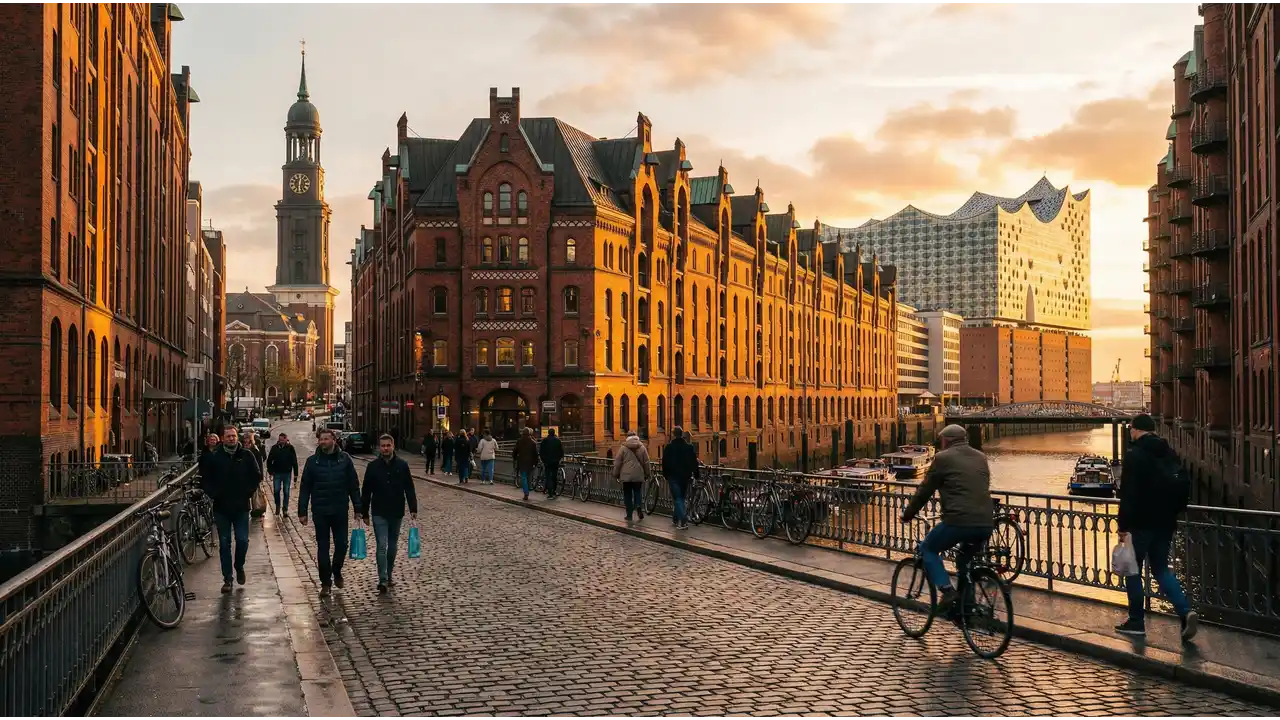
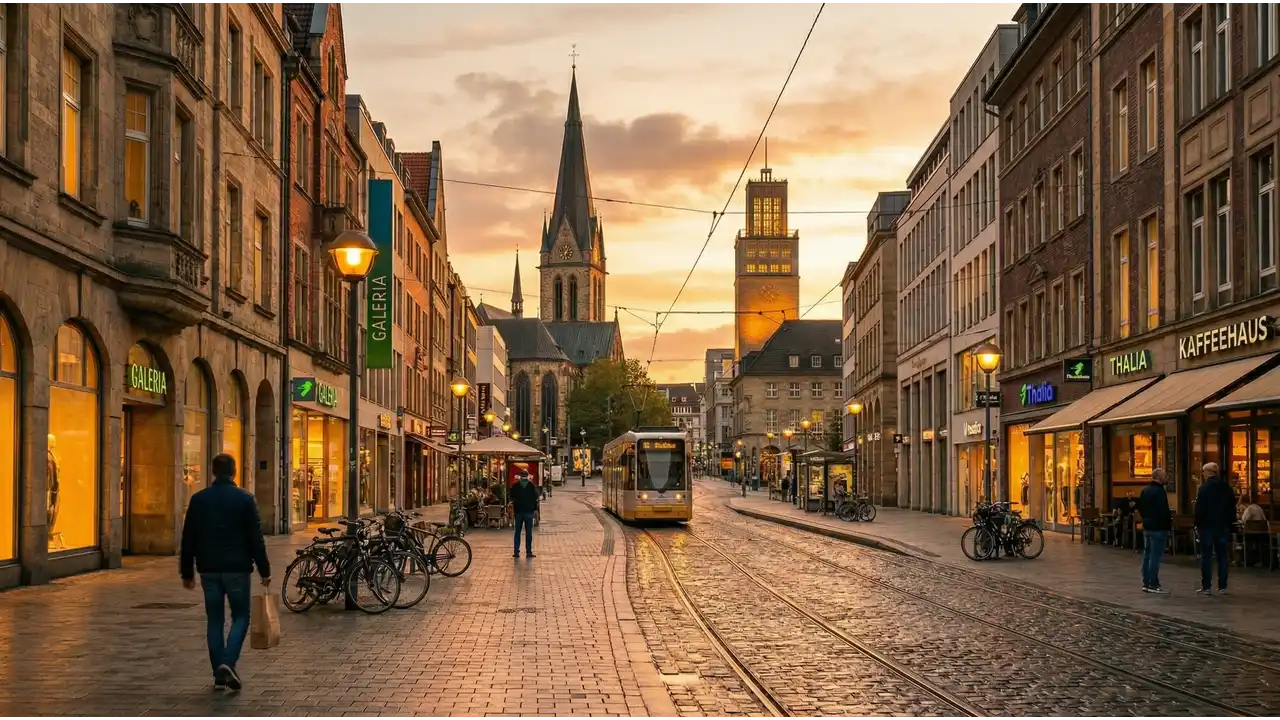
Bremen is a medium-sized port city in northwestern Germany with around 570,000 residents. It functions as an independent city-state within the German federal system. The city has a maritime heritage visible in its architecture and economy, with significant shipping and automotive sectors. Daily life centers on cycling, public transit, and pedestrian neighborhoods. The climate is temperate maritime: cold, wet winters and mild summers. The population is mixed, with growing expat communities from Eastern Europe, Southern Europe, and Asia. Social life revolves around cafes, beer gardens, markets, and the Weser riverfront.
💡 Local Insights
Bremen · 2026
Bremen's cost of living reflects its position as a smaller economic hub compared to Hamburg or Berlin. Housing averages $701/month and anchors the budget. A one-bedroom apartment in the Altstadt or Neustadt runs $650-$750/month; outer districts like Gröpelingen or Huchting drop to $550-$650. Shared flats are cheaper. Groceries average $371/month for a single person buying from Aldi, Lidl, or Penny. A liter of milk costs roughly $1, bread $1.50, chicken breast $6 per kilogram. Eating out is moderate: kebab around $5-$7, restaurant mains $12-$18. Public transport (tram, bus) costs $58 per month for a city pass or $10 per day. Bikes are the primary transport. Utilities (electricity, water, heating) run $100-$150/month. Expats and locals pay identical prices. The city's affordability comes from being outside the Berlin-Munich-Hamburg premium corridor, though rents have risen steadily. German language skills help with rentals and jobs, but English works in service industries.
Frequently Asked Questions
How much does it cost to live in Bremen per month?
A moderate lifestyle in Bremen costs around $1,850/month. This breaks down roughly as: housing $701, groceries $371, transport $60, utilities $120, and dining/entertainment $600. A budget tier lifestyle runs $1,110/month (cutting entertainment and eating out). A comfortable lifestyle with regular dining out, hobbies, and travel costs $2,868/month. Actual costs vary significantly by neighborhood and personal habits. Remote workers and those with stable employment often find Bremen manageable; students and service workers operate closer to the budget tier.
What is the average rent in Bremen?
Average housing costs are $701/month. A one-bedroom apartment in central neighborhoods (Altstadt, Neustadt, Findorff) typically rents for $650-$800/month; the same apartment in outer areas (Gröpelingen, Huchting, Mahndorf) runs $550-$700/month. Shared flats average $400-$550 per room. Two-bedroom flats range $800-$1,100/month depending on location. Prices have risen 3-5% annually. Most rentals require proof of income (typically 3x monthly rent), a German bank account, and a deposit of 1-2 months' rent. Furnished apartments cost 10-20% more. Real estate agencies charge a finder's fee equal to one month's rent plus VAT.
Is Bremen cheap to live in for expats?
Bremen is genuinely affordable compared to major Western European cities but not the cheapest option in Germany. Housing is $200-$300/month cheaper than Hamburg and $400+ cheaper than Munich or Berlin's central areas. Groceries and dining out are comparable across German cities. Expats from North America or Western Europe typically find Bremen inexpensive; those from Poland, Romania, or Turkey may find it costly. The city offers reasonable quality of life without the premium pricing of larger financial centers. However, salaries are also lower than in top-tier cities, so the advantage for remote workers is greater than for local employment seekers.
How much does food cost per month in Bremen?
Groceries average $371/month for one person. Weekly shopping at discount chains (Aldi, Lidl) costs $15-$20 for basics. Specific prices: milk $1/liter, bread $1.50-$2, eggs $2.50 per dozen, chicken $6/kilogram, ground beef $7/kilogram, apples $1.50/kilogram, cheese $8/kilogram. Eating out is moderate: a kebab $6, pizza slice $3, restaurant main course $14-$18, coffee $2.50. Supermarkets like Edeka or Rewe cost 15-20% more than discounters. Farmers markets (Markthalle, Wochenmarkt) offer seasonal produce at competitive prices. International grocers in Neustadt stock Asian and Eastern European items at reasonable markups.
What salary do you need to live comfortably in Bremen?
A comfortable lifestyle costs around $2,868/month, suggesting a gross monthly income of roughly $3,800-$4,200 (accounting for German income tax and social contributions). For a single person, net income of $2,400-$2,600/month covers comfortable living with regular dining out, hobbies, and modest travel. Two income earners at $2,000/month each live very comfortably. The minimum wage in Germany is approximately $12/hour; full-time minimum wage work yields roughly $1,800-$2,000/month net, barely covering the moderate budget. Professional salaries (IT, engineering, healthcare) typically range $2,800-$4,500/month net. Remote workers from higher-wage countries find Bremen very comfortable; local service sector workers budget tightly.
How does the cost of living in Bremen compare to other places?
Bremen sits in the mid-range for German cities. It is 15-20% cheaper than Hamburg and 25-30% cheaper than Munich on housing, while groceries and utilities are similar. Compared to Berlin, Bremen is slightly cheaper overall ($1,850 vs $1,750/month), though Berlin's periphery offers pockets of lower rents. Against European capitals, Bremen is significantly less expensive than Amsterdam, Copenhagen, or Stockholm, but slightly more expensive than Prague or Budapest. For expats from North America, Bremen feels affordable; for those from London or Scandinavia, it is a modest step down. Against German university towns like Heidelberg or Freiburg, Bremen is similarly priced but with more job options.
Can you live in Bremen on $1,110/month?
Yes, but with tight constraints. The budget tier of $1,110/month requires housing around $500-$550/month (shared flat in outer district), groceries $280-$300/month (discount chains only), transport $50/month (public transit pass), and utilities $100/month. This leaves roughly $130/month for phone, internet, healthcare contributions, and minimal discretionary spending. Eating out is rare. No travel budget exists. This works for students (with BAfoG or family support), long-term travelers with savings, or locals with subsidized housing. It is not sustainable for single adults on local wages without additional income or support. Those earning service sector wages ($1,400-$1,800/month net) use the moderate budget and cut savings or entertainment.