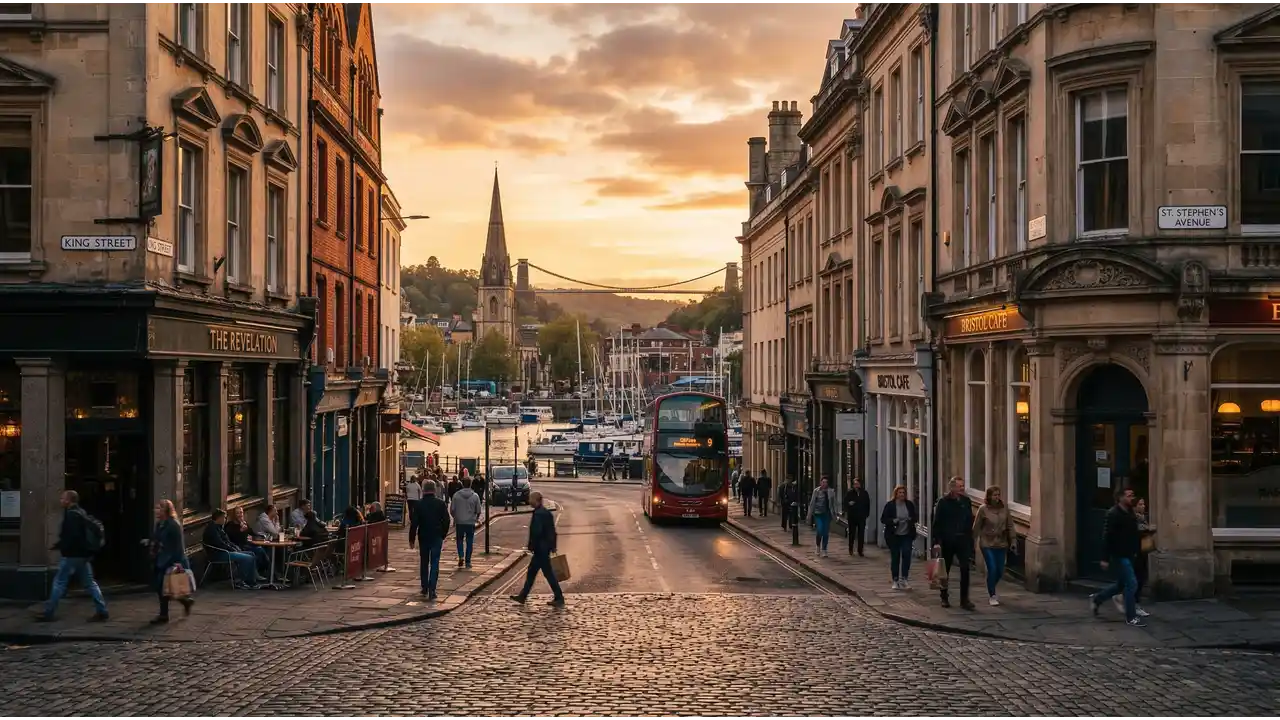
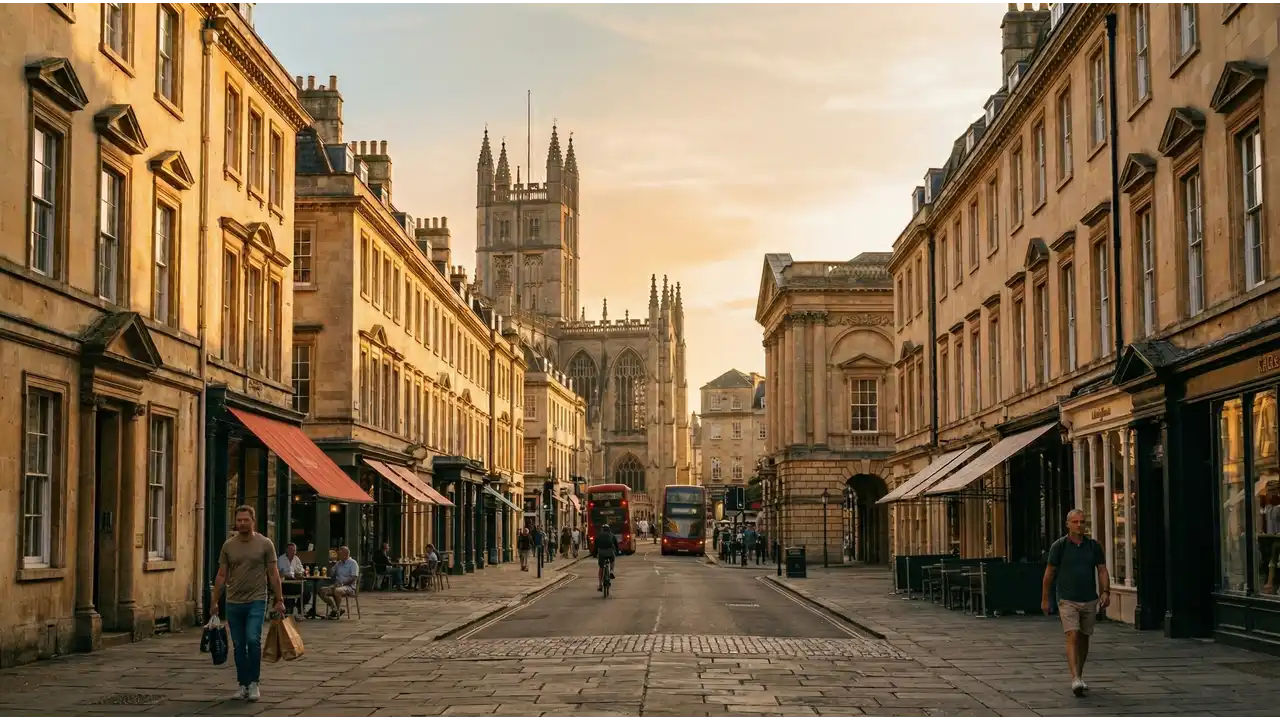
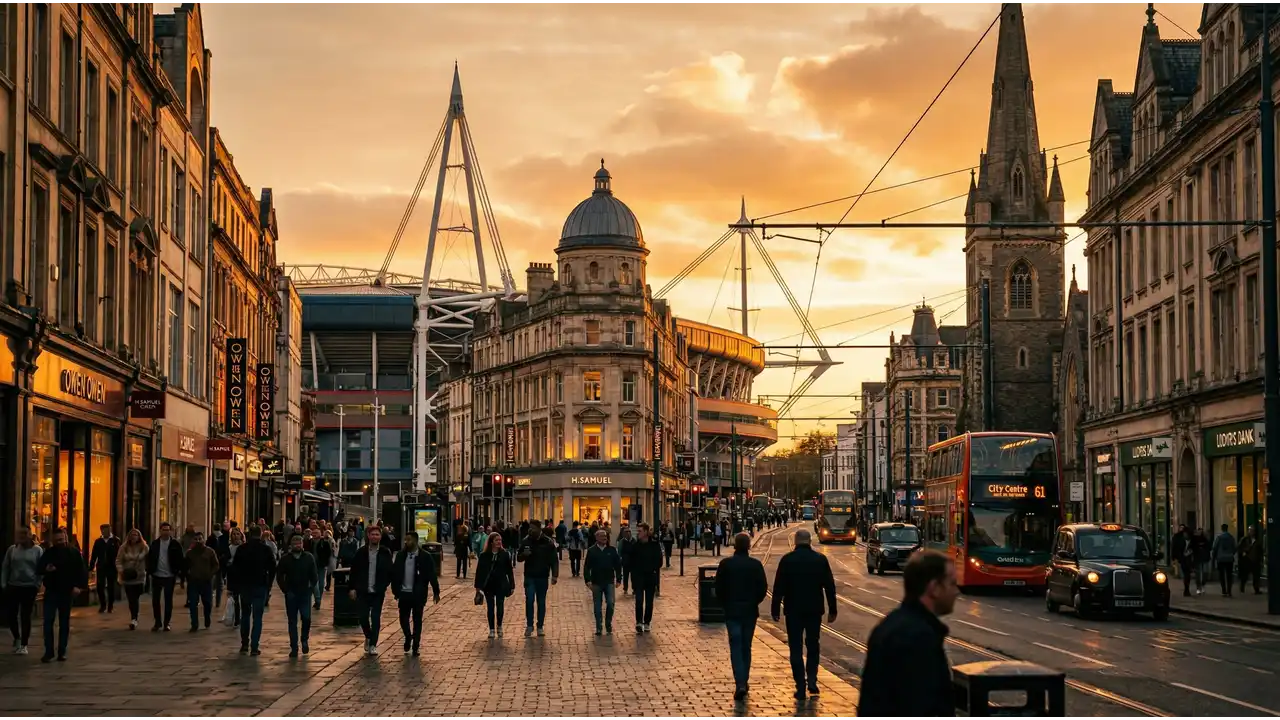
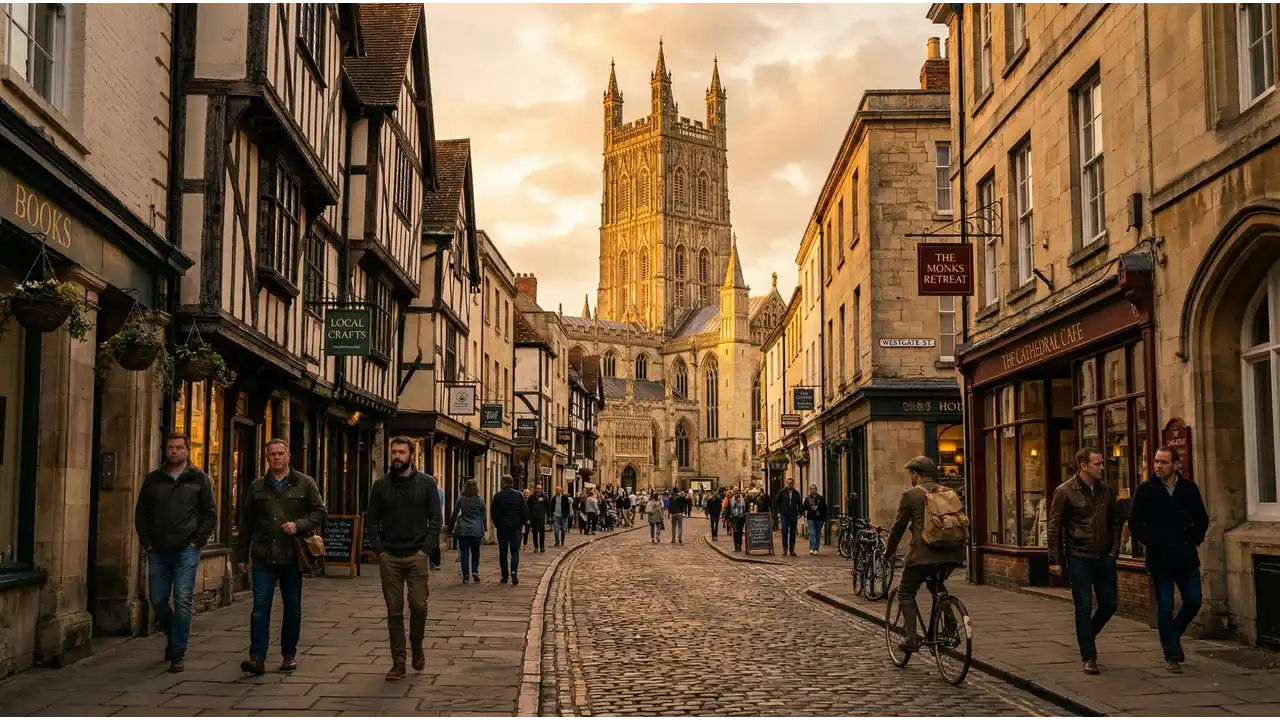
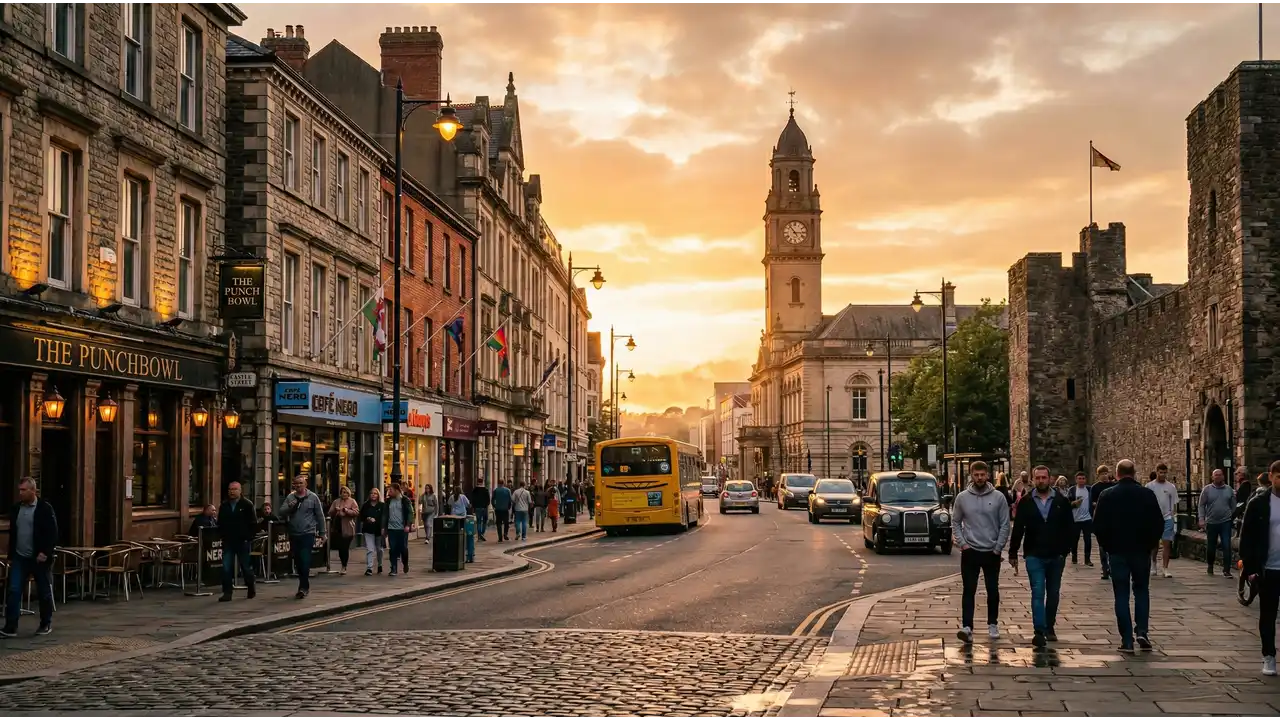
Bristol is a post-industrial city in southwest England that has become a center for creative industries, tech startups, and higher education. The population is around 465,000, with a younger demographic drawn by universities and the creative sector. Daily life revolves around neighborhoods like Clifton, Stokes Croft, and Bedminster, each with distinct character. The city sits on the Avon Gorge; weather is mild but rainy. Public transport relies on buses (limited rail). Food culture mixes independent cafes, street food markets, and chain retailers. It feels less polished than London but significantly less expensive, with gentrification ongoing in pockets rather than wholesale.
💡 Local Insights
Bristol · 2026
Bristol's cost structure is shaped by its transition from manufacturing to services and creative economy. Housing costs ($1,574/month on average) vary sharply by neighborhood. Clifton and Redland command higher prices; Bedminster, Southville, and Stokes Croft are cheaper but still rising. Most renters share properties or accept older housing stock. Grocery costs ($379/month) are similar to UK averages; budget chains (Aldi, Lidl, Tesco) are standard. Eating out is cheaper than London but not dramatically so (cafe coffee, $2.50-3; lunch, $8-12). Transport costs are moderate: a bus pass runs around $60/month, though the network doesn't cover all areas well. Expats often find Bristol affordable compared to London or Southeast England but pricier than Northern cities. Council tax (local property tax), utilities, and childcare can shift monthly totals substantially. Wages in creative and tech roles tend to be lower than London equivalents, which affects real purchasing power.
Frequently Asked Questions
How much does it cost to live in Bristol per month?
A moderate lifestyle in Bristol costs around $2,750/month. This covers rent ($1,574/month), groceries ($379/month), utilities, transport, and discretionary spending. The budget tier is $1,650/month (shared housing, minimal eating out, no car). The comfortable tier is $4,263/month (private flat, regular dining out, leisure activities). Actual costs depend heavily on neighborhood, household size, and personal habits. Council tax adds $100-200/month depending on property band.
What is the average rent in Bristol?
Average rent is $1,574/month for a one-bedroom apartment in a central or popular area. A two-bedroom flat typically runs $1,850-2,100/month. Neighborhoods vary considerably: Clifton and Redland command $1,700-2,000+ for one-bedroom; Bedminster, Southville, and Stokes Croft range $1,400-1,700. Outer neighborhoods like Filton or Yate drop to $1,200-1,400. Most renters share properties, which reduces individual cost to $700-1,000/month. Landlord deposits equal five weeks' rent. Council tax and utilities add $150-250/month.
Is Bristol cheap to live in for expats?
Bristol is cheaper than London, Edinburgh, or Manchester, but more expensive than most UK regional cities (Leeds, Sheffield, Newcastle). For expats from North America or Western Europe, it feels moderately priced. Rent is significantly lower than central London or Sydney; groceries and dining are comparable to medium-sized US cities. However, expats accustomed to lower-cost countries (Southeast Asia, Eastern Europe, Latin America) will find it noticeably dear. Salary expectations for expats are often lower than in London, which affects real purchasing power.
How much does food cost per month in Bristol?
Groceries for one person average $379/month. Budget chains (Aldi, Lidl) offer basics 10-20% cheaper than Sainsbury's or Waitrose. A loaf of bread costs $1-1.50; milk, $0.80-1.20; chicken breast, $4-6/lb. Farmers markets in Stokes Croft and St Nicholas offer cheaper seasonal produce. Eating out is moderate: chain restaurant lunch, $8-12; independent cafe, $10-15; pub meal with drink, $15-20. Takeaway costs $10-15 per meal. Alcohol (pub pint) runs $5.50-6.50.
What salary do you need to live comfortably in Bristol?
A comfortable lifestyle costs around $4,263/month, suggesting a gross annual salary of $55,000-65,000 (roughly GBP 35,000-40,000 after tax). This buys a one-bedroom private flat, regular dining out, hobbies, and modest savings. For couples, $40,000 combined after tax is tight; $60,000 is comfortable. Graduate roles in tech or creative sectors typically start at GBP 28,000-32,000 (after tax, $1,800-2,100/month), which requires careful budgeting. Senior professionals earn $55,000-80,000+ gross, placing them firmly in comfort territory.
How does the cost of living in Bristol compare to other places?
Bristol sits in the middle of the UK cost spectrum. A moderate lifestyle in Bristol runs $2,750 per month, with housing at $1,574 per month.
Compared to peer cities, Manchester is noticeably cheaper at $2,475 for a moderate lifestyle and $1,332 for housing. Liverpool offers even more savings at $2,125 overall and $1,030 for housing, making it a solid option if budget is your priority.
London, by contrast, is substantially more expensive. A moderate lifestyle in London costs $4,525 monthly, nearly double Bristol's figure, with housing alone at $3,027 per month.
Bristol's positioning makes it attractive if you want a major UK city without London's premium. You'll pay more than post-industrial northern cities, but gain the cultural infrastructure and job market of a genuine regional hub.
Yes, but with constraints. The budget tier at $1,650/month assumes shared housing ($700-900/month), groceries ($300-350/month), and minimal discretionary spending. You cannot afford a private one-bedroom flat on this budget in any central area. Shared housing in outer neighborhoods (Southmead, Hengrove, Bedminster fringe) is possible. Eating out is rare; takeaway is a weekly treat. No car; public transport only. This budget suits students, early-career workers, or those with supplementary income. Council tax and utilities can push monthly actual costs above $1,650, creating shortfalls.