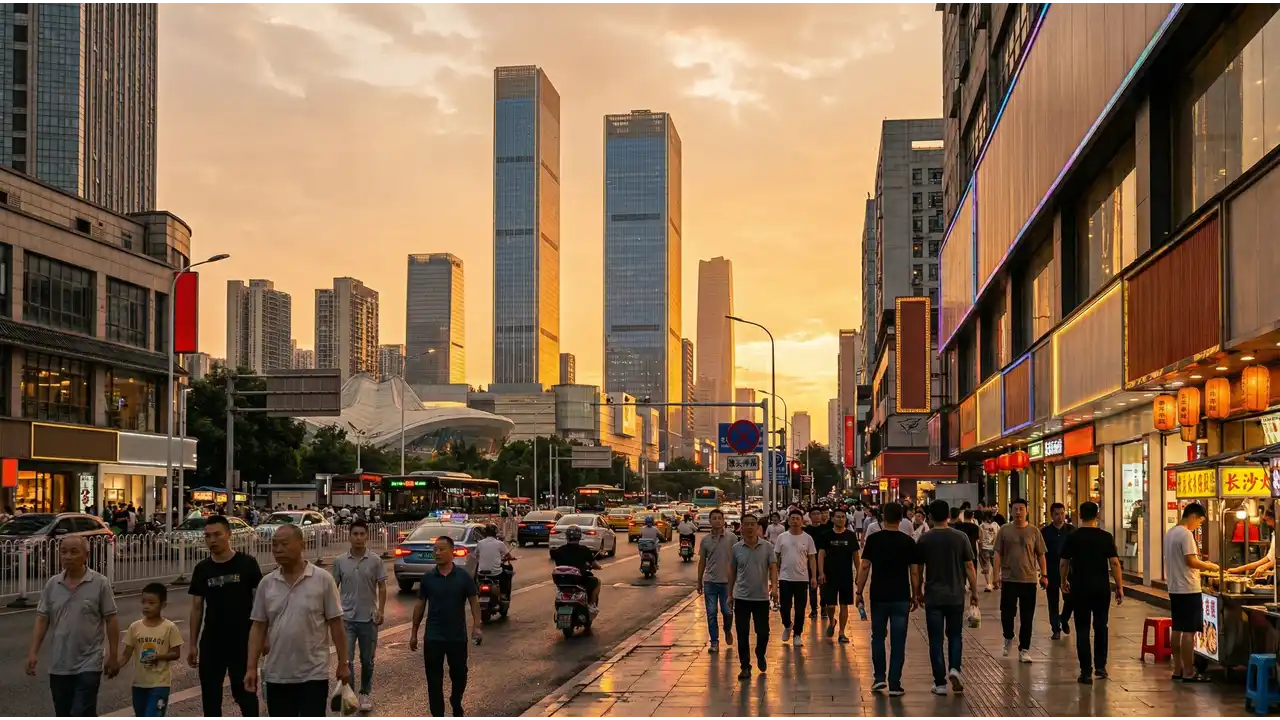
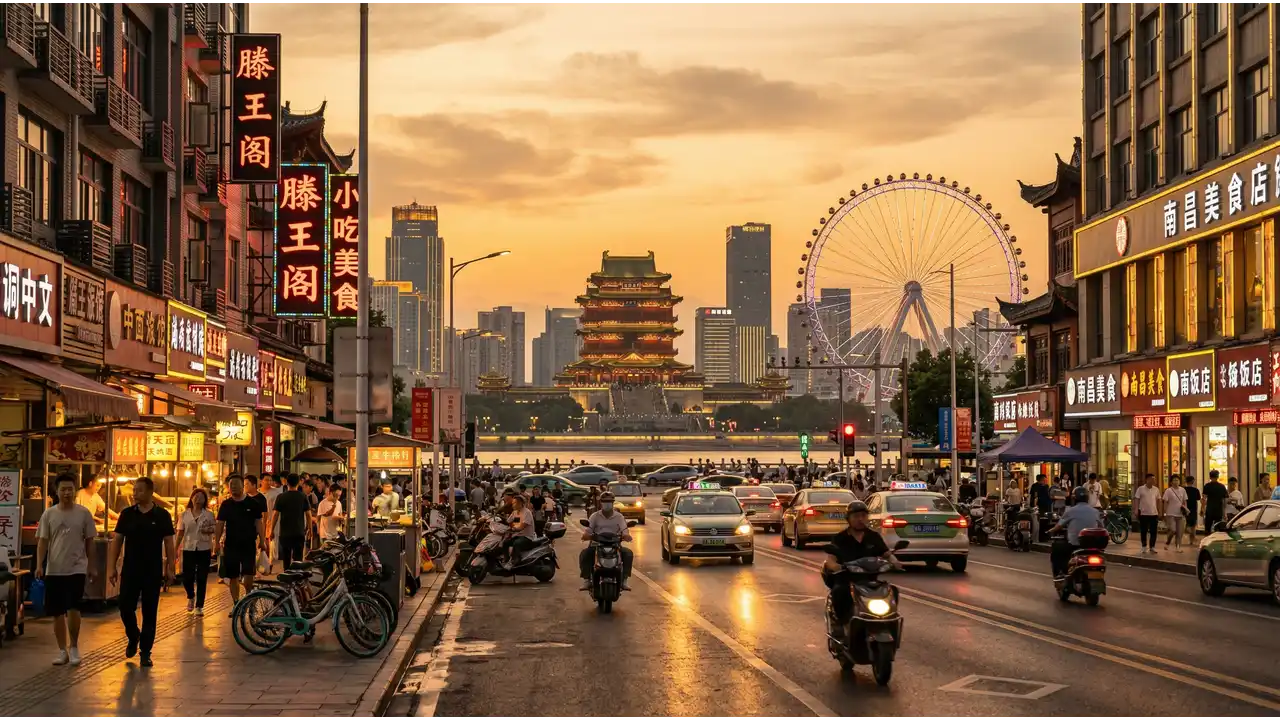
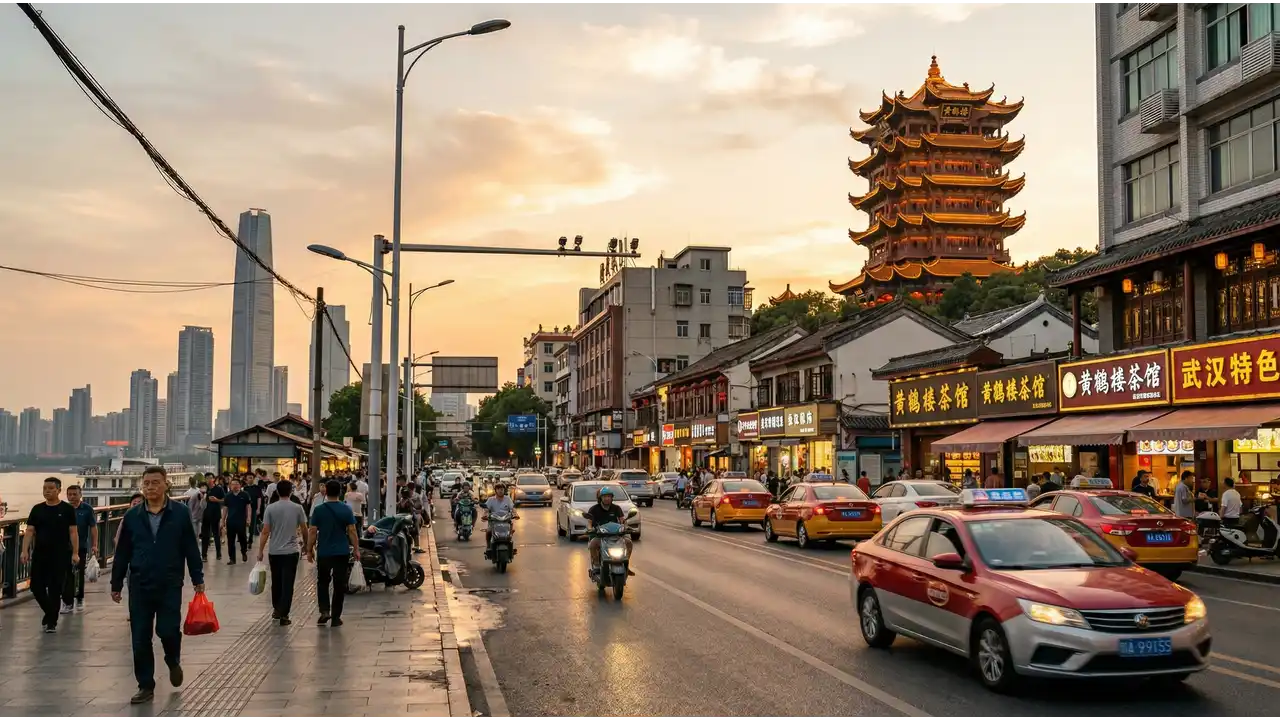
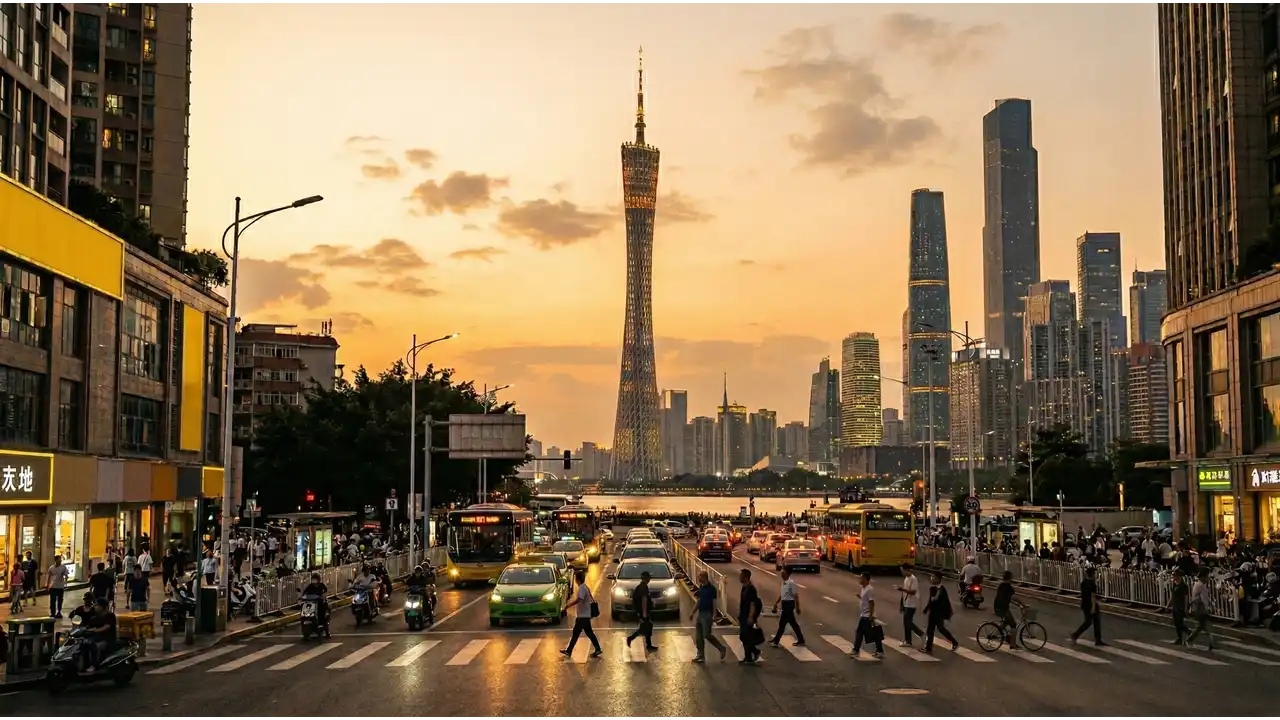
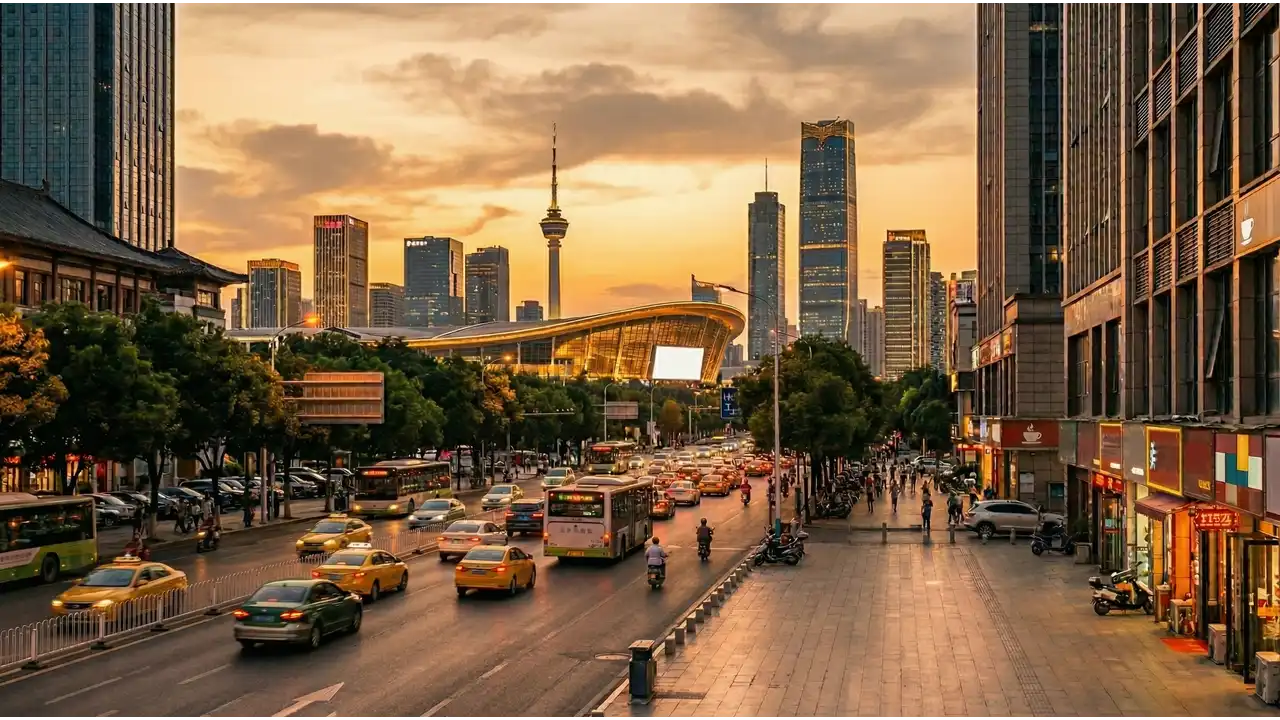
Changsha, capital of Hunan Province, is a manufacturing and education hub of roughly 8 million people along the Xiang River. The city has grown rapidly as a regional center for electronics, machinery, and textiles. Daily life centers on dense urban neighborhoods, night markets, and an extensive bus network. Summers are hot and humid. winters mild. The majority of residents are Han Chinese; expat communities exist but remain small outside university and corporate sectors. Local transport is affordable and reliable. The pace is less frenetic than first-tier cities like Shanghai or Beijing.
💡 Local Insights
Changsha · 2026
Changsha operates on a third-tier city cost structure, making it significantly cheaper than coastal hubs while offering modern infrastructure. Housing runs around $250/month and anchors the budget. A small apartment in central districts like Wuyi or Huangxing rents for $200–$350/month. Older, outer residential areas drop to $120–$180/month. Food shopping at wet markets and supermarkets averages $169/month for groceries. Local produce, rice, and eggs are cheap; imported goods cost 2–4 times more. Eating at local restaurants costs $2–$5 per meal. Public buses cost $0.40–$0.60 per ride; metro cards exist in limited form. Utilities run $20–$40/month. Expats and locals pay the same prices at markets, but expats sometimes face higher rents in foreign-friendly compounds. Getting a local bank account and using mobile payments (WeChat Pay, Alipay) cuts transaction friction significantly.
Frequently Asked Questions
How much does it cost to live in Changsha per month?
A moderate lifestyle in Changsha costs $775/month. This covers housing around $250, groceries $169, utilities $25–$40, local transport $15–$20, and meals out or personal items $200–$250. A tighter budget of $465/month is feasible by limiting eating out and renting in outer areas. A comfortable lifestyle with dining out regularly and more flexibility runs $1,201/month. These figures are based on consistent spending patterns for a single person or couple.
What is the average rent in Changsha?
Average rent is approximately $250/month. A studio or one-bedroom apartment in central neighborhoods like Wuyi, Huangxing, or near the university district ranges $200–$350/month. Outer residential zones offer $120–$180/month for similar space. Furnished apartments for expats in managed compounds run $350–$500/month but are optional. Rental agreements are typically month-to-month or annual. Most landlords prefer cash or local bank transfer; deposits equal one month's rent.
Is Changsha cheap to live in for expats?
Yes, Changsha is markedly cheaper than Beijing, Shanghai, or Shenzhen. At $775/month for a moderate lifestyle, an expat earning a mid-level salary in home currency stretches far. However, it is not as affordable as rural Hunan or smaller cities. Expats report comfortable lives on $1,000–$1,500/month including some dining out and travel. Work visas and residency permits are straightforward for qualified professionals. The smaller expat population means fewer English-language services; Mandarin basics help significantly.
How much does food cost per month in Changsha?
Groceries average $169/month. Wet markets offer rice at $0.30/kg, vegetables $0.40–$0.80/kg, eggs $0.80/dozen, and pork $4–$6/kg. Supermarkets cost 20–30 percent more. Eating out at casual noodle shops, street stalls, or small restaurants runs $2–$4 per meal. Mid-range restaurants charge $5–$8. Imported foods (cheese, cereal, chocolate) cost 3–5 times more than local equivalents. Coffee at a cafe is $2–$3. Mobile payment adoption makes daily shopping straightforward.
What salary do you need to live comfortably in Changsha?
A comfortable lifestyle costs $1,201/month, roughly $14,400/year. For stability and some savings, earn $1,500–$2,000/month. Local salaries for entry-level office work range $400–$700/month; university teachers or skilled professionals earn $800–$1,500/month. Expats on company assignments often receive housing allowances, making life far easier. If funding yourself through freelance work or savings, budget conservatively and maintain three months of expenses in reserve.
How does the cost of living in Changsha compare to other places?
Changsha sits in the lower-middle range for Chinese cities. A moderate lifestyle runs $775 per month with housing at $250 per month, making it noticeably cheaper than Chengdu, where the same lifestyle costs $825 monthly and housing runs $361. You'll find Changsha significantly more expensive than Surat, which costs $550 for a moderate lifestyle, though housing prices in both cities are comparable at $250 and $254 respectively. If you're comparing to international cities, Changsha is roughly a third the cost of Amman, where moderate living reaches $1,075 monthly. For a Chinese provincial capital, Changsha offers solid value. The low housing cost relative to overall expenses reflects the city's ongoing development as a regional hub, with reasonable rents offsetting other daily costs.
Yes, but with tight constraints. Budget housing at $150–$180/month in outer districts, groceries $120–$140/month from wet markets, utilities $20/month, and transport $10/month leaves $60–$100 for everything else. This requires cooking at home, no eating out, no gym, and using local transit only. Emergencies or travel blow the budget immediately. Realistic for students, digital nomads with low overhead, or those supplementing with side income. Most need $600+/month for modest comfort.