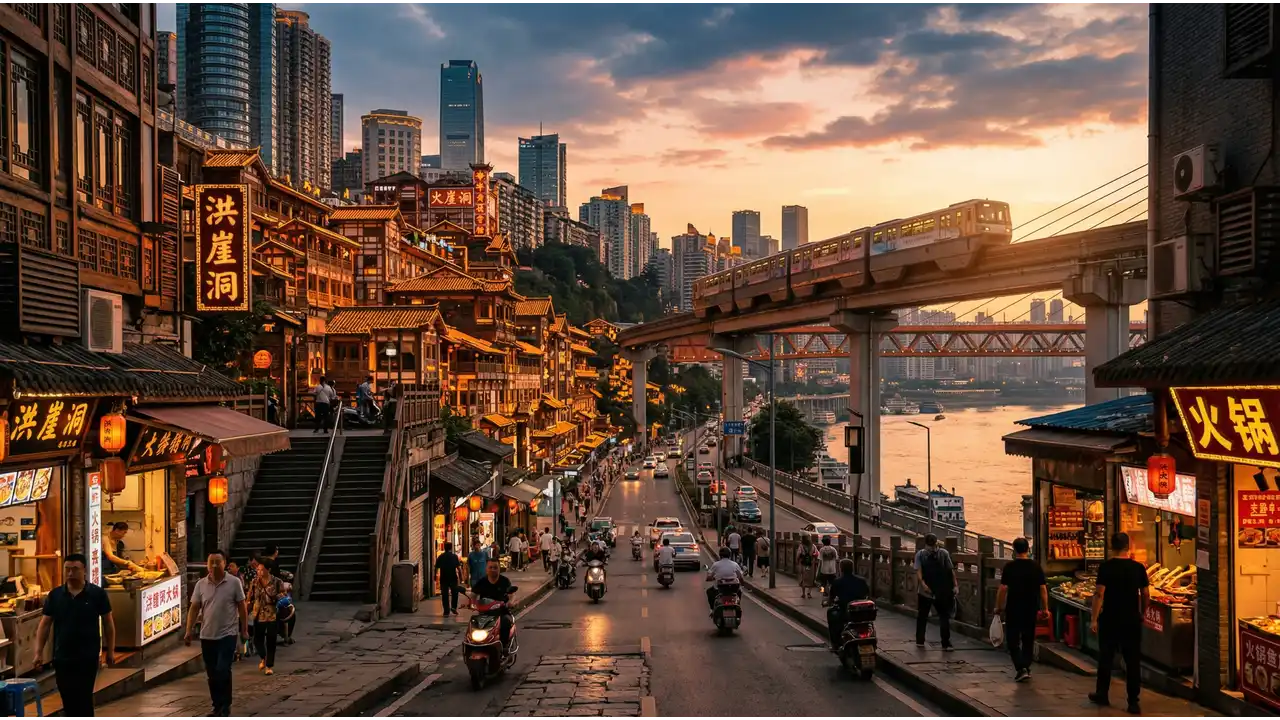
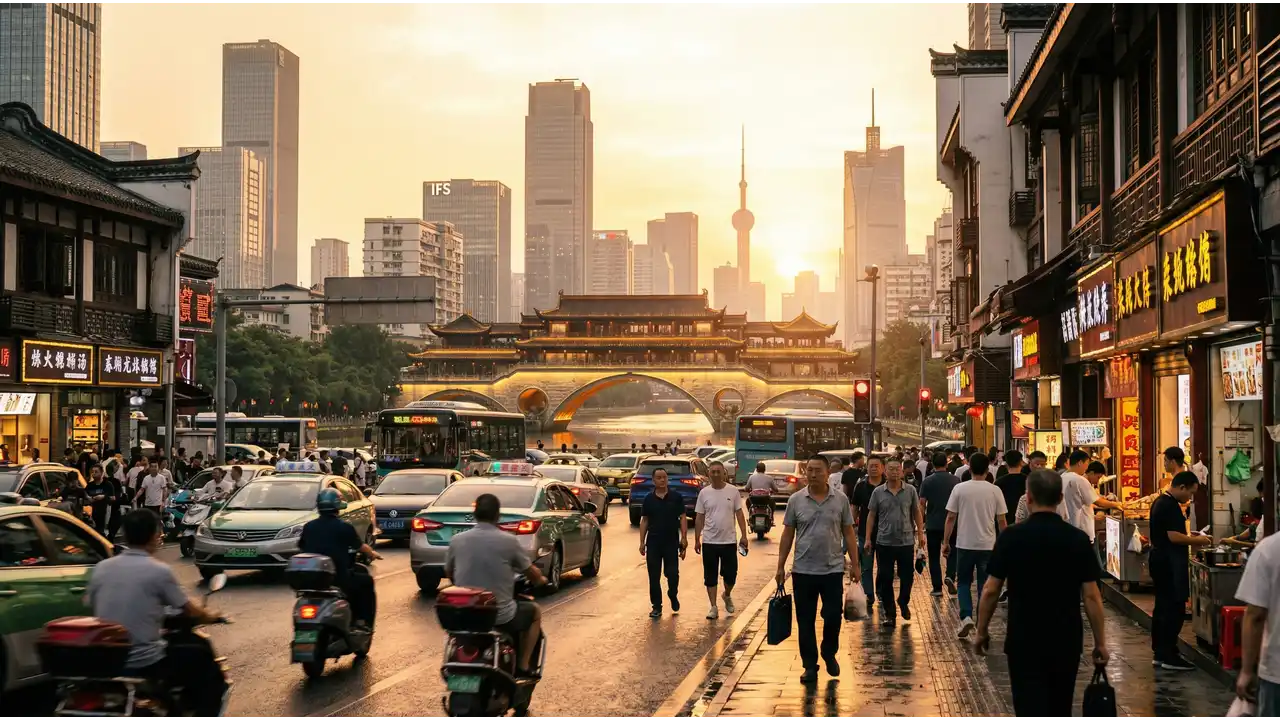
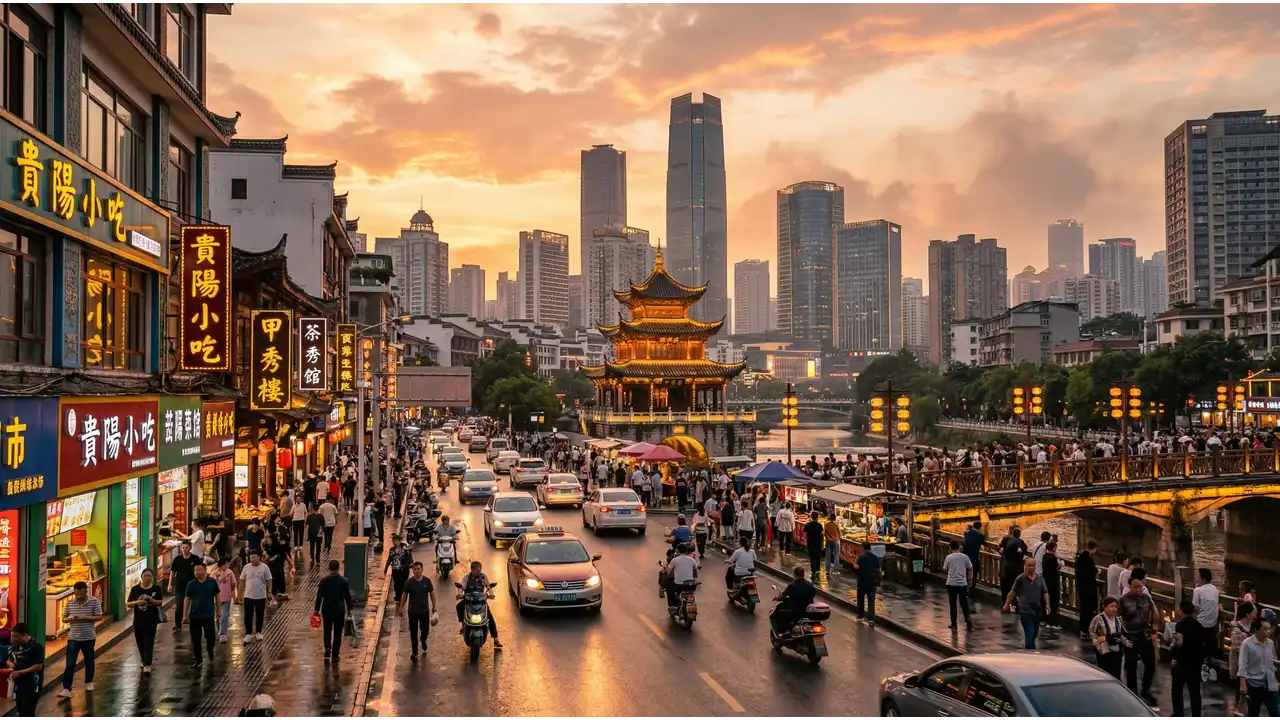
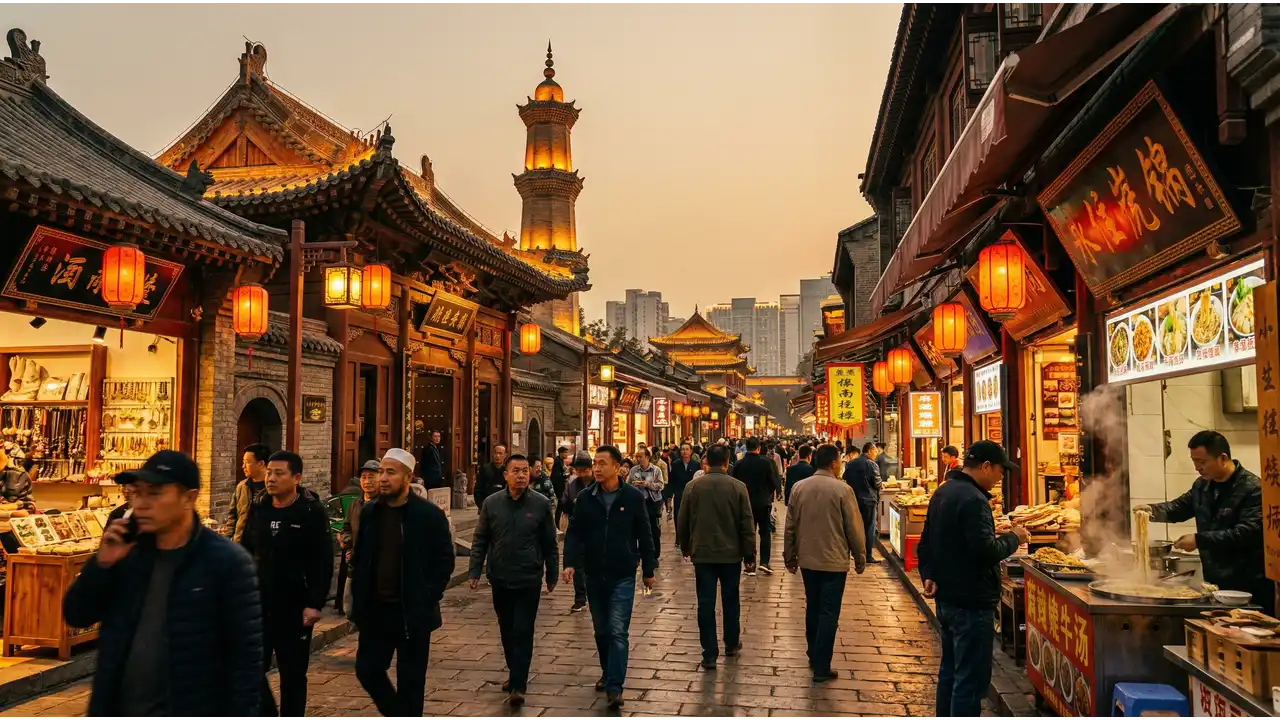
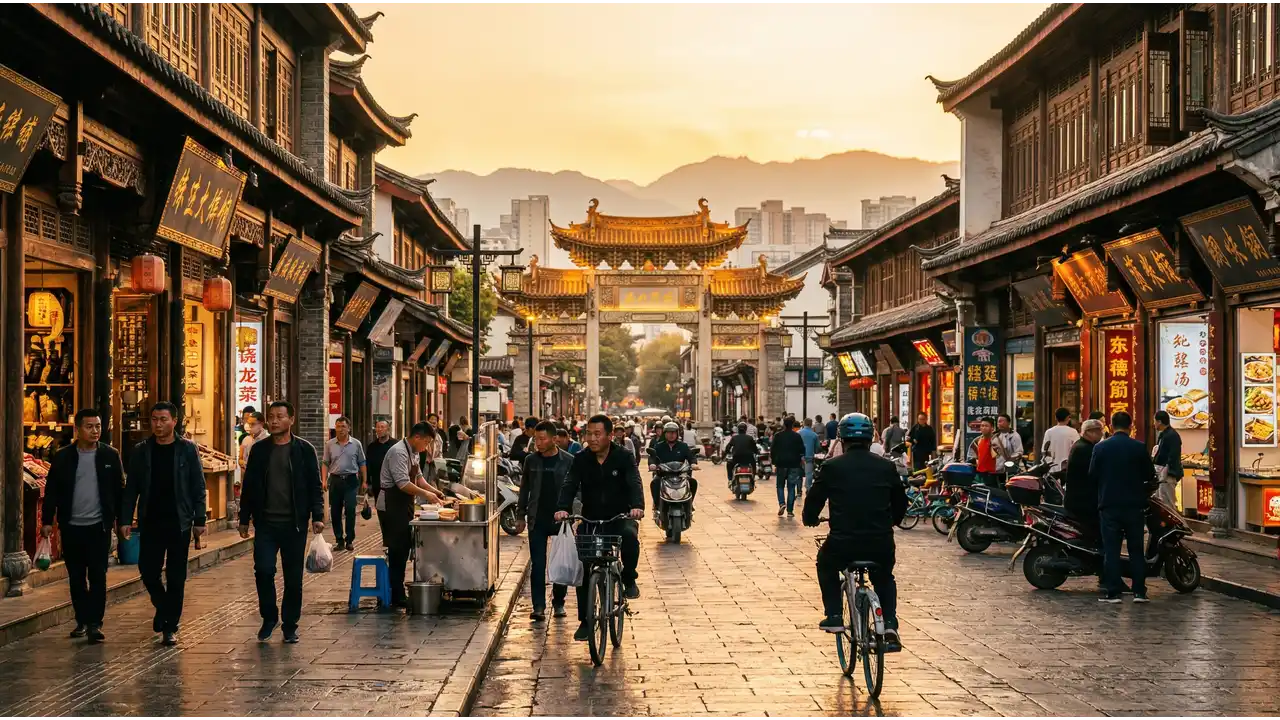
Chongqing is a sprawling megacity of 32 million people in southwestern China, built into steep terrain where the Jialing and Yangtze rivers meet. The climate is humid subtropical, with hot summers and mild winters, though winter damp can feel penetrating. Daily life revolves around street food stalls, crowded metro systems, and rapid urban development. Most residents are Chinese nationals; the expat population concentrates in central districts like Jiefangbei and Nanping. Apartment buildings dominate the skyline. Public transportation is extensive and cheap. The city feels less touristy than Shanghai or Beijing, with a working industrial edge underneath the modern construction.
💡 Local Insights
Chongqing · 2026
Chongqing's moderate cost of $775/month reflects both advantages and tradeoffs. Housing costs $312/month because residential property is abundant and real estate development is ongoing, keeping rental pressure lower than first-tier cities. A one-bedroom apartment in central neighborhoods runs $280-$350/month; outer districts drop to $200-$250/month. Shared flats are available from $150/month. Groceries cost $149/month because wet markets (菜市场) dominate food shopping, with rice under $0.50/pound, cabbage $0.30/pound, and eggs around $2/dozen. Expats buying imported goods at supermarkets will spend 40-60 percent more. Street food meals cost $1-$3. Metro fares are $0.30-$0.50/ride. Utilities (electricity, water, heating) add roughly $25-$40/month. Local salaries are substantially lower than first-tier cities, which keeps price inflation modest. Expat communities often negotiate furnished rental rates; speaking Mandarin or using a local agent unlocks better pricing.
Frequently Asked Questions
How much does it cost to live in Chongqing per month?
A moderate lifestyle in Chongqing costs $775/month. That breaks down to $312/month for housing (rent on a one-bedroom in central areas), $149/month for groceries, $30-$40/month for utilities, and the remainder split between transport ($15-$20/month on public transit), dining out ($100-$150/month on local restaurants), and miscellaneous expenses. A budget tier lifestyle costs $465/month; a comfortable tier with more restaurant meals and occasional imported goods runs $1,201/month. Individual expenses vary sharply based on whether you shop at wet markets or supermarkets, and whether you eat out frequently.
What is the average rent in Chongqing?
Average rent is $312/month. A one-bedroom apartment in central neighborhoods like Jiefangbei or Nanping runs $280-$350/month; two-bedroom apartments in the same areas cost $400-$500/month. Outer residential districts (Shapingba, Yubei) offer one-bedrooms for $200-$250/month. Shared flats rent from $120-$180/month per person. Furnished apartments for expats typically cost 20-30 percent more than unfurnished local rates. Utilities (electricity, water, internet) add $25-$40/month depending on usage and season. Most landlords accept month-to-month terms, though three or six month leases are standard. Negotiation through a local agent often yields 10-15 percent discounts compared to first-contact prices.
Is Chongqing cheap to live in for expats?
Yes, relative to most expat destinations. At $775/month for a moderate lifestyle, Chongqing is significantly cheaper than Shanghai ($1,100+/month), Beijing ($950+/month), or Guangzhou ($850+/month). Comparable cost-of-living cities for expats include Chengdu and Wuhan, both in the $700-$800 range. The key savings come from low housing costs, cheap local transportation, and affordable street food. However, expats who insist on Western groceries (imported cheese, beef, cereals) will spend substantially more. Healthcare and international school costs, if relevant, add significant expense outside the moderate budget. For remote workers earning in USD or EUR, Chongqing offers genuine financial flexibility.
How much does food cost per month in Chongqing?
Groceries cost $149/month buying locally. Wet markets offer rice ($0.40/pound), vegetables ($0.25-$0.50/pound), eggs ($2/dozen), and chicken ($2.50-$3.50/pound). Supermarket prices run 30-50 percent higher. Eating out is cheap: noodle soups cost $0.75-$1.50, rice bowls $1.50-$2.50, hot pot restaurants $8-$15/person. Street food (skewers, baozi, jianbing) runs $0.50-$2/item. Coffee at local cafes costs $2-$4; Western coffee shops charge $4-$6. A month of eating mostly local restaurants (breakfast and lunch from street vendors, dinners at small shops) runs $100-$150. Expats buying imported foods at chains like Carrefour or Auchan will double or triple grocery costs; budget-conscious expats using wet markets stay near the $149 baseline.
What salary do you need to live comfortably in Chongqing?
A comfortable lifestyle costs $1,201/month. That supports a pleasant one or two-bedroom apartment ($350-$400/month), regular meals at mid-range restaurants, occasional Western groceries, utilities, transport, and entertainment. For expats, this translates to roughly $1,300-$1,400/month after accounting for visa-related services, occasional travel, and higher imported goods costs. If your employer or remote work income lands in the $1,400-$1,600/month range, you can live comfortably without constant budget scrutiny. Teachers and English trainers often earn $1,200-$2,000/month locally; tech workers and business professionals earn significantly more. The comfortable tier assumes you're not supporting dependents or paying for international schooling; those add substantial costs outside this figure.
How does the cost of living in Chongqing compare to other places?
Chongqing is genuinely affordable for a major Chinese city. A moderate lifestyle costs $775 per month, with housing running $312 per month. That's slightly cheaper than Wuhan, which sits at $825 for the same lifestyle tier and $320 for housing. If you're coming from Guangzhou, expect to spend considerably less. Guangzhou runs $1,100 monthly with $508 in housing costs. Chongqing also undercuts Kathmandu on total living expenses ($550 per month there), though Kathmandu's housing is much cheaper at $164 per month. For expats and locals alike, Chongqing offers strong value in a sprawling, vibrant metropolis with excellent transport and dining. Your money stretches further here than in China's tier-one cities, while still providing urban amenities and infrastructure.
Yes, but with discipline. At budget tier ($465/month), you afford a $200-$220/month room in an outer district or shared flat, $100/month on groceries from wet markets only (no imported goods), $20/month transport, $25-$30/month utilities, and $70-$90 on occasional eating out and necessities. This means cooking most meals, using public transit exclusively, minimal entertainment spending, and living in less convenient neighborhoods. It's viable for students, digital nomads with very low spending, or long-term residents who've minimized costs. You'll miss out on restaurant meals, cafes, and Western products. Many people on tight budgets supplement by teaching English ($15-$25/hour) or freelance work. It's doable, not comfortable, and requires accepting a fairly basic apartment and minimal discretionary spending.