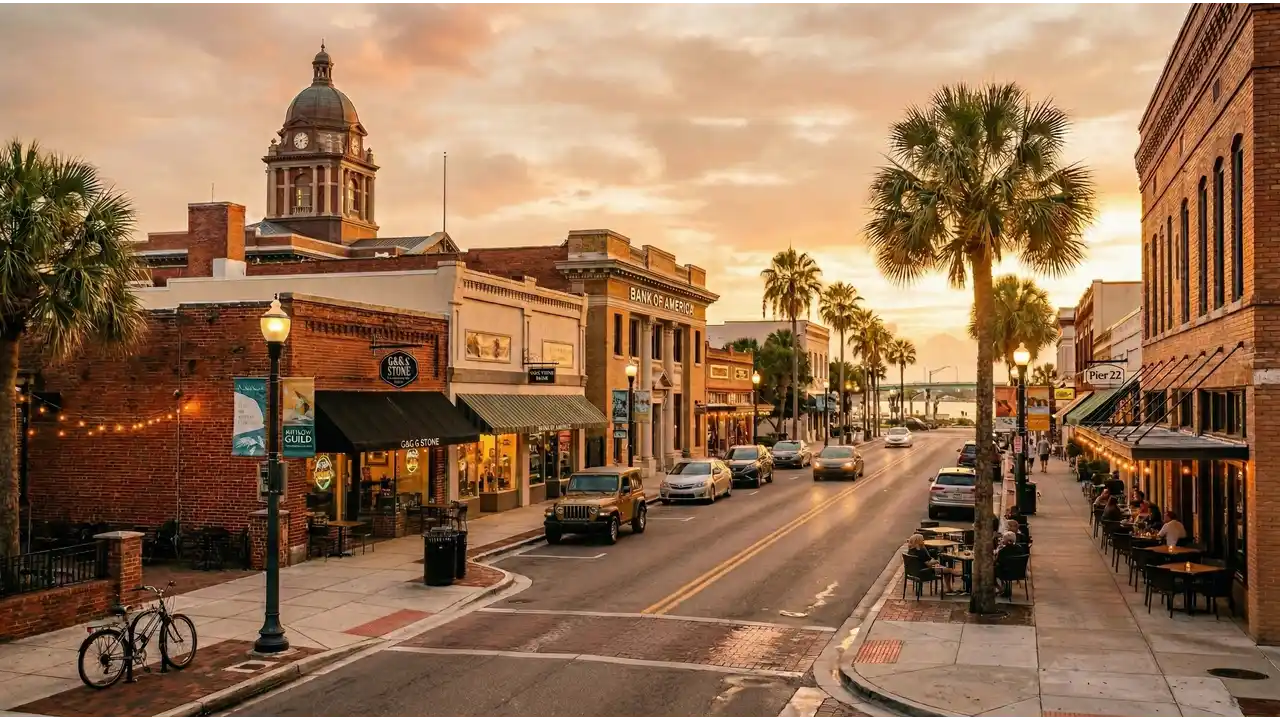
Clearwater is a mid-size beach city on Florida's west coast, about 20 miles northwest of Tampa. The population is roughly 115,000, with a significant retiree demographic alongside working families and young professionals. Daily life centers on the waterfront and downtown core, though suburban neighborhoods spread inland. The Gulf of Mexico dominates the landscape and culture. Summers are hot and humid with afternoon thunderstorms; winters are mild. Traffic congestion is moderate except on US 19, the main north-south corridor. The city has a laid-back pace compared to Tampa or Miami, with less nightlife but more beach access and parks.
💡 Local Insights
Clearwater FL · 2026
Clearwater's costs are moderate by Florida standards, driven primarily by housing demand near the Gulf. Rental housing averages $1,522/month across the area, with one-bedroom apartments in downtown or beachside neighborhoods ranging from $1,400 to $1,700, while suburban three-bedroom homes rent for $1,600 to $2,000. Prices rise sharply within a few blocks of the beach itself. Groceries cost about $517/month for a moderate diet, slightly above the national average, because fresh produce and specialty items carry Gulf Coast markups. Eating out is cheaper than coastal California but pricier than inland Florida. Public transit (PSTA bus system) costs $2.50 per ride; most residents drive. Utilities run $150 to $200/month year-round due to air conditioning. Property taxes and insurance on owned homes are reasonable compared to the Northeast but add up quickly. The biggest variable is beach proximity: living within walking distance of the sand costs substantially more than neighborhoods two miles inland.
Frequently Asked Questions
How much does it cost to live in Clearwater FL per month?
A moderate lifestyle in Clearwater costs $3,125/month. This breaks down as: housing $1,522, groceries $517, utilities and services $400, transportation $250, and dining/entertainment $300. A tight budget runs $1,875/month if you rent outside the beach area, skip dining out, and minimize discretionary spending. A comfortable lifestyle costs $4,844/month, which includes a better rental, frequent restaurant visits, and more flexibility on shopping and activities. Actual costs vary by neighborhood and personal spending habits.
What is the average rent in Clearwater FL?
Average rent in Clearwater is $1,522/month. One-bedroom apartments in downtown or mid-range neighborhoods run $1,400 to $1,650/month. Two-bedroom apartments or small homes rent for $1,600 to $1,900/month. Direct beachfront or beach-adjacent properties (within two blocks of sand) command $1,800 to $2,200+/month for comparable units. Inland suburbs offer slightly lower rents, $1,350 to $1,550/month. Seasonal rentals spike during winter months (January-March). Long-term leases of six months or more often receive 5-10% discounts. Most landlords require first, last, and security deposit upfront.
Is Clearwater FL cheap to live in for expats?
Clearwater is moderately priced for expats, cheaper than Miami or Fort Lauderdale but more expensive than inland Florida or most of the Midwest. At $3,125/month for a moderate lifestyle, it's comparable to mid-tier US cities like Austin or Portland. Expats enjoy no visa-based pricing discrimination; costs are the same as for US citizens. The main advantage is the lifestyle: year-round warm weather, beach access, and a relaxed pace. Downsides include Florida's humidity, limited public transit, and car dependency. For remote workers on typical North American salaries, Clearwater is comfortably affordable. For those on reduced overseas budgets, the $1,875/month tier requires careful choices about neighborhood and dining.
How much does food cost per month in Clearwater FL?
Groceries average $517/month for one person on a moderate diet. A gallon of milk costs about $3.50, a pound of chicken breast $5.50, and a dozen eggs $2.80. Weekly produce (seasonal citrus is cheaper) runs $25-35. Prepared foods and specialty items carry markups typical of coastal Florida. Eating out ranges from $12-18 for casual meals (tacos, sandwiches) to $20-35 per person at mid-range restaurants. Chain grocers (Publix, Winn-Dixie) dominate; Hispanic and international markets offer cheaper produce. Farmers markets operate year-round but prices peak in summer when local supply is lowest.
What salary do you need to live comfortably in Clearwater FL?
For a comfortable lifestyle, plan on $4,844/month, or roughly $58,000/year gross income (accounting for taxes). This budget allows a nicer one or two-bedroom rental ($1,800-2,000), regular restaurant dining, car ownership with insurance, and discretionary activities. If you have dependents, add $1,000-1,500/month per child for childcare and education. Couples with combined household income of $70,000-80,000/year can live well here with modest savings. Remote workers and retirees with investment income often find Clearwater very affordable. The key variable is housing choice; picking an inland neighborhood instead of beachside reduces the comfortable tier significantly.
How does the cost of living in Clearwater FL compare to other places?
Clearwater is cheaper than Miami ($3,600+ moderate), Fort Lauderdale ($3,800+), and San Diego ($4,200+), but more expensive than Jacksonville ($2,700+), Austin ($3,000), and Raleigh ($2,900). Compared to coastal Northeast cities like Boston or New York, Clearwater is 25-35% cheaper overall, primarily because housing is lower despite Florida's humidity and heat. Retirees often find it competitive with Arizona locations like Phoenix. The gap narrows when accounting for utilities (year-round air conditioning costs more than heating in cold climates) and vehicle necessity. For remote workers, Clearwater offers better value than most East Coast options.
Can you live in Clearwater FL on $1,875/month?
Yes, but with significant constraints. Budget housing runs $1,300-1,400/month for a one-bedroom apartment or shared rental in inland neighborhoods (away from the beach and US 19). Groceries drop to $400/month on a tight diet, heavy on rice, beans, and seasonal produce. No regular dining out; cooking is essential. Transport requires a used car (or PSTA transit at $60/month), insurance $75-100/month. Utilities and phone run $130/month. This leaves roughly $75/month for medical, clothing, and emergencies. It's doable for a single person working remotely or with minimal commuting, but offers no cushion. Any health issue, car repair, or unexpected cost creates stress. Most people on this budget live with roommates or family.