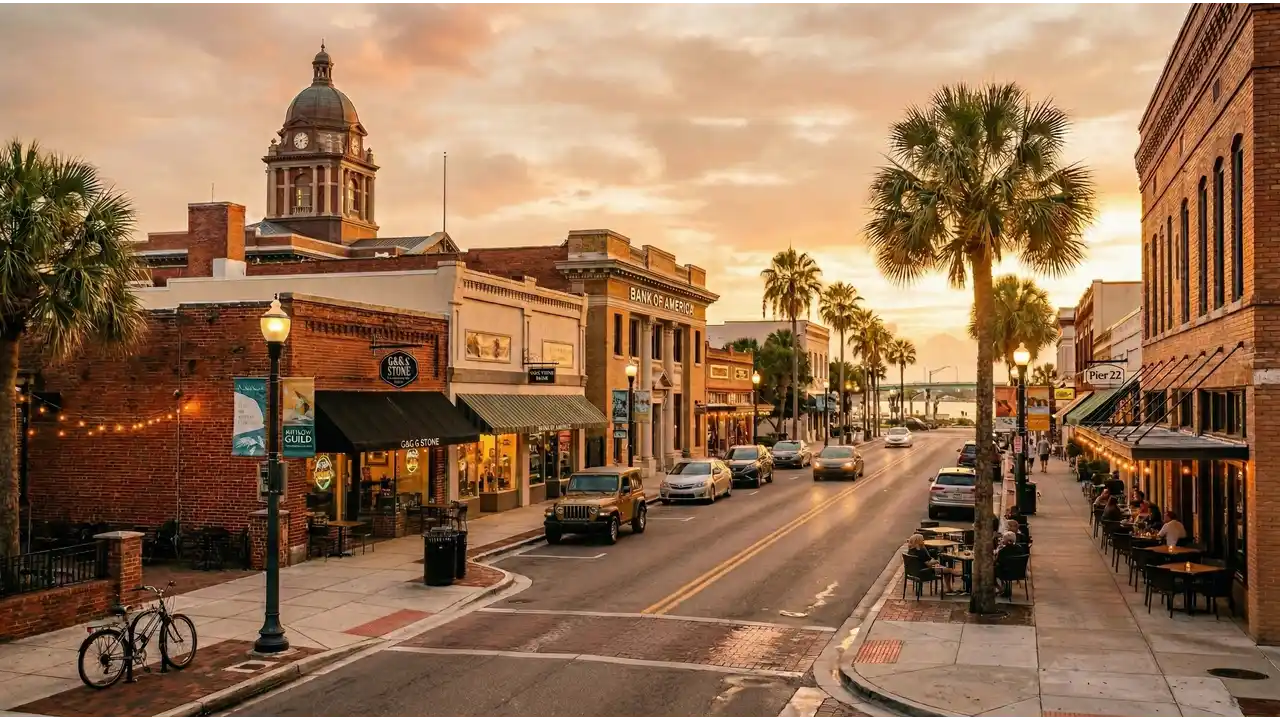
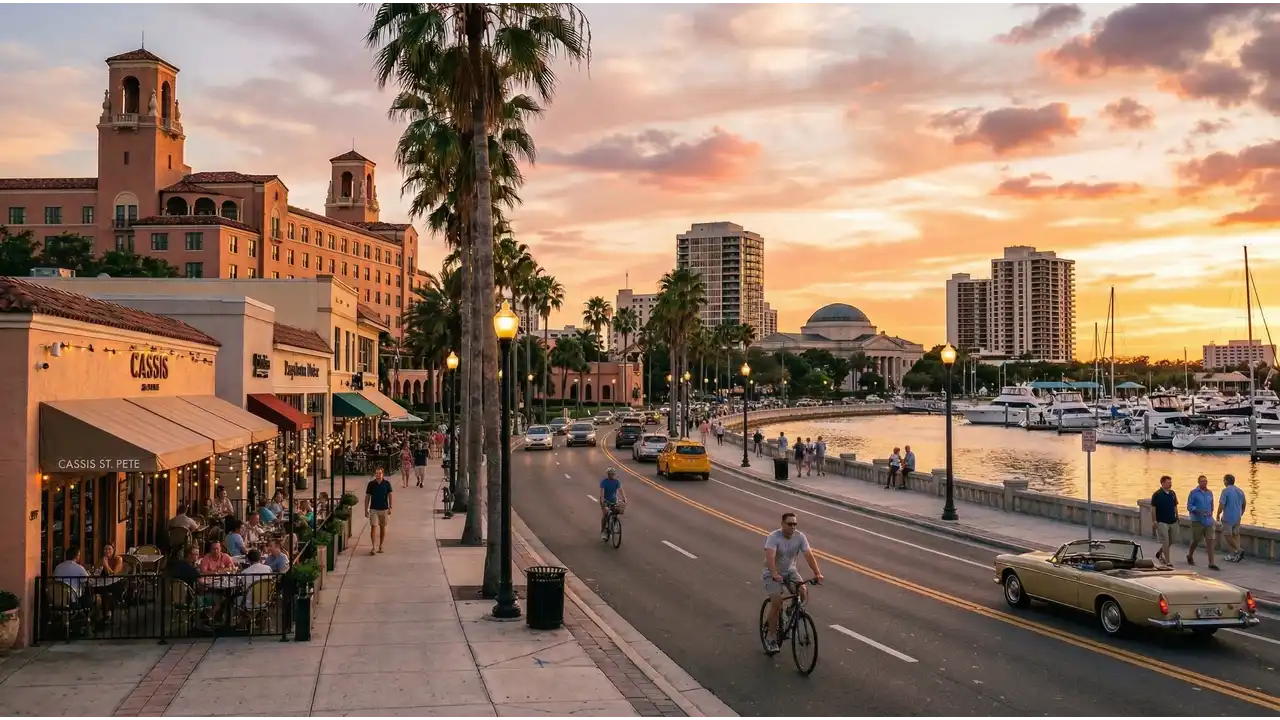
Sarasota is a waterfront city on Florida's Gulf Coast with a population around 60,000, plus another 400,000+ in the broader metro area. The downtown core has drawn retirees, remote workers, and families attracted to year-round warm weather, beaches, and relatively lower costs than major Northeast cities. Daily life centers on the waterfront, local restaurants, and cultural venues like the Ringling Museum. Summer heat and humidity are intense (90+F, high humidity). Traffic congestion is real, especially on US-41. Most residents drive; public transit exists but is limited. Median age skews older, though that's shifting with younger professionals moving in.
💡 Local Insights
Sarasota · 2026
Sarasota's cost structure reflects its position as a retiree and second-home destination with modest local employment outside hospitality and healthcare. Housing dominates the budget at $1,712/month, though this masks wide variation: studios in walkable downtown run $1,200-$1,500, while a two-bedroom house rental in South Sarasota or Siesta Key can reach $2,000-$2,500. Groceries at $520/month are reasonable because major chains compete aggressively (Publix, Whole Foods, Aldi). Eating out is moderate: casual dinner for two runs $40-$60; fine dining $80-$120. Transportation costs vary sharply. Car ownership is nearly essential outside downtown; insurance, gas, and maintenance add $400-$600/month. The Sarasota-Bradenton Transit Authority offers limited bus service but most residents drive. Expat pricing exists in tourist zones (downtown, Siesta Key restaurants), but supermarkets and residential neighborhoods price like broader Florida. Peak season (December-March) drives short-term rents and restaurant demand up; summer offers discounts. Utilities run higher than northern states because of AC use May-October.
Frequently Asked Questions
How much does it cost to live in Sarasota per month?
A moderate lifestyle in Sarasota costs $3,325/month. Housing runs $1,712/month, groceries $520/month. The remaining budget covers utilities ($200-$250/month in summer with heavy AC use), transport ($400-$600 if you own a car), dining out ($300-$400), and discretionary spending (entertainment, personal care). A tight budget of $1,995/month is possible if you skip car ownership, live outside prime neighborhoods, and minimize eating out. A comfortable lifestyle costs $5,154/month, allowing for a nicer home, dining flexibility, and travel.
What is the average rent in Sarasota?
Median rent is $1,712/month. Studio apartments downtown and near Siesta Key average $1,200-$1,500. One-bedroom rentals across the city run $1,400-$1,900. Two-bedroom houses and apartments range $1,800-$2,500, depending on neighborhood and proximity to water. South Sarasota (between downtown and Venice) and Bradenton offer lower rates, $1,400-$1,800 for two-bedroom units. Waterfront properties and Siesta Key command premiums. Peak-season (December-March) rentals jump 20-30%. Summer vacancies create discounts. Furnished short-term rentals run 40% higher than long-term leases.
Is Sarasota cheap to live in for expats?
Sarasota is moderately priced for expats compared to major US metros (New York, San Francisco, Boston). Housing is lower than those cities but higher than many expat-friendly Central American or Southeast Asian destinations. It appeals most to expats seeking US infrastructure and English-language ease without top-tier city costs. Retirees and remote workers with dollars or Euros find good value. Those accustomed to Bangkok or Playa del Carmen will find it expensive. Expat communities exist in Siesta Key and downtown, where English is universal and professional services (banking, healthcare) are straightforward.
How much does food cost per month in Sarasota?
Groceries average $520/month for one person eating at home (including Publix, Whole Foods, Aldi). Specific costs: eggs $4-5/dozen, chicken breast $7-8/lb, milk $3.50/gallon, fresh vegetables $2-4 each. Eating out is moderate: casual lunch $12-16, dinner at a mid-range restaurant $18-28 per person. Seafood (mahi, snapper, grouper) runs higher at markets and restaurants, $16-24/lb. Coffee shops charge $5-6 for specialty drinks. Grocery prices rise 10-15% in peak season (December-March) due to tourist demand and supply constraints.
What salary do you need to live comfortably in Sarasota?
A comfortable lifestyle costs $5,154/month, suggesting an annual income around $62,000 (gross). This budget covers a nicer one-bedroom or modest two-bedroom ($2,000-$2,300), regular dining out, utilities, car costs, and discretionary spending. For a couple, $80,000-$90,000 annual household income allows housing around $2,200-$2,500, dining flexibility, and modest travel. Remote workers earning USD salaries find this comfortable. Local jobs in healthcare, hospitality, and real estate average $35,000-$50,000, making the comfortable tier achievable but not loose. Retirees relying on pensions or fixed income should budget toward the moderate tier ($3,325/month).
How does the cost of living in Sarasota compare to other places?
Sarasota's moderate lifestyle costs $3,325 per month, with housing running $1,712 per month. That puts it slightly above Atlanta, where a moderate lifestyle costs $3,075 per month and housing is $1,519 per month. Columbus is notably cheaper at $2,725 per month overall, with housing at $1,146 per month. If you're coming from a high-cost market, Boston runs $4,675 per month with housing at $2,813 per month, so Sarasota offers meaningful savings by comparison. The difference comes down to what you value: Sarasota's waterfront location and retiree-friendly culture command a premium over the Southeast's cheaper metros, but it remains far more affordable than major Northeast coastal cities.
Yes, but with constraints. The budget tier of $1,995/month works if you rent a studio ($1,200-$1,400) or share a one-bedroom, skip car ownership and use buses or cycling, buy groceries carefully ($400-$450/month), and avoid eating out. This leaves $150-$250 for utilities and personal care. No margin for emergencies or travel. Most people on this budget are either younger professionals in shared housing or retirees supplementing Social Security. Summer (June-September) offers cheaper rentals, making this budget more viable. It's tight but doable for disciplined savers or those with additional income streams.