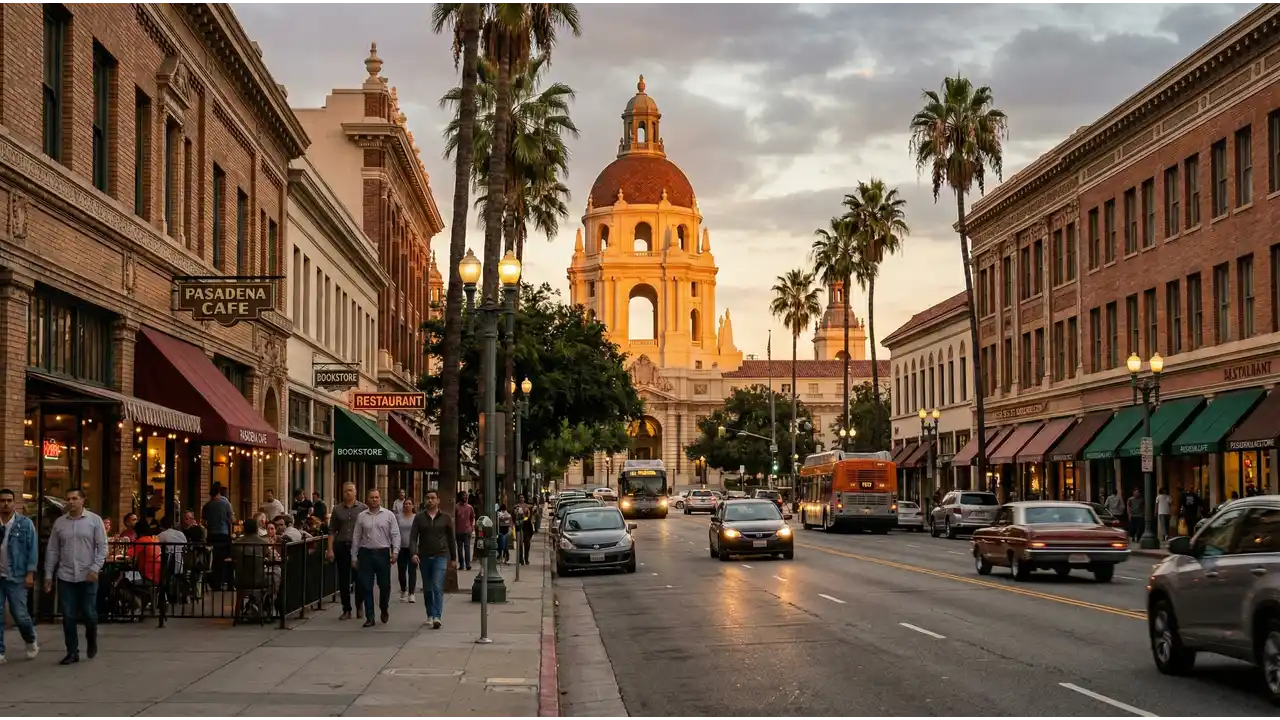
Los Angeles is a sprawling coastal city of 3.9 million people across 500 square miles of neighborhoods with distinct characters. Weather is mild year-round (60-85°F). The economy centers on entertainment, aerospace, international trade, and tech. Daily life depends heavily on car ownership; public transit exists but is limited outside central corridors. Neighborhoods range from beachside (Santa Monica, Venice) to inland (Silver Lake, Los Feliz, Downtown). Most residents drive to work. Cost of living reflects tight housing supply and competitive job markets.
💡 Local Insights
Los Angeles · 2026
Los Angeles housing dominates the budget at $2,446/month. Rent varies sharply by neighborhood: Downtown apartments run $1,400-$1,800 for a one-bedroom; Santa Monica and Venice $2,200-$3,200; more affordable inland areas (Eagle Rock, Highland Park) $1,300-$1,600. Homebuying is out of reach for most newcomers (median home price near $700,000). Groceries average $614/month, comparable to other major US cities. Eating out is expensive: casual meals $12-$18, mid-range restaurants $15-$35 per person. Transport costs rise without carpooling; a car, insurance, and gas add $400-$600/month. Public transit (Metro bus and light rail) costs $100/month unlimited pass but serves limited routes. Expats often underestimate parking costs ($15-$30/day in commercial areas). Utilities (electricity, water, internet) run $100-$150/month. Healthcare and childcare are additional shocks. Salaries in tech and entertainment tend higher than national average, which partially offsets housing.
Frequently Asked Questions
How much does it cost to live in Los Angeles per month?
A moderate lifestyle costs $4,350/month. Housing runs $2,446/month; food (groceries) $614/month. Add utilities ($100-$150), transport ($400-$600 with a car, $100 for transit only), phone and internet ($50-$100), and personal care ($50-$100). The remaining budget covers dining out, entertainment, and savings. A tighter budget (bare essentials, roommates, no car) is possible at $2,610/month. A comfortable lifestyle with flexibility runs $6,743/month.
What is the average rent in Los Angeles?
Median rent for a one-bedroom apartment is $1,900-$2,200, with the citywide average around $2,446/month including all unit types and locations. Geography matters enormously. Downtown and Arts District: $1,400-$1,800. Mid-range neighborhoods (Los Feliz, Silver Lake, Eagle Rock): $1,300-$1,700. Beach areas (Santa Monica, Venice, Malibu): $2,200-$3,500. Suburbs (Pasadena, Long Beach): $1,500-$2,100. Two-bedroom units typically cost 30-50% more. Furnished short-term rentals run 20-40% above unfurnished rates. Most landlords require first month, last month, and a $1,500-$2,500 security deposit upfront.
Is Los Angeles cheap to live in for expats?
No. At $4,350/month for a moderate lifestyle, Los Angeles ranks in the top 10% of US cities by cost. It's more expensive than London, Berlin, or Mexico City, though cheaper than San Francisco or Manhattan. Expats from Europe often find rent reasonable compared to central London or Paris, but US salaries and healthcare are shocks. Asian expats accustomed to Hong Kong or Singapore find LA affordable. The real cost comes from car dependency, healthcare, and childcare. Many expats discover they need higher income than expected to maintain their previous standard of living.
How much does food cost per month in Los Angeles?
Groceries average $614/month for one person eating at home, including produce, dairy, meat, pantry staples, and occasional prepared foods. Budget chains (Trader Joe's, Aldi) cost less; organic and specialty shops cost more. Specific examples: organic milk $4-$5/gallon, chicken breast $8-$10/pound, avocado $1-$2 each. Dining out is pricier: casual meals (taco truck to diner) $10-$18, mid-range restaurants $20-$35 per person excluding drinks. Groceries in beach areas run 10-15% higher than inland. Street food and ethnic markets (Thai, Mexican, Armenian) offer value.
What salary do you need to live comfortably in Los Angeles?
A comfortable lifestyle costs $6,743/month, or roughly $80,900/year gross (accounting for tax). This supports a one-person household with own apartment, car, regular dining out, modest travel, and savings. For couples or families with children, add $2,000-$3,000/month for childcare. Homebuyers need household income of $120,000+ to service a median mortgage ($300,000+) on current rates and terms. Tech and entertainment sector salaries often exceed $100,000-$150,000, which helps offset high costs. Lower-income service and retail workers (median wage ~$16-$18/hour) struggle with affordability.
How does the cost of living in Los Angeles compare to other places?
Los Angeles sits in the middle-to-upper range for major U.S. cities. A moderate lifestyle here costs $4,350 per month, with housing running $2,446 per month. That's noticeably pricier than Seattle, where a moderate lifestyle is $3,950 per month, though Seattle's housing at $2,177 per month is only slightly cheaper. If you're coming from the South, Savannah, Georgia is substantially less expensive at $3,075 per month overall and $1,504 for housing. Brooklyn, by contrast, will feel like a significant jump: $5,975 monthly for a moderate lifestyle and $4,295 for housing alone. Los Angeles's costs reflect its size, job market, and year-round climate, but you'll find more affordable metros in the Southeast and slightly cheaper options in the Pacific Northwest.
Yes, but with significant compromises. This is the budget tier. Housing must be under $1,500 (shared apartment or distant neighborhoods like Boyle Heights, El Segundo, or Long Beach). Groceries at $614/month leave no buffer. You need roommates, use public transit exclusively (no car), rarely eat out, and skip travel and entertainment. This budget works for students, recent graduates, or those with subsidized housing. Most working adults find this unsustainable without additional income or one-time savings. Health emergencies, car repairs, or unexpected rent increases create crisis. Feasible, but tight.