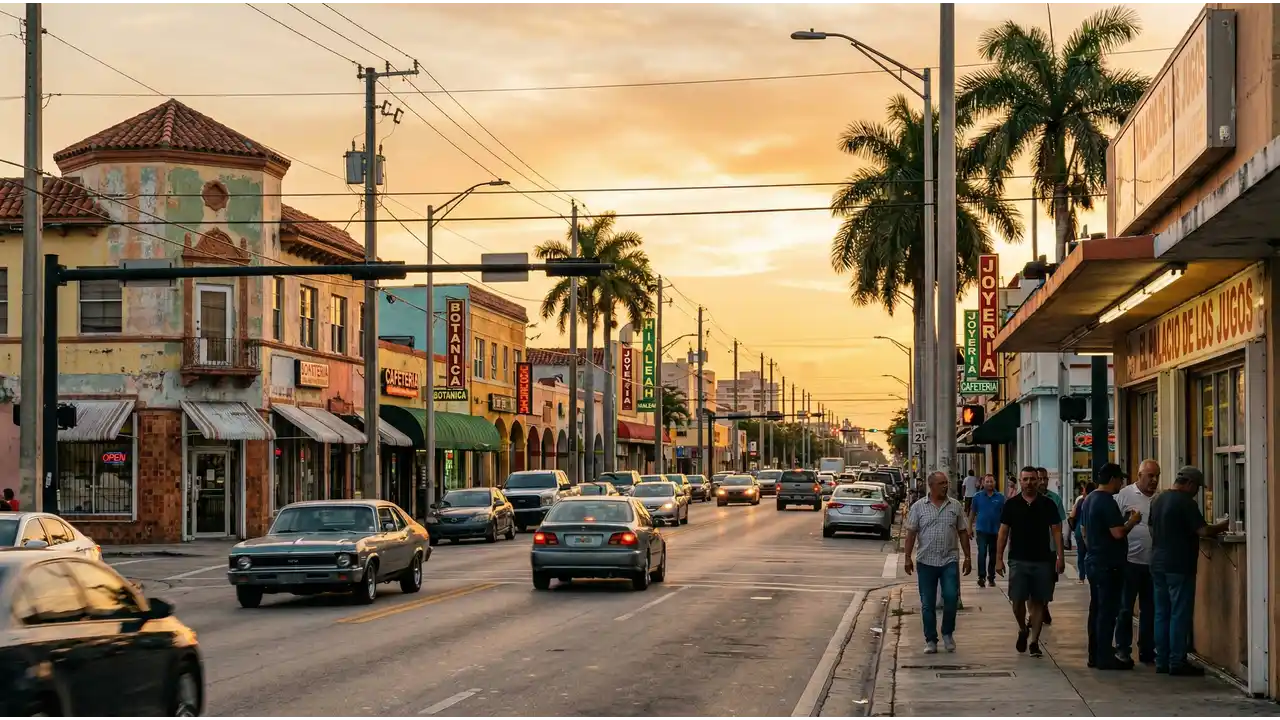
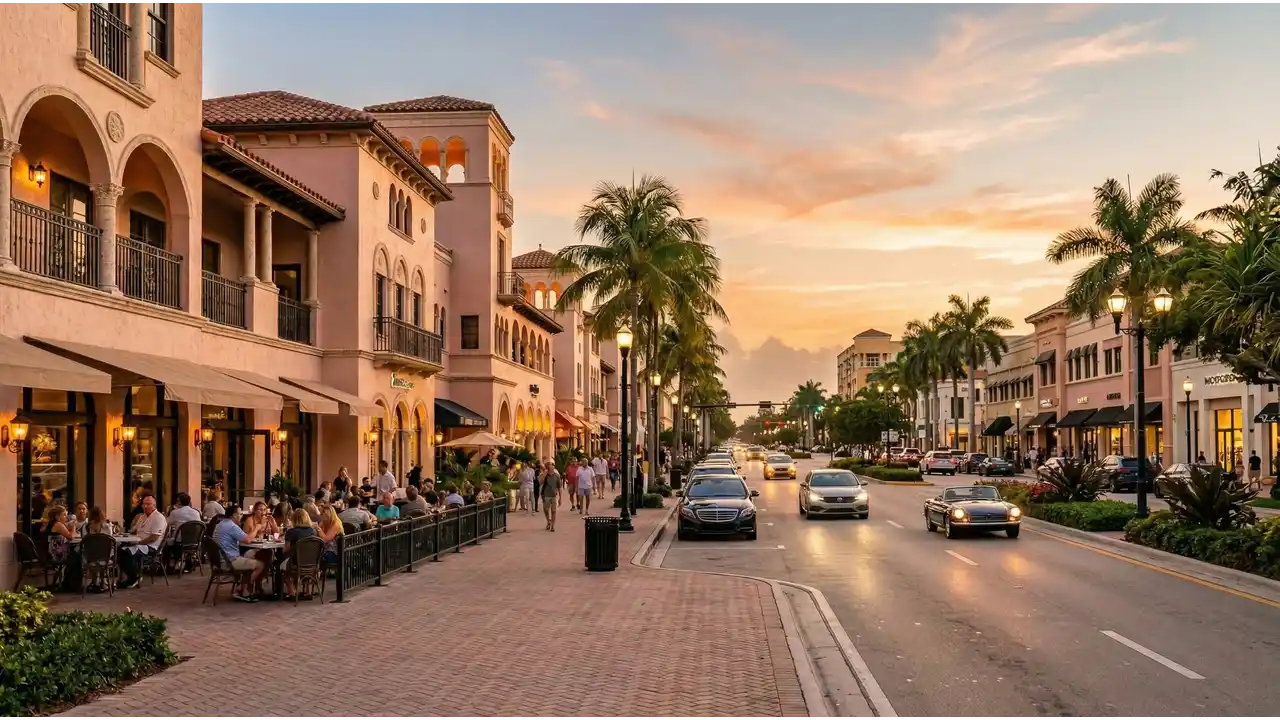
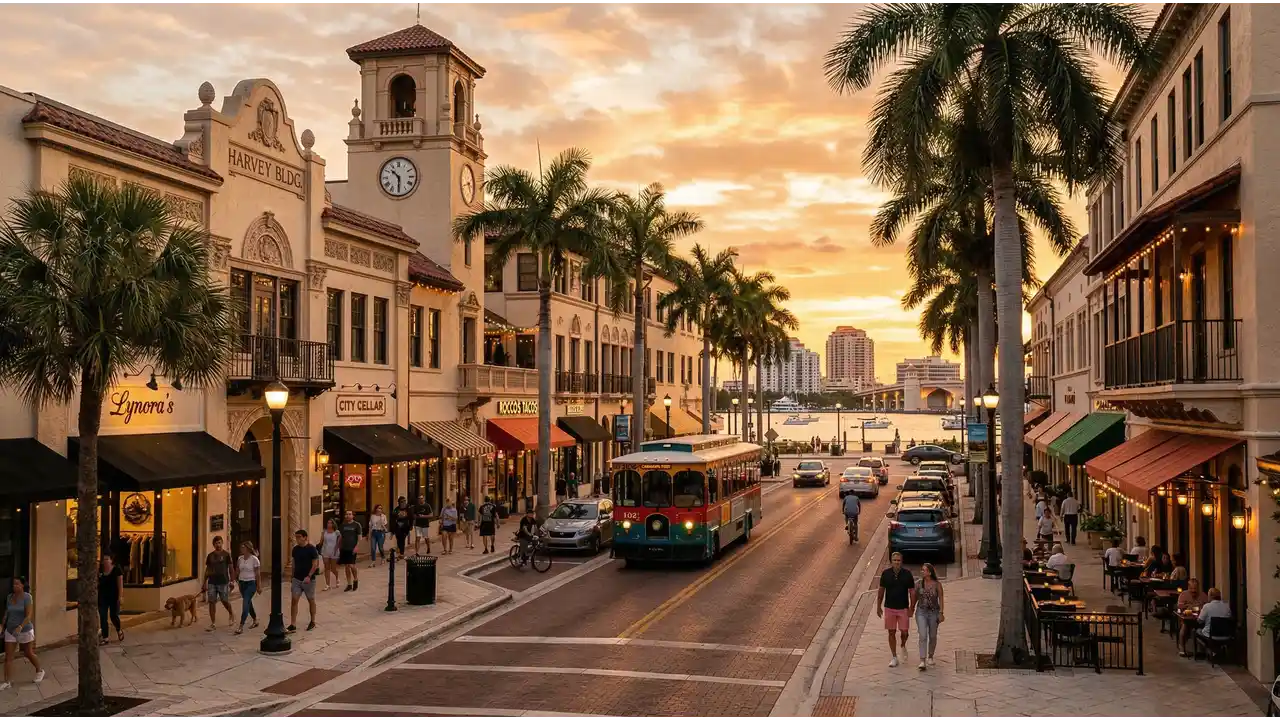
Miami is a coastal city of roughly 450,000 people (2.7 million in the metro area) built on real estate, tourism, finance, and Latin American trade. The climate is subtropical: hot, humid summers with afternoon thunderstorms, and mild winters that draw seasonal residents. Daily life centers on driving, beaches, and neighborhoods that range from working-class to ultra-wealthy. Spanish is widely spoken. The city has significant Cuban, Venezuelan, and Caribbean communities. Traffic is heavy year-round. Most residents live in single-family homes, small apartment complexes, or high-rises, often with air conditioning running constantly. Walkability varies sharply by neighborhood.
💡 Local Insights
Miami · 2026
Miami's cost of living sits above the US median, driven almost entirely by housing. Rent for a moderate one-bedroom apartment runs $1,200 to $1,600 per month; two-bedroom units range from $1,500 to $2,200 depending on neighborhood and proximity to water. These figures align with the $2,311 monthly housing average. Property ownership requires down payments of 15-20 percent and hurricane insurance adds 1-2 percent annually to mortgage costs. Groceries average $521 per month for a household, roughly aligned with US national averages, though imported Latin American staples can be pricier. Eating out costs $15-25 for casual meals, $40-80 for dinner at mid-range restaurants. Transportation is car-dependent; public transit (Metrorail, Metrobus) exists but covers limited routes. Car ownership, insurance, and fuel push transport costs to $800-1,200 monthly for those without a vehicle. Expats often find housing more expensive than expected; locals pay similar rates. Utilities (electric, water, internet) run $150-200 monthly year-round because air conditioning is essential. Property taxes are relatively low compared to northeastern US states.
Frequently Asked Questions
How much does it cost to live in Miami per month?
A moderate lifestyle in Miami costs approximately $3,925 per month. This breaks down as: housing $2,311, groceries and food $521, utilities and internet $180, transportation $650, personal care and clothing $250, entertainment and dining out $300, and miscellaneous $113. At the budget tier, you can live on $2,355 monthly by sharing housing, cooking most meals, and using public transit. For a comfortable lifestyle with more dining out and discretionary spending, plan for $6,084 per month. These figures reflect a single adult; families or couples will see different costs depending on housing arrangement.
What is the average rent in Miami?
Average rent is approximately $2,311 per month, which reflects the overall housing cost line. A one-bedroom apartment in central Miami (Brickell, Downtown, Wynwood) runs $1,300 to $1,700. Two-bedroom units range from $1,600 to $2,300. More affordable neighborhoods like Allapattah or Buena Vista average $1,200 to $1,450 for a one-bedroom. Waterfront areas and barrier islands (Miami Beach, Coconut Grove) command $2,000 to $3,500+ for comparable units. Home purchase prices start around $400,000 for modest properties inland and exceed $1,000,000 near the coast. Renters should budget for first month, last month, and a security deposit upfront. Lease terms are typically 12 months.
Is Miami cheap to live in for expats?
Miami is moderately expensive for expats, not cheap. Housing costs ($2,311 monthly) match or exceed what expats pay in secondary European cities like Lisbon or Barcelona. However, compared to New York, London, or Sydney, Miami is more affordable. The advantage for expats is a large English-speaking professional community, no language barrier, and straightforward visa processes for those with US work authorization. Latin American expats find Miami cheaper than their home countries and benefit from cultural familiarity and business ties. Currency matters: expats earning in strong currencies (euro, pound, Canadian dollar) find better value. Those on local salaries may find housing less affordable relative to income than in northern US cities.
How much does food cost per month in Miami?
Groceries average $521 per month for a household, covering staples like rice, beans, vegetables, meat, and dairy. A single person might spend $250-300 monthly. Specific prices: ground beef $5-7 per pound, eggs $4-5 per dozen, bread $2-3 per loaf, milk $3-4 per gallon. Imported Latin American items (plantains, specialty cheeses, tropical fruits) cost slightly more than in other US cities. Eating out is more expensive: fast casual meals $12-16, casual restaurant dinners $20-30 per person, upscale dining $50-100+. Many neighborhoods have affordable Colombian, Venezuelan, and Cuban restaurants where meals run $8-12. Supermarkets like Publix and Winn-Dixie are standard; Latino markets offer better prices on regional products.
What salary do you need to live comfortably in Miami?
A comfortable lifestyle in Miami requires approximately $6,084 per month, or roughly $73,000 annually gross income. This allows for a one-bedroom apartment in a good neighborhood ($1,600-1,800), regular dining out, a personal vehicle with insurance, entertainment, and modest savings. Households with two earners should each aim for $35,000+. For families of four, add $1,500-2,000 for the additional bedroom and scaled living expenses, suggesting $85,000-100,000 household income. Those earning below $50,000 annually will need to share housing, use public transit, and limit discretionary spending. Remote workers with income from higher-wage markets (US tech salaries, European professional wages) live much more comfortably. Local Miami salaries in service, retail, and administrative roles average $35,000-45,000, making housing cost-burdened for many residents.
How does the cost of living in Miami compare to other places?
Miami's moderate lifestyle costs $3,925 per month, with housing running $2,311. This puts it firmly in the mid-to-premium tier for U.S. cities.
You'll pay significantly less in St. Louis, where a moderate lifestyle costs $2,750 monthly and housing averages $1,253. Santa Fe, New Mexico runs $3,175 for a moderate budget with housing at $1,631, making it a peer city to Miami overall, though with lower housing costs.
San Francisco is substantially pricier at $5,200 monthly, with housing alone at $3,302.
Miami's positioning reflects its draw as a major coastal city with strong job markets and year-round appeal. Housing pressure is real but remains lower than top-tier markets like San Francisco. If you're relocating from a smaller city, expect a noticeable increase; from the coasts, you may find relief.
Yes, but with significant tradeoffs. The budget tier of $2,355 per month requires strict discipline. Housing must stay under $1,200 (shared apartment in Allapattah, Wynwood, or Buena Vista, or a small studio further inland). Groceries at $400-450 means cooking most meals and avoiding imported items. No car is feasible; rely on Metrorail and Metrobus, which reach Downtown, Brickell, and airport areas but have limited coverage. Entertainment is free (beaches, parks). This budget works for young professionals with roommates, students, or those with very low transport needs. It does not work for families, single renters in safe neighborhoods, or anyone requiring a vehicle. Utilities and internet will consume $120-150. Medical emergencies or car repairs blow this budget immediately. Many residents at this income level qualify for state assistance or rely on income from the informal economy.