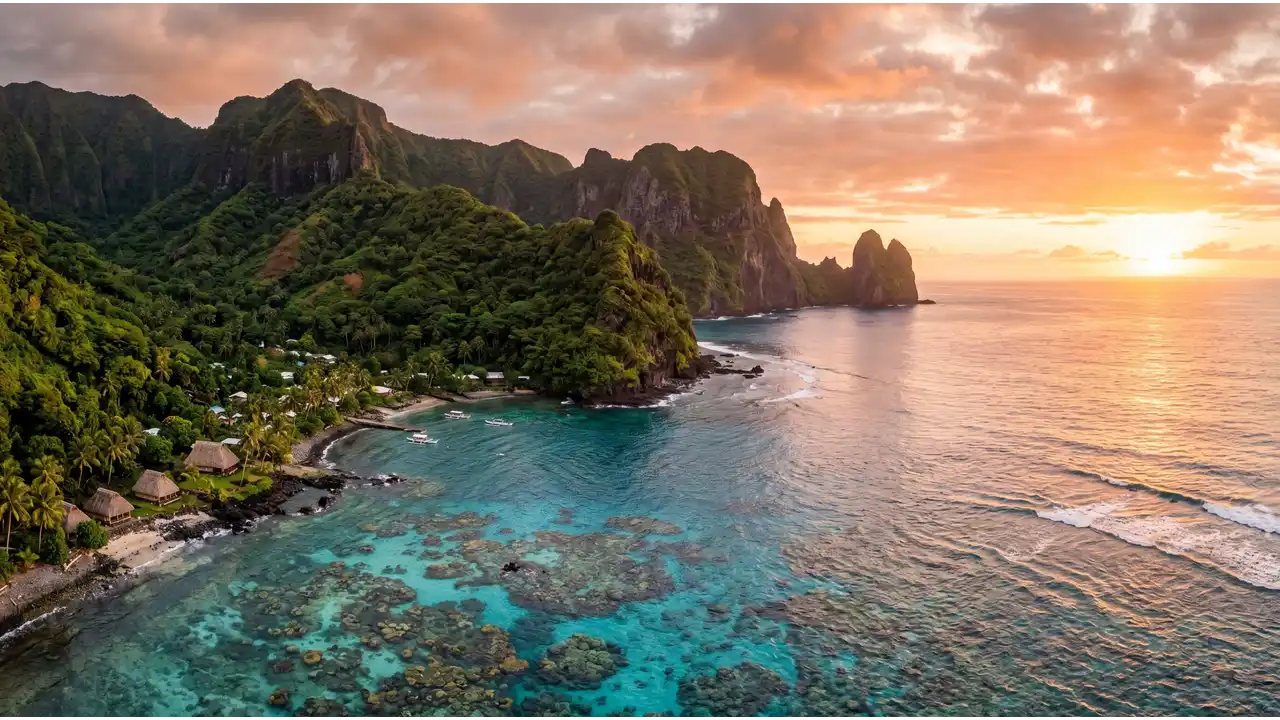
American Samoa is a South Pacific US territory with roughly 55,000 residents spread across five islands. Pago Pago, the capital on Tutuila Island, serves as the administrative and commercial hub. Daily life centers on strong Samoan culture, family networks, and subsistence agriculture alongside modern services. The climate is tropical with high humidity and frequent rain. Most residents are ethnic Samoan; expats are a small minority. Life moves at a slower pace than mainland US. Limited entertainment and dining options mean social life often revolves around family gatherings, church, and beach activities. Reliable electricity and water exist in main towns, but infrastructure outside Pago Pago can be unreliable.
💡 Local Insights
American Samoa · 2026
American Samoa's remoteness drives up costs for most goods. Housing runs $1,039 per month on average, covering modest apartments or smaller houses in Pago Pago and surrounding areas. Rental options are limited; locals often own property or rent through informal networks. Groceries cost $552 monthly and reflect heavy reliance on imported foods. Fresh produce from local markets is cheaper than packaged imports but inconsistent. Taro, coconut, and fish are local staples at lower cost. A can of soda or imported meat costs significantly more than stateside. Transportation relies on private vehicles or informal ride-sharing; no public transit system exists. Fuel prices fluctuate with global markets. Expats and locals pay similar prices for most goods, though some imported expat foods command premiums. Medical care is available but serious cases require travel to Honolulu, which is expensive. Employment is concentrated in government, education, and fishing industries, limiting job prospects for newcomers.
Frequently Asked Questions
How much does it cost to live in American Samoa per month?
A moderate lifestyle costs $2,750 per month. Housing averages $1,039 monthly. Groceries run $552 monthly. The remaining budget covers utilities, transport, dining out, and personal spending. A tight budget of $1,650 monthly is possible but requires cutting back significantly on dining out and entertainment. A comfortable lifestyle costs $4,263 monthly, allowing for more flexibility on food, transport, and leisure activities. Actual costs vary based on location (Pago Pago costs more than outer islands), lifestyle choices, and whether you cook at home versus eating out frequently.
What is the average rent in American Samoa?
Average rent is $1,039 per month. In Pago Pago proper, you can find modest one-bedroom apartments or houses in that range or slightly below. Two-bedroom family homes typically fall between $900 and $1,200 per month. Housing outside central Pago Pago, in areas like Fagaitua or Leone, may be cheaper ($700 to $950 monthly), though availability is lower. Furnished units for short-term expat contracts sometimes cost more. The rental market is small and largely informal; most locals own property. Landlords prefer long-term tenants. Property listings appear through word-of-mouth, Facebook groups, or local real estate contacts rather than major platforms.
Is American Samoa cheap to live in for expats?
No. Despite lower rent than major US cities, American Samoa is expensive for imported goods and services. Groceries cost roughly 30 to 40 percent more than mainland US due to shipping. Fresh produce is seasonal and limited. Dining out is costly for Western food, though local meals are affordable. Healthcare, vehicle maintenance, and electronics command high prices. The moderate lifestyle budget of $2,750 monthly is comparable to mid-range costs in smaller mainland US cities, not cheaper. Expats without local employment contracts face higher living costs because job opportunities are scarce. However, if you work remotely with a US salary or draw a pension, purchasing power improves substantially.
How much does food cost per month in American Samoa?
Groceries average $552 monthly for an individual on a moderate budget. Fresh local produce like taro and coconut costs less when in season. Fish from local markets runs $4 to $8 per pound. Imported staples like rice, canned goods, and dairy are significantly marked up. A gallon of milk costs around $6 to $7. Imported cheese and packaged foods can be twice stateside prices. Eggs and local root vegetables are more affordable. Eating out locally (Samoan-style meals) costs $8 to $12 per person; Western restaurant meals run $15 to $25. Cooking at home with local ingredients stretches the budget considerably. Shopping at the Faletai Town Center in Pago Pago offers better selection than outer island stores, though prices remain high.
What salary do you need to live comfortably in American Samoa?
A comfortable lifestyle costs $4,263 per month. This supports dining out regularly, reliable vehicle ownership with fuel costs, occasional travel off-island, and leisure spending. Working in American Samoa typically means government employment (Department of Education, ASG positions), private sector roles with shipping companies or canneries, or remote work. Government salaries range widely but competitive professional roles average $3,000 to $5,000 monthly. Many expats rely on remote employment to meet comfortable thresholds. Without local income or US pension/benefits, reaching $4,263 monthly is difficult in American Samoa's limited job market. If relocating, securing employment before arrival is strongly advisable.
How does the cost of living in American Samoa compare to other places?
American Samoa runs $2,750 monthly for a moderate lifestyle, with housing at $1,039 per month. That puts it slightly above Montana, where a moderate lifestyle costs $2,650 with housing at $1,074 per month. You're looking at substantially more than West Virginia, which runs $2,150 overall and $627 for housing. California, by contrast, is considerably pricier at $4,050 monthly with housing at $2,146.
The gap reflects American Samoa's geographic isolation and limited local production. Most goods arrive by boat or air, raising import costs across groceries, vehicles, and construction materials. Housing is relatively expensive for the territory's wage levels, though still reasonable compared to mainland coastal states. If you're relocating from the continental US, budget accordingly for higher everyday expenses, especially food and fuel.
Yes, but only on a tight budget. $1,650 monthly covers basic needs for one person or a couple who cook at home, use public transport or share rides, and limit entertainment. This budget allows roughly $1,039 for housing (modest one-bedroom apartment or house), $400 for groceries if you buy local and cook, and $200 for utilities and transport. Dining out is minimal; internet and phone services must be basic; no car ownership or only shared use. Medical or emergency expenses blow the budget immediately. This works for locals or expats with very low-cost housing arrangements (family property, shared accommodation). Anyone requiring more space, regular dining out, or vehicle ownership will need the $2,750 moderate budget or higher. Freelancers or expats should assume $2,500 minimum.