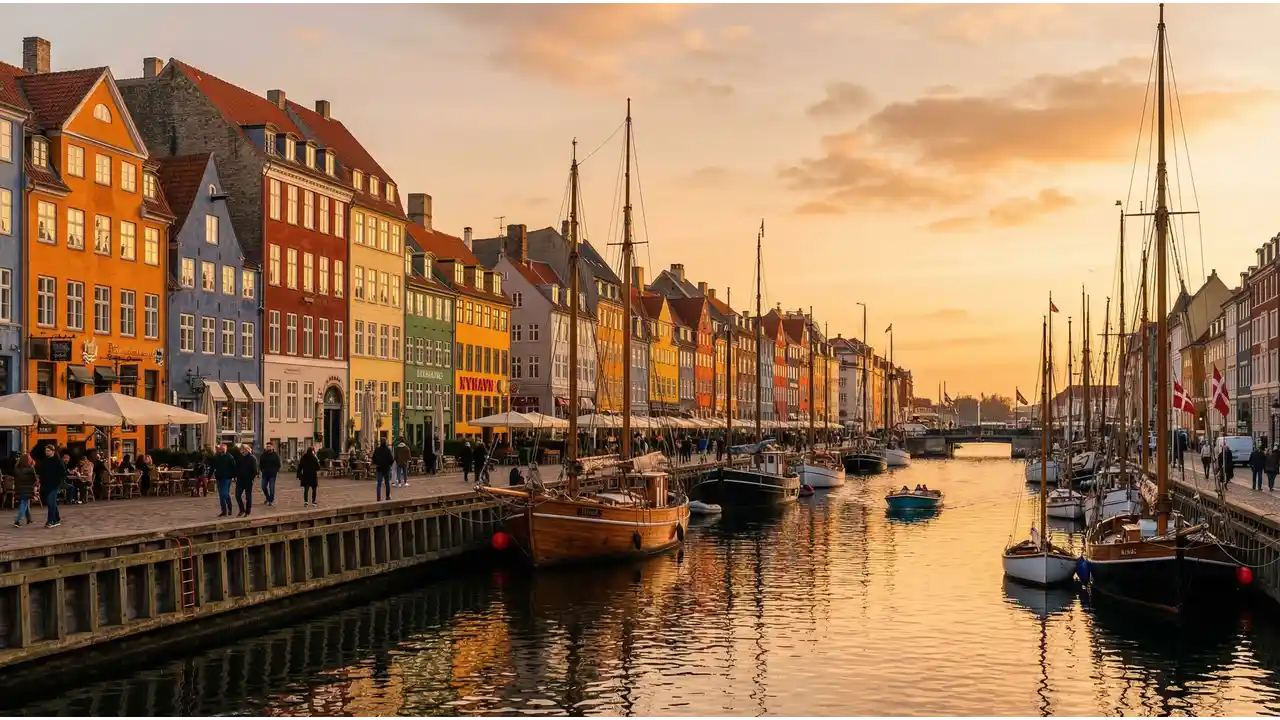
Denmark is a small Nordic country of 5.9 million people, with Copenhagen as its capital and largest city. Daily life centers on cycling, public transit, and a social culture built around hygge (coziness) and work-life balance. Winters are dark and cold, averaging 32 to 39 degrees Fahrenheit from December through February. Summers are mild, with long daylight hours. Danes have high incomes and strong social services, funded by high taxes. Most Danes speak English fluently. The country ranks consistently high in quality of life indices, though cost of living reflects both wages and tax levels. Outside Copenhagen, towns are smaller and quieter, with lower housing costs but fewer services.
💡 Local Insights
Denmark · 2026
Denmark's cost structure is driven by high taxes (25 percent VAT on most goods, plus income tax), strong labor protections, and expensive housing in Copenhagen and Aarhus. The $2,575/month moderate budget assumes careful spending outside housing and food. Rent averages $1,185/month, with one-bedroom apartments in central Copenhagen ranging from $1,100 to $1,500, and outer areas or smaller cities from $850 to $1,200. Groceries average $448/month for a single person buying at supermarkets like Netto or Fakta; organic or imported items cost significantly more. Eating out is expensive: a meal at a casual restaurant runs $15 to $25. Public transport is excellent and relatively affordable at roughly $80/month for unlimited city transit. Expats report that salary expectations are generally high enough to absorb costs, but retirees and remote workers on fixed budgets feel the pinch. Negotiating rent directly with landlords sometimes yields lower rates than agency listings.
Frequently Asked Questions
How much does it cost to live in Denmark per month?
A moderate lifestyle costs $2,575/month, broken down as: housing $1,185, food (groceries) $448, transport roughly $80 to $100, utilities $120 to $150, and discretionary spending $600 to $700. This assumes a one-bedroom apartment outside the city center, cooking most meals at home, and modest entertainment. A tight budget of $1,545/month is possible but requires shared housing or a studio, minimal dining out, and careful spending on utilities. A comfortable lifestyle with more space, frequent dining out, and travel costs $3,991/month.
What is the average rent in Denmark?
Average rent is $1,185/month. In Copenhagen's central neighborhoods (Nørrebro, Vesterbro, Frederiksstaden), one-bedroom apartments typically rent for $1,100 to $1,500. Outer Copenhagen areas like Amager or Rødovre range from $850 to $1,200. In Aarhus, Denmark's second city, expect $700 to $1,000. Smaller towns and rural areas drop to $600 to $900. Furnished rentals cost 10 to 20 percent more. Most landlords require documentation of income (usually three times monthly rent) and a security deposit equal to one month's rent. Lease terms are typically one year minimum.
Is Denmark cheap to live in for expats?
No. Denmark ranks among Europe's most expensive countries for expats on fixed budgets, especially those earning in weaker currencies. For context, comparable moderate-budget cities like Munich or Amsterdam cost roughly $2,200 to $2,400, while Copenhagen sits at $2,575. However, expats earning Danish or Northern European salaries find costs manageable. The hidden cost is tax: VAT at 25 percent and income tax at 22 to 56 percent (depending on income) mean your gross earnings don't go as far. Remote workers earning in USD or GBP and spending in Danish kroner often find Denmark unaffordable unless their salary significantly exceeds local norms.
How much does food cost per month in Denmark?
Groceries average $448/month for one person shopping at standard supermarkets. Milk costs roughly $1.20 per liter, chicken breast $8 to $10 per kilogram, bread $1.50 to $2.50, and eggs $3 to $4 per dozen. Budget supermarkets like Netto and Aldi offer lower prices; premium chains like Føtex cost 15 to 25 percent more. Organic food carries a 30 to 50 percent premium. Eating out is expensive: a casual lunch costs $12 to $18, dinner at a mid-range restaurant $20 to $40. Weekly farmers markets in Copenhagen and Aarhus sometimes offer better produce prices. Alcohol (beer, wine) is taxed heavily, pushing prices well above US and Southern European levels.
What salary do you need to live comfortably in Denmark?
A comfortable lifestyle costs $3,991/month, which translates to a gross salary of roughly $65,000 to $75,000 annually (before Danish taxes). This allows for a one-bedroom or small two-bedroom apartment, regular dining out, travel within Scandinavia, and hobbies. Keep in mind that Danish income tax ranges from 22 to 56 percent depending on total income, so take-home is significantly less. Non-residents and newly arrived expats often face higher initial costs (furnished rentals, visa and relocation fees). For secure housing and modest discretionary spending, $55,000 to $60,000 gross is often cited as the minimum threshold, though this assumes no dependents or major debts.
How does the cost of living in Denmark compare to other places?
Denmark sits in the middle-to-upper tier for European costs. A moderate lifestyle in Denmark runs $2,575 per month, with housing at $1,185 per month.
The Netherlands edges higher at $2,775 monthly, driven partly by housing costs of $1,587 per month. If you're looking to cut expenses significantly, the Czech Republic is notably cheaper at $1,775 per month for a moderate lifestyle, though housing there still costs $849 monthly.
Iceland tells a different story. A moderate lifestyle in Iceland runs $3,625 per month, with housing alone at $2,030 per month, making it substantially pricier than Denmark across the board.
Denmark's real expense pressure comes from housing and taxes. Compared to most Western European countries, costs are reasonable. Compared to Eastern Europe, it's steep. For North American expats, expect Danish prices to feel moderate relative to major US or Canadian cities.
Yes, but with significant trade-offs. This budget requires shared housing (cutting rent to $600 to $800), cooking almost every meal, minimal entertainment, and no travel. A studio apartment outside central Copenhagen plus groceries leaves only $300 to $400 for utilities, transport, phone, and insurance. This works if you have a secure room in a shared house and low healthcare costs, but leaves little cushion for emergencies or social life. Remote workers and expats on fixed budgets at this level report stress around unexpected costs (car repair, dental work). Students often manage this tier via student housing programs. It's survivable for short-term stays in smaller Danish cities, but uncomfortable for long-term residence in Copenhagen.