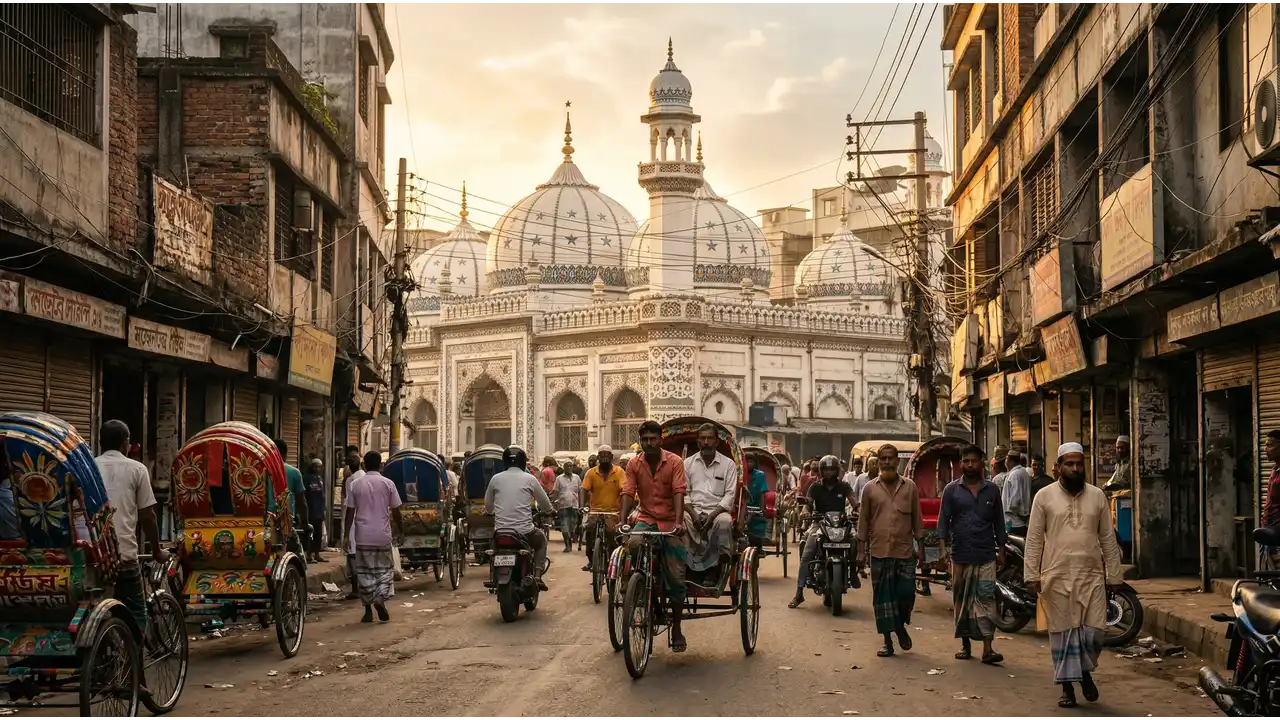
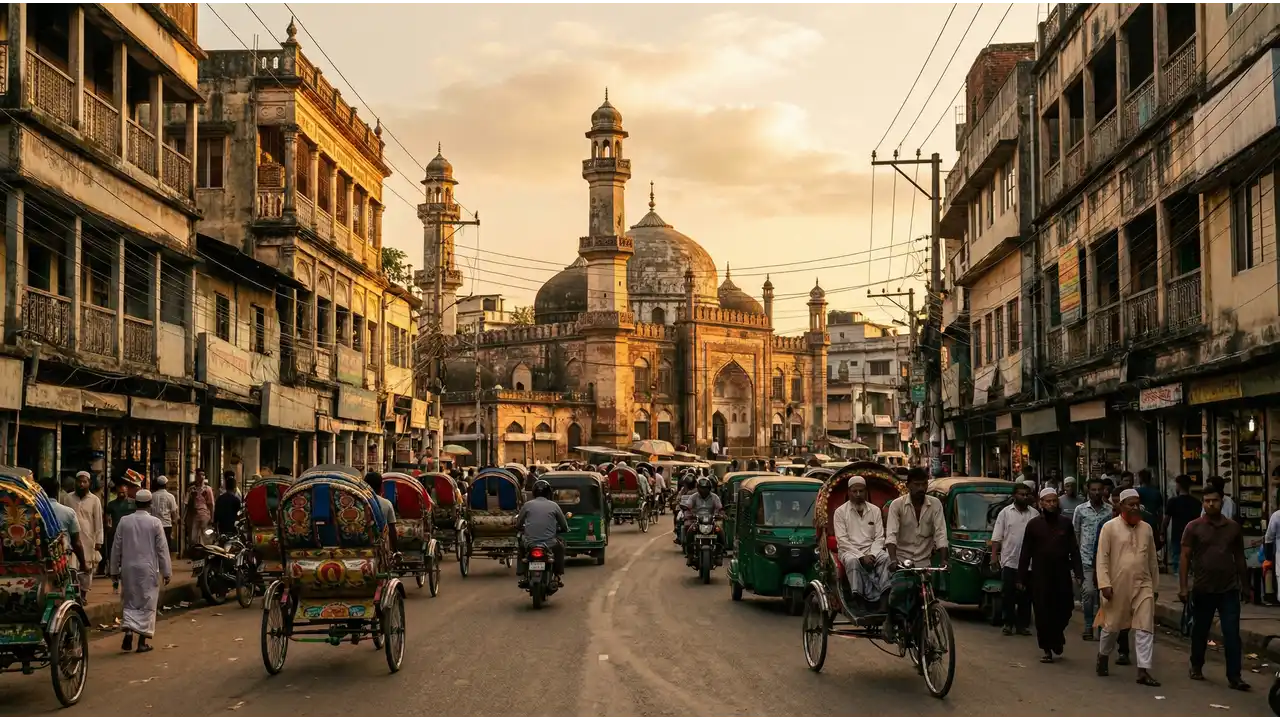
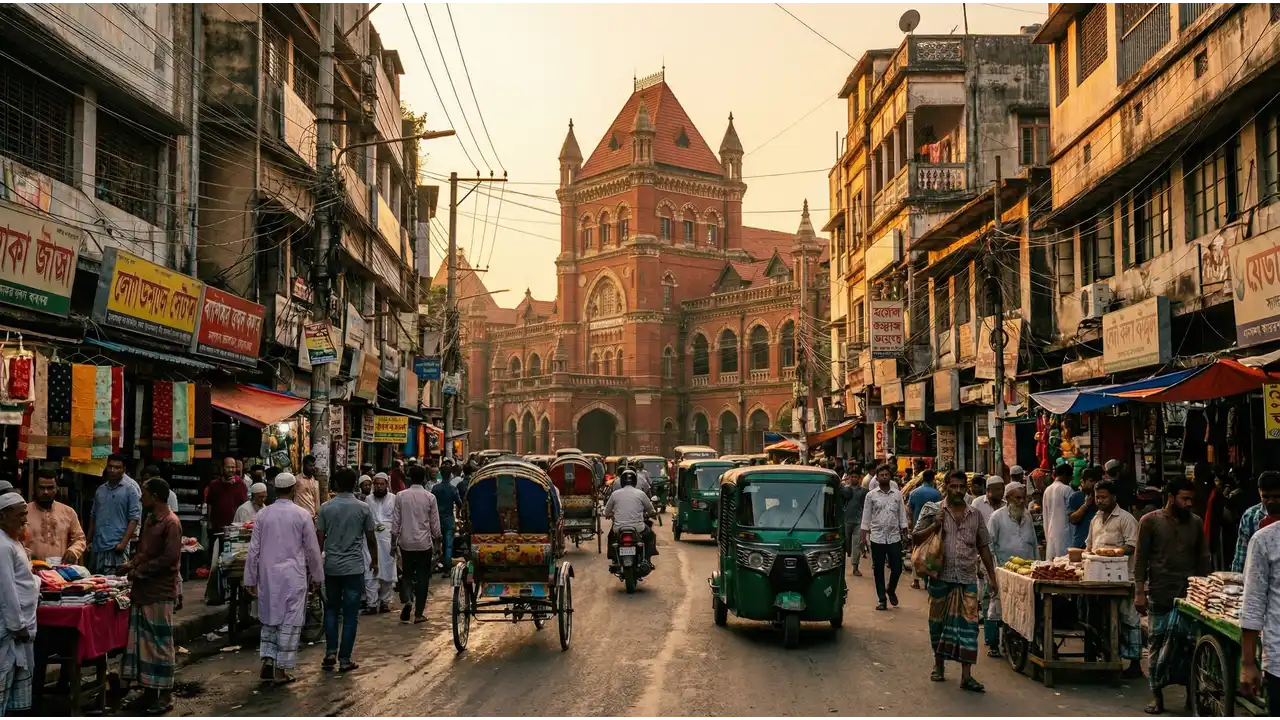
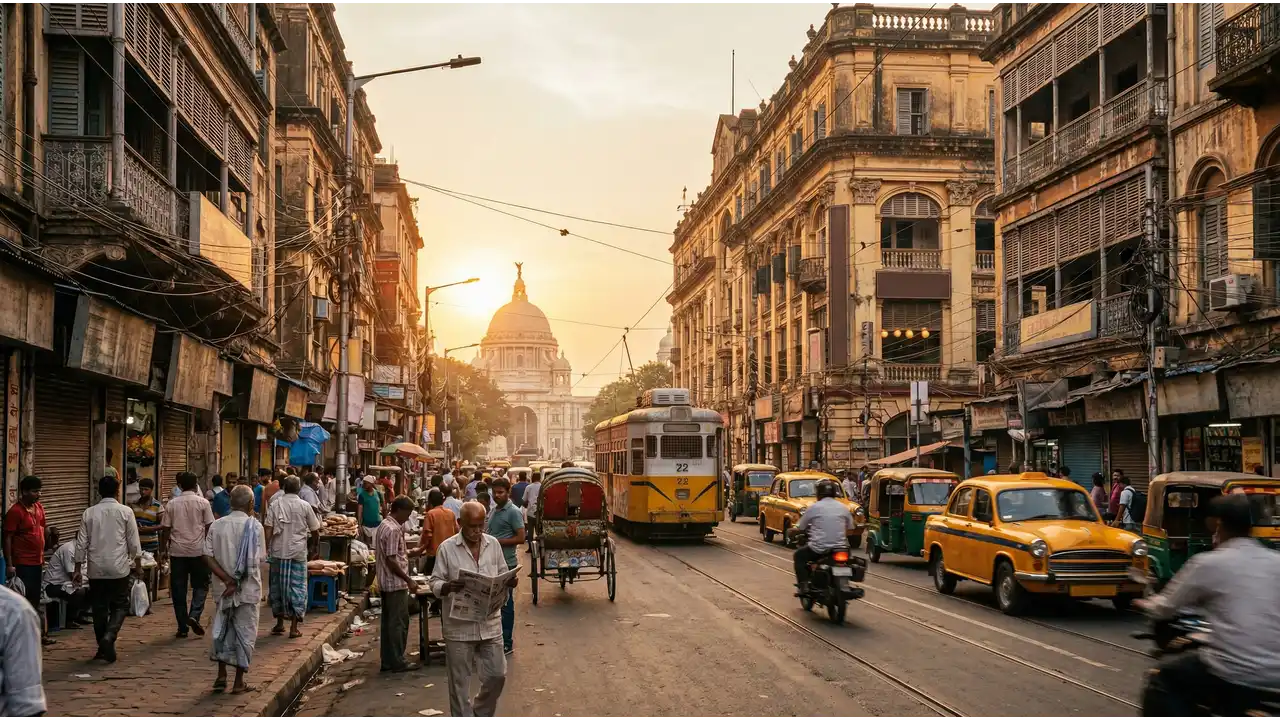
Dhaka is Bangladesh's capital and largest city, home to over 10 million people in the metropolitan area. The city sits on the Buriganga River in a humid subtropical climate with hot, wet summers and cool, dry winters. Daily life revolves around dense neighborhoods, crowded rickshaw routes, and markets selling fresh produce, fish, and textiles. Traffic congestion is severe during rush hours. Power outages occur but are less common than a decade ago. The city draws migrant workers, students, and expats working in NGOs, manufacturing, and tech. Most residents live in apartment buildings or rented rooms, often without air conditioning.
💡 Local Insights
Dhaka · 2026
Dhaka's cost of living depends heavily on neighborhood and lifestyle choices. Housing at $156/month typically means a basic one-bedroom apartment in peripheral areas like Mirpur, Dhanmondi (outer), or Gulshan (if shared). Central areas like Baridhara or upscale Gulshan command double or triple that. Groceries at $135/month covers local markets where rice, lentils, seasonal vegetables, and fish cost far less than imported goods. A kilogram of local rice runs $0.50 to $1. Expats often pay 30-50 percent more by shopping at imported grocery chains. Public transport (buses, CNGs, rickshaws) is extremely cheap, roughly $15-30 monthly for regular commuters. Eating at local restaurants costs $1-3 per meal; Western cafes charge $5-12. Utilities add $20-40 depending on air conditioning use. Many expats spend more on housing and Western groceries, pushing budgets toward $800-1,200 monthly.
Frequently Asked Questions
How much does it cost to live in Dhaka per month?
A moderate lifestyle in Dhaka costs $575/month. This covers housing ($156/month), groceries ($135/month), utilities ($25-35/month), transport ($20/month), and dining or entertainment ($60-80/month). The budget tier runs $345/month if you live very simply: cheaper accommodation, local food, minimal transport. A comfortable lifestyle costs $891/month, adding better housing, imported groceries, and regular dining out. Actual costs vary widely by neighborhood, whether you cook at home, and your comfort standards.
What is the average rent in Dhaka?
Average rent is $156/month for a basic one-bedroom apartment. In outer Mirpur or Uttara, unfurnished one-bedroom units rent for $100-150/month. Dhanmondi and Gulshan (outer) range $150-250/month for similar space. Gulshan, Baridhara, or Banani (upscale expat areas) start at $300-400/month for one bedroom and climb to $800-1,200/month for two-bedroom furnished apartments. Shared rooms in student areas cost $50-100/month. Most rentals are unfurnished; tenants buy or rent furniture separately. Lease terms are typically one year, with deposits equal to one or two months' rent.
Is Dhaka cheap to live in for expats?
Dhaka is cheap compared to most major global cities, but expat living often costs more than the local average. Local staff earning $300-500/month manage comfortably; expats typically spend $600-1,200/month to maintain familiar housing, groceries, and transport standards. Shared accommodations and eating local food can bring costs closer to $400-500/month. The main expense gap is housing (expats often prefer air-conditioned apartments in specific neighborhoods) and food (imported items cost 2-3 times more). Healthcare, schooling, and international flights also push budgets higher. Compared to Southeast Asian hubs like Bangkok or Ho Chi Minh City, Dhaka remains significantly cheaper.
How much does food cost per month in Dhaka?
Monthly groceries cost $135/month at local markets. Rice ($0.50-1/kg), lentils ($0.80/kg), seasonal vegetables ($0.30-0.80 each), and fish ($2-4/kg) are staples. A chicken costs $3-5. Local eggs are $0.10-0.15 each. Cooking at home keeps costs low. Eating out at roadside restaurants runs $1-2 per meal; mid-range local restaurants charge $3-5. Western cafes and restaurants cost $8-15 per meal. Imported groceries (cheese, cereals, sauces) at specialty shops cost 2-3 times more than local equivalents. Street food like pani puri, samosas, or fuchka costs under $0.50.
What salary do you need to live comfortably in Dhaka?
A comfortable lifestyle costs $891/month, suggesting a gross monthly income of $1,200-1,400 to account for taxes and savings. This supports decent housing ($250-300/month), regular groceries including some imported items ($180-200/month), utilities with air conditioning ($40-50/month), transport ($30/month), dining out occasionally ($100/month), and discretionary spending ($150-200/month). Expats working for international NGOs, companies, or embassies typically earn $1,500-3,000/month or more. Local professionals earn $300-800/month. For expats prioritizing comfort and social life, $1,500/month is a practical minimum.
How does the cost of living in Dhaka compare to other places?
Dhaka sits squarely in the budget-friendly range for South Asia. A moderate lifestyle costs $575 per month, with housing running $156 monthly. This puts it almost exactly on par with Kathmandu, which runs $550 for the same standard of living and $164 for housing.
If you're coming from a wealthier city, the difference is stark. Tehran costs considerably more at $800 monthly for a moderate lifestyle, driven largely by housing at $406 per month. On the opposite end, Kabul is notably cheaper at $400 monthly overall, though housing there is significantly less expensive at $91.
Dhaka's affordability comes from low labor costs, inexpensive local food, and minimal transportation expenses. Imported goods and Western goods cost more, but most daily expenses remain genuinely low by global standards. Your money stretches furthest if you eat local, use public transit, and avoid expat-oriented establishments.
Yes, but only on a tight budget. $345/month requires cheap housing ($80-100/month, often a shared room or small rented space in outer areas), groceries under $120/month (strictly local markets, rice and lentils as staples), minimal utilities ($10-15/month without air conditioning), and walking or occasional rickshaw rides ($10-15/month). Eating out is rare; you cook almost every meal. No international goods, limited entertainment, no private transport. This budget suits long-term backpackers, students, or locals. Most expats cannot sustain this comfortably without significant lifestyle sacrifice. Healthcare or unexpected expenses quickly break this budget.