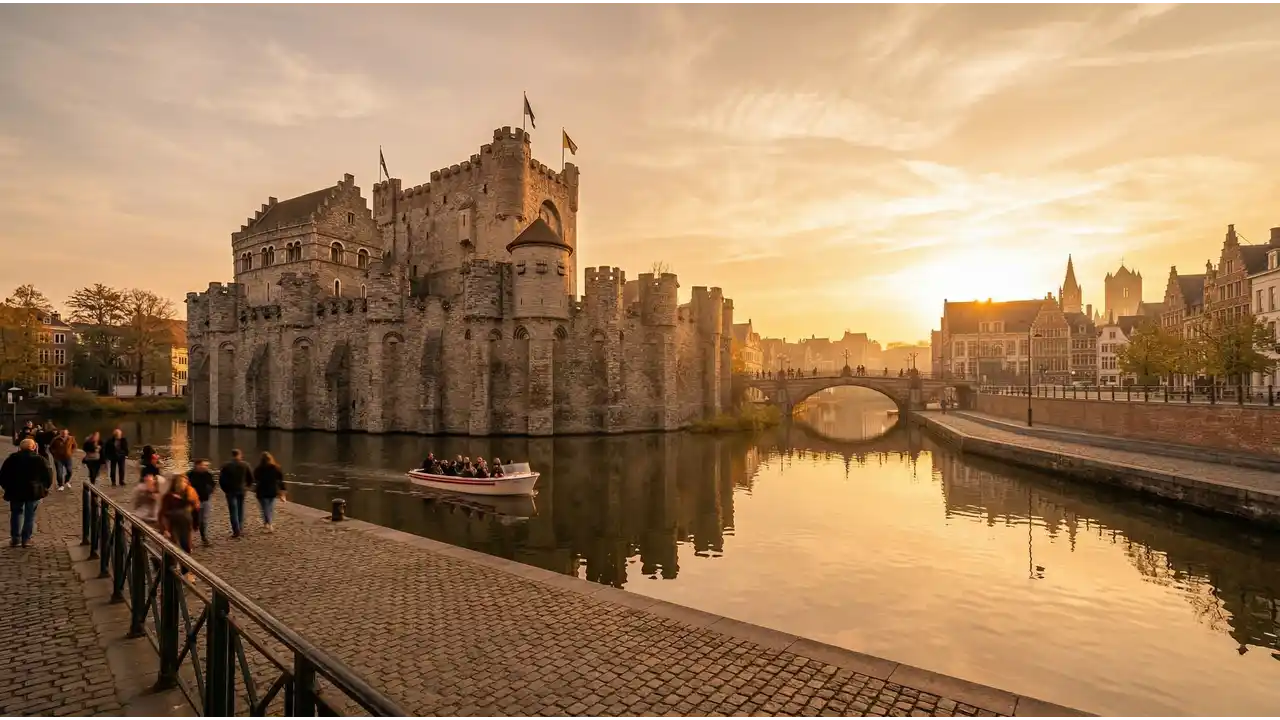
France is a mix of dense urban centers (Paris, Lyon, Marseille) and smaller regional towns with distinct character. Daily life centers on walkable neighborhoods, public transit, and strong local markets. The climate ranges from Mediterranean in the south to temperate in the north and central regions. About 68 million people live here, including a significant expat population in Paris and coastal areas. Work culture tends toward structured schedules and genuine lunch breaks. Regional identity runs deep, and language matters outside major cities, though English is more common among younger people and in tourist zones.
💡 Local Insights
France · 2026
Housing costs vary sharply by location. Paris averages well above the $914/month national figure; smaller cities and regions fall significantly below it. Outside the capital, a one-bedroom apartment in a secondary city runs $600-$800/month, while Paris studios or small one-bedrooms range $1,100-$1,500. Regional France offers the best value for remote workers. Groceries, including fresh produce from local markets, average $366/month for one person buying staples like bread, cheese, eggs, and vegetables. Eating out is expensive relative to groceries, especially in Paris (dinner entree $18-$28). Public transit is reliable and reasonably priced (Paris metro pass costs about $80/month; regional trains are efficient but require planning). Healthcare is subsidized through the French system if you have a work contract; private health insurance for expats runs $40-$100/month. Utilities add $80-$120/month depending on heating and location. Phone plans are cheap ($15-$30/month). Expats often pay slightly more for housing and services in major cities due to demand; learning basic French improves everyday costs and integration.
Frequently Asked Questions
How much does it cost to live in France per month?
A moderate lifestyle in France costs approximately $2,050/month for one person. This breaks down roughly to $914 for housing (rent, utilities, internet), $366 for groceries, and the remainder for transport, dining out, entertainment, and other expenses. The budget tier is $1,230/month (minimal housing, basic food, no dining out), while a comfortable lifestyle with better housing, eating out occasionally, and more discretionary spending runs around $3,178/month. Costs vary significantly between Paris and regional cities, with the capital running 30-40 percent higher overall.
What is the average rent in France?
Average rent is approximately $914/month, though this masks significant regional variation. In Paris, a one-bedroom apartment in a decent neighborhood runs $1,100-$1,500/month; outside the center, $900-$1,200/month. Secondary cities like Lyon, Toulouse, and Bordeaux range $650-$900/month for a one-bedroom. Smaller towns and rural areas often fall under $600/month. Furnished rentals (common for expats on short contracts) are typically 10-20 percent more expensive. The south coast and mountain regions command higher prices. Most French leases require first month's rent plus a security deposit; broker fees (if used) add another month's rent. Utilities typically run $80-$120/month on top of rent.
Is France cheap to live in for expats?
France is moderate for expats, not cheap. Paris ranks among Europe's pricier cities, comparable to Amsterdam or Barcelona for housing and dining. Regional France offers genuine value, especially smaller cities in the Occitanie, Nouvelle-Aquitaine, and Auvergne-Rhone-Alpes regions, where you can live well on $1,500-$1,800/month. Healthcare and public transit are genuine advantages if you establish residency and access the social system. Private health insurance and initial setup costs (visa, housing deposits, relocation) add up front. Expats on US or UK salaries often find France affordable; those on local French wages (median around $2,300/month gross) face tighter budgets. The real saving comes from living outside Paris.
How much does food cost per month in France?
Groceries average $366/month for one person buying staples. Bread costs $1-$1.50/loaf, cheese $8-$15/kg depending on type, eggs $3/dozen, and fresh vegetables $1-$3/kg at markets or supermarkets. Regional markets offer better prices than chain stores. Eating out is pricier: a cafe coffee runs $2-$3, a sandwich lunch $8-$12, and a restaurant dinner entree $18-$28 (more in Paris or tourist zones). A modest weekly groceries budget of $85-$90 covers basics; add $100-$150 if you eat out 2-3 times weekly. Wine and cheese are affordable compared to North America. Some expats reduce food costs by shopping at discount chains like Lidl or Aldi, or buying directly from farmers at seasonal markets.
What salary do you need to live comfortably in France?
A comfortable lifestyle costs approximately $3,178/month for one person. This translates to a gross monthly income of around $4,200-$4,500 (accounting for French income tax, which ranges 5-45 percent depending on bracket). In Paris, budget $4,000-$4,500/month gross to live comfortably; outside Paris, $2,800-$3,500/month is sufficient. For couples, add roughly 60-70 percent more total income (shared housing reduces per-person costs). French employment contracts typically include 25 days paid leave annually, healthcare contributions through employer, and pension contributions (roughly 8-10 percent of gross). Remote workers from higher-wage countries often find French salaries insufficient; many expats rely on income from abroad. A comfortable budget includes decent housing, regular dining out, travel, and hobbies.
How does the cost of living in France compare to other places?
France sits in the middle-to-upper band for Western Europe. A moderate lifestyle in France costs $2,050 per month, with housing at $914 per month. Belgium runs slightly higher at $2,150 monthly, though housing there costs $976 per month, a marginal difference. The Netherlands is considerably more expensive, at $2,775 per month overall and $1,587 for housing alone. If you're looking to cut costs, Hungary offers genuine savings at $1,375 per month, with housing at $578 per month. France's prices reflect its position as a developed Western European country with strong urban centers and solid infrastructure. Your actual costs will vary significantly by city (Paris and Lyon demand premiums) and lifestyle choices, but these figures give you a reliable baseline for budgeting.
Yes, but only with serious constraints. The budget tier of $1,230/month requires bare-bones housing (studio in a less central neighborhood, or shared apartment), buying only groceries (no dining out), using public transit or cycling, minimal entertainment, and no travel. In Paris, this means a studio rented with roommates in outer arrondissements (15th, 18th, 20th) or just outside city limits. In regional France, it's realistic: a small apartment for $500-$600/month, groceries $80-$100/week, transport pass $30-$50/month, and $150-$200 for utilities and phone. You cut out restaurants, bars, gyms, and most leisure spending. Many students live this way in university cities like Toulouse or Rennes. For long-term living, this budget is tight and stressful; $1,500-$1,800/month gives breathing room in regional cities.