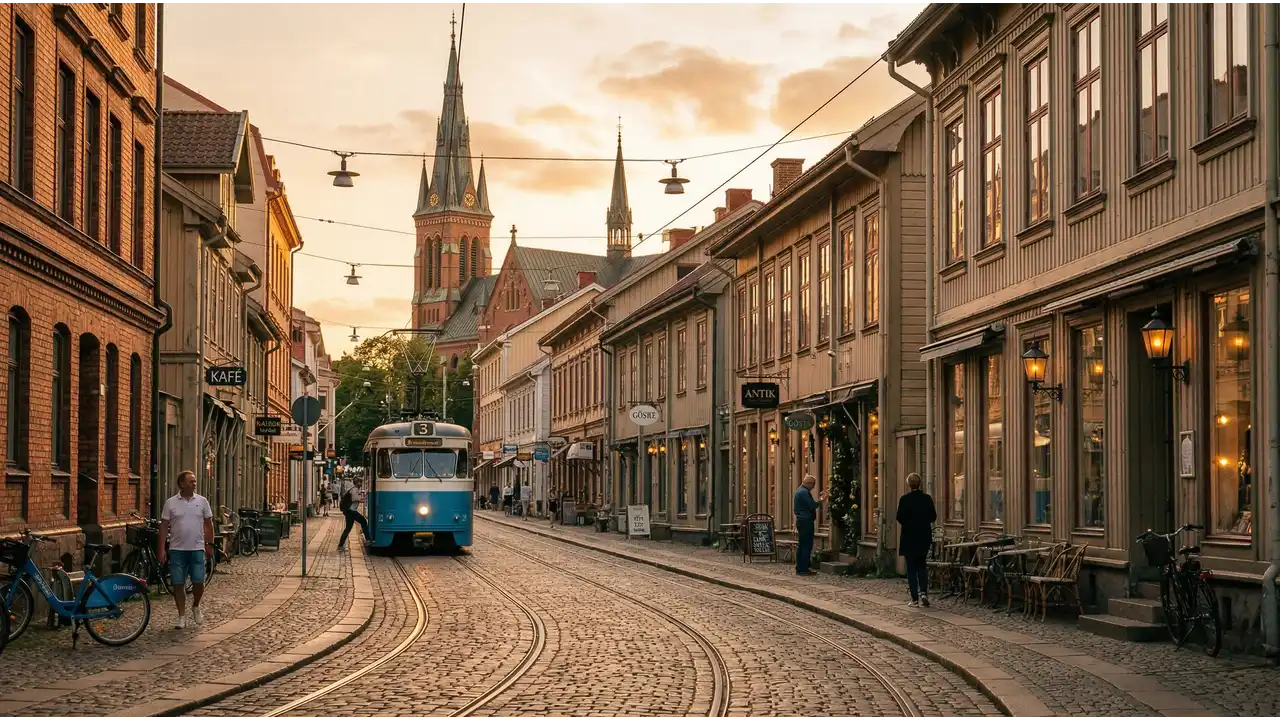
Gothenburg is Sweden's second-largest city, located on the west coast with direct access to the North Sea. The population is around 600,000 in the metro area, with a mix of locals, expats from across Europe, and students at Chalmers University. Daily life centers on biking (the city is exceptionally flat), public transit, and waterfront living. Winters are dark and rainy rather than extreme; summers are mild. The character is practical and understated. Swedish is the default language, though English is widely spoken among younger residents and the expat community. The job market is solid in tech, maritime industries, and automotive engineering.
💡 Local Insights
Gothenburg · 2026
Gothenburg costs roughly 15 to 25 percent less than Stockholm or Copenhagen, making it attractive for cost-conscious expats. Housing is the largest expense at $1,042/month for a moderate setup. One-bedroom apartments in central neighborhoods like Centrum or Haga rent for $900 to $1,100; further out in Linnestaden or Vasastaden, expect $750 to $950. Groceries run $357/month if you cook at home; major supermarkets (ICA, Coop) stock affordable basics, though imported goods cost more. Eating out is expensive (a casual lunch averages $12 to $15), so meal prep is common among residents. Public transport (trams, buses) costs around $70/month for unlimited travel. Bicycles are the go-to for short trips and require minimal investment. Expats pay the same rents and food prices as locals; no hidden dual pricing. The moderate budget of $2,150/month accommodates housing, food, transport, and modest leisure without cutting corners.
Frequently Asked Questions
How much does it cost to live in Gothenburg per month?
A moderate lifestyle in Gothenburg costs $2,150/month. That breaks down roughly as: housing $1,042/month, groceries $357/month, public transport $70/month, utilities and internet $120/month, and the remainder split among dining out, entertainment, and personal care. On the budget end, you can live on $1,290/month by sharing an apartment and minimizing eating out. At the comfortable tier, $3,333/month allows for a larger place, dining flexibility, and travel within Sweden. Most expats land in the moderate to comfortable range once settled.
What is the average rent in Gothenburg?
Average monthly rent is $1,042/month for a moderate setup. A one-bedroom apartment in central neighborhoods (Centrum, Haga, Magasinsgatan) typically rents for $950 to $1,150/month. Slightly further out in Linnestaden, Vasastaden, or Majorna, one-bedroom units are $750 to $950/month. Two-bedroom apartments run $1,200 to $1,500/month in central areas. Room rentals in shared apartments are $450 to $650/month. Furnished short-term rentals cost 20 to 30 percent more. Utilities (heat, water, electricity) add roughly $100 to $140/month. Most leases are unfurnished (möblerat), and landlords typically require a Swedish bank account and employment contract.
Is Gothenburg cheap to live in for expats?
Gothenburg is moderately priced for Northern Europe but not cheap in absolute terms. It's notably cheaper than Stockholm, Copenhagen, or Oslo, with roughly 20 percent lower housing costs. For North American expats, living expenses are higher than most US cities but comparable to Seattle or Boston. For those coming from London or Switzerland, Gothenburg feels like good value. The real cost advantage comes from biking infrastructure, affordable public transport, and competitive grocery prices if you cook at home. Dining out, alcohol, and entertainment remain pricey. Expats with Swedish salaries or remote US/UK income find it manageable; those relying on local wages in lower-paying sectors may find it tight.
How much does food cost per month in Gothenburg?
Groceries average $357/month for a moderate budget. Staples at ICA or Coop supermarkets include milk ($1.10/liter), bread ($2 per loaf), chicken ($8 per kilogram), and eggs ($2.50/dozen). Fresh produce is seasonal and reasonably priced (apples $1.50 per kilogram, tomatoes $2 per kilogram in summer). Imported and organic items cost 30 to 50 percent more. Eating out is expensive: a casual lunch averages $12 to $15, dinner at a mid-range restaurant $25 to $40 per person. Fika (coffee and pastry) is a cultural ritual, typically $4 to $6. Most residents meal-prep to stay within budget. Asian and Middle Eastern grocers offer better value for spices and international ingredients.
What salary do you need to live comfortably in Gothenburg?
A comfortable lifestyle costs $3,333/month, suggesting a gross monthly income of roughly $4,200 to $4,500 (accounting for Swedish taxes of 20 to 25 percent on earnings). That translates to an annual salary of around $50,000 to $54,000 USD. At that level, you can afford a nice one to two-bedroom apartment, eat out several times a week, travel within Sweden, and save modestly. Most tech and engineering roles in Gothenburg pay 35,000 to 50,000 SEK/month ($3,200 to $4,600), which places skilled workers comfortably in the moderate to comfortable tier after tax. Students and entry-level workers typically live on the budget tier ($1,290/month) with roommates and careful spending.
How does the cost of living in Gothenburg compare to other places?
Gothenburg is 15 to 25 percent cheaper than Stockholm for housing and 20 percent cheaper than Copenhagen. It ranks similarly to German cities like Cologne or Hamburg. Compared to US standards, housing is pricier than Austin or Denver but cheaper than San Francisco or New York. For expats from London, Paris, or Zurich, Gothenburg feels affordable. For those from Eastern Europe or Southeast Asia, it will feel expensive. The key differences: Gothenburg has lower housing supply stress than Stockholm, lower restaurant prices than Copenhagen, and lower overall tax burden than Denmark. Transport costs are roughly half those of car-dependent US cities, which partly offsets higher housing.
Can you live in Gothenburg on $1,290/month?
Yes, but with real constraints. That budget requires room rental in a shared apartment ($500 to $650/month), minimal eating out, cooking at home, and using public transport or a bike. You'll cover rent, utilities, groceries ($300 to $350/month by cooking carefully), transport ($50 to $70/month), and leave little for entertainment, clothing, or travel. Most people on this budget are students or early-career workers. Unexpected costs (dental work, repairs, travel home) force cuts elsewhere. It's doable long-term if you're disciplined, but leaves no margin for error. Most expats find it sustainable only in the first year; once settled, they move to the moderate tier ($2,150/month) for breathing room.