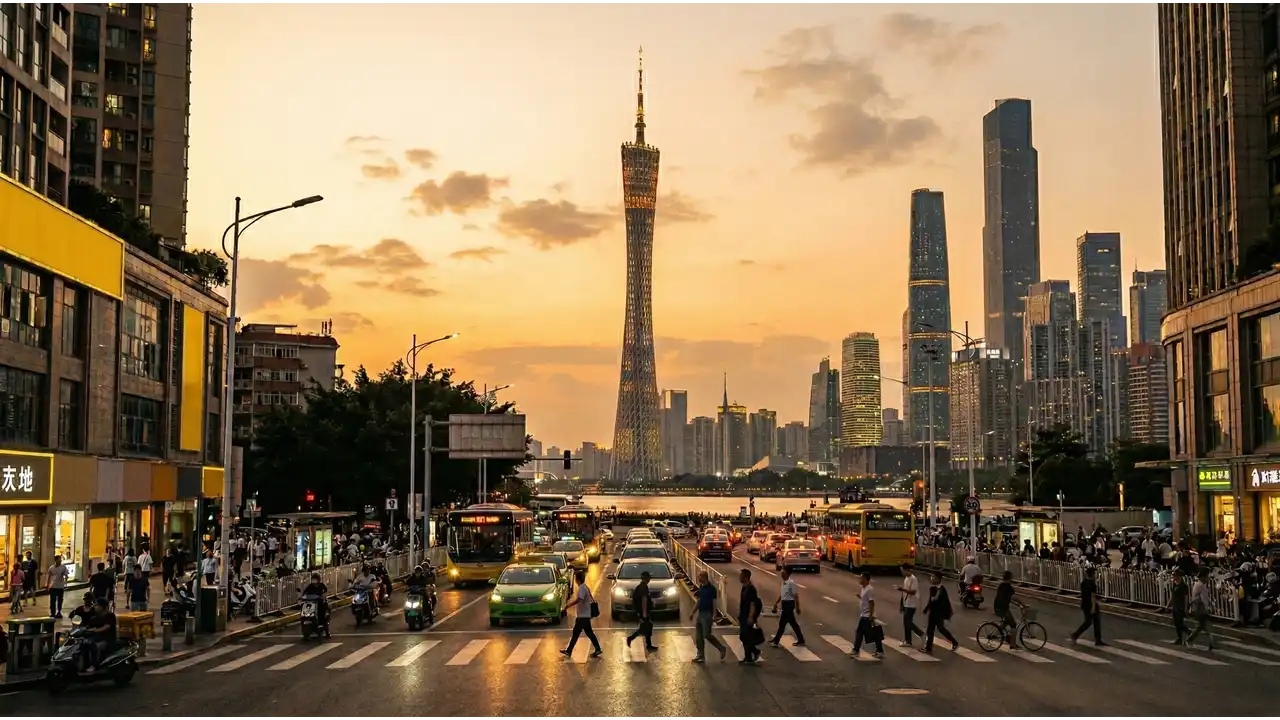
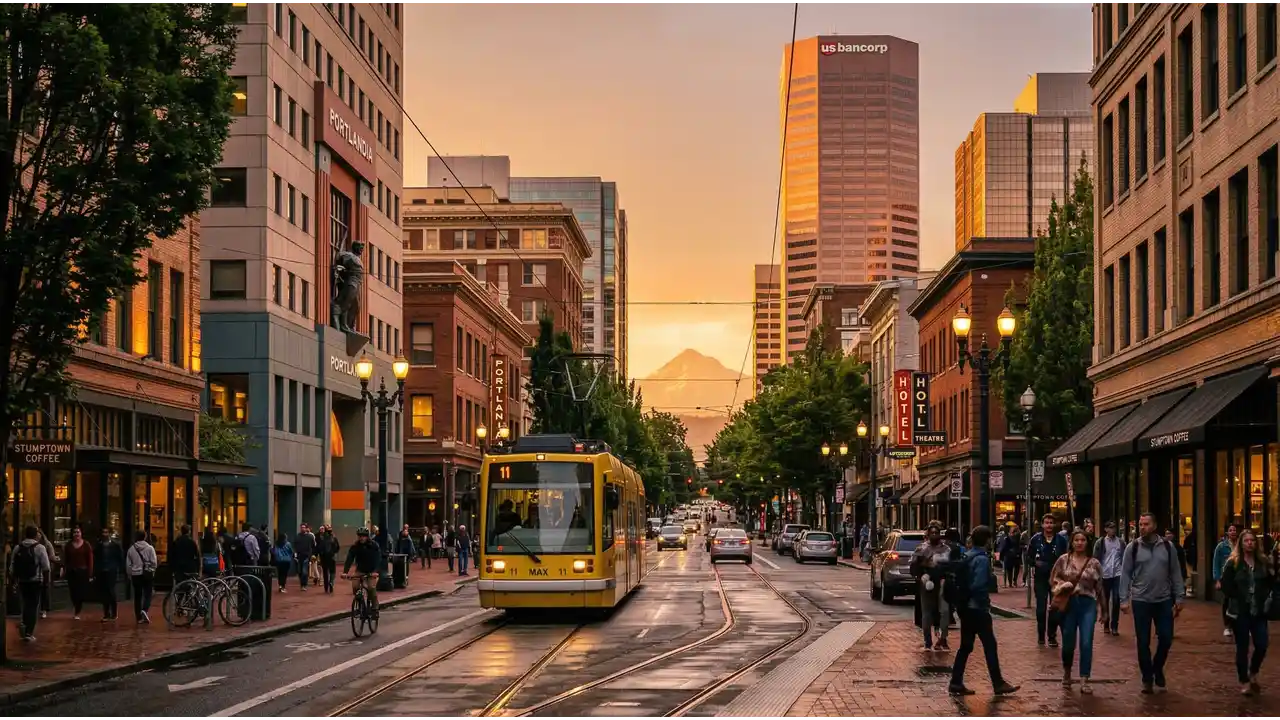
Guangzhou is a sprawling southern Chinese city of 15 million people, China's third-largest by GDP. It sits on the Pearl River in Guangdong Province, serving as a major manufacturing and export hub. Daily life moves fast. The climate is subtropical, hot and humid most of the year, with typhoon season June to September. Expats, local professionals, and migrant workers from across China share dense residential neighborhoods. Public transit dominates, with metro and bus networks covering most areas. Mandarin is standard, though Cantonese remains common among older residents. The city feels less touristy and more working than Beijing or Shanghai, with older mixed-use neighborhoods alongside modern business districts.
💡 Local Insights
Guangzhou · 2026
Guangzhou's cost of living sits well below first-tier Chinese cities. A moderate lifestyle runs $1,100 per month. Housing dominates the budget at $508 per month for a one-bedroom apartment in central neighborhoods like Tianhe or Yuexiu, or shared housing in Liwan. Outer districts like Baiyun or Panyu drop to $350-$450 for similar space. The metro is extensive and cheap, around $0.30-$0.60 per ride. Groceries are genuinely inexpensive if you shop local markets rather than imported goods. A month of groceries costs $191 if you cook at home, buying produce, rice, and local proteins at wet markets. Street food meals run $1.50-$3. Expats often pay 20-30% premiums for imported items and Western restaurants, which inflates budgets significantly. Local Chinese meals in casual restaurants cost $2-$4. The cost gap between budget ($660/month) and comfortable ($1,705/month) reflects housing choice and whether you're eating imported food regularly.
Frequently Asked Questions
How much does it cost to live in Guangzhou per month?
A moderate lifestyle in Guangzhou costs $1,100 per month. This breaks down roughly to $508 for housing (one-bedroom apartment in central areas), $191 for groceries, $40-$60 for utilities and internet, $20-$30 for local transport via metro and bus, and $100-$150 for dining out occasionally. A budget lifestyle can be done on $660 per month, mainly by sharing housing and eating only local food. A comfortable lifestyle with dining out more frequently, better housing, and occasional leisure costs around $1,705 per month.
What is the average rent in Guangzhou?
Average rent for a one-bedroom apartment in central neighborhoods like Tianhe or Yuexiu is around $508 per month, matching the housing budget line. In established expat areas closer to business districts, expect $500-$650. Shared housing or rooms in the same neighborhoods run $250-$380 per person. Outer districts like Baiyun, Panyu, or Huangpu offer one-bedroom apartments for $350-$450, and studio apartments for $280-$380. Utilities and internet add $40-$60 monthly. Prices have remained relatively stable, though newer developments in emerging business areas command slight premiums.
Is Guangzhou cheap to live in for expats?
Yes, Guangzhou is genuinely affordable compared to Shanghai, Beijing, or Shenzhen, but with caveats. If you live like locals (local housing, local food, public transport), $1,100 per month is comfortable. If you seek expat bubbles with imported groceries, Western restaurants, and international school tuition, costs climb sharply. Many expats report spending $1,500-$2,200 monthly on lifestyle preferences alone. The advantage is optionality: you can choose cheap or expensive. Unlike expensive tier-one cities, Guangzhou doesn't force high costs. Long-term expat residents often find the genuine local integration easier and more affordable here than in Shanghai or Beijing.
How much does food cost per month in Guangzhou?
Groceries cost around $191 per month if you shop wet markets and cook at home. Produce is $0.50-$1.50 per kilogram, rice $0.30-$0.50 per kilogram, and eggs $0.80 per dozen. Imported groceries (Western cheese, cereal, snacks) at chains like City Shop cost double or triple. Eating out is cheap if you choose street food or casual Cantonese restaurants: noodle soups cost $1.50-$2.50, rice-and-stir-fry dishes $2-$4, and dim sum $3-$6 per person. Western restaurants average $10-$20 per meal. Most expats spend $250-$400 monthly on food once they add restaurant meals and occasional imported items.
What salary do you need to live comfortably in Guangzhou?
A comfortable lifestyle costs $1,705 per month. As a rough rule, plan on earning 5-7 times that figure annually to account for taxes, savings, and occasional larger expenses, suggesting $10,000-$12,000 annually (or about $850-$1,000 per month after-tax income at minimum). Most expat employers in Guangzhou offer package salaries of $2,000-$4,000 per month, which covers comfortable living, savings, and occasional travel. Teaching English pays $1,500-$2,500 monthly, sufficient for the comfortable tier. Freelancers and remote workers need consistent income of at least $1,800-$2,000 monthly to live without financial stress and maintain savings.
How does the cost of living in Guangzhou compare to other places?
Guangzhou sits in the middle tier for Chinese cities. A moderate lifestyle costs $1,100 per month here, with housing running $508 monthly. That makes it slightly pricier than Cebu, where a moderate lifestyle costs $1,050 and housing is $488 per month. You'll find Guangzhou notably more expensive than Qingdao, which runs $825 for a moderate lifestyle and $336 for housing. Shanghai is the clear outlier in the region, with costs reaching $1,525 monthly for a moderate lifestyle and housing alone at $886 per month. Compared to Southeast Asian alternatives, Guangzhou's costs are competitive while offering the infrastructure and job market of a major Chinese manufacturing and trade hub. If you're considering the region, Guangzhou balances affordability with urban amenities better than Shanghai but with more development and stability than some cheaper inland options.
Yes, but with real constraints. The budget tier of $660 per month is achievable if you share an apartment (cutting housing to $200-$300 per person), cook exclusively with local groceries, use public transport, and avoid restaurants and nightlife. This means rice, noodles, vegetables, eggs, and occasional meat from wet markets. You'll live in outer districts or shared housing in less central areas. No car, no gym memberships, no regular travel, no imported foods. Chinese language helps. This budget works for students, digital nomads with low spending discipline, or those committed to deep local integration. For most expats with jobs in central areas, the moderate tier at $1,100 is more realistic.