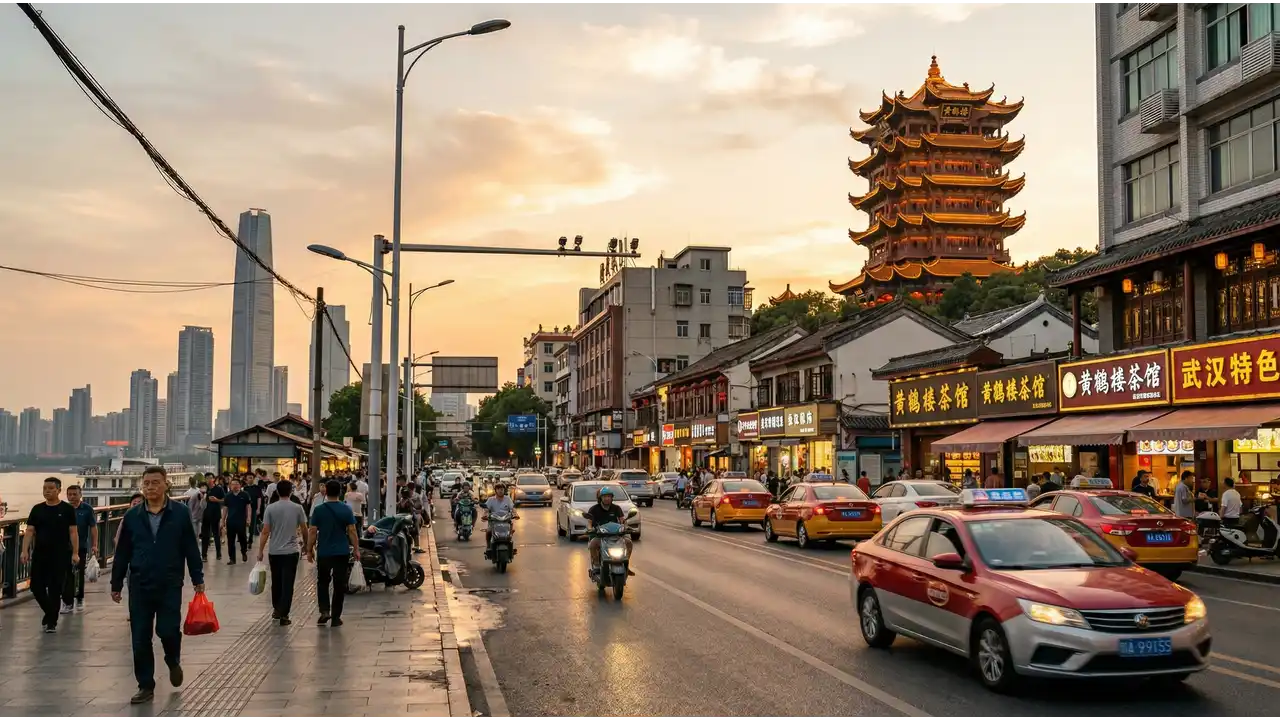
Hefei is the capital of Anhui Province in east-central China, a city of roughly 7 million people that has grown rapidly as a manufacturing and education hub. The climate is subtropical, hot and humid in summer, cold and damp in winter. Daily life revolves around metro lines, street food markets, and residential compounds (gated communities). The city attracts factory workers, university students, and a small expat population. Traffic is heavy, but the metro system is expanding. Shopping happens at wet markets, supermarket chains, and online delivery apps. English is not widely spoken outside universities and major hotels. Hefei has less tourist infrastructure than coastal cities but offers genuine lower costs and a Chinese experience less mediated for foreign visitors.
💡 Local Insights
Hefei · 2026
Hefei's primary cost advantage is housing. The China-level housing figure of $371/month reflects broad regional data; actual Hefei rents vary sharply by neighborhood and distance from the city center. A one-bedroom apartment in an older compound away from metro lines might rent for $200-350/month, while newer developments or central locations can reach $500-800. Food groceries average $195/month and track closely with wet market prices: rice runs $0.30-0.50/kg, eggs $0.80-1.20/dozen, vegetables $0.50-1.50/kg depending on season. Eating out at local restaurants costs $2-5 per meal; foreign restaurants and expat-oriented cafes charge $8-15. Transport is cheap: metro fares are $0.30-0.50 per ride, bus fares flat at $0.25. Utilities (electricity, water, heating) add $40-80/month depending on season and usage. Expats pay local prices for most goods but often spend more on imported food, international schools, and dining out, pushing real costs higher than the $975 moderate figure suggests. Chinese nationals with local salaries spend substantially less.
Frequently Asked Questions
How much does it cost to live in Hefei per month?
A moderate lifestyle in Hefei costs around $975/month. This breaks down roughly as: housing $371, groceries $195, utilities $60, transport $40, dining out and entertainment $200, and miscellaneous $109. A budget tier ($585/month) requires cutting to bare essentials: shared or very basic housing, minimal eating out, public transport only, no entertainment spending. A comfortable lifestyle ($1,511/month) allows a nicer apartment, regular dining out, gym memberships, and travel. Most expats spend closer to the comfortable tier because imported goods, international schools, and lifestyle choices push costs up.
What is the average rent in Hefei?
Hefei's housing cost in our data ($371/month) is inherited from the China-level figure rather than a separate Hefei measurement. In practice, local rental market rates vary widely. A modest one-bedroom apartment in an older compound or outer district rents for $200-400/month. Mid-range apartments in developing areas near metro stations run $400-600/month. New developments or central locations command $600-900/month or higher. Foreign expats often end up in the $500-800 range because they seek modern amenities and central access. Negotiation is normal; landlords may offer discounts for longer leases. Most rentals are unfurnished; furnished options cost 10-20% more.
Is Hefei cheap to live in for expats?
Yes, by global standards. Compared to major Western cities, Hefei is 60-75% cheaper for housing and food. Compared to coastal China (Shanghai, Beijing), it is 40-50% cheaper. However, expats typically spend more than the stated $975 moderate figure because they eat out more frequently, buy imported foods, use international schools, and travel. A realistic expat budget is $1,200-1,500/month for moderate comfort. Chinese nationals with local salaries live on significantly less. The actual savings depend on lifestyle choices: expats who adopt local eating habits, use public transport, and avoid imported goods can approach the standard figures.
How much does food cost per month in Hefei?
Groceries average $195/month. Wet market prices are lower: rice $0.35/kg, eggs $1/dozen, tofu $1-2/kg, seasonal vegetables $0.50-1.50/kg, pork $4-6/kg, chicken $3-5/kg. Supermarkets (Carrefour, Auchan, local chains) cost 20-30% more. Eating out is cheap: a bowl of noodles or dumplings costs $1-2, a full meal at a local restaurant $2-4. Street food (steamed buns, grilled meat skewers, pancakes) runs $0.50-1.50 per item. Imported groceries (Western cheese, specialty oils, international brands) are available but cost 2-4 times domestic prices. Online delivery apps (Meituan, Eleme) have expanded restaurant and grocery options. Most residents use a mix of wet market shopping and eating out at neighborhood stalls.
What salary do you need to live comfortably in Hefei?
A comfortable lifestyle costs around $1,511/month, suggesting a gross monthly income of at least $1,800-2,000 to account for taxes and savings. In local terms, that is roughly 12,000-14,000 RMB/month for a single person. This budget allows a decent apartment ($500-650), regular restaurant meals, occasional travel, gym membership, and some entertainment spending. Couples or families would need proportionally more. Expat salaries at international schools, foreign companies, or teaching positions typically start at $1,500-2,500/month plus housing allowance, which places earners comfortably above this threshold. Local professional salaries in Hefei average $800-1,500/month, so comfort for Chinese nationals requires either dual income, higher position, or lower lifestyle expectations.
How does the cost of living in Hefei compare to other places?
Hefei is genuinely affordable compared to most Southeast Asian alternatives. A moderate lifestyle here costs $975 per month, with housing at $371 per month. That puts it slightly cheaper than Cebu, where a moderate lifestyle runs $1,050 monthly and housing costs $488. Bangalore is notably less expensive, at $700 for a moderate lifestyle and $349 for housing, making it one of the few regional options that undercut Hefei. On the other end, Jeddah is substantially pricier, with a moderate lifestyle at $1,350 and housing at $554. For expats or remote workers looking for genuinely low costs without sacrificing livability, Hefei sits in a sweet spot, particularly if you value proximity to transportation, education, and healthcare infrastructure.
Yes, but with strict constraints. A budget of $585/month requires: basic housing in an outlying area ($200-300), groceries and cheap eating out ($200), utilities ($50), transport ($25), and minimal discretionary spending ($10-15). This means shared apartments or small rooms in workers' compounds, daily meals at street stalls and wet markets, no dining at restaurants, no travel, no entertainment expenses, and no buffer for medical costs or emergencies. It is feasible for students, digital nomads with very low spending, or those receiving additional support. Most Chinese laborers live on this range; expats find it austere because they lack local networks, struggle to negotiate housing, and have higher dietary expectations. Not recommended long-term without supplementary income or savings.