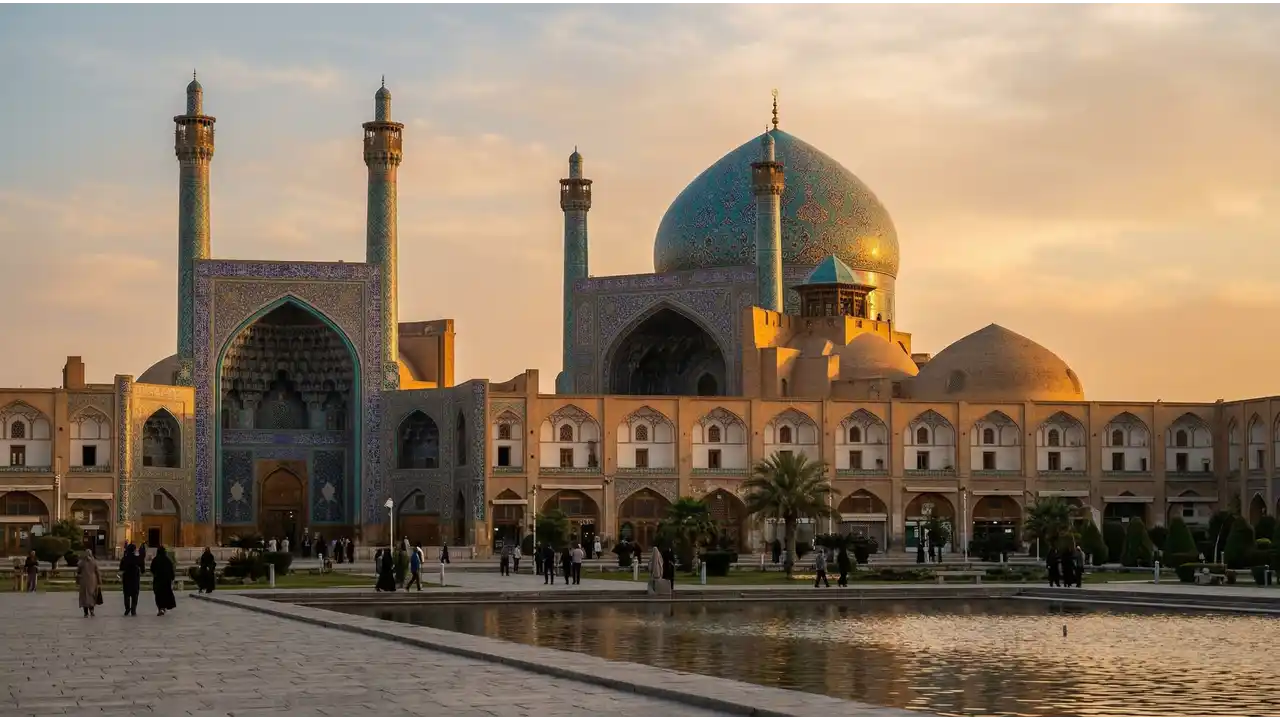
Iran is a large, diverse country spanning desert, mountains, and Caspian coastline. Most of the 90 million population lives in cities, with Tehran dominating. Daily life centers on bazaars, tea houses, and family. Winters are cold in the north and center; summers are hot and dry. Summers in Tehran regularly exceed 95°F (35°C). Public transport is cheap and common. Most neighborhoods are walkable. Access to Western goods is limited due to sanctions, and many services operate informally. Healthcare exists but quality varies. Internet is monitored and censored.
💡 Local Insights
Iran · 2026
Cost of living in Iran remains low compared to regional neighbors, though inflation has been persistent. Housing costs around $247/month and covers modest apartments in ordinary neighborhoods. Rent varies by city and distance from center; Tehran is most expensive, provincial cities significantly cheaper. Food and groceries cost approximately $130/month for a budget diet of local staples: rice, lentils, eggs, tomatoes, cucumbers, yogurt, and bread from bakeries. Meat and imported goods push costs higher. Public transit is inexpensive (buses and metros cost fractions of a dollar per ride). Expats often pay more than locals for housing and imported foods, but less than in Europe or North America. Informal cash payments are standard for many services. Utility costs are low because energy is subsidized. Medical care is affordable but may require private payment. Banking and currency exchange add complexity due to international sanctions.
Frequently Asked Questions
How much does it cost to live in Iran per month?
A moderate lifestyle costs around $650/month. Budget tier is $390/month, which requires careful spending on housing and food only. The comfortable tier is $1,008/month and allows eating out, taxis, and some entertainment. These figures reflect life in or near a major city like Tehran or Isfahan. Provincial towns cost less. Exchange rates and inflation mean prices shift, but the underlying affordability relative to Western countries remains significant. Most costs are paid in cash or informal transfers due to banking restrictions.
What is the average rent in Iran?
Average rent is roughly $247/month for a one-bedroom apartment in a regular neighborhood. In Tehran, expect $200 to $350/month depending on location and condition. South and east Tehran are cheaper; north Tehran (Shemiran, Darrous) commands higher prices. Provincial cities like Shiraz, Isfahan, and Mashhad run $150 to $220/month. Very central or new apartments cost more. Furnished rentals are common and may be slightly higher. Deposits are typically one or two months' rent paid upfront. Expats sometimes face higher asking prices from landlords. Utilities (water, gas, electricity) are subsidized and add $20 to $40/month on top of rent.
Is Iran cheap to live in for expats?
Yes, Iran is inexpensive compared to Europe, North America, or Gulf states. At $650/month, an expat can live decently in a major city with a private apartment, local food, and public transport. The real challenge is not cost but access and bureaucracy. Importing goods, opening bank accounts, and obtaining visas are difficult and time-consuming. Many expats arrive with teaching or business contracts that provide additional allowances or housing. Those without local income or local support networks find daily logistics harder than the budget itself suggests. Cost advantage exists only if you can navigate the practical obstacles.
How much does food cost per month in Iran?
Groceries for one person average $130/month on a local diet. Bread costs $0.30 to $0.50 per loaf. Rice, lentils, and beans are under $1 per kilogram. Eggs are roughly $1 per dozen. Fresh vegetables (tomatoes, cucumbers, onions, peppers) are $0.40 to $0.80 per kilogram depending on season. Chicken is around $3 to $4 per kilogram. Eating at street food stalls (kebab, ash, rice dishes) costs $1 to $3 per meal. Eating at casual restaurants is $3 to $6. Imported foods (cheese, chocolate, processed goods) are significantly more expensive and sometimes unavailable. Tea and dried fruits are staple snacks and very cheap.
What salary do you need to live comfortably in Iran?
A comfortable lifestyle requires around $1,008/month. This covers housing ($247+), groceries ($130+), utilities, transport, dining out occasionally, and modest entertainment. It does not include major medical expenses, travel, or importing goods. In US dollar terms, that is roughly $12,000/year. Most Iranian salaries are much lower in nominal terms, but they are supplemented by subsidies on fuel, utilities, and staple foods. Expats often earn in foreign currency (or have contracts denominated in dollars or euros), which provides significant purchasing power advantage. Without a local income or external funding, $1,008/month is tight for comfort.
How does the cost of living in Iran compare to other places?
Iran is significantly cheaper than Indonesia, where a moderate lifestyle costs $875 per month, but slightly less expensive than Laos at $700 per month. Pakistan offers the lowest costs in this comparison at $450 per month. A moderate lifestyle in Iran runs $650 per month, positioning it squarely in the lower-cost category for Asia.
Housing illustrates the same pattern. Iran's moderate housing costs $247 per month, compared to $345 in Laos, $373 in Indonesia, and just $139 in Pakistan. This means Iran offers genuine affordability without the extreme frugality required in Pakistan, while remaining substantially cheaper than most Southeast Asian options. Your money stretches furthest in Pakistan, but Iran provides a reasonable middle ground for those seeking low costs with more urban amenities and services than the cheapest alternatives.
Yes, but narrowly, and only as a local or very long-term resident. $390/month is the strict budget tier and requires living in a modest apartment ($150 to $200), buying only local groceries ($120 to $150), and using public transport. It cuts out restaurants, entertainment, travel, and new clothes. Utilities, phone, internet, and basic healthcare are squeezed into the remaining cash. Expats arriving with luggage and no local contacts cannot realistically do this. A local person with family support, rent subsidies, or existing possessions can manage it. Any emergency (medical, travel, replacement of broken goods) breaks the budget. This figure is real but fragile.