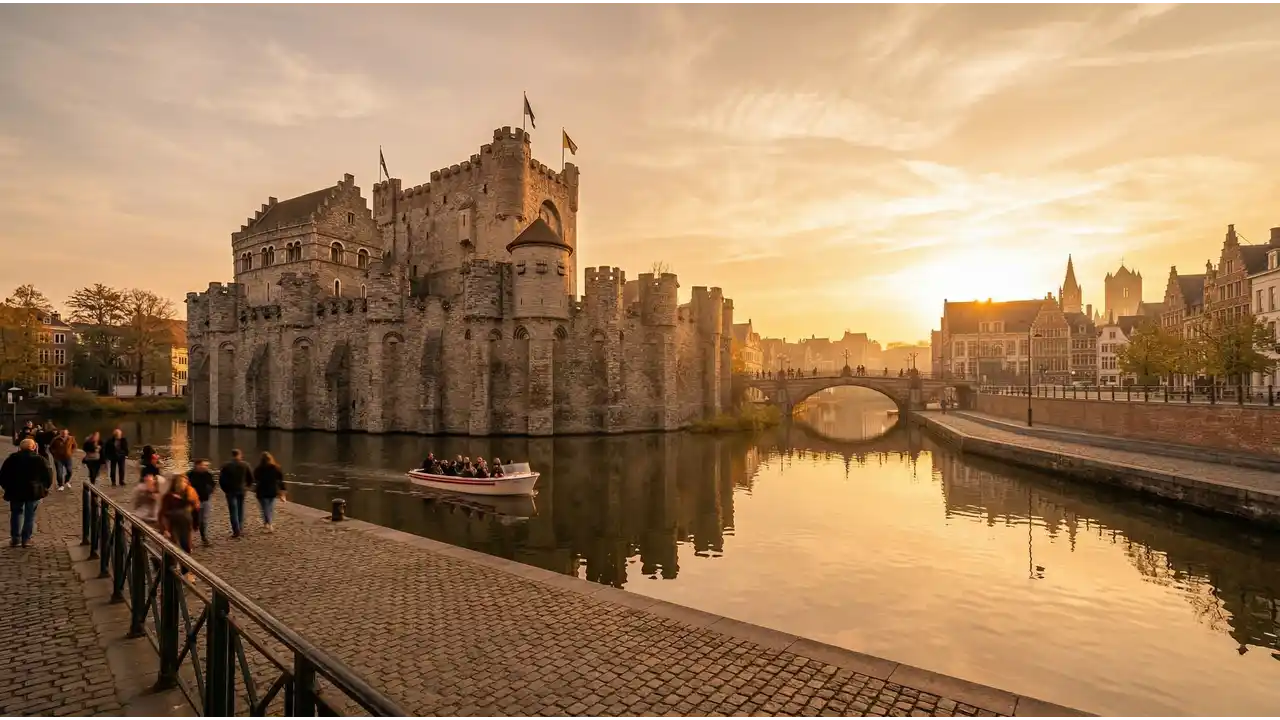
Ireland is a small island nation in northwestern Europe with 5.1 million people, about half living in the greater Dublin area. The climate is cool and wet year-round. Daily life centers on coffee culture, pubs, and a strong work-life boundary that kicks in after 5 p.m. Most locals rely on cars outside Dublin; public transport exists but requires planning. The pace is slower than major continental cities. English is the primary language. Summers reach 65-70°F, winters drop to 40-45°F. Housing stock is limited and aging. Internet infrastructure outside cities can be patchy. Cost of living has risen sharply since 2021, making Ireland expensive by European standards.
💡 Local Insights
Ireland · 2026
Ireland's cost of living sits at $3,100 per month for a moderate lifestyle, driven primarily by housing scarcity. Rental supply has not kept pace with demand, especially in Dublin and Cork. Housing costs run around $1,796 per month, covering a one-bedroom apartment in central Dublin at the higher end or a shared house outside the city at the lower end. Outside major cities, prices drop noticeably. Groceries average $421 monthly, comparable to other Western European countries, though some imported goods (especially North American brands) carry premiums. Eating out is expensive: a casual dinner for two costs $60-80. Transport varies by location. Dublin has buses and trams (Luas); a monthly pass is roughly $100. Outside Dublin, a car is essential; fuel and insurance add $200-300 monthly. Healthcare is mixed: Irish citizens get public coverage, but expats typically need private insurance ($100-250/month). Utilities (electricity, gas, broadband) run $150-200 monthly. Wages in tech and professional services are competitive, offsetting costs for those sectors. Expats in lower-paying work often find Ireland tight unless they have savings or remote income from cheaper markets.
Frequently Asked Questions
How much does it cost to live in Ireland per month?
A moderate lifestyle costs $3,100 per month. This breaks down roughly as: housing $1,796, groceries $421, transport $150-200, utilities $150-200, and discretionary spending (entertainment, dining out, personal care) $300-400. A budget tier exists at $1,860 monthly (shared accommodation, minimal travel, home cooking), while a comfortable lifestyle runs $4,805 (private apartment, regular dining out, car use). These figures apply to Dublin and Cork; smaller towns and rural areas cost less.
What is the average rent in Ireland?
Average monthly rent is around $1,796. In Dublin city center, a one-bedroom apartment rents for $1,800-2,200. Outside the center (Rathmines, Stoneybatter), expect $1,500-1,800. In Cork or Galway, one-bedrooms run $1,200-1,600. Shared house rooms in Dublin cost $800-1,200; outside Dublin, $600-900. Landlord requirements can be strict (proof of income, deposit equal to 4-5 weeks' rent). Housing is the single largest budget item and the primary cost driver for expats. Availability remains tight across all price points.
Is Ireland cheap to live in for expats?
No. Ireland ranks among Europe's more expensive countries, particularly for housing. Expats arriving on modest remote salaries often find the cost of living a shock compared to Southern or Eastern Europe. However, it remains cheaper than central London, Geneva, or Copenhagen. For tech workers and professionals earning Dublin-level salaries, costs are manageable. For expats on budget travel income or lower-wage jobs, Ireland is difficult. Many expats choose smaller towns (Galway, Waterford) to reduce housing costs. Healthcare for expats requires private insurance. Overall, expect to spend significantly more than in Portugal, Spain, or Poland.
How much does food cost per month in Ireland?
Groceries average $421 per month for one person cooking at home. A loaf of bread costs $1.50-2, a liter of milk $1.20-1.40, eggs (dozen) $2.50-3.20, chicken breast (per pound) $6-8, and cheddar cheese $5-7 per half-pound. Supermarkets like Tesco, Dunnes, and Supervalu dominate; Lidl and Aldi are cheaper. Eating out is expensive: a casual lunch runs $12-18, dinner at a mid-range restaurant $18-28 per person. Pints cost $5-7 in Dublin, less elsewhere. Shopping at farmers markets or ethnic grocers (Asian, Eastern European) can reduce costs for specific items.
What salary do you need to live comfortably in Ireland?
A comfortable lifestyle costs $4,805 per month, implying a gross annual salary around $67,000-70,000 for a single person (before taxes and deductions). This supports private housing, regular dining out, a car, and travel. In Dublin, tech and finance salaries start around $60,000-75,000 and climb higher. Irish income tax is progressive: 20% on income up to roughly $43,000, 40% above. Social security contributions add another 4-8%. An expat earning remote income from a cheaper market (USD or GBP, paid to a home account) can live more comfortably than an Irish salary holder in the same bracket.
How does the cost of living in Ireland compare to other places?
Ireland sits in the middle-to-upper range for Western Europe. A moderate lifestyle in Ireland costs $3,100 per month, with housing running $1,796 per month. That puts it slightly cheaper than Luxembourg, where a moderate lifestyle runs $3,300 per month and housing costs $2,021 per month. Both are considerably more expensive than Germany, where you can manage a moderate lifestyle for $2,175 per month with housing at $1,009 per month. Monaco is the outlier at $4,025 per month for a moderate lifestyle, driven largely by housing costs of $2,323 per month. If you're coming from North America or Australia, Ireland will feel expensive. If you're relocating from London or Zurich, it will feel like a bargain. For most Western Europeans, it's a straightforward calculation: pricier than the continent's budget options, but not at premium-city levels.
Yes, but with tight constraints. The budget tier supports housing around $1,000-1,200 (shared accommodation or small town apartment), groceries $300-350 (cooking mostly at home, minimal waste), transport $80-120 (bus pass or occasional car use), utilities $120-150, and $100-200 for everything else (phone, hygiene, rare social outings). Dining out is nearly impossible. Healthcare must be low-cost (public GP visits with a Health Care Card, or minimal private cover). This budget works best outside Dublin and requires discipline. Unexpected costs (car repair, dental work, travel home) create real stress. It's viable for minimalist remote workers or those with low local expenses, but offers little margin.