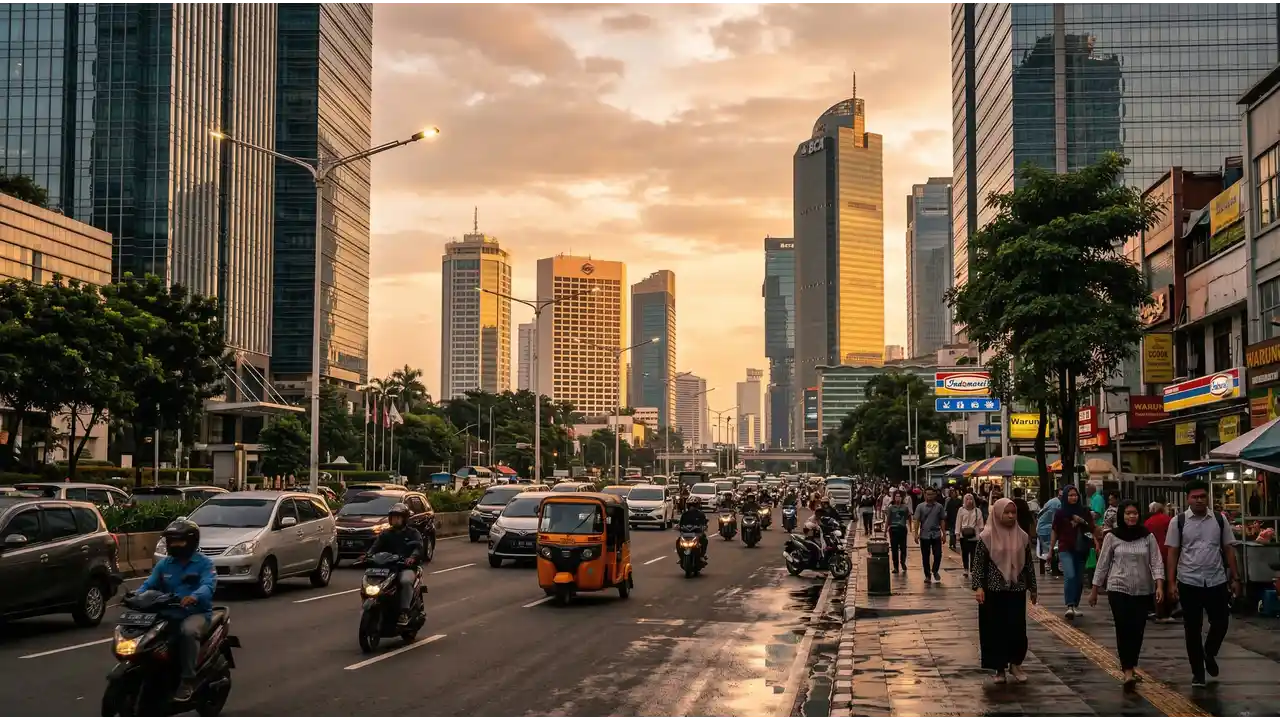
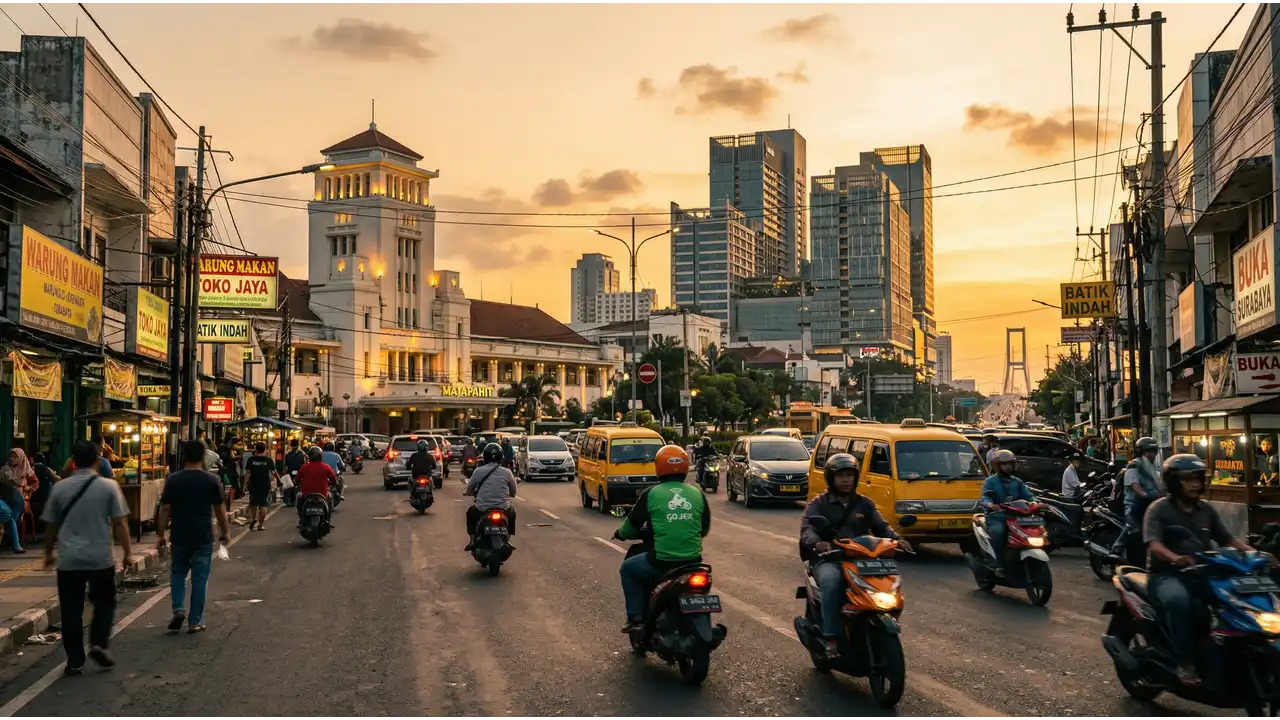
Jakarta is Indonesia's capital and primary economic hub, home to over 10 million people in the city proper. The climate is tropical and humid year-round, with a wet season from October to April. Daily life revolves around traffic, which is severe during rush hours, and a mix of modern office districts (Central Jakarta), older colonial areas (Kota), and sprawling residential neighborhoods (South Jakarta, East Jakarta). The city has a substantial expat community concentrated in areas like Menteng, Pondok Indah, and Senayan. Public services, healthcare, and retail vary significantly by neighborhood and whether you use local or expat-oriented providers.
💡 Local Insights
Jakarta · 2026
Jakarta's cost structure is defined by sharp neighborhood variation. Housing at $467/month covers a range: shared accommodations or older Indonesian apartments in working-class areas run $250-400/month, while mid-range furnished apartments in established expat neighborhoods (Menteng, Blok M) run $500-800/month. New luxury high-rises command far more. Groceries at $164/month assumes buying local produce at traditional markets (wet markets) and local supermarkets like Carrefour or Hypermart. Imported Western goods cost 2-3 times local prices. Transportation is cheap if you use ride-hailing (Gojek, Grab average $1-3 per trip) or buses, but traffic means time costs add up. Eating at warungs (small local eateries) costs $1.50-3 per meal; restaurant meals for expats run $6-15. Expat taxation, private healthcare, and school fees (if relevant) are major budget items not always reflected in basic living costs. Utilities and internet are inexpensive. The gap between budget and moderate lifestyles is real: the difference is often quality of housing, eating out frequency, and use of expat services versus local alternatives.
Frequently Asked Questions
How much does it cost to live in Jakarta per month?
A moderate lifestyle in Jakarta costs $975/month. This breaks down roughly as: housing $467/month, groceries $164/month, transportation $60-100/month, utilities and internet $30-50/month, and meals out and discretionary spending $200-300/month. A budget approach costs around $585/month by cutting housing costs, eating primarily at warungs, and using public transport. A comfortable lifestyle runs $1,511/month with better housing, more dining out, and greater use of expat services and convenience.
What is the average rent in Jakarta?
Average monthly rent is around $467/month, with substantial variation by location and property type. In working-class Indonesian neighborhoods like Cikini or Kemang, you can find basic apartments for $250-350/month. Mid-range furnished apartments in established expat areas like Menteng, Pondok Indah, or around Senayan run $500-750/month. Newer developments and luxury apartments in central business districts command $1,000-2,000+/month. Shared houses or rooms cost less. Prices depend heavily on amenities: air conditioning, hot water, and security gates are standard in mid-range and up. Furnished units typically cost 20-30% more than unfurnished.
Is Jakarta cheap to live in for expats?
Jakarta is moderately affordable for expats compared to other major Asian capitals, but less so than Southeast Asian alternatives like Chiang Mai or Da Nang. At $975/month for a moderate lifestyle, it is significantly cheaper than Singapore or Hong Kong, but comparable to or slightly pricier than Bangkok or Kuala Lumpur depending on neighborhood choice. The real cost depends heavily on your choices: you can live frugally on $585/month using local services and housing, but expat-oriented areas and Western convenience inflate costs. Private healthcare, international schools, and imported goods create a two-tier economy. For digital nomads and remote workers on modest budgets, Jakarta works; for families and those dependent on expat amenities, it is pricier.
How much does food cost per month in Jakarta?
Groceries average $164/month when shopping at local markets and Indonesian supermarkets. A meal at a warung costs $1.50-3. Rice, eggs, canned goods, and seasonal produce are cheap; imported Western brands (cheese, cereal, specialty items) cost 2-3 times more than in the US. Eating out at mid-range Indonesian or Asian restaurants runs $4-8 per meal. Western-oriented cafe meals and expat-friendly restaurants cost $8-15. A budget approach (cooking at home, local markets, warungs) easily stays under $150/month. Moderate spending includes some restaurant meals and use of modern supermarkets, pushing toward $200-250/month for food including occasional dining out.
What salary do you need to live comfortably in Jakarta?
A comfortable lifestyle costs $1,511/month, suggesting a gross salary of $1,800-2,000/month for a single person, or higher if supporting dependents. This budget allows decent housing ($600-800/month), regular dining out, private healthcare access, and modest use of paid services. For families with children attending international schools, realistic comfortable costs are $2,500-4,000+/month depending on school choice. Expat packages from employers often include housing allowances, which changes the equation significantly. Local Indonesian salaries that support a comfortable lifestyle are roughly 15-20 million rupiah/month ($950-1,300), though high earners earn substantially more. Freelancers and remote workers need stable income equivalent to the comfortable tier to avoid financial stress.
How does the cost of living in Jakarta compare to other places?
Jakarta is moderately priced for Southeast Asia but not the cheapest option in the region. A moderate lifestyle in Jakarta costs $975 per month, with housing at $467 per month. Hanoi runs $875 monthly overall and $406 for housing, making it slightly cheaper and a direct peer city. Delhi is substantially less expensive at $675 per month with housing at $299, though it's a different scale of city. If you're comparing upward, Yerevan costs $1,350 per month with $644 for housing, making it notably dearer. Jakarta's sweet spot is being affordable enough for most expats and remote workers, while offering better infrastructure and services than many cheaper Southeast Asian cities. Your dollar stretches reasonably here, particularly outside central business districts.
Yes, but with real constraints. The budget tier of $585/month requires: housing around $300-350/month (older apartments or shared houses in less central areas like Bekasi or Depok), groceries strictly from local markets under $164/month, minimal transportation beyond buses and ride-hailing for necessity, and eating primarily at warungs ($2-3 per meal). You will forgo air conditioning in some cases, avoid expat areas entirely, use local (not international) healthcare, and have minimal discretionary spending. Many Indonesian locals and long-term budget expats do this successfully. However, this budget leaves little buffer for emergencies, medical costs, or quality-of-life spending. It suits digital nomads with very low expectations or those fully integrated into local life. Most expats find $750-850/month a more sustainable minimum.