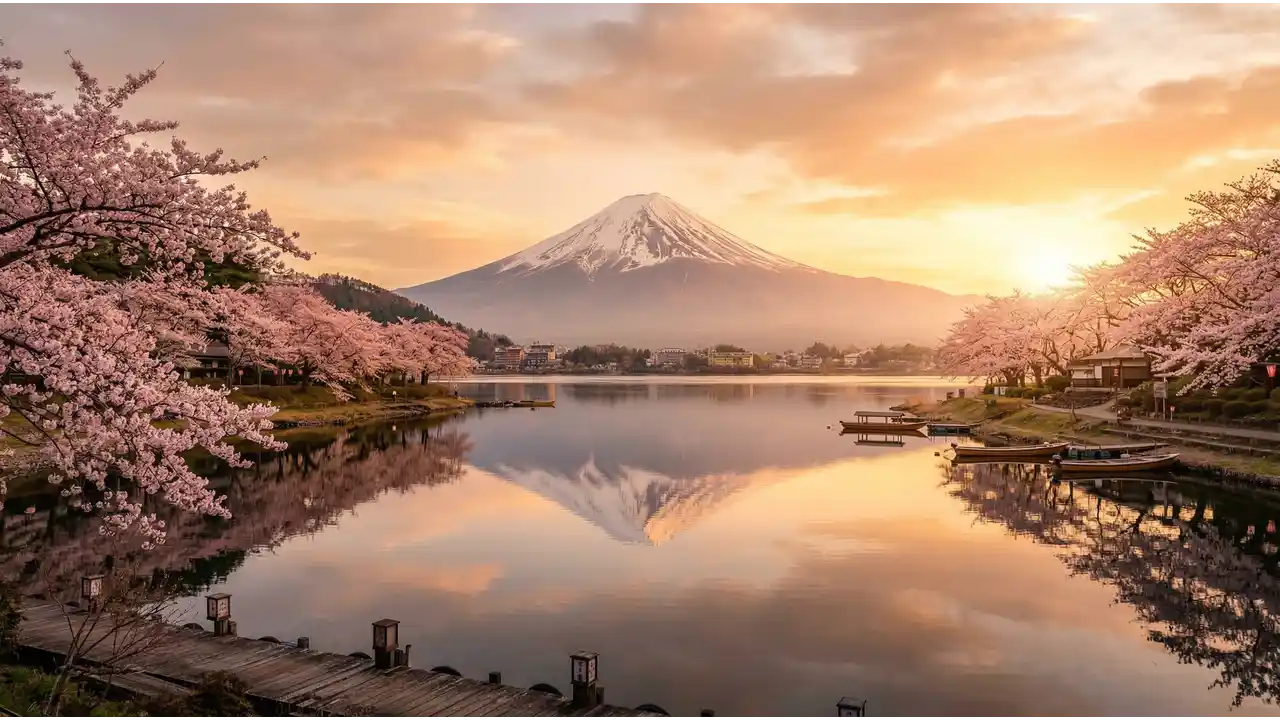
Japan is a densely populated island nation with over 125 million people living across four main islands. Urban life centers on Tokyo, Osaka, Kyoto, and smaller regional cities. Winters are cold in the north, mild in the south; summers are hot and humid nationwide. Most residents use trains and bicycles for daily transport rather than cars. Daily life revolves around convenience stores (open 24 hours), small grocery shops, public bathhouses, and restaurants ranging from $3 noodle bowls to $50 omakase. Work culture is structured; housing is compact. English speakers concentrate in Tokyo and other major cities; rural areas require Japanese fluency.
💡 Local Insights
Japan · 2026
Japan costs less than major US or Western European cities but more than Southeast Asia. Housing at $603/month covers a small studio or one-bedroom apartment in secondary cities; Tokyo and Kyoto charge 30-50% more. Groceries at $346/month reflect high produce prices (fruit especially) but cheap rice, noodles, and convenience food. Train passes cost $50-120/month depending on your commute; owning a car adds $300-500/month. Expats often pay more than locals for the same apartment because landlords require guarantors and deposits upfront. Eating out is cheaper than cooking (ramen $6-8, set lunch $8-12). Utilities run $80-120/month. Healthcare costs little if you enroll in national insurance ($50-100/month). Mobile phone plans are $20-40/month if you avoid major carriers. Winter heating and summer cooling push utility bills higher in extreme months.
Frequently Asked Questions
How much does it cost to live in Japan per month?
A moderate lifestyle costs $1,675/month. That breaks down roughly as housing at $603/month, groceries at $346/month, transport $80/month, utilities $100/month, and discretionary spending (dining out, entertainment, clothing) at around $546/month. A budget tier at $1,005/month cuts housing to a shared apartment or small town, eliminates dining out, and restricts travel. A comfortable tier at $2,596/month allows for larger housing, frequent restaurants, and regular domestic travel. Exchange rates matter; the yen fluctuates against the dollar, which affects your monthly purchasing power.
What is the average rent in Japan?
Average rent is $603/month for a one-bedroom apartment in a secondary city or outer Tokyo ward. A studio in central Tokyo runs $700-900/month. A one-bedroom in Osaka or Kyoto runs $500-700/month. Rural towns drop to $300-400/month. Deposits (shikikin) equal 1-2 months' rent and are non-refundable; you also pay 1 month's rent as key money (reikin) to the landlord. Real estate agents charge one month's rent as commission. Furnished apartments for expats cost 20-30% more. Shared housing (sharehouse) runs $400-600/month and is popular with expats.
Is Japan cheap to live in for expats?
Japan is moderately priced for expats but not cheap. It costs less than London, New York, or Sydney but more than Bangkok or Hanoi. Expats often pay premiums because landlords require Japanese guarantors, larger deposits, and upfront payments. Language barriers add costs (translation services, English-speaking doctors). Food, especially imported Western products, costs 2-3x more than in home countries. However, public transit, healthcare, and utilities are reasonably priced. The biggest expense difference is housing. On a $1,675/month budget, you can live adequately in a regional city but will feel constrained in Tokyo without remote work income.
How much does food cost per month in Japan?
Groceries average $346/month. Rice costs $1-2/kg, eggs $0.50 each, chicken $6-8/kg, fish $12-18/kg, fresh vegetables $2-5 per item, and fruit is expensive ($3-6 per apple). Convenience store meals (onigiri, bento) run $3-5. Ramen shops charge $6-8 for a bowl. Set lunches (teishoku) at restaurants are $8-12. Sushi from supermarkets costs $6-10 for a portion; omakase restaurants are $40-80. Convenience stores (Seven-Eleven, Lawson, FamilyMart) are cheaper for ready-made meals than cooking. Alcohol is inexpensive; beer from a convenience store is $1.50-2 per can. Eating out is often as cheap as cooking for one person.
What salary do you need to live comfortably in Japan?
A comfortable lifestyle costs $2,596/month, roughly $31,000/year. This allows larger housing ($800-900/month), regular dining out, domestic travel 2-3 times annually, and new clothing without strict budgeting. Remote workers earning $3,000-3,500/month live very comfortably. A teacher's salary (around $2,000-2,500/month) is tight for comfort but workable in regional cities. Tokyo requires $3,000+/month for comfort. Visa sponsorship usually requires an employer to justify a salary, though there is no official minimum. Many expats live on $1,675/month by sharing housing or living outside major cities.
How does the cost of living in Japan compare to other places?
Japan sits in the middle range for developed Asia. A moderate lifestyle costs $1,675 per month, with housing at $603 monthly. This puts Japan slightly above Bahrain, where a moderate lifestyle runs $1,600 with housing at $877 per month. Japan is notably more expensive than Armenia, where $1,225 covers a moderate lifestyle and housing costs $623 monthly. The UAE is considerably dearer, with a moderate lifestyle at $2,650 and housing at $1,624 monthly. Within Japan itself, costs vary significantly between Tokyo and rural areas, so your actual expenses depend heavily on where you settle and your lifestyle choices. For most expats and visitors, Japan's moderate tier provides a realistic baseline for planning, though eating out frequently and living in central Tokyo will push spending higher.
Yes, but with constraints. The budget tier of $1,005/month requires a shared apartment or town outside Tokyo (housing $250-350/month), strict grocery shopping at discount stores ($200/month), no dining out, minimal transport costs, and no discretionary spending on travel or entertainment. You would cook most meals, use bicycles or walk, and avoid hobbies. This works for students (many live on $800-1,000/month through part-time work) and in rural areas or smaller cities. Tokyo is not feasible on this budget. Your quality of life depends heavily on location and lifestyle choices. Sharing housing with Japanese roommates reduces costs and improves language learning.