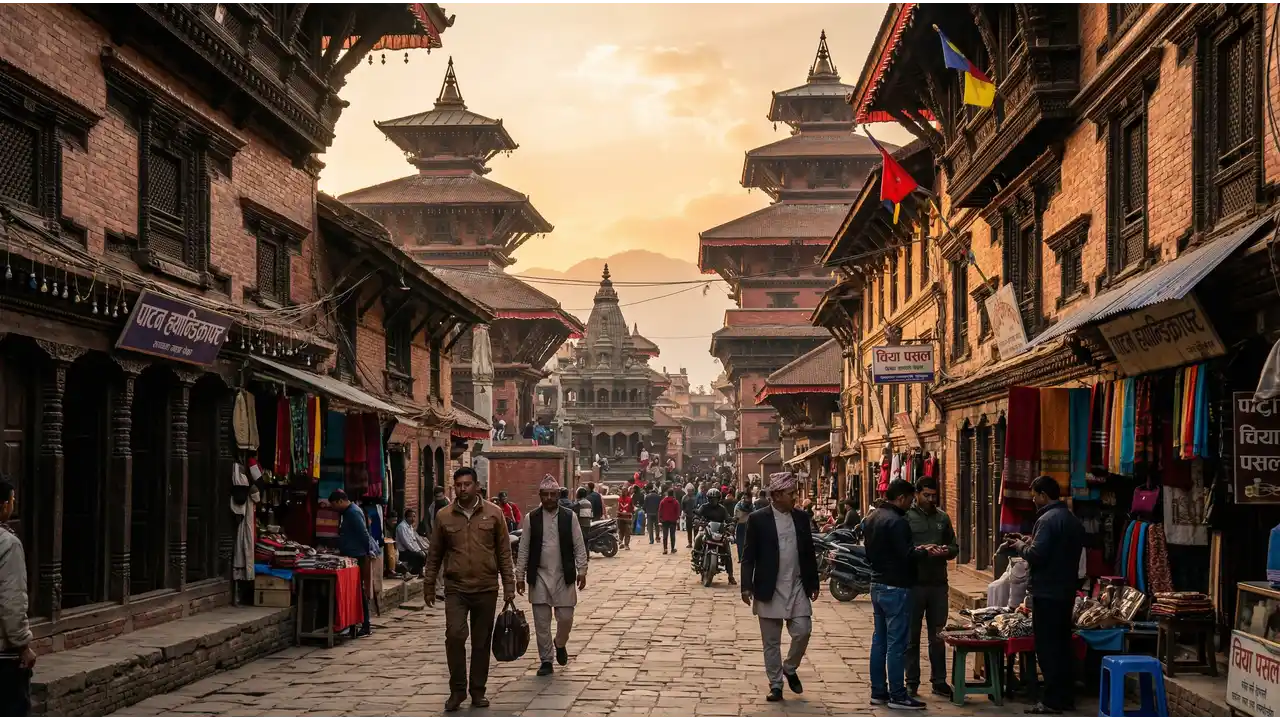
Kathmandu is Nepal's capital and largest city, home to about 1.7 million people in the metropolitan area. The city sits in a valley at 4,600 feet elevation, with a monsoon climate bringing heavy rains June through September and dry, clear weather the rest of the year. Daily life centers on crowded streets, small shops, and a mix of traditional Newari architecture alongside modern construction. Most expats live in neighborhoods like Thamel (tourist-heavy, central) or Lazimpat (quieter, residential). Air quality is poor in winter months. Traffic is chaotic but manageable on foot or by local taxi. Electricity and water are unreliable but improving.
💡 Local Insights
Kathmandu · 2026
Kathmandu's low cost reflects Nepal's developing economy and the prevalence of local wages, but expat realities differ. Housing runs $164 per month on average, with basic one-bedroom apartments in central areas renting for $120-$200, and nicer places with consistent utilities reaching $250-$350. Neighborhoods matter: Thamel charges tourist premiums; Lazimpat, Maharajgunj, and Baneshwar offer better value. Groceries cost about $125 monthly if you buy local produce at markets and Nepali staples, but imported Western goods (cheese, cereal, chocolate) double or triple that figure. Eating at local restaurants costs $2-$4 per meal; tourist restaurants $6-$15. Transport is cheap: local buses under $0.50, taxis metered but negotiable at $1-$3 per ride. Utilities add $15-$30 monthly. Internet runs $15-$25. The main cost variable is whether you eat local or import Western food, and which neighborhood you choose. Expats often spend more than the $550 moderate figure by preference, not necessity.
Frequently Asked Questions
How much does it cost to live in Kathmandu per month?
A moderate lifestyle costs around $550 per month. This breaks down roughly as: housing $164, groceries $125, utilities and internet $25-$35, local transport $15-$20, and eating out or other expenses $170-$200. A tight budget works at $330 monthly if you share housing, eat only Nepali food, and use public transport exclusively. Comfortable expats typically spend $853 or more, usually by choosing better housing ($250-$350), eating mix of local and imported food, and dining out regularly. The range reflects personal choices more than necessities.
What is the average rent in Kathmandu?
Average rent is around $164 per month. Basic one-bedroom apartments in central neighborhoods like Thamel rent for $120-$180. Quieter residential areas like Lazimpat, Maharajgunj, or Baneshwar run $130-$200 for similar space. Nicer two-bedroom homes with reliable utilities and backup power cost $250-$350. Budget guesthouses for short-term rentals start at $10-$20 nightly but are more expensive over time. Prices fluctuate based on neighborhood, amenities, and landlord willingness to negotiate with long-term tenants. Always factor in utilities ($15-$30 monthly for water, electricity, gas) and verify internet availability before signing.
Is Kathmandu cheap to live in for expats?
Yes, by global expat standards Kathmandu is cheap. Your money stretches further here than in Bangkok, Chiang Mai, or Bali for comparable housing and local food. However, that depends on your choices. If you eat imported Western food, live in upscale expat buildings, and frequent tourist restaurants, costs climb toward $1,200-$1,500 monthly. The real advantage is the option to live very cheaply (under $400 monthly) if you adopt local eating habits and accept basic housing. Expats report the biggest budget shock is utilities and imported goods, not rent itself. Visa length matters too: tourist visas cost less hassle than long-term residence permits.
How much does food cost per month in Kathmandu?
Groceries for one person average $125 monthly if you buy local produce and staples. Rice, lentils, potatoes, onions, and seasonal vegetables cost $0.30-$1 per pound at markets. Local dairy products, eggs, and meat are cheap. Imported goods cost triple or more: imported cheese $8-$12, Western cereals $6-$8, chocolate $3-$5. Eating out is cheaper: momos (dumplings) $1-$2, dal bhat (rice and lentils) $2-$3 at local restaurants, noodle soup $1.50. Tourist area restaurants charge $5-$15 for similar food. Bakeries sell fresh bread for $0.50-$1. Supermarkets like Kathmandu Supermarket and Bishal Bazaar offer packaged goods at moderate markups. Budget-conscious expats spend $100-$150 monthly on food; those mixing local and imported goods, $200-$250.
What salary do you need to live comfortably in Kathmandu?
A comfortable lifestyle costs around $853 per month, translating to roughly $10,200 annually. This budget assumes better housing ($250-$350), a mix of local and imported food ($180-$200), regular dining out ($100-$150), reliable utilities and internet ($40-$50), occasional travel within Nepal ($50-$100), and discretionary spending. In practical terms, expat remote workers earning $1,500-$2,000 monthly feel secure and can save. Those on $1,000-$1,500 can live comfortably if disciplined. Teachers and NGO workers on $800-$1,200 manage but report less margin for unexpected costs like medical care or home repairs. Local salaries ($150-$400 monthly) reflect Nepal's wage levels; expats typically earn significantly more through remote work or foreign employers.
How does the cost of living in Kathmandu compare to other places?
Kathmandu sits in the middle range for South and Central Asia. A moderate lifestyle costs $550 per month, with housing at $164 monthly. That makes it slightly more expensive than Rawalpindi, where a moderate lifestyle runs $525 with housing at $168. Kabul is noticeably cheaper at $400 monthly overall, though housing there costs only $91. If you're comparing to cities outside the region, Kathmandu is considerably less expensive than most Southeast Asian capitals. Changsha, for instance, costs $775 monthly with $250 for housing. Your money stretches furthest in Kathmandu if you live like a local, eating at small restaurants and renting in older neighborhoods away from tourist areas. Expat compounds and new developments will eat into your budget faster. The key difference from cheaper regional alternatives is Kathmandu's superior infrastructure and tourist services, which drive prices up slightly.
Yes, but with significant constraints. $330 monthly requires: shared housing ($80-$100 per room), buying only local groceries and eating Nepali food ($100-$120 monthly), using public buses ($10-$15), and minimal discretionary spending. You'll need electricity and water included in rent or accept frequent outages. Internet becomes a luxury; phone data replaces it. Medical emergencies, travel, or replacing broken items consume your margin fast. Long-term sustainability depends on good health and accepting local living standards entirely. This budget works better as temporary (3-6 months) than as a permanent arrangement. Most people on $330 are students, volunteers, or taking sabbaticals, not relocating permanently. Utilities outages, seasonal water shortages, and visa renewal hassles become more pressing at this budget level.