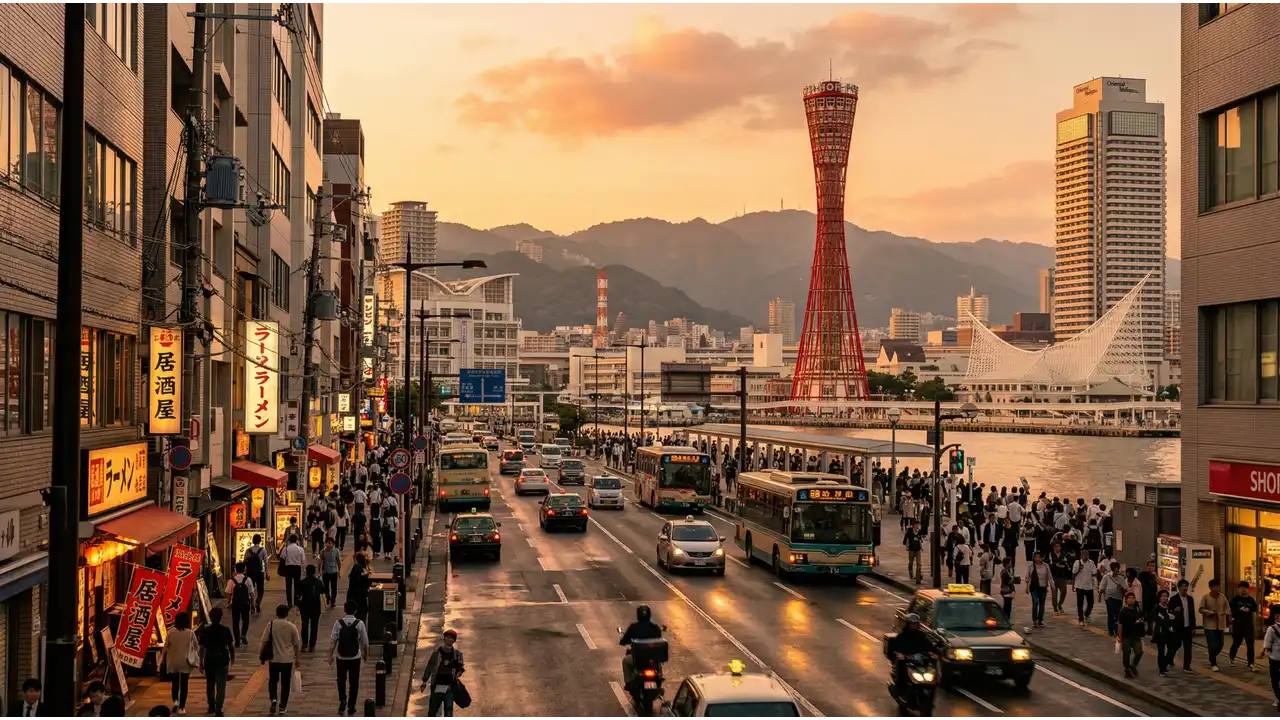
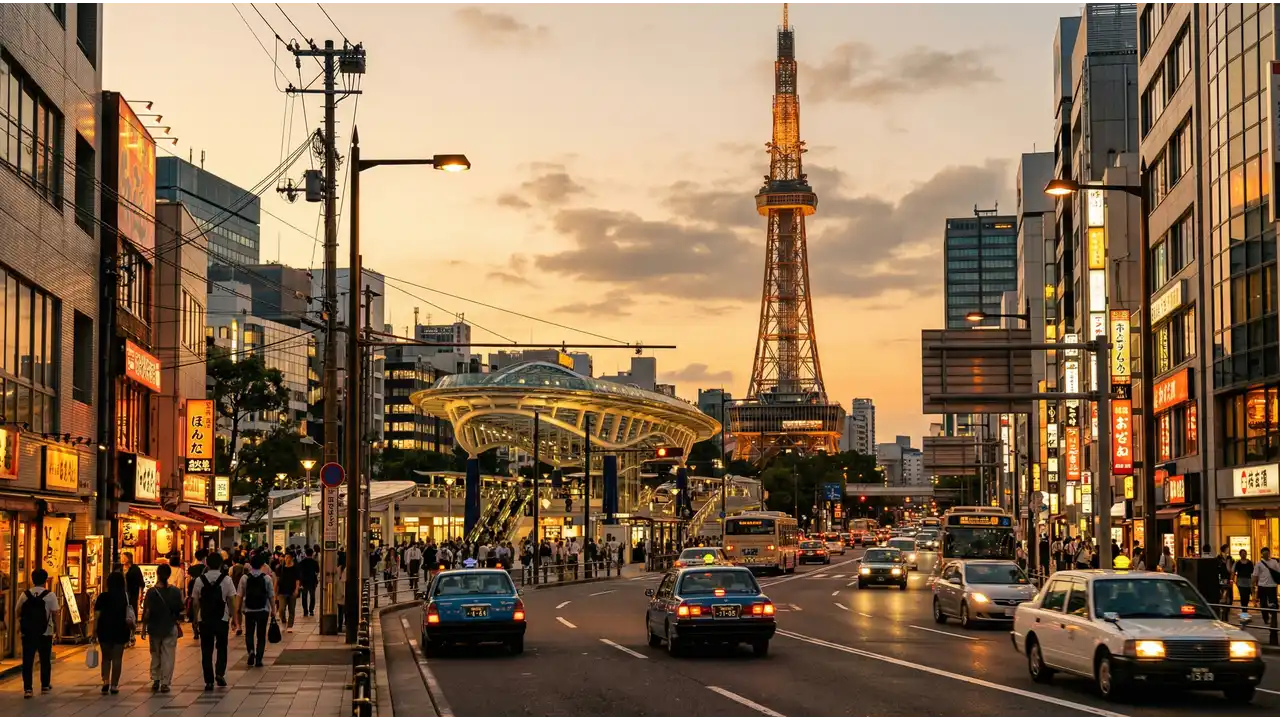
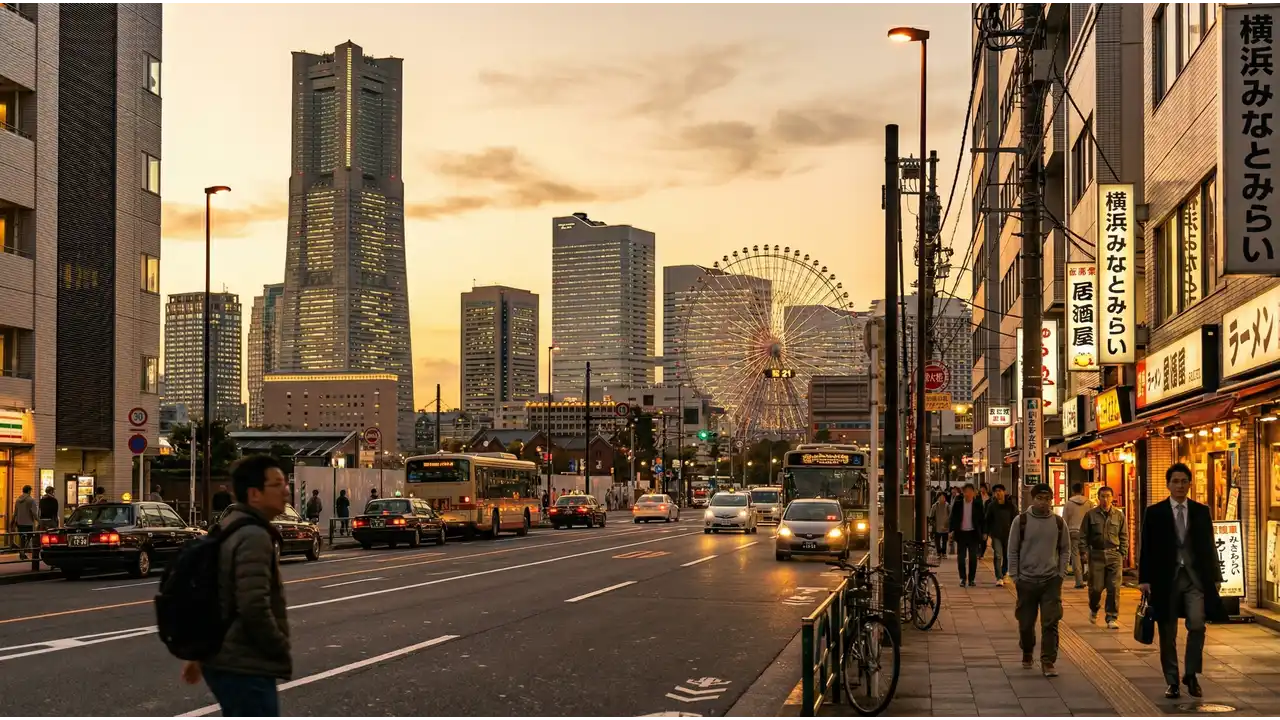
Kobe is Japan's sixth-largest city, a port town on the Seto Inland Sea with a temperate climate and mixed residential-commercial character. Home to about 1.5 million people, it draws expats for work in shipping, manufacturing, and finance, alongside young professionals and families. Daily life centers on efficient public transit (trains and buses), small neighborhood shops, and a mix of formal and casual dining. Winters are mild, summers warm and humid. The city rebuilt after the 1995 earthquake and now feels stable and walkable. It's neither Tokyo's scale nor a small town; it's a working port city where residents live fairly compact lives and know their neighborhoods well.
💡 Local Insights
Kobe · 2026
Kobe's cost structure reflects Japan's broader economy. The $603/month housing figure is Japan's national level that Kobe inherits in our data, not a separate Kobe rent measurement. In practice, expat rental listings show one-bedroom apartments in central areas (Chuo, Hyogo wards) range from $400 to $700 monthly; shared housing or older buildings run cheaper. Groceries at $346/month align with supermarket shopping at convenience stores and local markets, where rice, vegetables, and protein cost less than in Western cities but prepared foods and imports cost more. Transport is efficient and affordable: unlimited transit passes run $50 to $80 monthly. Eating out ranges widely, from $5 ramen bowls to $30 restaurant meals. Expats report that Kobe undercuts Tokyo and Osaka on rent while offering similar services. The $1,675/month moderate lifestyle assumes modest housing, regular home cooking, and public transport.
Frequently Asked Questions
How much does it cost to live in Kobe per month?
A moderate lifestyle in Kobe costs $1,675/month. That breaks down roughly as $603 for housing (Japan's national figure), $346 for groceries, $60 to $80 for transport, $150 to $200 for utilities, and the remainder on dining out, entertainment, and miscellaneous expenses. A tighter budget of $1,005/month is possible if you share housing and cook almost all meals. A comfortable lifestyle with more spacious housing and frequent dining out runs closer to $2,596/month.
What is the average rent in Kobe?
The $603/month housing figure shown is Japan's national level that Kobe inherits rather than a measured Kobe-specific rent rate. On the ground, expat and local rental listings show one-bedroom apartments in central neighborhoods like Chuo or Hyogo ward typically rent $400 to $700 monthly. Older units or those further from stations rent lower, $350 to $500. Two-bedroom places run $600 to $1,000. Furnished expat rentals cost more. Deposits and key money (reikin) are still common and add to upfront costs. The rental market is stable; long-term leases are standard.
Is Kobe cheap to live in for expats?
Kobe is moderately priced compared to other major Asian expat hubs. It undercuts Tokyo and Singapore significantly on rent and dining. It's roughly comparable to Osaka and slightly cheaper than major Korean or Thai expat centers. The main appeal for expats isn't extreme affordability but consistency: transparent pricing, efficient services, and stable neighborhoods. Expats working in shipping, trading companies, and tech report that salaries often scale to local costs, so the effective spending power is similar. It's not a budget destination, but it's efficient and predictable.
How much does food cost per month in Kobe?
Groceries average $346/month for one person buying at supermarkets and convenience stores. A typical week might include rice ($2), fresh vegetables ($15 to $20), eggs ($3), fish or chicken ($10 to $15), and pantry staples. Eating out is cheaper than groceries per meal: ramen or udon bowls run $5 to $8, casual lunch sets $8 to $12, and restaurant dinners $20 to $40. Many expats split between cooking at home and occasional restaurant meals. Imported foods (cheese, meat, specialty items) are expensive. Local and seasonal produce is cheaper than imported alternatives.
What salary do you need to live comfortably in Kobe?
A comfortable lifestyle in Kobe runs approximately $2,596/month. That supports spacious housing, frequent dining out, hobbies, and travel. For expats, employers typically offer salaries in the $3,500 to $6,000/month range depending on role and experience, which allows for comfortable living and saving. A household with two working professionals can live very comfortably. For freelancers or self-employed expats, the same budget applies, though you should plan for variable income and higher taxes. Families with children should budget higher due to school fees and larger housing needs.
How does the cost of living in Kobe compare to other places?
Kobe runs $1,675 per month at a moderate lifestyle, with housing at $603 per month. That puts it in the middle band for major Asian cities. Shanghai runs $1,525 monthly overall, though Shanghai's housing costs $886 per month, notably higher than Kobe's. Mumbai is genuinely cheaper: a moderate lifestyle in Mumbai runs $1,150 per month and housing there costs $730 per month. On the other end, Doha runs $2,700 per month for the same moderate tier, making it substantially more expensive than Kobe across the board. If you're relocating from Europe or North America, Kobe will likely feel affordable. Compared to other Japanese cities, Kobe sits below Tokyo but offers a similar quality of life with better affordability. Your rent and daily expenses will stretch further here than in most developed-world equivalents.
Yes, but with real constraints. The budget tier of $1,005/month requires shared housing (cutting rent to $250 to $350), cooking almost all meals at home, using public transport exclusively, and minimal discretionary spending. It works for students, remote workers with low cost expectations, or people living in company housing. You'll have little room for hobbies, eating out, or emergencies. Most working expats find it uncomfortably tight. Japanese residents do live on this budget, but it means accepting smaller living spaces and fewer conveniences. It's sustainable short-term, not ideal long-term.