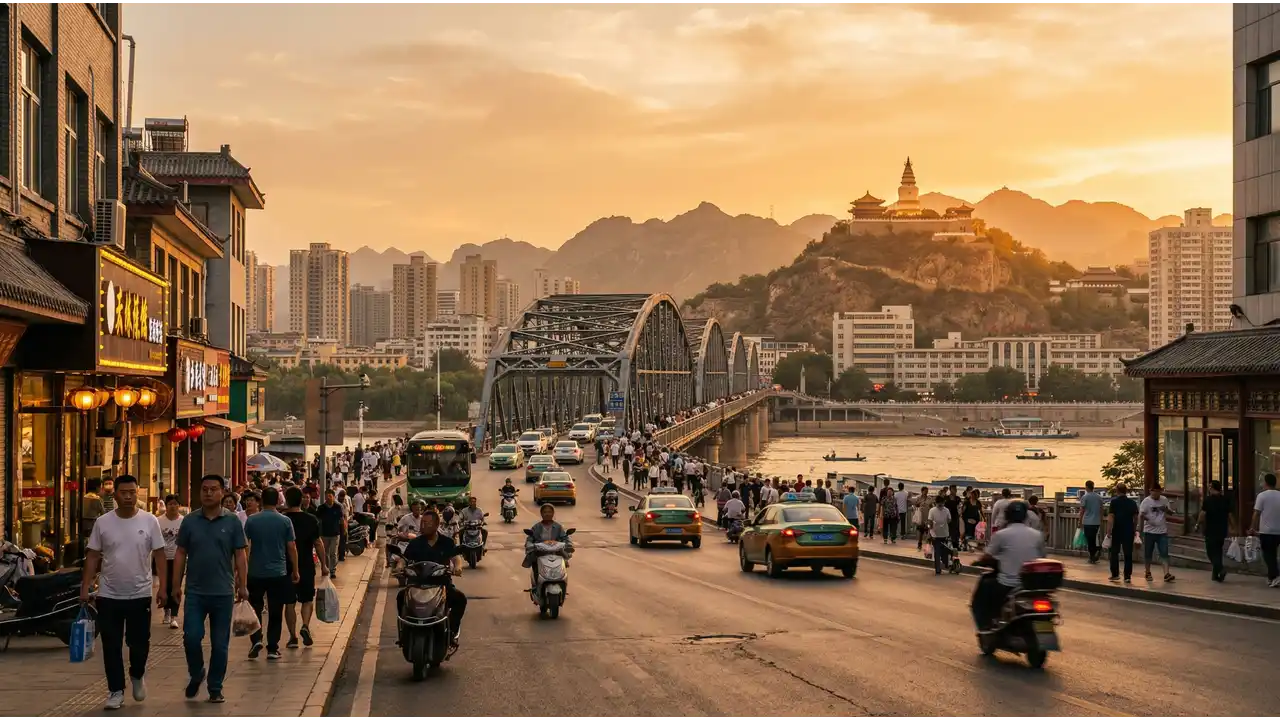
Lanzhou is a provincial capital in Gansu, northwestern China, with about 4 million people. The city sits on the Yellow River and serves as a transport hub connecting central and western China. Daily life revolves around local markets, noodle shops, and small restaurants. Winter is cold and dry; summer is warm. Most residents are Han Chinese, with smaller Hui Muslim and other minority populations. The urban center has modern infrastructure alongside older residential blocks. Air quality varies seasonally. Unlike coastal cities, Lanzhou feels less transient. Local work is concentrated in government, manufacturing, petrochemicals, and retail. Expat communities are small but growing, mainly teaching English or working for international companies.
💡 Local Insights
Lanzhou · 2026
Lanzhou costs substantially less than coastal Chinese cities like Shanghai or Shenzhen, but more than rural western China. A moderate lifestyle runs $975/month. Housing costs vary by location. The $371/month figure shown is the China-level estimate that Lanzhou inherits in national databases, not a measured rent for Lanzhou specifically. In practice, a one-bedroom apartment in central Lanzhou rents for roughly $300-$500 monthly (indicative range), while outer districts run $200-$350. Groceries average $195/month for a single person buying at local markets and wet markets, where prices are lower than supermarkets. Street noodles cost $1-$3 per bowl; restaurant meals run $3-$8. Public transport is cheap (bus fares around $0.30-$0.50), and taxis meter at low rates. Expat pricing for Western groceries exists in specialty shops but most residents shop local. Utilities and phone bills are minimal. Energy costs spike in winter heating. The biggest variable is housing quality and location preference.
Frequently Asked Questions
How much does it cost to live in Lanzhou per month?
A moderate lifestyle in Lanzhou costs around $975/month. This breaks down to housing at $371/month, groceries at $195/month, transport at roughly $30/month, utilities around $40/month, and the remainder covering dining out, entertainment, and miscellaneous expenses. A budget tier lifestyle runs $585/month, achievable by renting further from the center, shopping only at wet markets, and minimizing dining out. A comfortable lifestyle with better housing and more flexibility costs $1,511/month. Individual spending varies widely based on neighborhood choice and expat versus local purchasing patterns.
What is the average rent in Lanzhou?
The $371/month housing figure displayed is the China-level estimate that Lanzhou inherits in national databases, not a separately measured rent for Lanzhou itself. Lanzhou has no dedicated local rent measurement in major cost-of-living indices. In practice, renters on the ground report one-bedroom apartments in central districts renting for $300-$500 monthly (indicative), depending on age and amenities. Outer residential zones run $200-$350 for similar space. Shared apartments are cheaper. Furnished versus unfurnished makes little difference in price. Most leases are negotiated directly with landlords or agents; contracts typically run one to two years.
Is Lanzhou cheap to live in for expats?
Yes, but with caveats. Lanzhou is significantly cheaper than Shanghai, Beijing, or Shenzhen. Rent, food, and transport are low by global expat standards. However, Lanzhou is not a typical expat destination. Job opportunities outside English teaching and a few international companies are limited. The expat social scene is smaller and less established. Salaries for expat positions are often lower than coastal cities. Housing quality varies; modern apartments exist but many rental units are older. Air quality and winter heating can be concerns. If you are posted by a company or teaching English, costs are manageable. If relocating independently, confirm income and employment first.
How much does food cost per month in Lanzhou?
Groceries for one person average $195/month shopping at wet markets and neighborhood supermarkets. A typical weekly shop might include rice ($2-$3), noodles ($0.50-$1 per package), vegetables ($1-$2 per type, in season), eggs ($1 per dozen), pork ($4-$6 per pound), and staples. Street food and small restaurants keep meal costs low: a bowl of lanzhou beef noodles (the local signature dish) costs $1.50-$2.50. Eating out for lunch or dinner runs $3-$8 per meal at casual local spots. Imported groceries in expat shops cost 2-3x local prices. Dining exclusively at restaurants would exceed the grocery budget; most residents cook at home regularly.
What salary do you need to live comfortably in Lanzhou?
A comfortable lifestyle costs around $1,511/month. This supports better housing in central locations, regular dining out, hobbies, and travel within China. Translated to annual salary, a single person would want at least $18,000-$20,000 yearly after tax to live comfortably without financial stress. For families, multiply accordingly. English teachers typically earn $800-$1,500 monthly locally; international companies often pay $1,200-$2,500. Government or state enterprise positions vary. Many expats combine a modest salary with savings from home. Lanzhou is affordable, but earning enough to save and enjoy leisure activities is important for quality of life.
How does the cost of living in Lanzhou compare to other places?
Lanzhou is genuinely affordable compared to most regional centers. A moderate lifestyle costs $975 per month here, with housing at $371 per month. That puts it slightly cheaper than Baku, where you'd spend $1,025 monthly for the same comfort level. Mashhad is less expensive overall at $650 per month, though Lanzhou offers better infrastructure and job prospects if that matters for your move. Almaty runs considerably higher at $1,300 per month. Within China, Lanzhou ranks well below first-tier cities like Shanghai or Beijing, making it realistic for people relocating on modest salaries or remote work income. Food and transport are particularly inexpensive here, which helps keep the overall budget manageable.
Yes, but with constraints. The budget tier of $585/month is achievable by renting a one-bedroom in outer districts for $200-$250, buying groceries only at wet markets (keeping food near $150/month), using public transit, and eating out rarely. This budget excludes major travel, hobbies, or entertainment beyond free activities. Utilities, phone, and internet fit within the remainder. It works for students or those with very modest lifestyles. Any unexpected costs (medical, travel home, appliance repair) create strain. Most people living long-term prefer the moderate budget of $975/month for breathing room and occasional enjoyment. The budget tier is survivable, not comfortable.