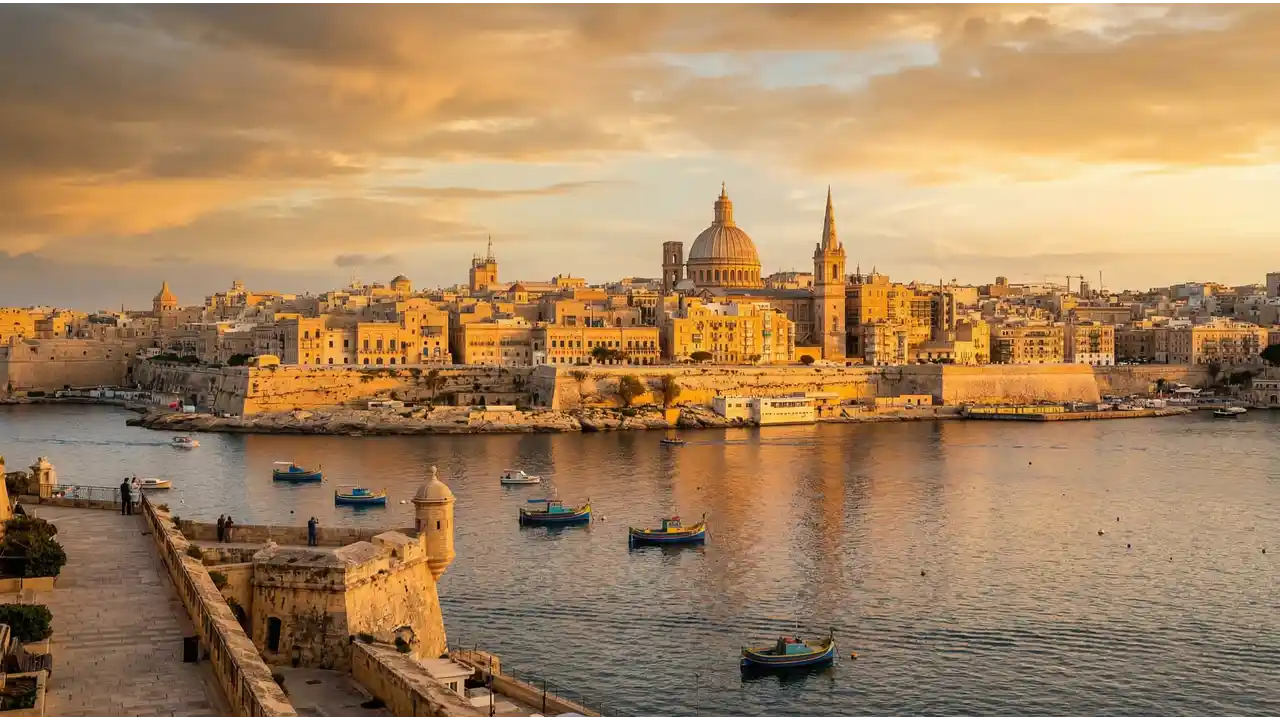
Malta is a small Mediterranean island nation with about 535,000 residents, most concentrated in the northern harbor towns of Valletta, Sliema, and St. Julian's. The climate is warm year-round, with summers exceeding 30°C and mild winters. English is widely spoken alongside Maltese. Daily life revolves around compact urban neighborhoods, car ownership, or public bus transit. The pace is slower than northern Europe but faster than southern Mediterranean countries. Food culture centers on local seafood, pasta, and bread. Politics and EU membership shape daily infrastructure and worker protections. Expats from the UK, Italy, and Eastern Europe form visible communities, particularly in newer developments outside Valletta.
💡 Local Insights
Malta · 2026
Malta's cost of living reflects its island economy and EU membership. Housing dominates at $1,156 per month, driven by limited land and strong foreign demand. Central Sliema and St. Julian's command premium rents; Mosta, Naxxar, and Birkirkara offer better value. Furnished one-bedroom apartments in city centers run $1,000 to $1,400; outside central areas, $700 to $1,000 is realistic. Groceries cost around $329 monthly for basics, comparable to southern Europe but higher than mainland Eastern Europe. Local produce at farmers' markets is cheaper than supermarkets. Eating out ranges from $8 to $15 for casual meals, $25+ for restaurants. Public buses are the main transport (€21/month unlimited pass); many expats use cars, adding fuel and insurance costs. Local pricing exists for some services, but expat demand has pushed prices upward, especially housing. Working remotely while paying Western salaries makes Malta affordable for many expats.
Frequently Asked Questions
How much does it cost to live in Malta per month?
A moderate lifestyle in Malta costs $2,175 per month. This covers housing ($1,156), groceries ($329), utilities, transport, and dining out. Budget-conscious living (shared housing, local eating) runs $1,305 monthly. Comfortable expat living with private accommodation, frequent dining out, and leisure costs $3,371 monthly. Actual costs vary by neighborhood, lifestyle, and whether you own a car. Remote workers earning in USD or GBP often find Malta very affordable relative to their income.
What is the average rent in Malta?
Average rental housing costs $1,156 per month. One-bedroom furnished apartments in central Sliema or St. Julian's rent for $1,100 to $1,400. Outside the central harbor towns, in areas like Mosta, Naxxar, or Birkirkara, expect $700 to $1,000. Unfurnished apartments are slightly cheaper. Valletta, the capital, has fewer residential rentals and higher prices. Studios rent for $600 to $900 depending on location. Most leases run one year. Expat-facing websites and local Facebook groups list rentals; agencies charge one month's rent as commission. Prices have risen steadily, driven by UK and EU remote workers.
Is Malta cheap to live in for expats?
Malta is moderately priced for Western expats but not cheap by Mediterranean standards. Housing costs are higher than Greece, Portugal, or Croatia due to limited land and strong foreign demand. It is cheaper than London, Amsterdam, or Switzerland. Food and utilities are reasonable. The main advantage for expats is English fluency, EU stability, and residency ease, which justify the premium over southern Spain or Portugal. For expats earning in strong currencies (GBP, USD, EUR), Malta remains affordable. Those relocating for lower living costs should compare Portugal or Greece first.
How much does food cost per month in Malta?
Groceries average $329 monthly for one person buying local basics: bread ($0.50 per loaf), milk ($1.20/liter), eggs ($2.50/dozen), chicken ($6/kg), pasta ($1/kg), and seasonal vegetables. Supermarket brands cost more than local markets. Eating out: casual cafes and takeaway shops offer meals for $8 to $12; mid-range restaurants $20 to $35 per person. Seafood, a local specialty, is pricier ($15 to $30 per dish). Imported goods (UK brands, US products) cost 20 to 40 percent more. Farmers' markets in towns like Valletta or Naxxar offer cheaper fresh produce. Wine is affordable; local beer costs $2 to $4 per bottle in shops.
What salary do you need to live comfortably in Malta?
A comfortable lifestyle requires $3,371 per month, roughly $40,500 annually. This covers private housing ($1,200 to $1,400), dining out regularly, car ownership or taxis, leisure, and travel. For a couple, $5,500 to $6,000 monthly provides security and flexibility. Remote workers earning $3,500 to $4,500 USD per month find Malta very comfortable. Those earning $2,500 to $3,000 can live moderately but must budget carefully for housing and car costs. Local employment offers lower salaries than Western countries, so relocation usually requires remote work or savings. EU and UK citizens have work rights; non-EU citizens need employment visas or investor permits.
How does the cost of living in Malta compare to other places?
Malta sits in the middle-to-upper range for European cost of living. A moderate lifestyle in Malta costs $2,175 per month, with housing at $1,156 per month. That puts it slightly above Portugal, where a moderate lifestyle runs $2,050 monthly and housing $1,033. Serbia is noticeably cheaper, at $1,375 for a moderate lifestyle and $537 for housing. On the other end, Ireland is substantially dearer at $3,100 monthly for a moderate lifestyle and $1,796 for housing. For someone relocating from Western Europe or North America, Malta feels relatively affordable. Compared to Southern European peers, it's competitive but not the cheapest option. Your money stretches further in Serbia or Portugal, but less far than in Ireland.
Yes, but with significant constraints. This budget tier covers housing ($800 to $900, requiring shared or distant apartments), groceries ($329), utilities ($80 to $120), and minimal discretionary spending. Eating out means occasional budget meals ($5 to $8), not restaurants. Public transport only; no car. No travel budget or hobbies. This works if you have savings for emergencies. Most expats on this budget either share housing significantly, live in outer towns like Mellieha or Mgarr, or rely on remote work topping up local income. Locals managing on this budget use family support, cheaper local goods, and informal networks. Realistic for long-term residents; difficult for newly arrived expats without local connections.