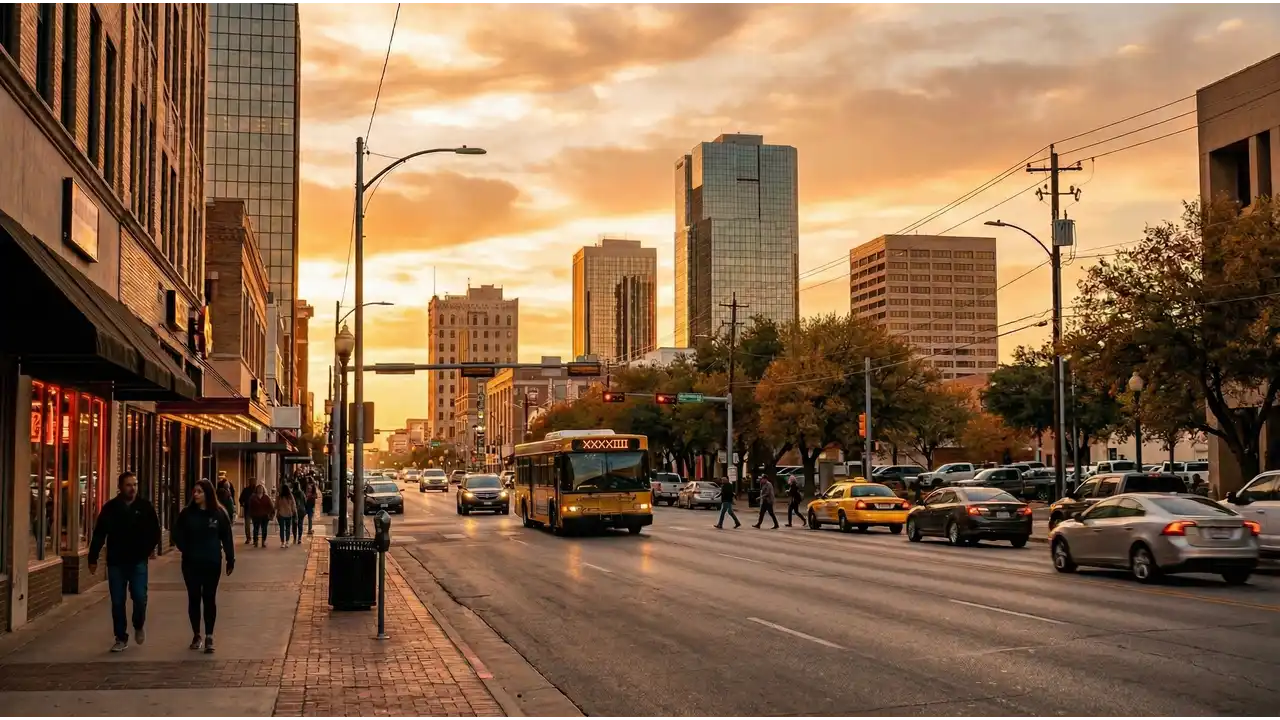
Midland is a mid-sized city in West Texas with a population around 150,000, built on oil and gas industry employment. The landscape is flat and arid, with hot summers regularly exceeding 95 degrees Fahrenheit and mild winters. Daily life centers on work, family, and outdoor activities when weather permits. The city has grown rapidly over the past two decades, attracting young professionals from across the country. Downtown Midland has undergone recent redevelopment, though sprawl defines the urban form. Most errands and social activities require a car. Schools are a major draw for families. Social life tends toward work networks and established community groups rather than tourist-oriented nightlife.
💡 Local Insights
Midland · 2026
Midland's cost of living sits well below national averages, driven by low housing costs and moderate service expenses. A moderate lifestyle runs $2,750/month. Housing averages $1,203/month, with one-bedroom apartments in established neighborhoods ranging from $900 to $1,300, and three-bedroom houses renting between $1,200 and $1,600. Grocery costs are stable at $499/month for a family budget, with prices tracking national averages at major supermarket chains like Albertsons and Walmart. Eating out is cheaper than coastal cities (casual dinner under $15). Utilities run high in summer due to air conditioning demand. Transportation costs are moderate since most residents drive; public transit is limited, so car ownership is effectively mandatory. Healthcare expenses are reasonable. Expats often find Midland markedly cheaper than major metros or international postings, though less cosmopolitan in amenities. The trade-off is clear: low cost for limited walkability and cultural density.
Frequently Asked Questions
How much does it cost to live in Midland per month?
A moderate lifestyle costs $2,750/month. This covers housing at $1,203/month, groceries at $499/month, utilities around $200, car expenses including fuel and insurance at $400, and dining, entertainment, and miscellaneous services at the remainder. A budget lifestyle runs $1,650/month by cutting housing to $800-900, groceries to $350, and limiting dining out. A comfortable lifestyle costs $4,263/month, allowing higher housing ($1,600+), dining frequently, and more discretionary spending. Actual costs vary by household size, neighborhood choice, and lifestyle.
What is the average rent in Midland?
Average rent is around $1,203/month. One-bedroom apartments in central or newer neighborhoods typically rent for $950 to $1,250/month. Two-bedroom apartments range from $1,100 to $1,400/month. Three-bedroom houses rent between $1,200 and $1,600/month. Older properties on the south side run cheaper, often $800 to $1,000/month for one-bedrooms. Newer complexes near downtown or northwest areas command the upper end of ranges. Utilities are not included in these figures and add $150-250/month depending on season and usage.
Is Midland cheap to live in for expats?
Yes. At $2,750/month for a moderate lifestyle, Midland is considerably cheaper than major US expat hubs like New York, San Francisco, or Washington D.C., where comparable living costs $4,500-6,000/month. It is also cheaper than many Middle East postings or European cities. However, Midland offers limited international infrastructure compared to major metros. There are no direct international flights from Midland's airport, no consulate services, and a smaller expatriate community. International groceries and restaurants exist but are limited. For cost-conscious expats prioritizing affordability over cosmopolitan amenities, Midland works well. For those requiring frequent international travel or cultural services, nearby Dallas or Houston may be better despite higher costs.
How much does food cost per month in Midland?
Groceries average $499/month for a family of four. A typical weekly shop at Walmart or Albertsons costs $100-120 and includes produce, dairy, proteins, and staples. Ground beef is around $4 per pound, chicken $3-4 per pound, milk $3.50 per gallon. Organic and specialty items cost more but are not required. Eating out is inexpensive. Casual meals at local restaurants (burgers, tacos, barbecue) run $10-15 per person. Mid-range dining is $15-25. Fine dining is available but limited. Grocery costs track national averages. Restaurant prices are notably cheaper than coastal cities.
What salary do you need to live comfortably in Midland?
A comfortable lifestyle costs $4,263/month, suggesting an annual income of around $51,000-55,000 for a single person, or $65,000-70,000 for a household of two earners. This allows for housing at $1,600/month, frequent dining out, regular entertainment, and modest discretionary savings. For a family of four, $60,000-70,000 annual household income supports comfortable living. However, comfort is subjective. Some households live well on $2,750/month, while others spend $5,000+. Most professionals working in oil and gas, education, or healthcare in Midland earn $50,000-100,000 annually, putting comfortable living well within reach for working expats and relocated professionals.
How does the cost of living in Midland compare to other places?
Midland's moderate lifestyle costs $2,750 per month, with housing running $1,203. That puts it squarely in the middle tier for mid-sized American cities. Louisville, Kentucky sits just below at $2,650 monthly, making it a genuine peer in overall expenses, though Louisville's housing is slightly cheaper at $1,111. If you're looking for genuine savings, Wichita comes in noticeably lower at $2,325 per month with housing at just $808. On the other end, Seattle is a different proposition entirely, running $3,950 monthly with housing alone at $2,177. Midland's position reflects Texas's generally lower cost structure compared to coastal metros, while staying accessible compared to smaller plains cities. Your actual expenses will shift based on lifestyle choices, but the moderate baseline gives you a solid reference point.
Yes, but with clear constraints. The budget tier is $1,650/month. Housing must be $800-900/month, typically older one-bedroom apartments on the south side or further from downtown. Groceries need discipline at $350/month, requiring meal planning and avoiding convenience foods. Utilities, internet, and phone total $150-180. That leaves $220-400 for transportation, dining out, entertainment, and emergencies. A car is mandatory, so insurance, fuel, and maintenance consume most of this. Dining out is rare. This budget works for single individuals with modest needs, but not for families. It requires no major expenses or debt. It is doable but leaves minimal cushion for job loss, medical costs, or lifestyle flexibility.