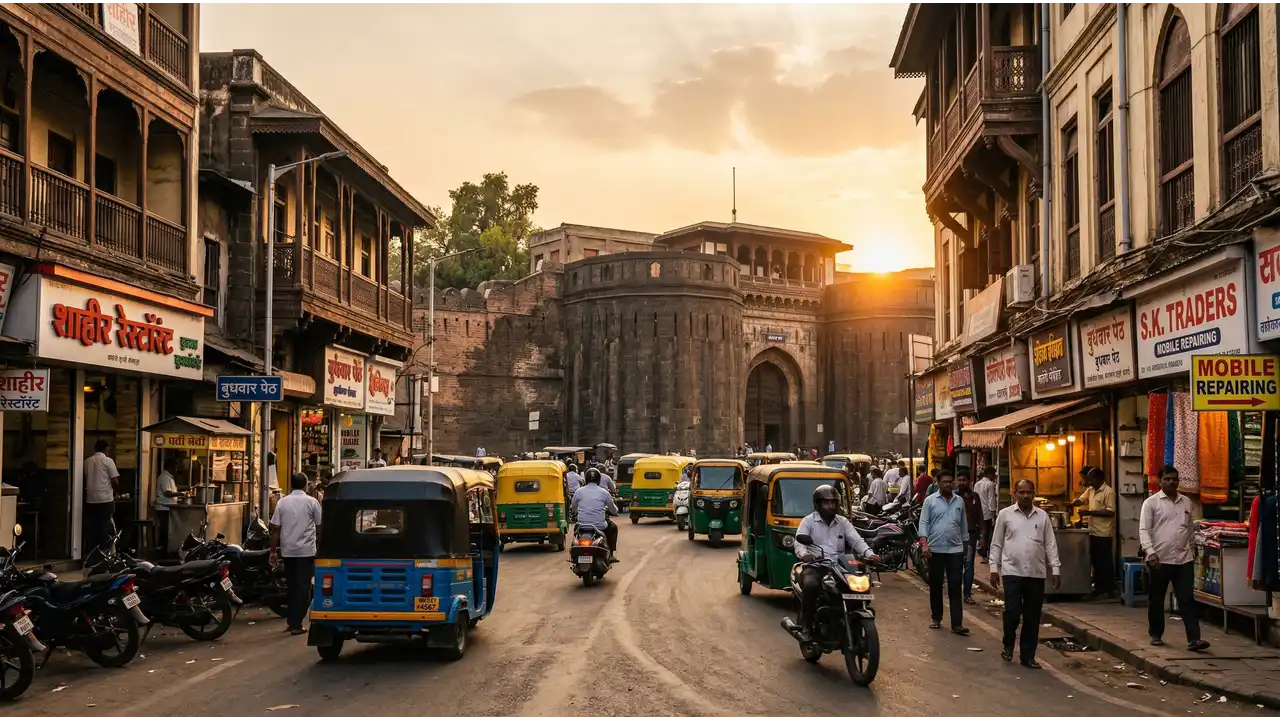
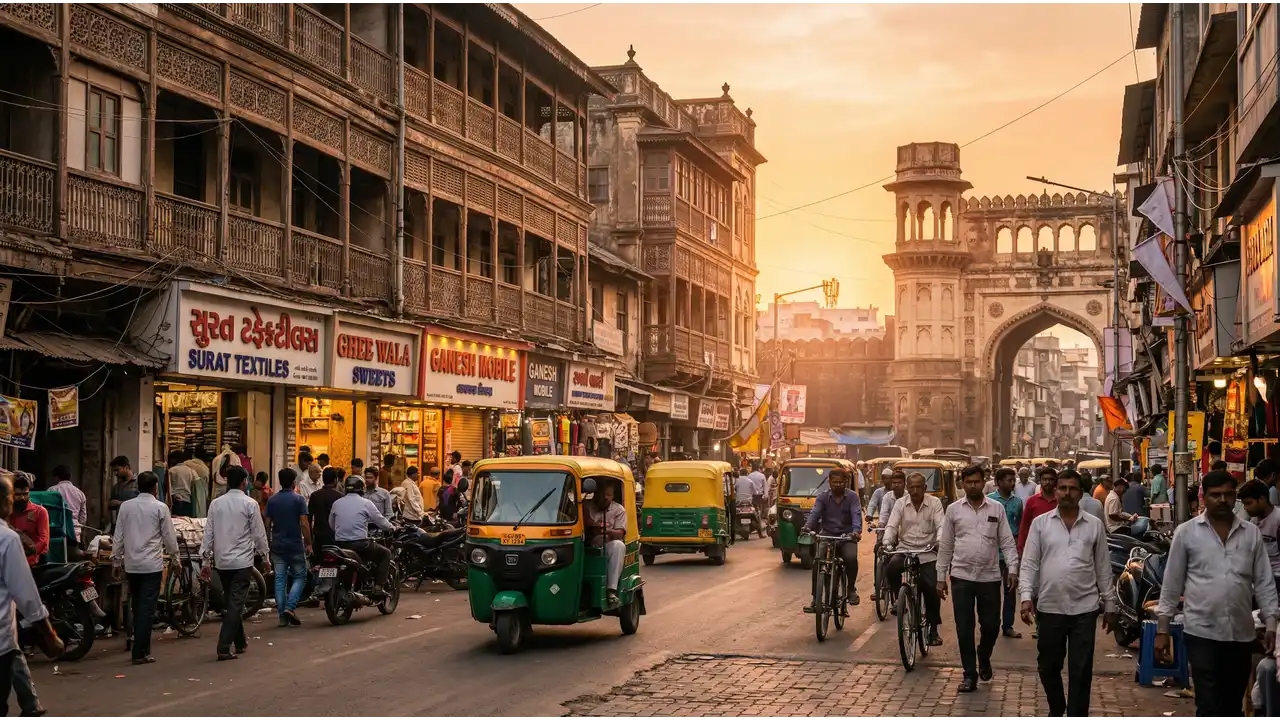
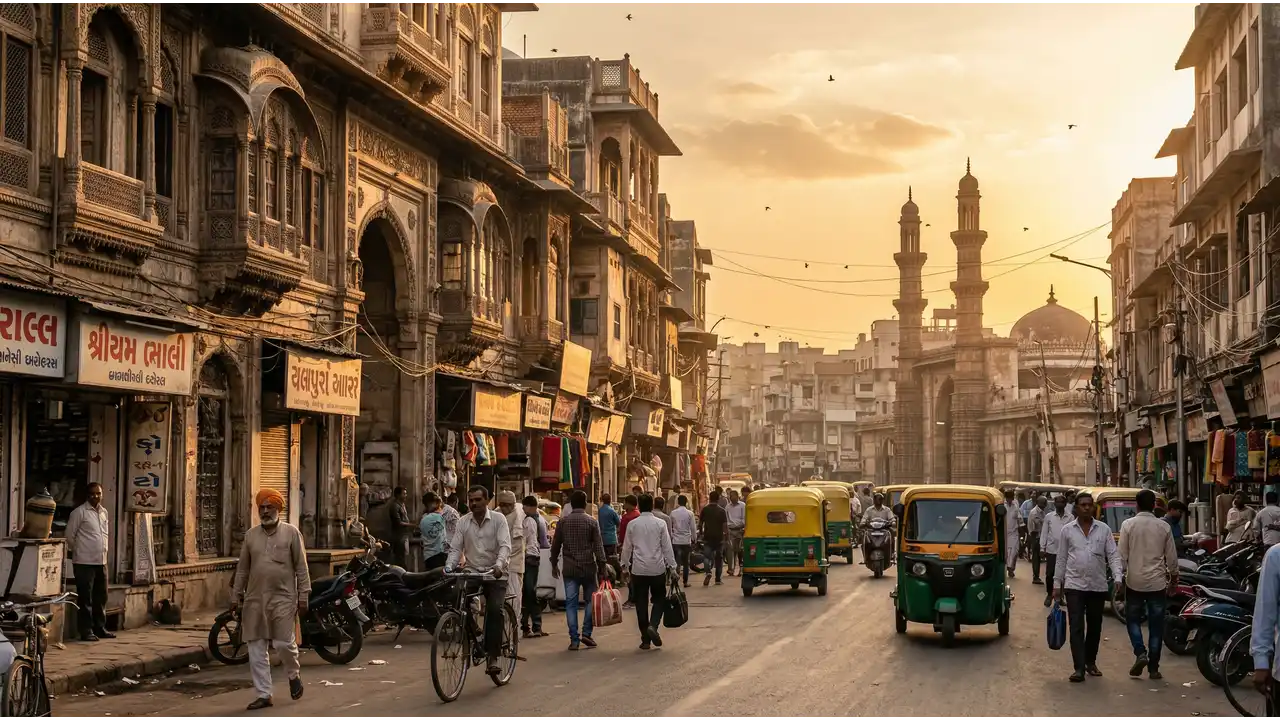
Mumbai is India's financial and entertainment hub, home to 20 million people across an island city and sprawling suburbs. Daily life runs at high intensity: packed trains, street food vendors, monsoon flooding, and year-round heat above 80 degrees Fahrenheit. The city attracts corporate workers, film industry staff, and migrants from across India. Neighborhoods range from ultra-dense central areas like Dadar to more spacious suburbs like Bandra and Powai. Infrastructure is congested but functional. English is widely spoken in business districts. Power cuts and water restrictions still occur in some areas.
💡 Local Insights
Mumbai · 2026
Mumbai's cost structure depends heavily on neighborhood choice and expat vs. local pricing. Housing dominates at $730/month, but this covers a wide range: local apartments in central areas like Dadar or Grant Road run $400-500, while expat-oriented buildings in Bandra, Powai, or Juhu start at $1,000 and climb to $2,000 for modern amenities and western-standard maintenance. Landlords typically want 10 months deposit upfront plus proof of income. Groceries average $135/month for basic staples bought at supermarkets like BigBasket or D-Mart, though local markets cost 20-30 percent less. Eating out is cheap: a dosa runs $1-2, full restaurant meals $3-6 in local spots, $8-15 in expat areas. Transport via local trains or buses costs under $20/month; ride-sharing (Uber, Ola) adds $100-200 if used regularly. Internet and mobile are $8-15/month. Expat pricing is real but avoidable: shop where Indians shop, use trains, rent in Indian-oriented neighborhoods. Summer (April-June) pushes electricity bills up 40 percent due to air conditioning.
Frequently Asked Questions
How much does it cost to live in Mumbai per month?
A moderate lifestyle in Mumbai costs around $1,150/month. This breaks down roughly as: housing $730, groceries $135, utilities and transport $150, dining and entertainment $100, and miscellaneous $35. The budget tier is $690/month (smaller space, minimal transport, cooking at home), while the comfortable tier reaches $1,783/month (larger apartment, regular dining out, taxis or ride-sharing, gym membership, entertainment). Actual spending varies significantly by neighborhood and expat vs. local lifestyle choices.
What is the average rent in Mumbai?
Average rent in Mumbai is $730/month for a moderate one-bedroom apartment. Central neighborhoods like Dadar, Fort, or Grant Road offer studios and one-bedrooms for $400-600/month if you accept older buildings and minimal amenities. Expat-preferred areas like Bandra, Powai, and Juhu range $1,000-1,800/month for modern buildings with reliable power and water. Suburban areas like Thane or Navi Mumbai (across bridges) offer $350-500/month. Landlords require 10 months deposit and 2-3 months advance rent. One-year leases are standard. Registration fees and agent commissions add 5-10 percent to total setup costs.
Is Mumbai cheap to live in for expats?
Mumbai is relatively cheap compared to Western cities but expensive for India. Expats often spend 30-50 percent more than locals for the same lifestyle due to neighborhood choice, imported goods, and service expectations. A one-bedroom in expat zones costs $1,000-1,500 versus $400-600 in Indian neighborhoods. Dining out at expat restaurants costs $8-15 versus $3-6 at local spots. However, skilled workers earning $2,000-4,000/month find comfortable living easy. The budget tier ($690/month) requires tight discipline: small local apartment, no car, street food and groceries, public transport only. For most expats earning professional salaries, expenses feel reasonable compared to Singapore, Bangkok, or Delhi NCR tech hubs.
How much does food cost per month in Mumbai?
Groceries average $135/month: rice and lentils $20, vegetables $30, dairy and eggs $25, bread and basics $40, oil and spices $20. Local markets offer 20-30 percent lower prices than supermarkets. Eating out is cheap: a dosa or pav bhaji runs $1-2, a full lunch thali $3-5 at local restaurants, pizza or burgers $6-10 at casual chains, fine dining $20-40 per person. Most middle-income residents spend $40-60/month on restaurant meals. Expats typically spend $100-150/month on groceries (Western items cost more) plus $150-200 on dining out. Alcohol is heavily taxed; beer costs $3-4 per pint at bars, imported wine $15-20 per bottle.
What salary do you need to live comfortably in Mumbai?
A comfortable lifestyle in Mumbai costs $1,783/month, suggesting a gross monthly income of $2,500-3,000 to cover taxes, savings, and emergencies. This supports a one-bedroom in a decent neighborhood ($1,000-1,200), regular restaurant meals, gym membership, occasional entertainment, and reliable ride-sharing or a used car. Local professionals earning $1,500-2,000/month live comfortably in Indian neighborhoods with modest housing and family dining. Expats earning less than $2,000/month typically adopt local lifestyle patterns to stretch budgets. Those earning $3,500-5,000/month can afford larger apartments, frequent dining out, regular travel, and household help. Most corporate expat packages start at $2,500-3,500/month base plus housing allowance.
How does the cost of living in Mumbai compare to other places?
Mumbai sits in the middle range for major Asian cities. A moderate lifestyle runs $1,150 per month here, with housing at $730 per month. This makes it slightly more expensive than Hangzhou, where a moderate lifestyle costs $1,100 monthly and housing $517. You'll find significantly cheaper options in Wuhan, where the same moderate lifestyle runs $825 per month with housing at $320. Beirut, by comparison, is noticeably dearer at $1,625 per month overall and $787 for housing. Mumbai's cost reflects its status as India's financial hub. Your money stretches further in smaller Chinese cities, but Mumbai remains far more affordable than Middle Eastern centers or comparable Western metros. Budget constraints matter most here for housing and local transport, where prices vary widely by neighborhood.
Yes, but with significant constraints. This is the budget tier and requires: a small studio or shared apartment in a central but unglamorous area (Dadar, Parel, Malad) for $350-450/month; groceries only, no restaurant meals except rare street food for $100-120/month; public transport exclusively (trains cost $15-20/month); no car, gym, or entertainment spending; no household help; basic phone and no streaming services. This budget works for students, service industry workers, or those with very low housing costs. Any medical emergency, visa renewal, or travel eats the entire month's buffer. Most expats find this unsustainable beyond 2-3 months. The $1,150/month moderate tier is the realistic minimum for expat comfort and security.