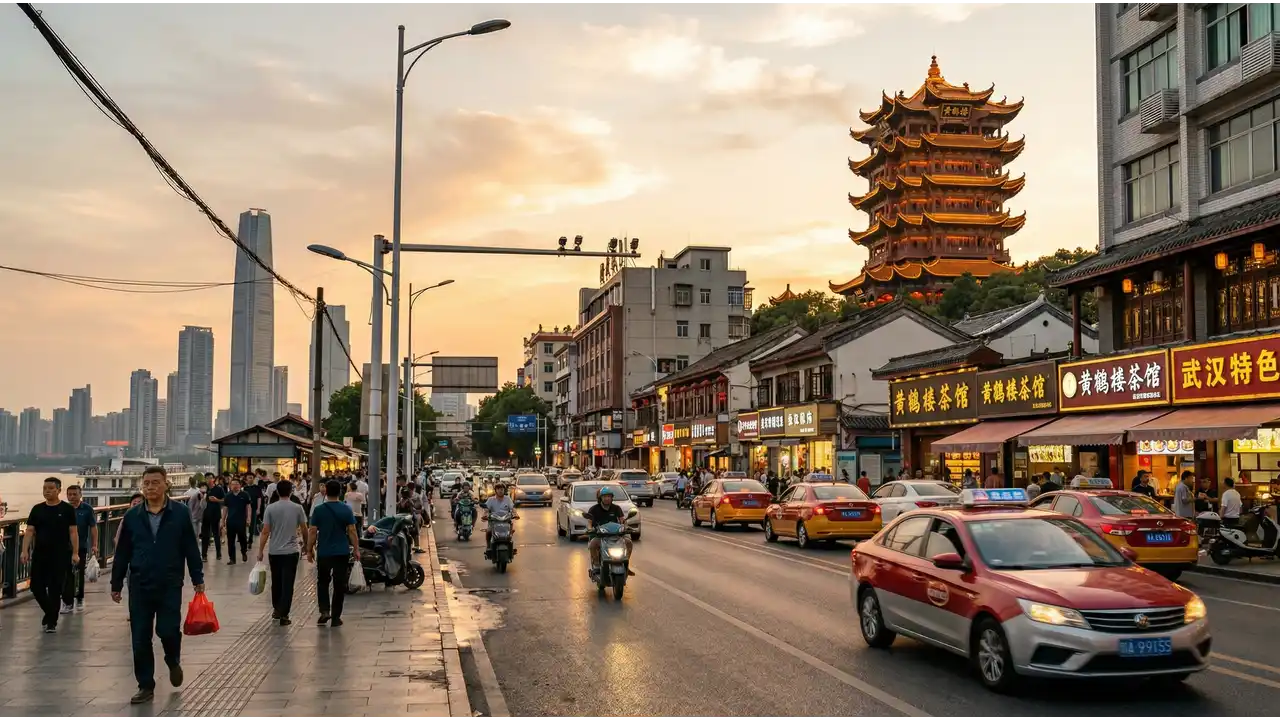
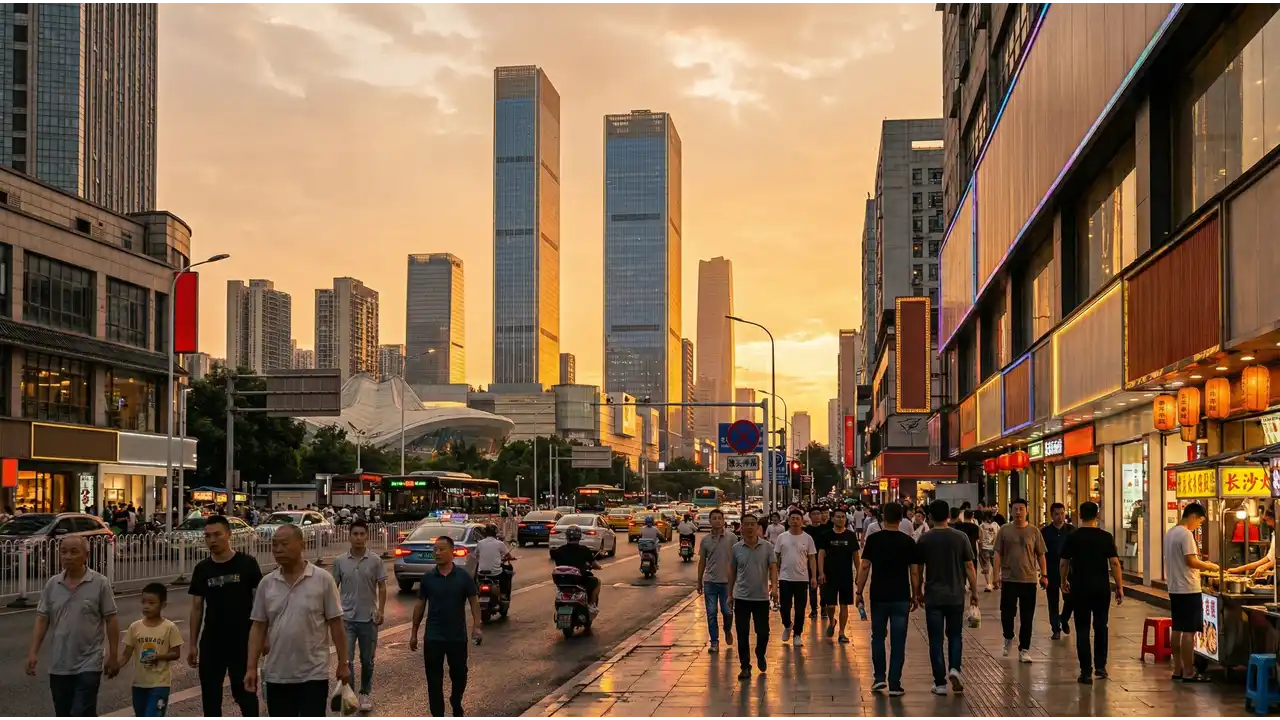
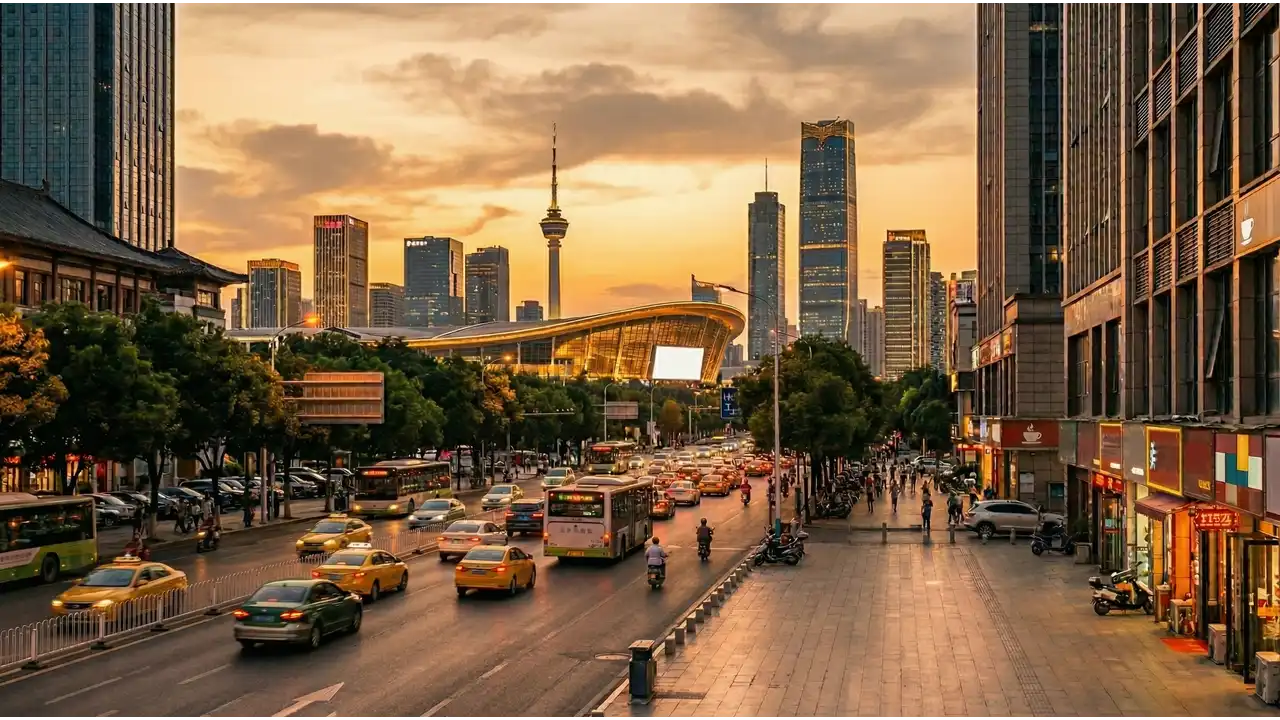
Nanchang is the capital of Jiangxi Province in central China, a mid-sized city of roughly 5.5 million people. It sits on the Gan River and functions as a regional commercial and administrative hub rather than a major international destination. The city has a humid subtropical climate with hot, wet summers and mild winters. Daily life revolves around local markets, noodle shops, and small restaurants. Expats are present but not concentrated in obvious enclaves. The pace is slower than Shanghai or Beijing, with less English spoken outside tourism and business sectors. Public transport relies on buses and an expanding metro system. Street food and grocery markets are the norm for most residents.
💡 Local Insights
Nanchang · 2026
Nanchang's cost structure is shaped by its status as a provincial capital without the international premium of tier-one cities. Housing costs reported at the China-wide level ($371/month) do not reflect a separate Nanchang measurement, so local rental reality varies. Renters typically find one-bedroom apartments in ordinary neighborhoods for $300-500 per month, though prices rise in newer developments or closer to the center. Groceries ($195/month) are genuinely cheap if you shop at wet markets and street vendors. A kilogram of rice costs roughly $0.50, vegetables $0.30-0.60 per unit, and eggs around $0.08 each. Eating out remains inexpensive, with noodle bowls at $1.50-3 and restaurant meals for two at $8-15. Public transport is efficient and costs pennies per trip. Expats generally pay more than locals for housing if they seek furnished apartments or serviced housing, but local-market rentals keep overall costs low. Transport inflation is minimal; taxis are metered and cheap.
Frequently Asked Questions
How much does it cost to live in Nanchang per month?
A moderate lifestyle in Nanchang costs around $975/month. This covers housing ($371/month at the China level), food and groceries ($195/month), utilities and transport, and discretionary spending on dining, entertainment, and personal services. At the budget tier, you can live on $585/month if you share housing, eat exclusively at street markets and cheap restaurants, and avoid dining out or paid entertainment. For a comfortable lifestyle with private housing, occasional dining out, and leisure activities, expect $1,511/month or higher.
What is the average rent in Nanchang?
The $371/month housing figure CostLiving reports is the China-wide level, not a separate measurement for Nanchang itself. Actual rents in Nanchang vary by location and condition. One-bedroom apartments in ordinary residential areas typically rent for $300-500 per month. Newer developments or closer proximity to the city center command $500-800 per month. Furnished or serviced apartments marketed to expats run $600-1,200. A two-bedroom in a standard neighborhood costs $400-700. Prices are lowest in outer districts and highest near Zhongshan Road and government areas. Most local residents rent far below these ranges by negotiating directly with landlords and accepting older buildings.
Is Nanchang cheap to live in for expats?
Yes, Nanchang is affordable compared to Shanghai, Beijing, or Guangzhou, but less obvious value than smaller Chinese cities. Expats accustomed to Southeast Asian prices find it slightly expensive; those from North America or Europe find it very cheap. The real savings come if you adopt local habits: live in Chinese residential buildings, shop at wet markets, eat at street stalls and small restaurants, and use public transport. If you insist on expat housing standards, Western grocery imports, and international services, costs rise significantly. Many expat teachers and professionals live comfortably on $1,200-1,500 monthly. Long-term visa sponsorship can be challenging, which affects some expats' ability to settle.
How much does food cost per month in Nanchang?
Groceries average $195/month if you shop at wet markets and neighborhood shops. Rice costs $0.50/kilogram, leafy greens $0.30-0.60 per bunch, eggs $0.08 each, and chicken $2-3 per kilogram. Street food is exceptionally cheap: steamed buns $0.25-0.50, noodle soup $1.50-2, and grilled skewers $0.50-1 per stick. Eating out at casual restaurants costs $3-5 per person for a noodle or rice dish, $8-15 for a seated meal for two with drinks. Imported goods and Western supermarkets (if you seek them) cost double or triple local prices. Most residents eat primarily from wet markets and street vendors, making food one of Nanchang's lowest-cost categories.
What salary do you need to live comfortably in Nanchang?
A comfortable lifestyle costs approximately $1,511/month, suggesting a monthly income of at least $1,600-1,800 to allow for savings and unexpected expenses. This budget covers private one-bedroom housing ($400-600), regular eating out, occasional entertainment and travel, personal care, and some shopping for non-essentials. Teaching English in Nanchang typically pays $1,200-1,800 monthly after tax, sufficient for a comfortable lifestyle if housing is included or heavily subsidized by the employer. Professionals in tech, finance, or business can earn $2,000-4,000 monthly, enabling a high standard of living. For expats without local employment, a prior savings buffer or remote income is important because visa sponsorship is competitive and not guaranteed.
How does the cost of living in Nanchang compare to other places?
Nanchang sits comfortably in the lower-middle range for Chinese cities. A moderate lifestyle here costs $975 per month, with housing at $371 per month. That puts it slightly cheaper than Bursa, where a moderate lifestyle runs $1,050 monthly and housing costs $394. Shenzhen, by contrast, is substantially more expensive at $1,350 for a moderate lifestyle and $726 for housing, reflecting its status as a major tech hub. If you're looking for genuine budget territory, Tabriz comes in notably lower at $650 monthly overall and $247 for housing, though that's in Iran rather than mainland China. For most expats and remote workers, Nanchang offers solid value without the premium pricing of first-tier Chinese cities, while still providing decent infrastructure and amenities.
Yes, but only if you embrace a genuinely local lifestyle and make deliberate trade-offs. This budget requires shared housing or a very small room ($150-250), exclusively shopping at wet markets and eating street food ($120-150/month for groceries), avoiding paid entertainment and dining out, using buses only, and no travel or shopping for luxuries. Many local students and recent graduates live at this level. For an expat, this means no private space, basic food, and minimal discretionary spending. It is possible but uncomfortable for most Westerners. A solo traveler or remote worker could stretch $585 by accepting dormitory or shared housing and accepting limited comfort, but full independence requires moving closer to the $975 moderate budget.