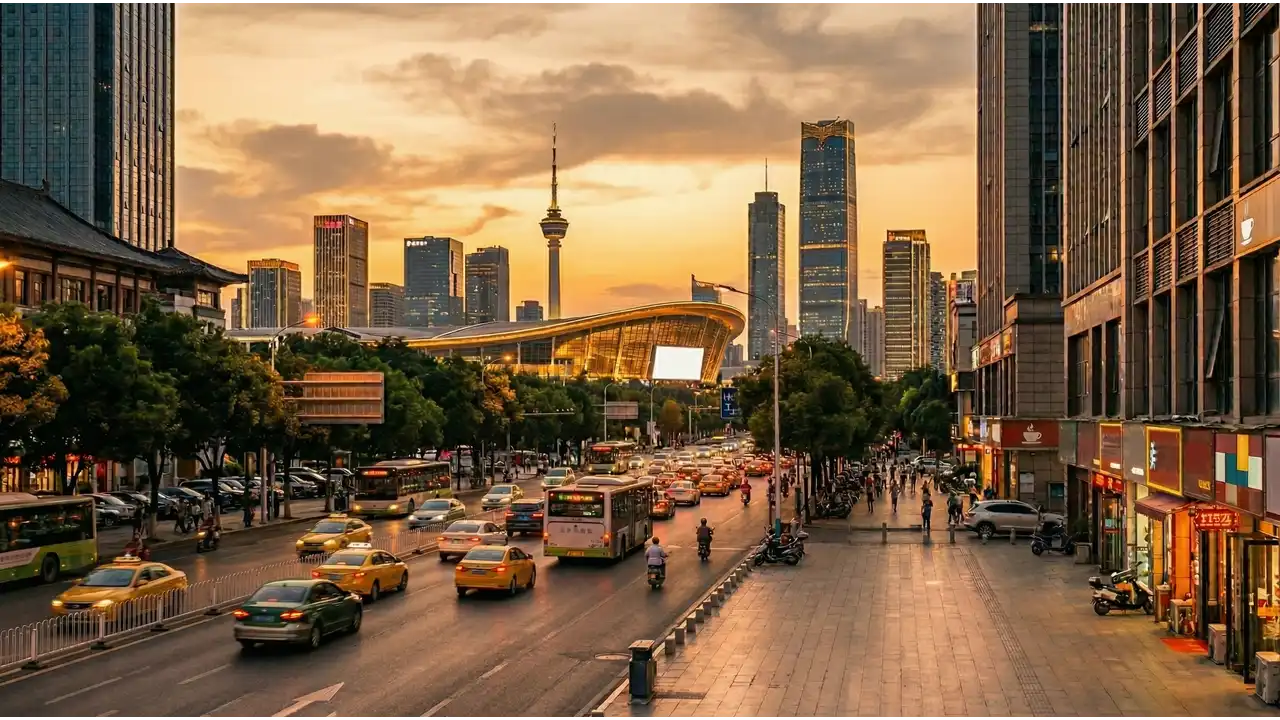
Nanjing is a major city in eastern China on the Yangtze River, home to about 8 million people. It functions as both a provincial capital and a technology hub, with significant manufacturing and service sectors. Daily life revolves around metro travel, street markets, and dense residential neighborhoods. Weather ranges from hot, humid summers to cool winters. The city attracts both local workers and a small but growing expat community, primarily in education, tech, and finance. Housing is concentrated in newer apartment developments. Local Chinese speakers dominate; English availability varies by neighborhood and workplace.
💡 Local Insights
Nanjing · 2026
Nanjing costs less than major first-tier cities like Shanghai or Beijing, but more than smaller inland cities. Housing at $439/month reflects shared apartments or modest one-bedroom units in outer districts or older buildings. Central locations and newer developments cost significantly more. Groceries at $165/month covers local Chinese markets and supermarkets; fresh produce, rice, and eggs are cheap, while imported goods cost more. Eating out ranges from 3-8 dollars for noodle soups to 12-20 dollars for nicer restaurant meals. Public transport is efficient and cheap, with metro rides under $0.50 and monthly passes around $30. Expats often pay slightly more for housing if they prioritize newer buildings or specific neighborhoods like Gulou or Xinjiekou. Utilities add 40-60 dollars monthly. Healthcare costs are low for routine care but vary by facility tier. Overall, the $950/month moderate figure is achievable but requires attention to housing location and eating primarily local food.
Frequently Asked Questions
How much does it cost to live in Nanjing per month?
A moderate lifestyle in Nanjing costs around $950/month. This breaks down to approximately $439 for housing (rent), $165 for groceries, $30-40 for transportation, $80-120 for utilities and internet, and the remainder for dining out, entertainment, and personal expenses. Budget-conscious residents can live on $570/month by sharing accommodation, cooking exclusively at home, and using public transit. Comfortable living with more restaurant meals, better housing, and leisure activities runs closer to $1,473/month. Actual costs vary by neighborhood, lifestyle choices, and whether you're eating local or seeking imported goods.
What is the average rent in Nanjing?
Average rent in Nanjing is around $439/month, reflecting typical housing costs. A shared apartment or small one-bedroom in outer districts (Jiangning, Pukou, Qinhuai outskirts) runs $350-550/month. Newer or central locations (Gulou, Xinjiekou, Jianye near CBD) range from $550-800/month for one-bedroom units. Two-bedroom apartments cost $600-1,000/month in similar areas. Expats renting furnished apartments often pay a premium of 20-40 percent above local rates. Utilities add $40-60 monthly. Lease terms typically require three months' deposit. Prices fluctuate with renovations and neighborhood development; checking local apps like 58.com or agents in your target area is essential for current rates.
Is Nanjing cheap to live in for expats?
Nanjing is moderately affordable for expats but not as cheap as smaller Chinese cities. The $950/month moderate budget is substantially lower than Shanghai, Beijing, or Shenzhen, where equivalent lifestyles cost $1,400-2,000/month. However, expats often spend more than local residents due to housing preferences, imported food, and dining out for convenience. If you live like a local, share housing, cook at home, and use public transport, costs drop significantly. The real savings versus Western cities are substantial: housing $439/month versus $1,200+ in Western capitals, groceries $165/month versus $300+. Expat salaries in tech and education typically exceed $2,000/month, making Nanjing attractive for savings. Your actual cost depends heavily on lifestyle choices and housing standards.
How much does food cost per month in Nanjing?
Groceries cost around $165/month for a single person eating local. Markets and supermarkets sell rice at $0.30/pound, cabbage or bok choy at $0.20/pound, eggs at $0.15-20 each, and pork at $3-5/pound. A week of basic groceries costs $25-35. Eating out is cheaper: simple noodle soups run $1.50-3, dumplings $1-2 for a portion, rice bowls with meat and vegetables $2-4. Restaurants offering sit-down meals with decent portions cost $5-10 per person. Imported foods (Western cheese, coffee, cereals) are triple or more versus local staples. Convenience stores near expat areas charge premiums. To stay within $165/month groceries, rely on wet markets, avoid imported goods, and cook at home most meals. Mixed with occasional restaurant meals, $250-300/month is realistic for moderate food spending.
What salary do you need to live comfortably in Nanjing?
Comfortable living in Nanjing costs approximately $1,473/month. This allows for a one-bedroom apartment in a decent neighborhood ($500-650/month), regular restaurant meals, gym membership, occasional entertainment, and modest travel within China. A monthly salary of $2,200-2,500 provides this lifestyle while allowing savings, accounting for taxes. International school teachers and mid-level tech workers typically earn $2,000-3,500/month, which comfortably exceeds this threshold. If you earn less (around $1,200-1,500/month), you can still live reasonably by sharing housing, limiting restaurant meals, and avoiding imported goods, but discretionary spending shrinks significantly. For expats prioritizing comfort, newer housing, frequent dining out, and travel, budget $2,000/month or more. Local salaries are substantially lower, typically $600-1,200/month, making expat compensation significantly higher relative to local standards.
How does the cost of living in Nanjing compare to other places?
Nanjing sits in the middle tier for major Asian cities. A moderate lifestyle here costs $950 per month, with housing running $439 per month. That puts it slightly ahead of Surabaya, where a moderate lifestyle costs $900 and housing averages $455 per month, making the two cities genuine peers. Move inland to Mashhad and you'll spend considerably less: $650 monthly for a moderate lifestyle and just $247 on housing. But head to the coast and prices climb sharply. Shenzhen's moderate lifestyle runs $1,350 per month with housing at $726, a significant step up from Nanjing. So if you're comparing Nanjing to Southeast Asian alternatives, expect similar costs. If you're considering China's wealthier coastal cities, budget substantially more.
Yes, but with significant constraints. The budget tier of $570/month requires shared housing (cutting rent to $250-300/month), cooking almost exclusively at home (groceries around $150-165/month), minimal dining out, and using public transit. This leaves roughly $120-170/month for utilities, phone, internet, and essentials. Entertainment, travel, and social activities become rare. Most who do this are students, long-term backpackers, or locals supplementing low incomes. Short-term expats rarely maintain this budget because housing standards and social dining are higher priorities. It is physically possible if you accept a shared room, very basic conditions, and a restricted lifestyle, but most expats find it unsustainable for more than a few months. A more realistic minimum for expats is $750-850/month, allowing a small private space and occasional meals out. The $570/month figure is feasible mainly for those with minimal Western expectations.