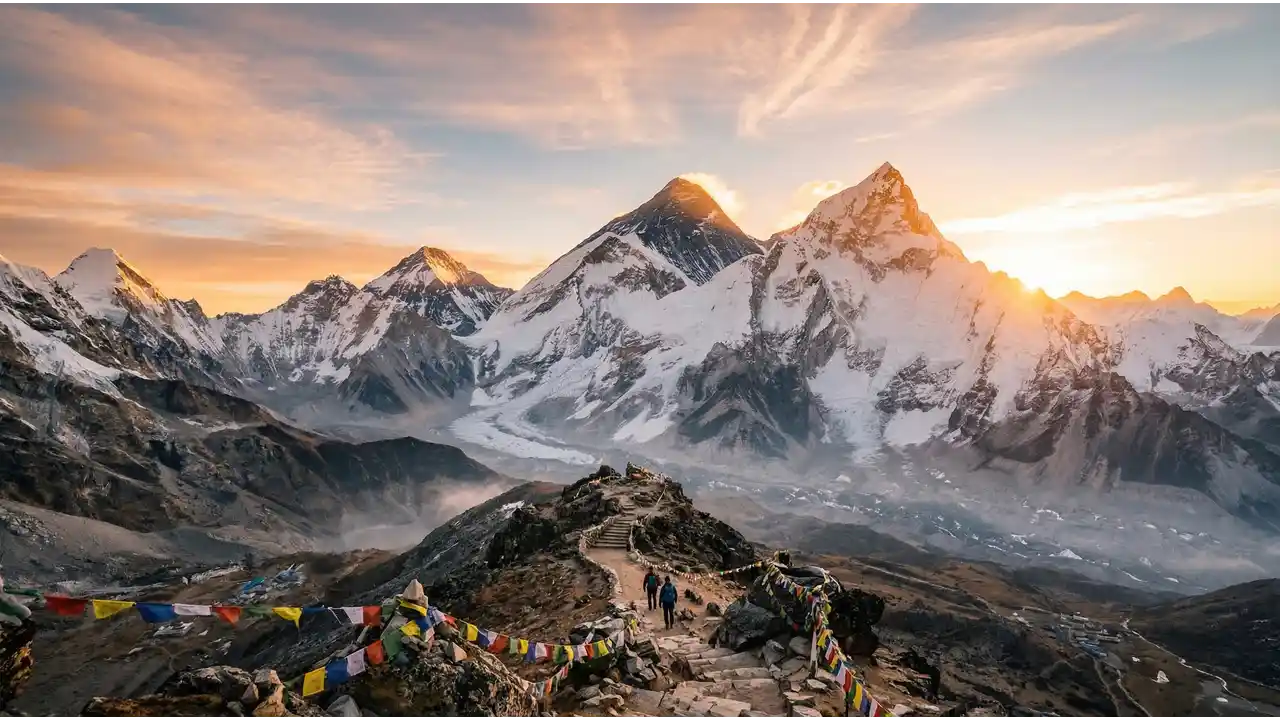
Nepal is a mountainous South Asian country where daily life centers on Kathmandu Valley and smaller cities like Pokhara. The climate ranges from subtropical lowlands to alpine peaks. Most residents are Nepali speakers, though English is common in expat areas. Life moves at a deliberate pace compared to Western cities. Power cuts still occur in some regions, though less frequently than years past. Transportation relies on local buses, shared taxis, and increasingly, motorbikes. Monsoon season (June to September) brings heavy rain and occasional landslides. Most expats cluster in central Kathmandu or tourist-oriented Pokhara, where Western groceries and familiar services exist but cost more than local equivalents.
💡 Local Insights
Nepal · 2026
Nepal's cost of living reflects its income levels and limited infrastructure for Western imports. Housing at $119/month covers a modest one-bedroom apartment in residential Kathmandu neighborhoods like Thamel or Patan, or more space in smaller cities. Local rent rarely increases for expats, though newly renovated or centrally located units command premiums. Groceries at $131/month assumes buying local produce, rice, and dal (lentils) at neighborhood markets. Imported goods (cheese, cereal, coffee) cost 2 to 3 times what you pay locally. Eating out remains cheap: a meal at a local restaurant costs $1.50 to $3.50, though expat-oriented cafes charge $5 to $8. Transport costs almost nothing (buses cost cents; taxis are metered). Utilities add $15 to $25 monthly. Visa runs and occasional travel to India or Thailand are easy and affordable. The moderate budget of $525/month assumes local living without frequent Western amenities.
Frequently Asked Questions
How much does it cost to live in Nepal per month?
A moderate lifestyle costs $525/month. Housing runs $119/month, groceries $131/month. The remaining budget covers utilities ($15 to $25), transport (minimal, $10 to $20), phone and internet ($5 to $10), and entertainment or dining out. Tight budgets can manage on $315/month by eating street food and sharing housing. Comfortable expats spend $814/month to include regular restaurant meals, travel, and Western groceries. Costs vary by city. Kathmandu is pricier than Pokhara or Bhaktapur, mainly in housing and restaurant prices.
What is the average rent in Nepal?
Average housing costs $119/month. A basic one-bedroom apartment in residential Kathmandu neighborhoods (Thamel, Patan, Jorpati) runs $80 to $130/month unfurnished. Furnished apartments add $20 to $40. Shared housing or rooms are cheaper, often $50 to $80/month. Pokhara and smaller cities offer similar or lower rents. Prime central locations or renovated units with modern amenities cost $150 to $250/month. Most landlords lease monthly without formal contracts. Utilities (water, electricity) cost $15 to $25 extra and fluctuate seasonally. Internet and phone are separate.
Is Nepal cheap to live in for expats?
Yes, Nepal is genuinely inexpensive for expats with Western income. $525/month provides a comfortable standard that would require $1,500 to $2,500/month in Southeast Asian tourist hubs like Thailand or Vietnam, and $3,000+/month in urban India. Local amenities are abundant and cheap. However, importing Western goods or accessing expat services raises costs. Banking, visas, and residency paperwork involve bureaucratic friction. Healthcare quality varies; serious issues require flying to Delhi or Bangkok. Expats who embrace local living costs less; those insisting on Western groceries and services will spend proportionally more.
How much does food cost per month in Nepal?
Groceries average $131/month buying locally. Rice, dal, seasonal vegetables, and local grains cost very little. A kilogram of rice is $0.40 to $0.60; a kilogram of tomatoes, $0.30 to $0.50; eggs, $0.10 each. Imported items (cheese, breakfast cereal, peanut butter) cost 2 to 3 times more. Eating out is cheaper than grocery shopping. A meal at a local restaurant runs $1.50 to $3.50; momos (dumplings) cost $0.50 to $1. Expat cafes charge $5 to $8 per meal. A coffee at a local shop is $0.30 to $0.50; at an expat cafe, $2 to $3.
What salary do you need to live comfortably in Nepal?
A comfortable lifestyle costs $814/month. At that level you can rent a better apartment ($150 to $200/month), eat regularly at restaurants, use taxis instead of buses, buy some imported goods, and travel occasionally. Many digital nomads and remote workers with $1,500 to $2,000/month income live very well, save substantially, or fund regular travel. Teachers and skilled workers earning $800 to $1,200/month often do well locally. A single person needs less; families with children or those requiring medical care should budget higher. The comfortable tier assumes no major emergencies or visa complications.
How does the cost of living in Nepal compare to other places?
Nepal is genuinely cheap by regional standards. A moderate lifestyle costs $525 per month here, which undercuts India at $575 per month. Housing is where Nepal's advantage really shows. Moderate-tier rent in Nepal runs $119 per month, compared to $176 per month in India. If you're coming from Sri Lanka, expect a significant drop in costs. Sri Lanka's moderate lifestyle reaches $725 per month with housing at $295 per month, making it substantially dearer across the board. Kabul is cheaper than Nepal overall at $400 per month for a moderate lifestyle, though that reflects Afghanistan's particular economic conditions rather than quality or amenities. For most expats and locals alike, Nepal offers solid value in Southeast Asia, particularly if you're willing to live simply outside Kathmandu's tourist zones.
Yes, but with constraints. That budget requires sharing housing ($50 to $70/month), eating only local food and street meals, using buses exclusively, and skipping imported goods. You could spend roughly $315/month: housing $70, groceries $80 (rice, dal, vegetables), utilities $15, transport $10, phone $5, contingency $35. This works for extended travelers or those with minimal medical needs and no visa complications. It excludes restaurant meals, alcohol, gifts, and emergency travel. Many backpackers and long-term budget travelers sustain this. Those earning remotely or with savings can live this way easily; those depending on local work will struggle at this level.