Oslo is Norway's capital and largest city, home to about 680,000 people in the city proper and over 1.3 million in the metro area. The city sits on the Oslofjord, surrounded by forests and water. Daily life centers on work, outdoor activity (skiing, hiking, sailing are standard winter and summer pursuits), and a social culture built around coffee, restaurants, and evening gatherings. Winters are long, dark, and cold (December through February average around freezing). Summers are mild and bright. The population is predominantly Norwegian, though expat communities from around Europe, Asia, and North America are visible in central neighborhoods. Public transport is reliable and frequent. Most residents speak English, but integration and housing access favor Norwegian speakers.
💡 Local Insights
Oslo · 2026
Oslo's cost of living reflects Norway's high wages, strong labor protections, and small, wealthy population. Housing dominates the budget at $1,434/month, driven by limited supply and strong demand. Central neighborhoods (Ferner Eiler, Grünerløkka, St. Hanshaugen) command higher rents; outer areas (Stovner, Bekkelaget, Lambertseter) cost less but require longer commutes. Most housing is rental; purchasing property requires significant capital and permanent residence status. Groceries cost around $513/month for a single person buying staples at chains like Rema 1000 and Coop, but imported goods and organic products cost significantly more. Eating out is expensive (lunch averages $15-18, dinner entrees $20-28). Transport is excellent via Oslo's T-bane (subway), tram, and bus network; an unlimited monthly pass costs about $90. Cars are uncommon among urban residents due to high tolls, parking costs, and excellent transit. Expats often pay slightly more for housing in expat-friendly areas. Those with Norwegian work contracts typically access the same rents and prices as locals.
Frequently Asked Questions
How much does it cost to live in Oslo per month?
A moderate lifestyle in Oslo costs $3,025/month. This breaks down as follows: housing at $1,434/month, groceries at $513/month, transport at roughly $90/month for a transit pass, and the remainder covering utilities, dining out, entertainment, and personal care. The budget tier runs $1,815/month (shared housing, minimal dining out, no car), while a comfortable lifestyle costs $4,689/month (larger apartment, frequent restaurants, more leisure spending). These figures assume a single adult; couples and families see economies of scale on housing and utilities.
What is the average rent in Oslo?
Average rent in Oslo is $1,434/month based on typical moderate-lifestyle housing costs. A one-bedroom apartment in central neighborhoods (Ferner Eiler, Grünerløkka, Sagene) typically runs $1,500-1,800/month; outer ring neighborhoods (Stovner, Lambertseter, Grorud) range $1,100-1,400/month. Shared flats (common among younger residents and expats) average $700-900/month per person. Studio apartments are rare and command premium prices. Most leases require first month, last month, and a deposit upfront. Supply is tight; finding an apartment typically takes 2-4 weeks to several months, especially outside summer. Furnished apartments cost 10-20% more. Norwegian landlords rarely negotiate; posted prices are firm.
Is Oslo cheap to live in for expats?
No. Oslo ranks among Europe's most expensive cities. For expats accustomed to Southern or Central Europe (Spain, Czech Republic, Poland), costs are 2-3 times higher. Compared to other Nordic capitals, Oslo is pricier than Copenhagen and Stockholm on most metrics. Compared to Western Europe (London, Paris, Amsterdam), Oslo is roughly comparable or slightly cheaper in rent but more expensive in groceries and dining. The main advantage for expats is that employer salaries typically rise to match cost of living; those on local Norwegian contracts usually break even. Expats on fixed international contracts or remote work at home salaries often struggle. Expat forums and Facebook groups offer real-time housing market intel and flat-shares.
How much does food cost per month in Oslo?
Groceries for one person average $513/month at budget-conscious supermarkets like Rema 1000 and Coop. Milk costs $1.30/liter, bread $2-3, eggs $4/dozen, chicken breast $11/kg, ground beef $13/kg. Organic and imported items cost 30-50% more. Dining out is expensive: a simple lunch runs $15-18, dinner entrees at casual restaurants $20-28, fancy restaurants $50-80 per person before drinks. Alcohol is heavily taxed; a beer at a bar costs $8-10, wine at restaurants $50-70/bottle. Kebab shops and Asian takeout offer better value ($8-12/meal). Weekly markets in Grünerløkka and Youngstorget have competitive prices on produce but limited selection compared to supermarkets.
What salary do you need to live comfortably in Oslo?
A comfortable lifestyle costs $4,689/month, which translates to a gross annual salary of roughly $65,000-70,000 (depending on tax withholding and deductions). After Norwegian taxes and social security contributions, a mid-level professional earning 650,000-700,000 NOK annually takes home enough to cover this budget comfortably. Most professional roles (IT, finance, healthcare, education) offer salaries in the 550,000-850,000 NOK range, placing workers solidly above comfortable spending. Entry-level and service sector jobs (retail, hospitality) pay 400,000-500,000 NOK and make the moderate budget ($3,025/month) tight. High earners (engineers, executives, consultants) earn 900,000+ NOK and spend freely. Many expats supplement income through second jobs or freelance work.
How does the cost of living in Oslo compare to other places?
Oslo sits at the expensive end of European city living. A moderate lifestyle in Oslo runs $3,025 per month, with housing alone at $1,434 per month.
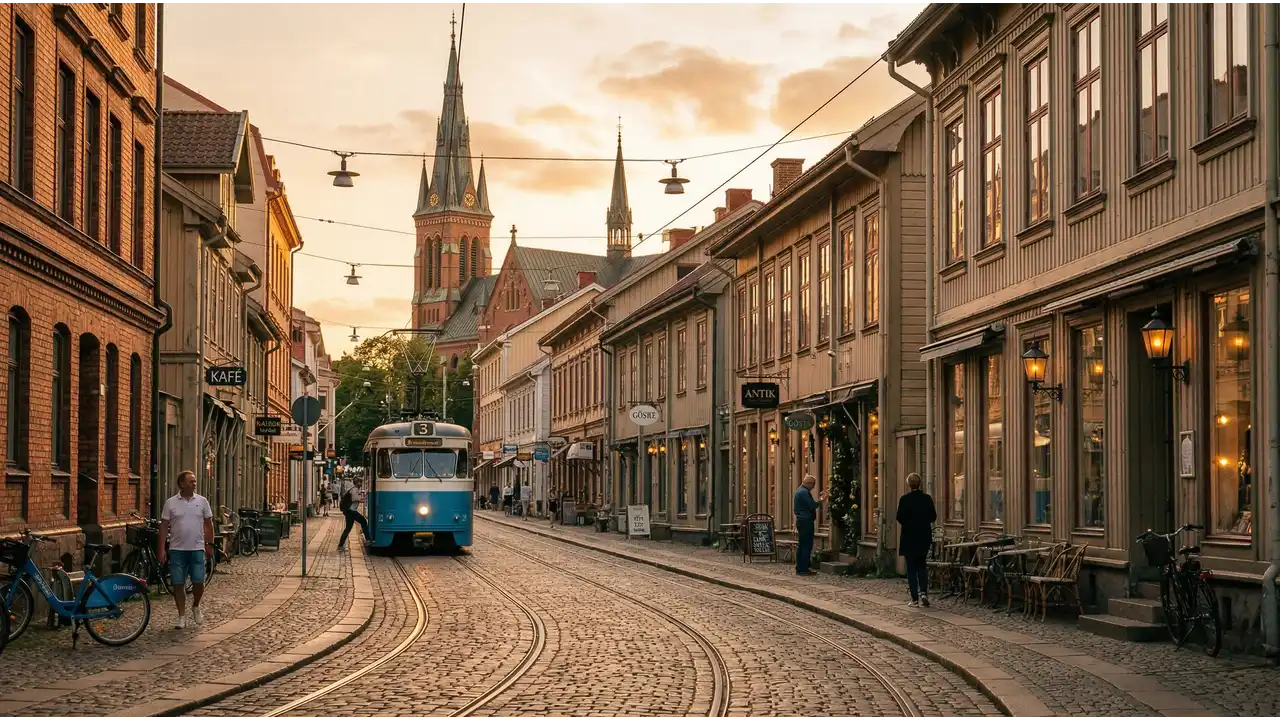
You'll find Paris marginally cheaper overall at $2,925 per month, though Paris housing costs more at $1,611 per month. If you're looking for genuine savings, Gothenburg offers real relief at $2,150 per month, with housing at $1,042 per month. That's roughly 30 percent less than Oslo across the board.
Moving upmarket, Monte Carlo surpasses Oslo significantly at $4,025 per month, with housing at $2,323 per month. So Oslo is expensive by most European standards, but not extreme. You're paying premium prices for Scandinavian quality of life, services, and infrastructure, though you'll find slightly better value in nearby Swedish cities.
Yes, but with significant trade-offs. The budget tier of $1,815/month requires shared housing (splitting a two-bedroom apartment with one or two roommates at $700-900/month per person), buying groceries strictly at discount chains, minimal dining out, using public transport (covered by the transit pass), and no car. Entertainment and leisure are limited; weekend trips, hobbies, and shopping are carefully budgeted or foregone. This works for students, recent graduates, or those willing to live lean. Many Oslo residents do this, especially early in their careers. It is harder for single professionals earning less than 350,000 NOK annually or expats unfamiliar with frugal living. Shared housing requires strong flatmate compatibility; language barriers and cultural differences can create tension.