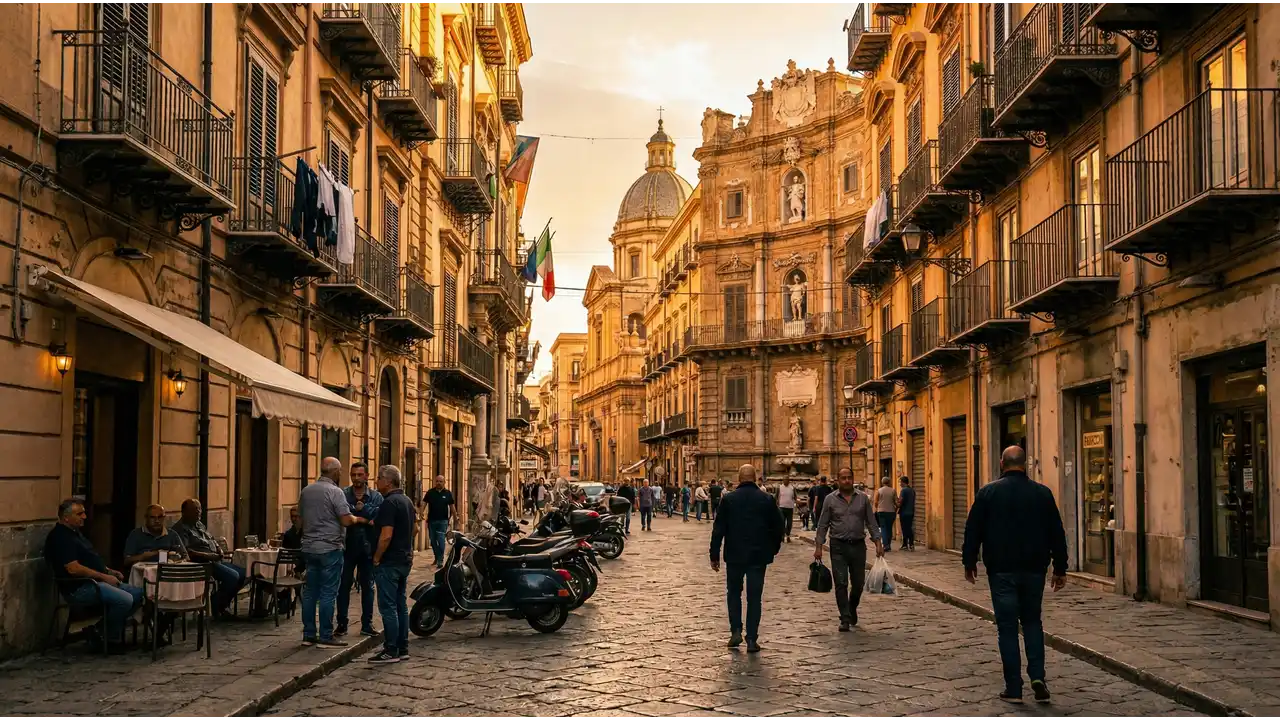
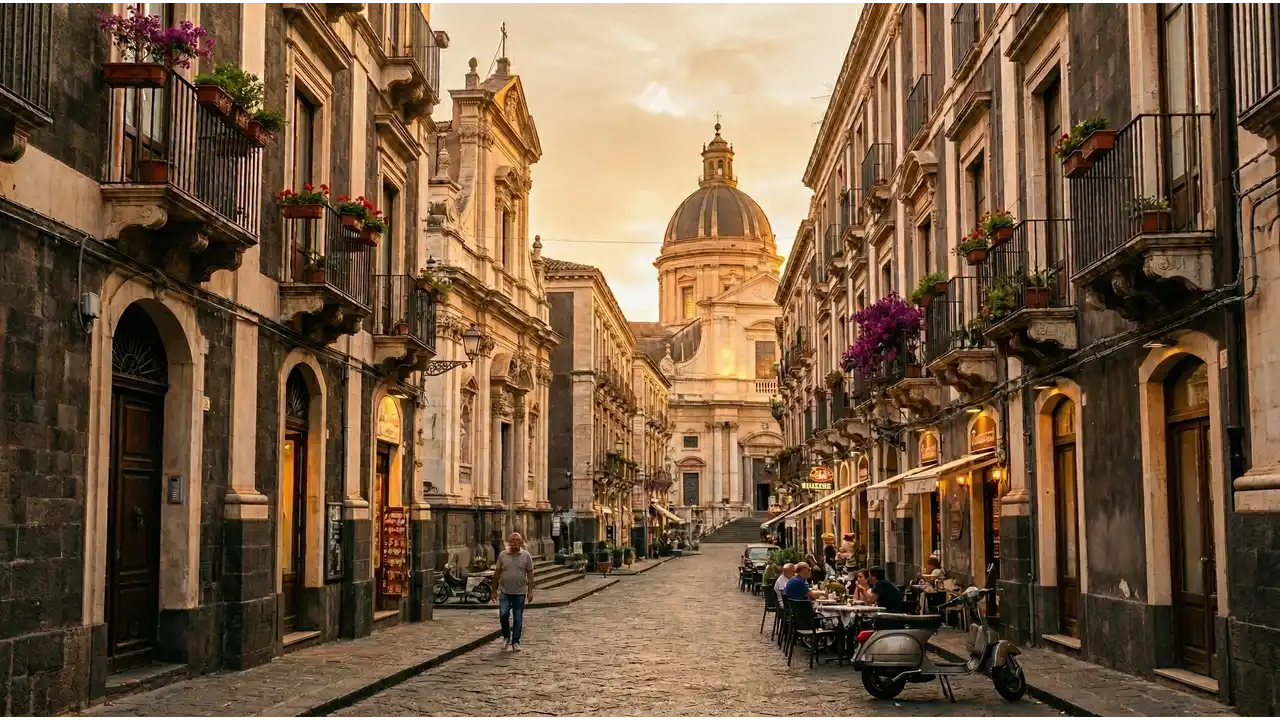
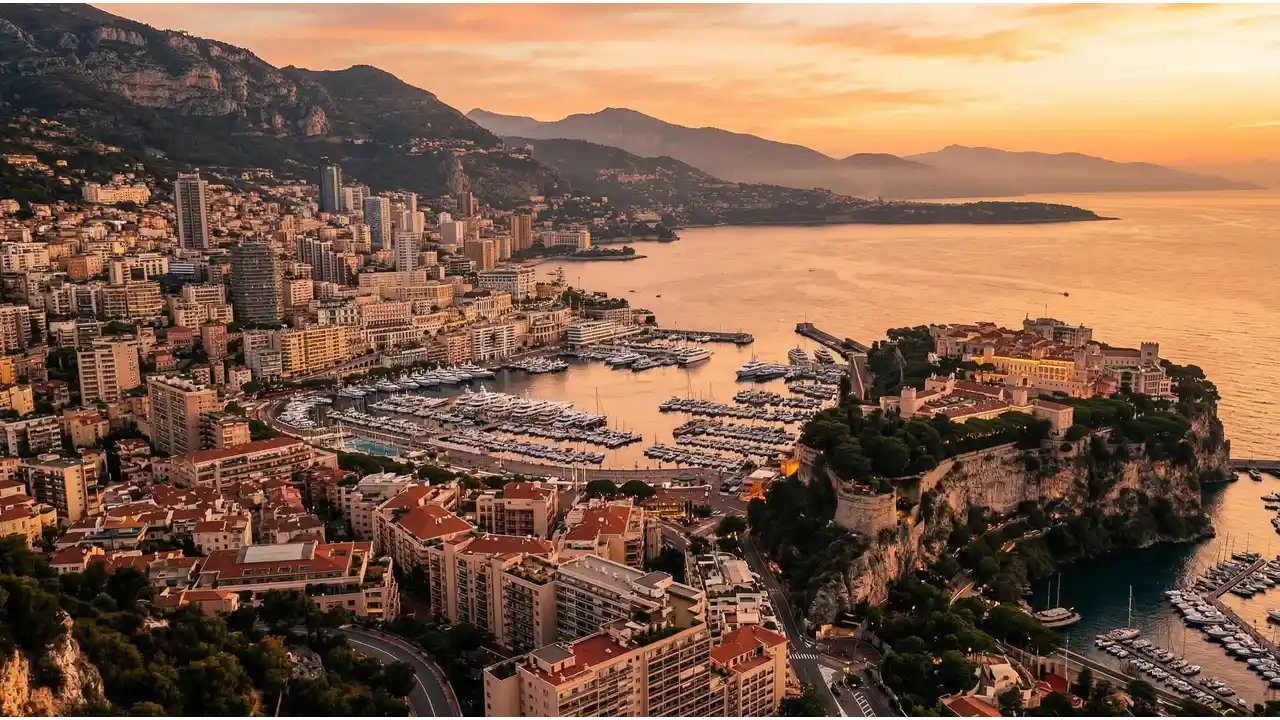
Palermo is Sicily's capital and a working Mediterranean port city, not a museum. You'll find crumbling palazzos next to laundries, street markets selling fish and produce alongside tourist stalls, and neighborhoods that change character block by block. The climate is warm year-round, with hot, dry summers and mild winters. Residents are a mix of longtime Sicilians, Italian mainlanders, and growing numbers of expats and digital nomads. Daily life centers on markets, cafes, and piazzas. Traffic is chaotic. Infrastructure works, mostly. Cost of living has risen in central areas but remains substantially lower than northern Italian cities.
💡 Local Insights
Palermo · 2026
Palermo's affordability comes from being outside the wealthy north and from low tourist saturation outside the old town. Housing costs $618/month on average, but this varies sharply by location. Central neighborhoods like Vucciria and Capo command premiums for restored apartments; peripheral areas like Vergine Maria or Addaura run cheaper. Utilities add $80-120/month. Groceries cost around $301/month for a moderate diet mixing supermarkets and street markets. Eating out ranges from $5 for street arancini to $15-25 for sit-down meals. Transport is cheap: AMAT buses cost $1.20 per ride or $25/month for unlimited access. Expats often overpay for housing by renting short-term or through agencies. Negotiate directly with landlords, use Facebook groups, or check Immobiliare.it for better rates. Utility bills can shock newcomers in winter. Food costs drop sharply if you shop markets instead of supermarkets. Internet runs $25-40/month. No major pricing gap between locals and expats for essentials, though some restaurants in Ballarò do inflate tourist prices.
Frequently Asked Questions
How much does it cost to live in Palermo per month?
A moderate lifestyle costs around $1,550/month. This breaks down roughly as: housing $618, groceries $301, utilities $100, transport $25, and other expenses (dining out, entertainment, services) making up the remainder. A more austere budget runs $930/month by cutting housing costs and eating cheaply. A comfortable lifestyle with better housing, more dining out, and regular leisure activities runs $2,403/month. Actual costs depend heavily on neighborhood choice and whether you eat at home or in restaurants.
What is the average rent in Palermo?
Average rent is around $618/month. One-bedroom apartments in livable neighborhoods (Mondello, Kalsa, Vergine Maria) rent for $450-700/month. Two-bedroom places run $600-900/month. Central old-town addresses or newly renovated units cost more, sometimes $800-1,100/month. Peripheral areas or older buildings go for $350-500/month. Furnished short-term rentals marketed to tourists command premiums of 30-50 percent above these figures. Long-term leases (6-12 months) are cheaper than month-to-month. Use Immobiliare.it or local Facebook groups rather than booking platforms to avoid tourist markups.
Is Palermo cheap to live in for expats?
Yes, relative to Western Europe and North America. Monthly housing costs $618, and you can eat well for $301/month by shopping markets. However, Palermo is not cheap compared to Eastern Europe or many Asia-Pacific cities. Expats often report that initial housing searches cost 30-50 percent more through tourist platforms or local agents. Once settled with a proper lease and familiar with where to shop, costs drop significantly. The real advantage is lifestyle affordability: cultural activities, dining out, and travel around Sicily remain accessible on modest incomes. Visa requirements and bureaucracy are the bigger challenge than cost.
How much does food cost per month in Palermo?
Groceries average $301/month if you shop markets and supermarkets. Bread costs $0.80-1.20 per loaf, eggs $1.50-2 per dozen, chicken breast $6-8/kg, pasta $0.70-1.50/kg, and seasonal produce $2-4/kg. Markets (Ballarò, Capo, Vucciria) are cheaper than supermarkets and sell fresher produce. Eating out ranges from $5 for arancini or street panelle to $8-12 for a basic pizza or pasta dish at a casual restaurant. Sit-down meals at neighborhood trattorias run $15-25. Supermarket chains like Carrefour and Coop are widespread and reliable. Expats often spend more initially by eating at tourist restaurants; learning to shop where locals do cuts costs by 20-30 percent.
What salary do you need to live comfortably in Palermo?
A comfortable lifestyle costs $2,403/month. This allows for decent housing ($700-800/month), regular dining out, travel around Sicily, and occasional leisure spending. On this budget, you can afford a furnished one-bedroom or a two-bedroom apartment in a non-central but pleasant neighborhood, eat well mixing home cooking and restaurants, use taxis occasionally, and have discretionary spending for hobbies and short trips. Remote workers earning $2,400-2,600/month (roughly $30,000-31,000 annually) live comfortably without financial stress. Those earning less can live on the moderate budget of $1,550/month by being deliberate about housing location and eating mostly at home.
How does the cost of living in Palermo compare to other places?
Palermo sits firmly in the affordable tier for European cities. A moderate lifestyle costs $1,550 per month, with housing running $618 monthly. That puts it roughly on par with Sofia, where a moderate lifestyle runs $1,500 and housing costs $705. If you're comparing to Eastern Europe more broadly, Kazan is noticeably cheaper at $1,100 for a moderate lifestyle and $504 for housing. Where Palermo becomes conspicuously affordable is against Western Europe. Stuttgart, a comparable mid-sized German city, costs $2,175 monthly for a moderate lifestyle with housing at $1,001. Palermo offers similar urban amenities and walkability at roughly two-thirds the price. For most travelers and relocators from northern Europe or North America, Palermo represents genuine savings without requiring compromise on neighborhood quality or access to services.
Yes, but with constraints. The $930/month budget requires disciplined choices: rent a place outside central neighborhoods for $350-450/month, eat almost entirely at home shopping markets ($250/month), use public transport ($20/month), and minimize dining out and entertainment. This leaves almost no buffer for emergencies, medical costs, or leisure. It works if you have stable housing and health coverage (EU citizens via reciprocal agreements, others through insurance). Remote workers on this budget often eat cheaply, share housing to split costs, and build social life around free or low-cost activities. Many do it successfully, but unexpected expenses (car repair, dental work, visa fees) can derail the budget quickly.