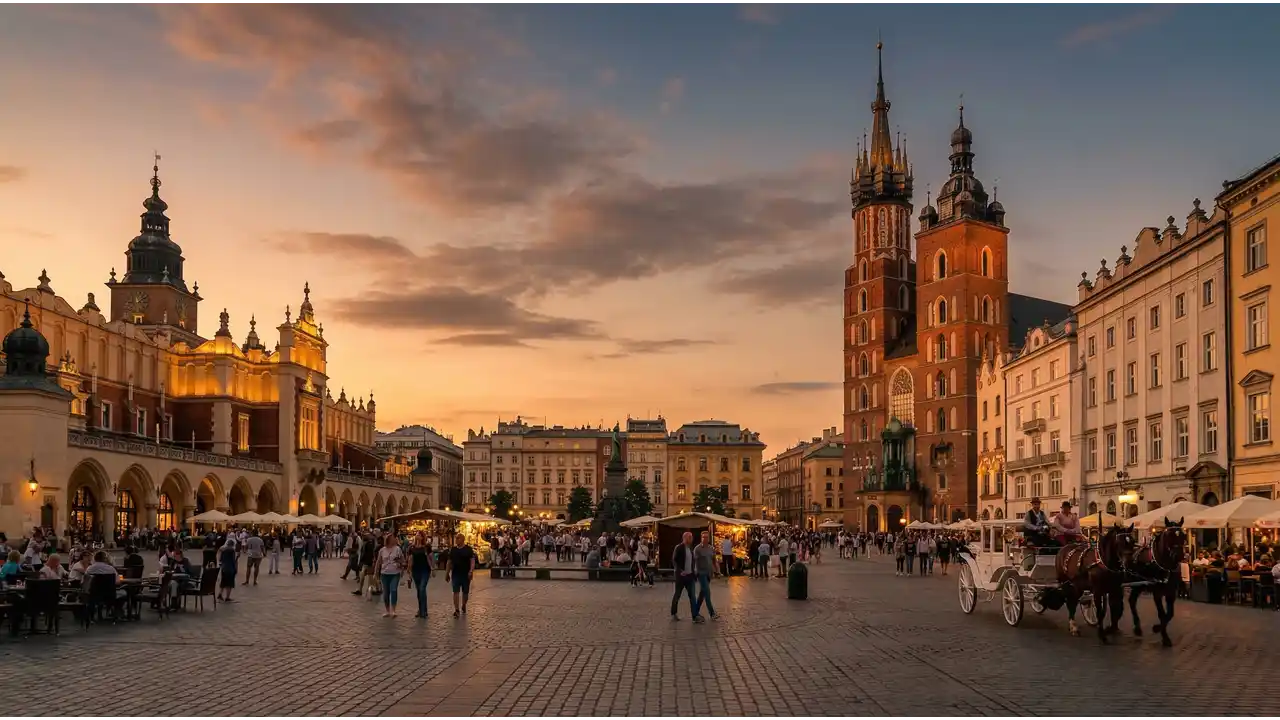
Poland is a Central European country of 38 million people with a mix of medieval Old Towns, Soviet-era apartment blocks, and modern business districts. Winter is cold and dark (November through February), summers mild. Daily life centers on public transit (buses, trams, metro in major cities), local cafes, and neighborhood markets. Poles tend to be direct and pragmatic. Warsaw is the capital and most expensive city; Krakow attracts tourists and expats; smaller cities like Wroclaw and Gdansk offer lower costs. Most neighborhoods lack the manicured feel of Western Europe but function well.
💡 Local Insights
Poland · 2026
Poland remains genuinely affordable by European standards, but prices have risen steadily since 2020. Housing at $754/month reflects shared apartments or modest one-bedroom rentals outside city centers. In Warsaw, expect $650-$850 for a one-bedroom outside the center; Krakow runs similar or slightly less. Utilities (heating, electricity, internet) typically add $100-$150. Groceries at $289/month assume supermarket shopping (Lidl, Biedronka, Tesco dominate). Eating out is cheap: a lunch special costs $3-$5, a dinner for two at a casual restaurant $15-$25. Transport is efficient and affordable (monthly transit pass in Warsaw costs roughly $30). The biggest variable is where you live. City centers command premiums; neighborhoods 20 minutes by tram are significantly cheaper. Many expats report lower costs than quoted because they avoid Western grocery brands and tourist restaurants. Polish wages remain low (median around $15,000 yearly), so locals notice inflation more acutely than visiting foreigners.
Frequently Asked Questions
How much does it cost to live in Poland per month?
A moderate lifestyle costs $1,650/month. This includes housing at $754/month, groceries at $289/month, utilities ($100-$150), public transport ($30-$40), and modest dining and entertainment ($300-$400). A tighter budget works at $990/month if you live outside major city centers, cook almost everything, and use only public transit. A comfortable lifestyle with more dining out, private transport, and occasional travel runs $2,558/month or higher. Your actual cost depends heavily on which city you choose and whether you accept local price levels or seek Western-brand equivalents.
What is the average rent in Poland?
Average rent is $754/month for a one-bedroom apartment outside the city center. In Warsaw's center, expect $800-$900; outside center, $650-$750. Krakow runs $600-$800 depending on neighborhood. Smaller cities like Wroclaw, Gdansk, or Poznan range $450-$650. Shared apartments (3-4 people) drop to $300-$450 per person. These figures assume unfurnished units without utilities. Furnished apartments rent at 10-20 percent premiums. Expats often overpay by searching in English; Polish-language sites (OLX, Gumtree Poland) offer better rates. Most leases run 12 months with one-month advance notice to terminate.
Is Poland cheap to live in for expats?
Yes, but with caveats. Poland is cheaper than Western Europe, Scandinavia, and urban centers in Germany or Austria, but not drastically. If you earn in euros or pounds, it feels very affordable. If you earn Polish zloty or live on a global minimum wage, it's tight. Food and transport are genuinely inexpensive; housing and utilities have risen. Expats who adapt to local habits (public transit, neighborhood restaurants, local supermarkets) spend $1,200-$1,500/month comfortably. Those who insist on Western brands, cars, and expatriate social scenes spend $2,200 and up. Warsaw and Krakow attract multinational companies offering international salaries, which makes them viable for remote workers on stable incomes.
How much does food cost per month in Poland?
Groceries average $289/month for one person eating basic, local items: bread ($0.50), milk ($1.20), chicken ($6-$8/kg), eggs ($1.50/dozen), seasonal vegetables ($0.40-$1 per item), cheese ($4-$6/kg), pasta ($0.80). Budget supermarkets (Lidl, Biedronka, Aldi) are cheapest. Eating out is affordable: lunch specials run $3-$5, beer $2-$3, coffee $1.50-$2.50. A casual dinner for two costs $20-$30; fine dining $50-$100+. Markets sell seasonal produce cheaper than supermarkets. Western or imported brands cost 30-50 percent more than local equivalents, which is why many expats shift dietary habits.
What salary do you need to live comfortably in Poland?
A comfortable lifestyle costs $2,558/month. If you earn this stably (either locally or remotely), you can rent a nice one or two-bedroom apartment, eat well, use occasional transport or own a car, travel within Europe monthly, and save modestly. In zloty terms, that's roughly 10,000-11,000 PLN/month after tax, which is above the median Polish wage but achievable through multinational employers, remote work, or freelancing. Locals earning Polish salaries stretch far less. For expats, a remote job paying $2,500-$3,500/month USD makes life comfortable and allows savings. Couples or families split costs differently but should plan on $2,200-$2,800/month combined for a comfortable, non-anxious life in major cities.
How does the cost of living in Poland compare to other places?
Poland sits in the middle band of European cost of living. A moderate lifestyle in Poland runs $1,650 per month, with housing at $754 per month.
Your closest peers are Lithuania and Moldova. Lithuania costs about the same overall at $1,600 per month, though its housing is somewhat cheaper at $640 per month. Moldova is noticeably less expensive at $1,225 per month for a moderate lifestyle, with housing at $603 per month, making it one of Europe's most affordable countries.
If you're comparing Poland to Western Europe, the difference is sharp. Austria costs $2,275 per month for the same lifestyle, with housing at $1,029 per month. This means Austria runs roughly 38 percent more overall and 36 percent more for housing alone.
Poland's real advantage is stability and amenities at prices well below the EU average, especially outside Warsaw.
Yes, but uncomfortably by expatriate standards. The budget tier of $990/month means sharing an apartment (roughly $350-$400), buying groceries strictly ($289/month), minimal dining out, using only public transit, and zero car ownership. Utilities, phone, and internet fit in $80-$100. This leaves almost nothing for entertainment, clothing, or savings. It's sustainable if you cook almost daily, live outside city centers, and accept limited social spending. Many Polish students and young workers live this way. Expats find it spartan unless accustomed to minimal consumption. Remote workers making $1,200-$1,400/month can do it with modest comfort by Polish standards but must be disciplined. Single income earners on tight budgets should plan $1,200-$1,400/month minimum to avoid constant stress.