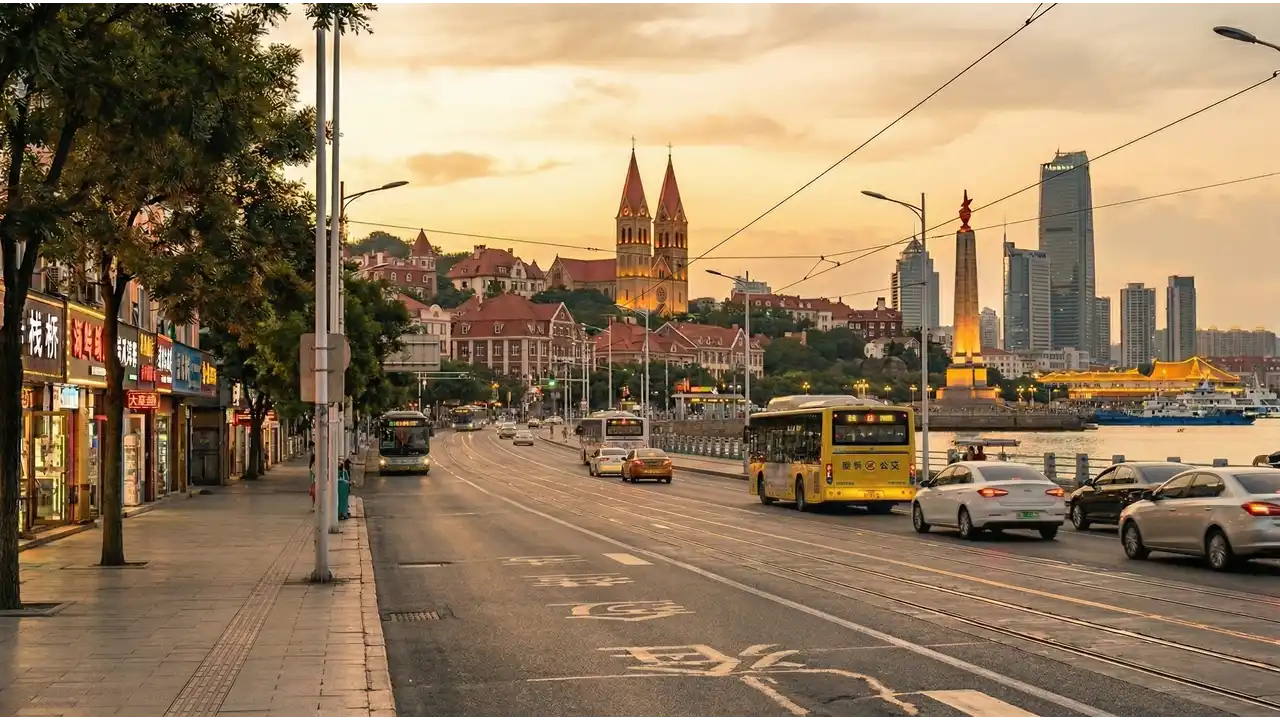
Qingdao is a coastal city in Shandong Province with about 9 million residents. It functions as both a major port city and a beach destination, which shapes its economy and character. Winters are cold and dry, summers warm and humid. The city attracts domestic tourists, shipping workers, and expat professionals employed by international firms. Daily life involves navigating older urban neighborhoods alongside newer development zones. Public transit runs on buses and a light rail system. The seafront is a working harbor, not a resort strip. Most residents shop at local wet markets or supermarket chains. Mandarin Chinese is the only practical language for daily tasks outside international workplaces.
💡 Local Insights
Qingdao · 2026
Qingdao's cost structure reflects its role as a working port city rather than a tourist center. Housing at $336/month covers shared apartments or small studios in older neighborhoods like Shinan or Licang, or better-located one-bedroom units in developing areas. Newer expat-oriented compounds cost significantly more. Groceries at $158/month assumes cooking at home from wet markets and discount supermarkets. Meat, vegetables, and rice are cheap; imported dairy and Western packaged goods carry premiums. Eating street food or casual restaurants costs $2 to $4 per meal. Transport is inexpensive: bus fare under $0.50, with monthly passes under $15. Local salaries are lower than Shanghai or Beijing, so wage-indexed pricing on expat goods does not apply uniformly. Healthcare and utilities add $50 to $100 monthly. Real estate agents and expat Facebook groups quote rents in RMB; conversion and negotiation are standard.
Frequently Asked Questions
How much does it cost to live in Qingdao per month?
A moderate lifestyle costs $825/month. This covers housing at $336/month, groceries at $158/month, transport under $15/month, and utilities, dining out, and entertainment totaling roughly $316/month. The budget tier ($495/month) requires roommates, no eating out, and minimal utilities. The comfortable tier ($1,279/month) includes solo housing in a newer compound, regular dining out, and discretionary spending. Actual costs vary by neighborhood, lifestyle choices, and access to local versus imported goods.
What is the average rent in Qingdao?
Monthly rent averages $336/month for moderate living. This typically means a shared two-bedroom apartment ($250 to $350/month per person) or a small one-bedroom studio in older urban areas. Single expatriates sharing housing can find rooms for $200 to $300/month. New expat-oriented furnished apartments in central locations cost $500 to $800/month. Neighborhoods like Shinan and Licang offer cheaper older stock; Laoshan and newer zones command premiums. Landlords often quote prices in RMB (roughly 7 to 7.3 RMB per dollar). Deposits of one to two months' rent are standard. Lease terms are typically one year.
Is Qingdao cheap to live in for expats?
Yes, compared to Shanghai, Beijing, or Shenzhen, but with caveats. Expats earning Western salaries find it genuinely affordable. However, expat services (international schools, Western healthcare, furnished compounds) cost more than local alternatives. A Chinese colleague paying $336/month for housing lives comfortably; an expat paying the same often lives in older or less convenient areas. Imported groceries and dining at expat restaurants push costs up. For expats willing to adopt local habits (shopping at wet markets, using public transit, living in Chinese neighborhoods), costs remain low. For those seeking Western amenities and community, budgets climb toward $1,400+ per month.
How much does food cost per month in Qingdao?
Groceries cost $158/month if you cook at home. Wet markets offer vegetables, rice, and fish at very low prices: cabbage under $0.30/kg, rice $0.50/kg, eggs $0.50/dozen. Supermarket chains like Carrefour and local chains are slightly higher. Eating out is cheap: noodle soups $1 to $2, dumplings $2 to $3, seafood dishes $3 to $5. A meal at a casual Chinese restaurant costs $3 to $5. Imported Western goods (cheese, cereal, peanut butter) from supermarkets cost two to three times U.S. prices. Street food and food court meals are under $2. Alcohol from local breweries is inexpensive; imported beer and wine cost more.
What salary do you need to live comfortably in Qingdao?
A comfortable lifestyle requires $1,279/month. This allows solo housing in a modern apartment ($400 to $500/month), regular dining out ($200/month), utilities and transport ($80/month), and discretionary spending on hobbies, gym memberships, and travel ($300+/month). In local currency terms, a monthly salary around 8,000 to 10,000 RMB ($1,100 to $1,400) supports this for someone without dependents. Expats working for multinational firms typically earn $2,000 to $4,000+ monthly, well above comfort level. Those teaching English or working remotely on global rates generally exceed comfortable spending. Local professionals earning lower salaries manage on $400 to $600/month.
How does the cost of living in Qingdao compare to other places?
Qingdao sits in the middle tier for Chinese coastal cities. A moderate lifestyle costs $825 per month here, with housing running $336 per month. That puts it slightly ahead of Tehran, where a moderate lifestyle runs $800 per month and housing costs $406 per month. Both cities offer comparable affordability for expats and local residents alike. If you're coming from Southeast Asia, Qingdao is noticeably more expensive than Surat, which runs $550 per month for a moderate lifestyle. However, you'll spend less here than in Phnom Penh, where a moderate lifestyle reaches $1,150 per month. Qingdao's advantage lies in better infrastructure and wages relative to its cost, making it a practical choice for those balancing expense with quality of life.
Yes, but with discipline. The budget tier of $495/month requires shared housing ($150 to $200/month per person), cooking entirely at home with local groceries ($120/month), minimal transport ($10/month), and no eating out or entertainment. Utilities add $20 to $30/month. This leaves almost nothing for clothes, emergencies, or leisure. It works for students, long-term volunteers, or people with extremely low consumption. Most expats at this budget live in Chinese-majority neighborhoods without English signage, handle all interaction in Mandarin, and accept slower internet and older infrastructure. It is feasible but austere. A modest increase to $600 to $700/month substantially improves quality of life.