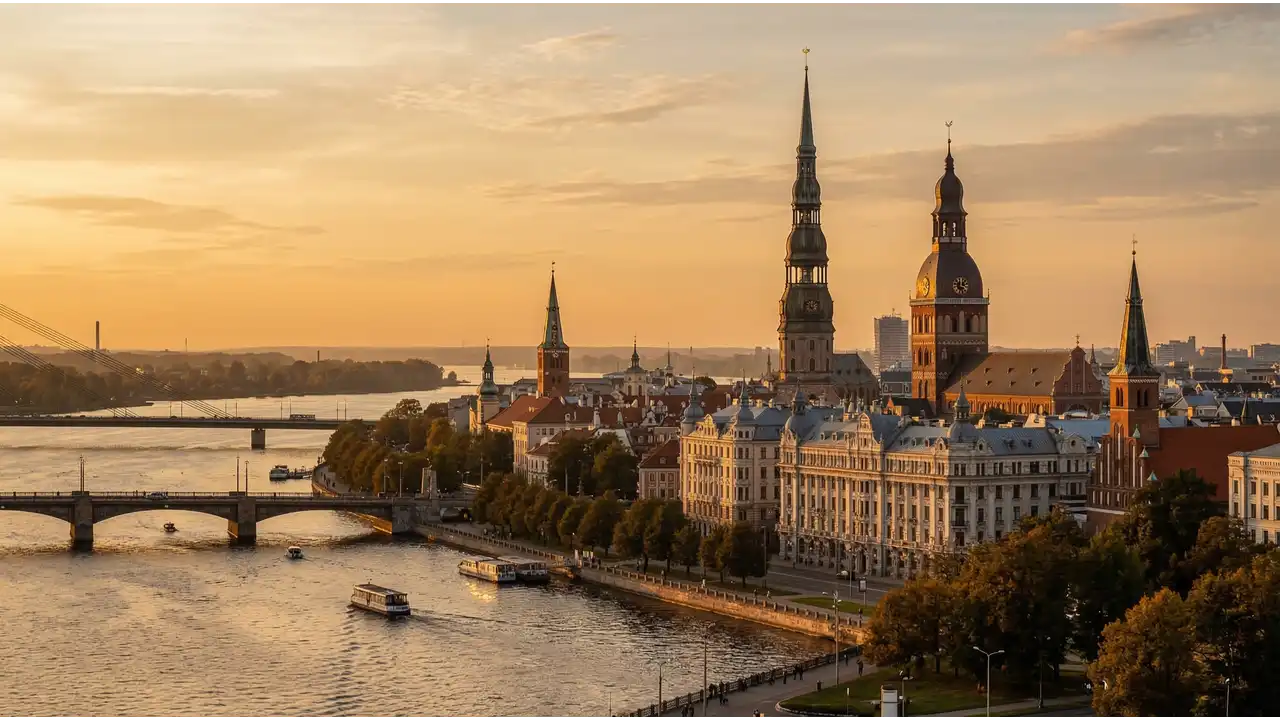
Riga is Latvia's capital and largest city, home to about 633,000 people on the Daugava River. The Old Town is a UNESCO World Heritage site with narrow medieval streets and Art Nouveau architecture from the early 1900s. Winters are cold and dark (around 0°C from December through February), summers mild and long-daylit. The city attracts working professionals, remote workers, and families drawn by lower costs than Western Europe and a developed tech sector. Daily life centers on efficient public transit, local markets, and a mix of Soviet-era and newly renovated residential areas. Salaries are lower than Western Europe, so many expats find their income stretches further here.
💡 Local Insights
Riga · 2026
Riga's cost structure reflects Latvia's EU membership and Baltic economy. Housing at $545/month covers a one-bedroom apartment in walkable neighborhoods like Āgenskalns or Klīversala, or a room-share in central Old Town. Outer districts like Imanta or Mārupe run lower. The rent market has tightened for expats in recent years, especially near the center. Groceries at $292/month are genuinely inexpensive compared to Western Europe. A liter of milk costs around $1.20, a loaf of bread $1.50, chicken $6 per kilogram. Local supermarkets like Rimi and Maxima undercut international prices. Eating out remains affordable: a meal at a casual restaurant runs $8 to $12. Public transit is efficient and cheap (€1.15 per ride, or €58 for a monthly pass). Utilities, internet, and phone services add another $80 to $120 monthly. Locals negotiate salaries in euros; expats should note that quoted salaries are often gross and include mandatory employer contributions. Expat communities cluster in Old Town and central neighborhoods, where English is more common but prices are highest.
Frequently Asked Questions
How much does it cost to live in Riga per month?
A moderate lifestyle in Riga costs around $1,450/month. Housing averages $545/month, groceries $292/month. Transport (public transit pass) runs about $58. Utilities and internet add $80 to $120. Eating out and entertainment fill the remaining budget. This estimate is based on Central European pricing models and local market data. Budget travelers can live on $870/month by sharing housing and cooking at home. Those seeking more space, dining out frequently, or living in premium central neighborhoods should plan on $2,248/month or more.
What is the average rent in Riga?
Average rent is around $545/month for a one-bedroom apartment. In Āgenskalns or Klīversala (walkable neighborhoods south and west of Old Town), you'll find studios and one-bedrooms in that range. Old Town and central locations command $650 to $850 for one-bedroom units. Room shares start at $300 to $400. Outer districts like Imanta, Sampeteris-Pleskodale, or Mārupe run $400 to $500. Larger two-bedroom apartments rent for $700 to $1,000 depending on location. Most leases are in euros, and landlords often require proof of income. The expat housing market has tightened in the past two years, so availability in central areas is competitive.
Is Riga cheap to live in for expats?
Yes, but with caveats. Riga is cheaper than Prague, Budapest, or Warsaw by 15 to 20 percent on housing and dining. For expats from North America or Western Europe, $1,450/month delivers comfortable urban living. For those from Southeast Asia or Latin America, it's moderate. Expat salaries in tech and professional services are lower than Western equivalents but higher than local wages, creating an advantage. The trade-offs: salaries are genuinely lower (€1,200 to €2,000 net for mid-level roles), winter weather is brutal, and locals speak Latvian first. English is common among younger residents but less so outside the center. Expat communities are established but smaller than in Prague or Budapest.
How much does food cost per month in Riga?
Grocery shopping totals around $292/month for one person eating a mix of local and international foods. Milk costs $1.20 per liter, bread $1.50, eggs $2.50 per dozen, chicken $6 per kilogram, and potatoes $0.70 per kilogram. Rimi and Maxima supermarkets are cheapest. Markets like Riga Central Market sell fresh produce cheaper but less convenient. Eating out is affordable: casual lunch spots charge $8 to $12, mid-range dinner $15 to $25. Coffee at a cafe runs $2 to $3. Alcohol is inexpensive (local beer $4 to $6 per bottle). Shopping at farmers markets or discount chains like Lidl can cut groceries to $250/month; eating out frequently pushes food costs to $400 to $500.
What salary do you need to live comfortably in Riga?
A comfortable lifestyle requires around $2,248/month. This allows for a private one-bedroom apartment in a good neighborhood ($650 to $750), regular dining out, travel, and hobbies. In euros, this is roughly €2,100 net monthly income. For expats, employers typically pay gross salaries of €2,500 to €3,500 (including employer taxes) for mid-level professional roles. Remote workers on North American or Western European salaries will find themselves well above this threshold. Local salaries for entry-level positions start around €800 to €1,200 net, making comfortable living challenging on purely local wages. Couples earning the local median can live moderately but not lavishly. Budget constraints hit hardest on utilities in winter and international travel.
How does the cost of living in Riga compare to other places?
Riga sits in the middle of Eastern Europe's cost range. A moderate lifestyle runs $1,450 per month, with housing at $545. That puts it slightly above Saint Petersburg, which runs $1,400 for the same lifestyle, though Saint Petersburg's housing costs $738, making it noticeably pricier to rent there. Move south and Riga becomes considerably more expensive than Skopje, where a moderate lifestyle costs $1,000 with housing at $365. If you're comparing west, Nantes in France runs $2,050 monthly, nearly 40 percent higher than Riga overall. For most travelers and expats, Riga offers solid value within the region, cheaper than Western Europe but pricier than the Balkans. Your money goes further here than in major Western cities, though less far than in smaller Eastern European capitals.
Yes, but it requires careful choices. Budget tier living at $870/month means sharing a one-bedroom apartment (your portion around $300 to $350), spending $292/month on groceries, using public transit, and avoiding restaurants and bars. Entertainment is limited to free or low-cost activities (parks, museums with discounted entry). This works for students, remote workers with very low costs, or those receiving local social support. Many locals live at this level. Expats find it tight because they often pay premium rent for English-speaking landlords and Western-standard housing. Internet, phone, and winter utilities eat into the budget quickly. Healthcare basics are cheap or free (Latvia has public healthcare), but private expat-friendly clinics cost more. Feasible but requires discipline and comfort with shared housing or Soviet-era apartments.