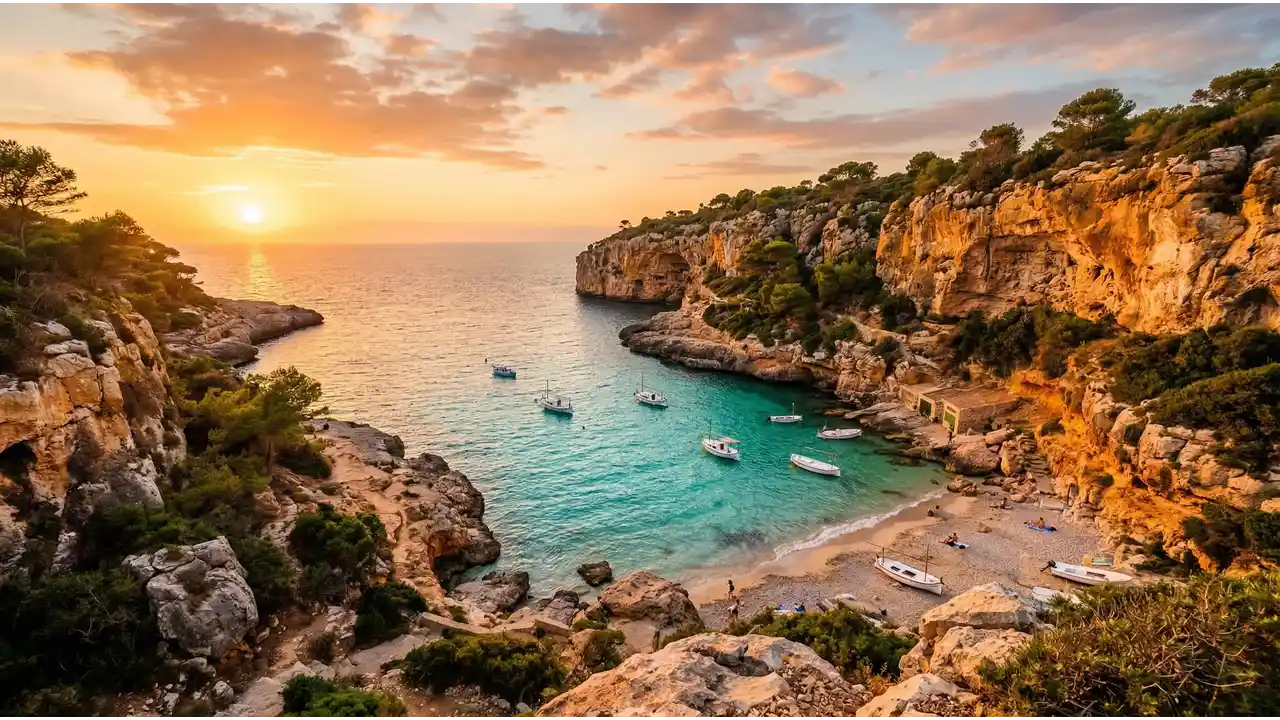
Sardinia is an autonomous region of Italy with 1.6 million residents, located 200 kilometers south of mainland Italy. The population is concentrated in coastal towns and the capital Cagliari, with inland areas sparsely settled. Daily life revolves around Mediterranean routines: long lunch breaks, late dinners, and strong local community ties. The climate is warm and dry, with winters mild and summers hot. Tourism drives the summer economy, especially June through August. Local Sardinians speak Italian and Sardinian; English is common in tourist zones but less so inland. Work culture is slower-paced than northern Europe, with siesta traditions still observed in many businesses.
💡 Local Insights
Sardinia · 2026
Sardinia costs less than mainland Italy and much less than northern Europe, but prices have risen steadily as tourism expands. Housing costs around $669/month because rental supply is tight outside summer; landlords often prefer short-term tourist rentals at higher rates. A one-bedroom apartment in central Cagliari or Sassari runs $500-750/month; coastal towns like Porto Cervo demand $1,200+ for comparable space. Groceries cost roughly $365/month for a single person buying at supermarkets like Carrefour or Conad. Local markets offer cheaper produce. Eating out costs $10-15 for pizza or pasta, $20-30 for a restaurant meal. Public transport is cheap (single bus ticket $1.50, monthly pass $45) but limited outside main towns. Private car ownership is common and necessary in rural areas. Expat pricing exists in tourist zones but not in everyday local shops. Banking and telecommunications are standard European prices.
Frequently Asked Questions
How much does it cost to live in Sardinia per month?
A moderate lifestyle costs $1,800/month for a single person. This covers housing ($669/month), groceries and eating out ($400-500/month combined), transport ($40-60/month), utilities ($80-120/month), and leisure and personal care ($150-200/month). A budget tier lifestyle runs $1,080/month by cutting dining out, choosing cheaper accommodation, and minimizing utilities. A comfortable lifestyle costs $2,790/month, allowing dining out regularly, larger housing, and more discretionary spending. Actual costs vary significantly by location: coastal and southern towns are pricier than inland Nuoro or Ogliastra regions.
What is the average rent in Sardinia?
Average housing costs $669/month based on typical regional data. In Cagliari (the largest city), a one-bedroom apartment in a central neighborhood rents for $500-700/month; outside the center, $400-550/month. In Sassari (second city), expect $450-650/month. Coastal resort towns like Alghero or Olbia rent much higher, $700-1,200/month, especially in high season. Village properties in Nuoro or inland areas cost $350-500/month. Summer tourist rentals inflate coastal prices but are irrelevant for permanent residence. Utilities (water, electricity, heating) add $80-120/month. Furnished apartments cost 10-20% more than unfurnished.
Is Sardinia cheap to live in for expats?
Yes, but not exceptionally. Sardinia is cheaper than France, Switzerland, or northern Italy, and comparable to or slightly cheaper than Spain or Portugal. It is not as affordable as Greece, Croatia, or Eastern Europe. Remote workers and retirees with stable non-local income find Sardinia comfortable at $1,800-2,000/month. Expats often pay more than locals for rental housing due to short-term tourism demand and language barriers. Long-term expat communities exist in Porto Cervo (wealthy), Sassari (students and young professionals), and Cagliari (diverse). The visa situation matters: EU citizens can stay indefinitely; non-EU residents need specific visa categories (remote worker, retiree, investor).
How much does food cost per month in Sardinia?
Groceries for one person average $365/month at supermarkets. Bread costs $1-1.50/loaf, milk $1.20/liter, eggs $2.50/dozen, chicken $6-8/kilogram, cheese $8-12/kilogram, pasta $0.80-1.50/box, and fresh vegetables $2-5/kilogram depending on season. Local markets offer cheaper produce. Eating out costs $10-15 for casual pizza or pasta, $20-35 for a sit-down restaurant meal with wine. Coffee at a bar is $1-1.50. Supermarket chains like Conad, Carrefour, and Todis offer competitive prices. Coastal tourist areas charge 20-40% more. Wine and regional cheeses are affordable because they are produced locally.
What salary do you need to live comfortably in Sardinia?
A comfortable lifestyle costs $2,790/month. This allows a larger apartment ($800-1,000/month in central areas), regular restaurant dining ($300-400/month), leisure activities ($250-300/month), and moderate travel. Expressed as annual income, plan on $33,500-35,000/year. This assumes stable, non-local income (remote work, retirement, investment). Local wages are significantly lower: median salaries range $1,200-1,800/month for skilled work, making the comfortable tier out of reach for most local residents. EU citizens can work remotely and live on comfortable-tier budgets. Non-EU citizens need specific visa arrangements or local employment sponsorship.
How does the cost of living in Sardinia compare to other places?
Sardinia sits firmly in the middle range for European cost of living. A moderate lifestyle costs $1,800 per month, with housing at $669 monthly. This puts it slightly cheaper than Slovenia, where the same lifestyle runs $1,875 with housing at $845. If you're comparing to southern or eastern Europe, Bulgaria is noticeably less expensive at $1,225 monthly overall and $455 for housing. On the other end, Norway is substantially dearer at $2,550 monthly with housing costs of $1,197. For someone relocating from mainland Italy or France, Sardinia typically feels like good value. The island's remoteness keeps some services pricier than the mainland, but food, utilities, and rental markets remain accessible compared to northern European standards.
Yes, but with tight constraints. A budget lifestyle requires sharing housing ($300-400/month rent for a room in an apartment), cooking all meals ($250-300/month groceries), minimal dining out, using public transport, and avoiding tourist activities. This works in smaller towns (Nuoro, Oristano) better than Cagliari or coastal areas. You cannot afford comfortable housing, regular restaurant meals, or frequent travel on this budget. This tier suits students, long-term volunteers, or people with very low monthly needs. Non-EU visa requirements are stricter at this income level; most countries require proof of $1,500-2,000/month minimum. It is doable but requires deliberate lifestyle choices and location selection.