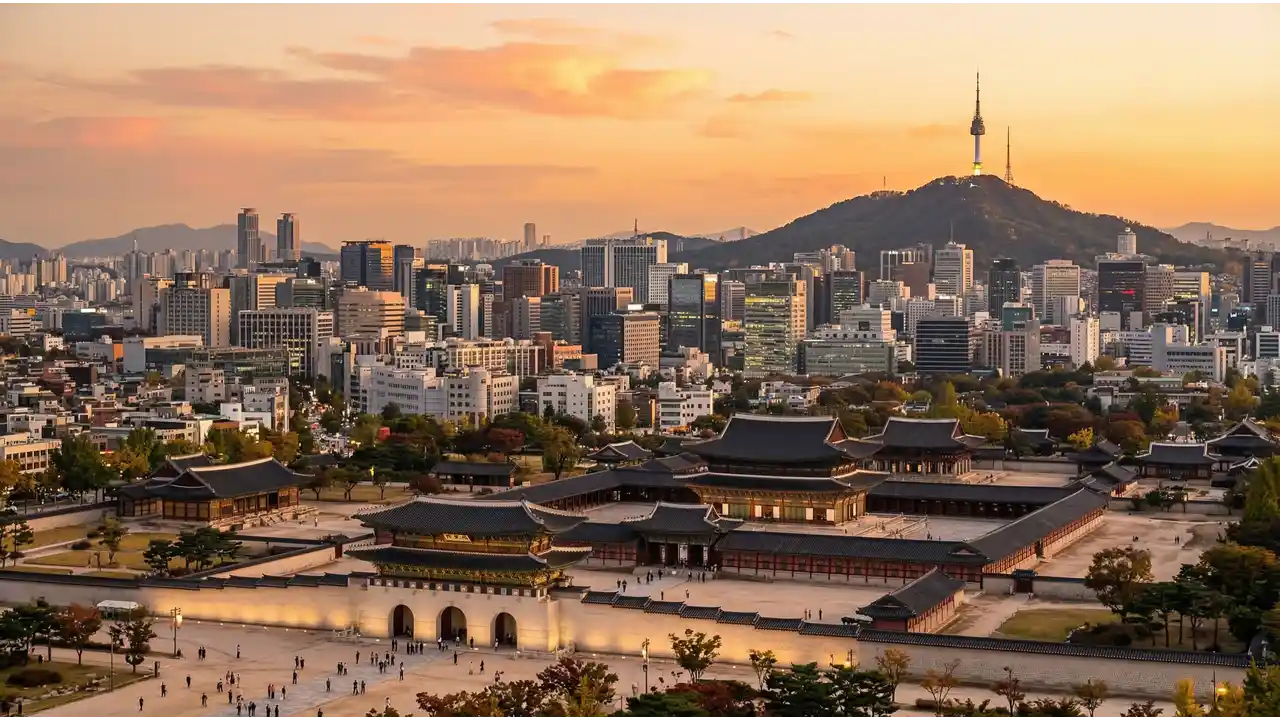
Seoul is a dense capital of 9.7 million people spread across 23 districts, with no single center. The city runs on subway (24 lines), buses, and taxis. Weather swings hard: summers are hot and humid (July averages 24°C/75°F), winters cold and dry (January around 0°C/32°F). Most expats cluster in Gangnam, Itaewon, or Hongdae; many Koreans live further out in newer apartment complexes. Daily life revolves around convenience stores (GS25, CU, Emart24) on every block, smartphone payment for everything, and 24-hour PC bangs and restaurants. Work culture is intense; social life centers on drinking after work and late-night eating.
💡 Local Insights
Seoul · 2026
Seoul's cost structure is driven by land scarcity and density. Housing averages $841 per month and varies sharply by location: Gangnam and Itaewon command premiums, while Dongdaemun, Hongik University area, and outer districts like Nowon offer lower rates. Most expats rent goshiwon (tiny single rooms, $300-500), officetel (studio-apartments, $500-900), or share multi-bedroom flats ($600-1,100 per person). Groceries run $358 per month for basic cooking; Korean staples (rice, vegetables, kimchi) are cheap, imported goods expensive. Eating out is affordable: lunch sets at local restaurants cost $4-7, convenience store meals $3-5. Public transport is exceptional and cheap (single ride $1.25). Expat pricing exists for western groceries and coworking spaces but not for housing or transport. The gap between budget tier ($1,170/month) and moderate tier ($1,950/month) reflects housing flexibility and eating-out frequency.
Frequently Asked Questions
How much does it cost to live in Seoul per month?
A moderate lifestyle costs $1,950 per month. This covers housing around $841, groceries roughly $358, utilities $80-120, public transport $50-80, and discretionary spending on dining out, entertainment, and shopping. The budget tier is $1,170 per month (roommates, minimal eating out, Gangnam avoided), while a comfortable tier that includes regular dining, entertainment, and more central locations runs $3,023 per month. Actual spending depends heavily on where you live and eating patterns.
What is the average rent in Seoul?
Housing averages $841 per month. A small officetel (studio-apartment) in outer districts like Nowon or Guro runs $500-700; central areas like Hongdae or Gangnam run $700-1,100. Shared flats are $400-700 per person. The cheapest option is a goshiwon (furnished single room), $300-500, common for new arrivals. Deposit structures vary: jeonse (deposit-only rental, no monthly rent) requires $20,000-50,000 up front; wolse (monthly rent plus smaller deposit) is more common for expats. Rental prices have held relatively stable outside prestige districts.
Is Seoul cheap to live in for expats?
Seoul is moderate-cost compared to Tokyo, Hong Kong, or Singapore, but not cheap compared to Southeast Asia. Housing at $841 per month is affordable if you share or live outside central districts, but tight if you want a solo place in Gangnam or Itaewon. Local food and transport are genuinely inexpensive. Western groceries, coworking memberships, and English-language services carry expat markups. For remote workers earning in major currencies, Seoul offers good value. For expats on local Korean salaries under $2,500 per month after tax, the budget tightens noticeably.
How much does food cost per month in Seoul?
Groceries run approximately $358 per month if you cook. Rice, vegetables, Korean staples like kimchi and tofu are cheap; imported western goods cost 2-3 times US prices. Eating out is affordable: lunch sets (kimbap, bulgogi, bibimbap) at local restaurants cost $4-7. Convenience stores sell prepared meals for $3-5. A coffee at a chain (Starbucks, Ediya) costs $2.50-4. Alcohol is inexpensive (Korean beer $1.50-3 at convenience stores, $5-8 at bars). Monthly food spending jumps to $600-800 if you regularly dine out and frequent western restaurants.
What salary do you need to live comfortably in Seoul?
A comfortable lifestyle costs $3,023 per month. This budget assumes a solo apartment in a good neighborhood (not budget corner, not luxury Gangnam), regular restaurant meals and cafes, entertainment, occasional travel, and some western groceries. In US dollar terms, this requires monthly income around $3,500-4,000 to account for taxes and banking fees. For couples or those sharing, the per-person comfortable threshold drops closer to $2,000-2,500. Remote workers earning $3,000-4,000 per month in USD find Seoul comfortable; local expat salaries (English teaching, typical office roles) often hover at or below this level.
How does the cost of living in Seoul compare to other places?
Seoul is roughly 25-35% cheaper than Tokyo on housing and food. Compared to Bangkok, Seoul is 40-50% more expensive overall due to higher rent and utilities, though eating out is similarly cheap. Versus Singapore, Seoul is roughly 30-40% cheaper overall. For US expats, Seoul costs 20-30% less than major US cities like New York or San Francisco, though salaries for expat jobs are also lower. The key difference: Tokyo and Singapore have higher transport costs; Bangkok has cheaper housing but fewer expat employment opportunities; Seoul offers a balance of affordability, job market, and livability.
Can you live in Seoul on $1,170/month?
Yes, but with constraints. The budget tier of $1,170 per month requires: a shared officetel or goshiwon ($300-500), minimal grocery spending or heavy reliance on convenience stores and eating out cheaply ($250-300), no car, public transport only, and almost no entertainment or travel. This budget cuts out dining at mid-range restaurants, western groceries, coworking memberships, and entertainment. Most people living on $1,170 are students, teaching English with free housing, or in very early career stages. It's survivable for 1-2 years but unsustainable long-term without additional income or housing support.