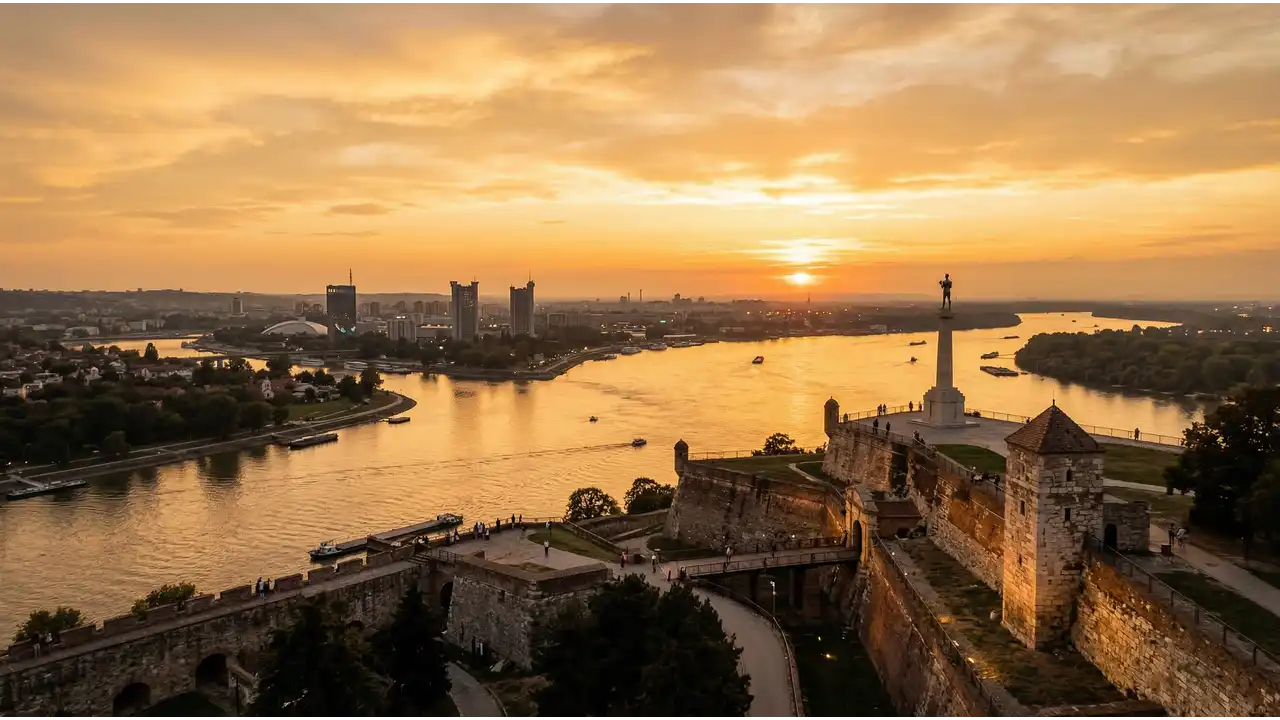
Serbia is a Balkan country of about 6.6 million people, centered on Belgrade, a riverside capital with Ottoman and Austro-Hungarian architecture. Daily life involves walking or using cheap public transit (buses, trams, metro in Belgrade). Winters are cold and damp; summers warm. Food culture revolves around bread, meat, dairy, and strong coffee. Expats, remote workers, and locals mix in central neighborhoods. Healthcare is public and inexpensive. The pace is slower than Western Europe, with a strong social calendar around cafes and family meals.
💡 Local Insights
Serbia · 2026
Serbia's low cost comes from modest wages, cheap utilities, and agricultural food production. Housing runs $537/month on average, covering a one-bedroom apartment in central Belgrade or a larger space in secondary cities like Nis or Novi Sad. Outside the center, rents drop further. Groceries cost around $270/month for a single person cooking at home, buying local produce and staples like bread ($0.30-0.50 per loaf), chicken ($3-4 per kilogram), and dairy. Eating out is cheap (a meal under $5), but imported goods carry Western prices. Public transport is efficient and costs under $20/month for unlimited passes. Utilities (electricity, water, heating) run $40-80 monthly depending on season and apartment size. Expats report no local pricing markup; locals and foreigners pay the same at markets and restaurants. Budget travelers can live on $825/month by cooking, using public transit, and avoiding Western chain stores. The comfortable tier at $2,131/month allows eating out regularly, private healthcare, and travel within the region.
Frequently Asked Questions
How much does it cost to live in Serbia per month?
A moderate lifestyle costs $1,375/month. This covers a one-bedroom apartment ($537), groceries ($270), utilities ($60), public transport ($15), and meals out and entertainment ($493). Budget living runs $825/month if you cook, use public transit, and avoid restaurants. A comfortable lifestyle with more eating out and travel costs $2,131/month. Costs vary by city; Belgrade is pricier than Nis or Subotica. Expats with remote income find this sustainable long-term.
What is the average rent in Serbia?
Average rent is $537/month for a one-bedroom apartment. In Belgrade's central areas (Vozdovac, Cukarica, Zvezdara), expect $600-750. In secondary cities like Nis, Novi Sad, or Subotica, rents drop to $400-550. Outside city centers, studios and one-bedrooms rent for $350-450. Larger two-bedroom apartments run $700-900 in Belgrade, $500-650 elsewhere. Utilities (heating, electricity, water) add $40-80 monthly. Most leases are informal; written contracts are less common than in Western Europe. Deposits typically equal one month's rent.
Is Serbia cheap to live in for expats?
Yes, compared to Western Europe and North America. Rent, food, and transport cost significantly less. However, Serbia is not the cheapest in the Balkans; Albania and North Macedonia are slightly lower. For remote workers earning in dollars or euros, Serbia offers strong purchasing power. Expats report good value for quality of life, especially in Belgrade's social scene. Downsides: some utilities are weather-dependent, healthcare for non-residents requires private insurance, and expat-focused services (international schools, Western groceries) carry premium prices. No local or expat pricing distinction exists at markets or standard restaurants.
How much does food cost per month in Serbia?
Monthly grocery costs average $270 for one person cooking at home. Bread ($0.35), milk ($0.80/liter), eggs ($1.20/dozen), chicken ($3.50/kg), and tomatoes ($0.70/kg) are local staples. Eating out is cheap: a meal at a local restaurant costs $3-6, coffee $0.80-1.50. Imported foods (cheese, specialty items) cost Western prices. Markets are cheaper than supermarkets. A weekly shop at a farmer's market or Maxi supermarket yields 5-7 days of meals for $50-60. Alcohol is inexpensive; local wine costs $2-4 per bottle.
What salary do you need to live comfortably in Serbia?
A comfortable lifestyle costs $2,131/month. This allows eating out 2-3 times weekly, private healthcare, occasional travel, and entertainment. In USD terms, a remote worker earning $2,500-3,000/month lives well above average. For locals, the average salary is around $650-800/month, so foreigners with Western income enjoy significant advantage. A couple can live comfortably for $3,200-3,500/month. Comfortable means a modern apartment in a good neighborhood, eating out regularly, and traveling within the Balkans monthly. Below $1,375/month requires cooking and transit discipline.
How does the cost of living in Serbia compare to other places?
Serbia is genuinely affordable compared to Western Europe. A moderate lifestyle runs $1,375 per month, with housing at $537 per month. That's roughly a third cheaper than Italy, where a moderate lifestyle costs $1,975 monthly and housing alone runs $841. Serbia sits slightly below Montenegro, its regional peer, where the moderate lifestyle totals $1,450. If you're coming from Russia, Serbia is more expensive overall at $1,375 versus Russia's $1,000, though housing costs are similar (Russia's at $504 against Serbia's $537). The real advantage is stability and access. You get Western European infrastructure and services at prices closer to Eastern Europe, without the geopolitical uncertainty. Compared to major Western cities, you're looking at roughly half the monthly outlay for comparable comfort.
Yes, but with discipline. The budget tier is $825/month. This requires cooking all meals (groceries $270/month), using public transit ($15), living outside central neighborhoods ($400-450 rent), and minimal eating out. You sacrifice restaurants, international groceries, and frequent entertainment. A studio or shared apartment in Nis, Zemun, or outer Belgrade fits this budget. Utilities and insurance squeeze margins, especially in winter. Locals live on this comfortably; expats can manage if they embrace local living. Not sustainable for visitors who want frequent restaurants or travel. Remote workers can boost comfort by earning even modest side income.